Explore

Need help with your project?

Oops! Something went wrong while submitting the form.
Virtual reality in healthcare is gaining momentum because it can deliver both clinical and business value. What seemed like a gimmick of the future several years ago is now turning into a strategic investment area for healthcare providers and digital health founders alike. Read the article to find out why.
%20(1)%20(1)%20(1)%20(1)%20(1)%20(1)%20(1)%20(1)%20(1)%20(1)%20(1).png)
VR technology is relevant in healthcare in 2026 because adoption has moved beyond isolated demos into training, rehabilitation, and therapy workflows. For founders planning custom software development for healthcare, the practical question is whether VR fits clinical routines and available hardware. It also needs evidence that healthcare providers can trust.
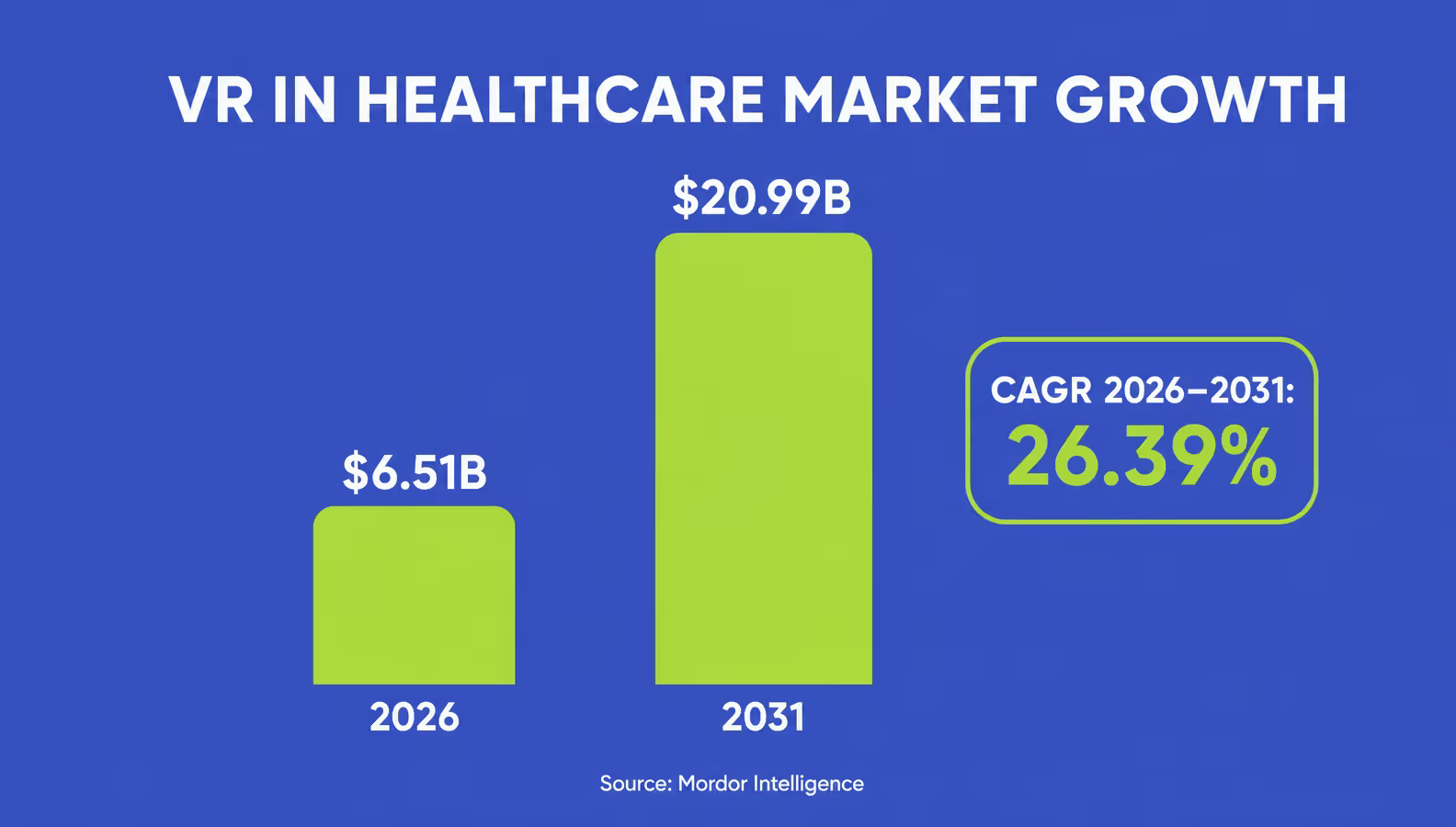
Mordor Intelligence estimates the sector at $6.51 billion in 2026 and $20.99 billion by 2031, with annual growth of 26.39%. The forecast reflects adoption in medical training and rehabilitation.
The key benefits of VR in healthcare are safer medical training, reduced pain and anxiety, faster rehabilitation, better patient engagement, and lower training costs. VR works when each experience supports a specific clinical task rather than adding immersion for its own sake.
In medical education, virtual reality training can help medical students and practicing healthcare professionals rehearse procedures without risking patients. Trainees can repeat scenarios, review mistakes, and build familiarity before clinical work. The same setup supports routine skills and rare emergencies.
VR for physical therapy turns repeated movements into guided tasks in a virtual environment. Motion tracking helps clinicians follow progress, while visible goals keep patients engaged between appointments.
A 2025 systematic review of randomized controlled trials found meaningful pain reduction for knee conditions, with less consistent results elsewhere. This supports the efficacy of virtual reality therapy as an adjunct for pain and anxiety, not a replacement for standard care.
A reusable VR training program lets healthcare providers deliver the same scenario across teams and locations. Once the core environment is built, new modules can cover different procedures without recreating the entire virtual reality system.
Immersive explanations help patients understand a diagnosis, planned procedure, or rehabilitation goal. Instead of interpreting a flat scan, they can explore a visual model with a clinician and discuss what happens next.
The main applications of VR in healthcare are medical training, pain management, physical rehabilitation, mental health treatment, and patient education. An immersive VR experience lets people practice, recover, or understand a procedure without recreating the real clinical situation.
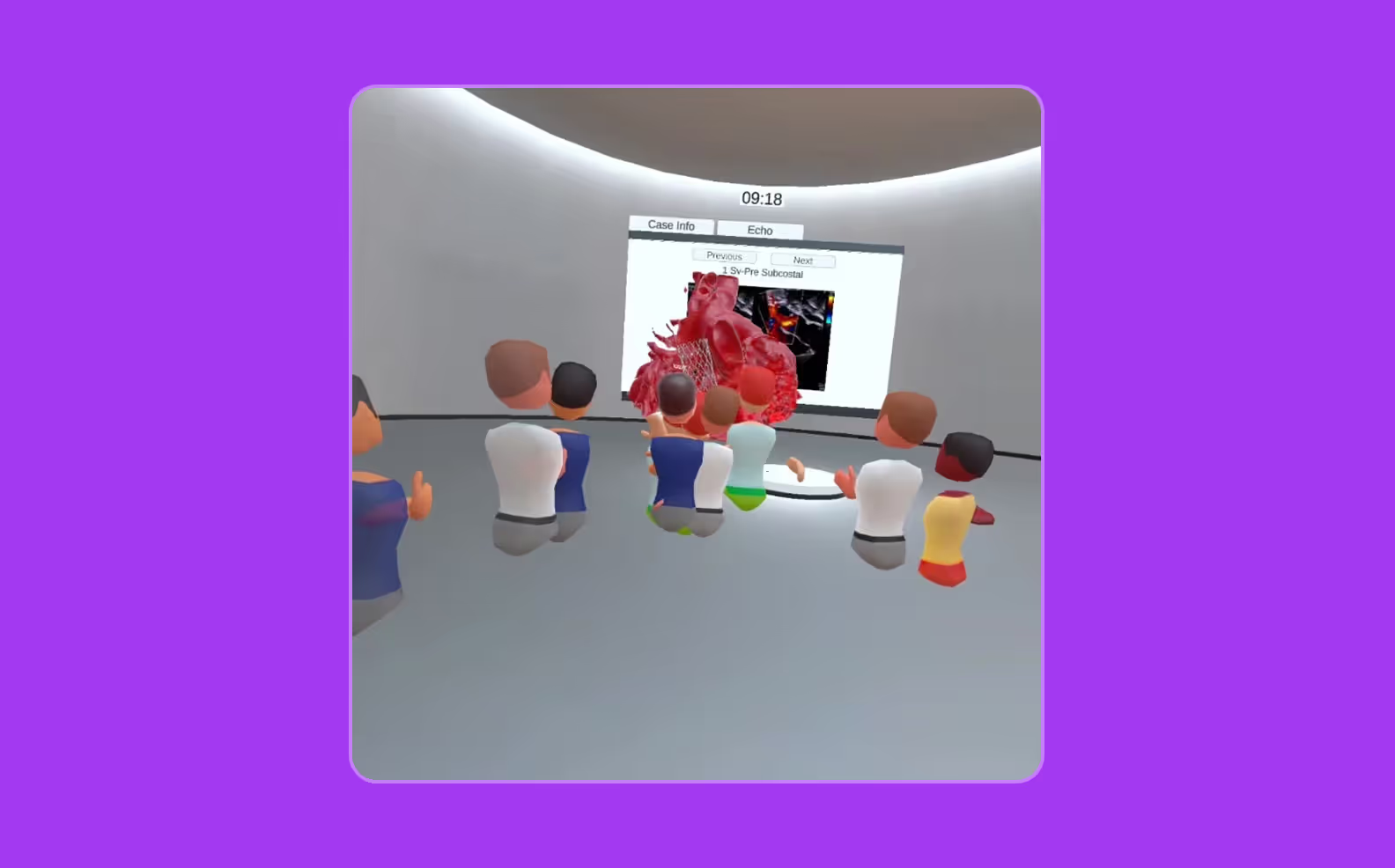
Medical students can repeat a VR simulation until the sequence becomes familiar. Experienced surgeons can rehearse unusual procedures before entering an operating room. Detailed models also turn medical imaging into a virtual space that is easier to inspect than a flat scan. This Vhearts model shows how the approach works with cardiac anatomy.
Virtual reality exposure therapy recreates controlled situations for people with anxiety, post-traumatic stress disorder, or phobias. A therapist can adjust the intensity while the patient practices coping strategies.
⭐ Our experience
We built an MVP for GSR — a platform for online psychologist consultations with specialists that work with a niche methodology.
GSR aims to work with negative feelings and attitudes that cause self-doubt and a lack of confidence. The main goal is to help a person succeed in life and find harmony.
But there was no separate platform for such psychologists — until our client decided to create one, with an option to book appointments and learn more about the methodology.
We built the MVP version of the web application with basic functions: viewing the catalog of specialists, choosing a psychologist, and booking a session (without payment). We also created a modern and sleek design for it, adapted the platform for different devices, and developed a simple user journey.
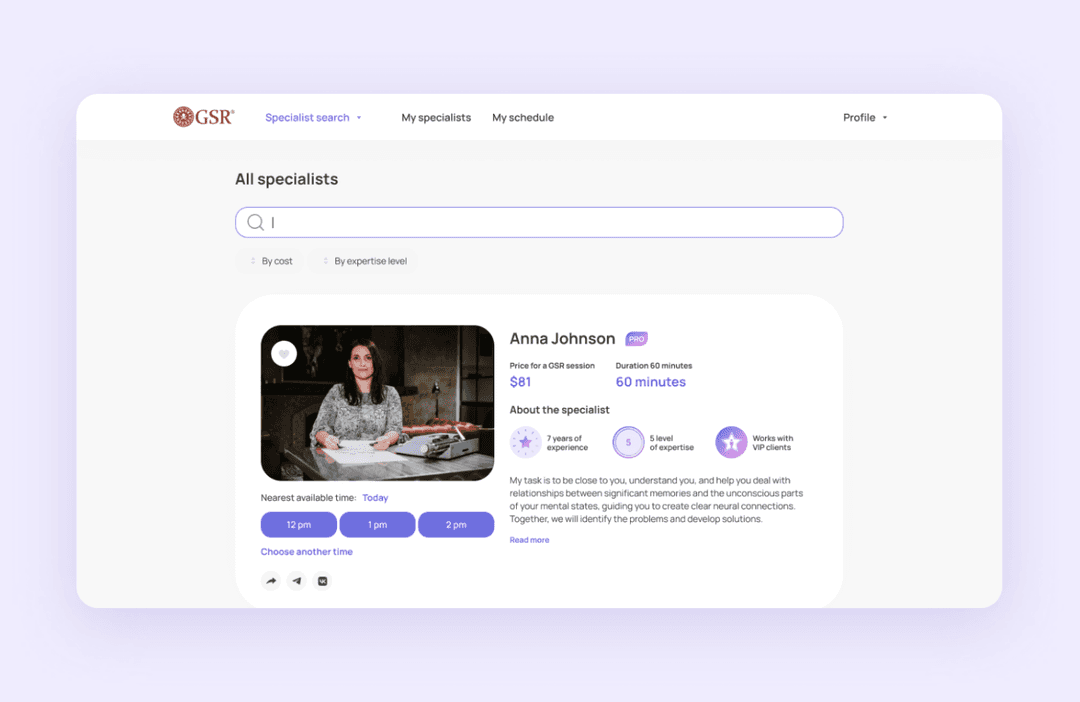
We finished the MVP in 4 months, and it cost our client $40,000.
💡At the time, VR in healthcare wasn’t that popular, but if it was… here’s what we could also do:
The table brings the five applications together and shows what each one changes for healthcare professionals and patients.
| Application | How VR helps | Example |
| Surgical training | Risk-free practice of operations in immersive VR simulation | Osso VR and FundamentalVR platforms for surgeons |
| Pain management | Distracts the brain and lowers perceived pain during procedures | VR sessions for burn wound care and chronic pain |
| Physical rehabilitation | Gamified VR therapy exercises improve engagement and recovery | Stroke recovery programs with motion tracking |
| Mental health treatment | Virtual reality exposure therapy for PTSD, phobias, and anxiety | Guided immersive sessions with a therapist |
| Patient education | Visual 3D walkthroughs of diagnoses and procedures | VR tours of planned surgery for patients |
Yes, augmented reality (AR) and virtual reality (VR) are not the same. They are often mentioned together, but they solve different problems in healthcare.
VR creates a fully immersive digital environment that replaces the real world. AR, on the other hand, overlays digital elements on top of the real world. Instead of replacing reality, it enhances it with additional information.
High-growth segments in both markets are surgical training for AR and mental health practices for VR. But of course, they are not limited to just that. Here’s a table that will help you differentiate between the concepts.
| Feature | VR (Virtual Reality) | AR (Augmented Reality) |
| Environment | Fully immersive digital environment | Real world with digital overlays |
| Main purpose in healthcare | Training, therapy, rehabilitation | Surgical assistance, diagnostics |
| User experience | User is completely inside a virtual world | User remains in the real environment |
| Typical hardware | VR headsets | Smart glasses, AR displays |
| Common use cases | Surgical simulations, mental health therapy, patient rehabilitation | Surgical navigation, medical visualization, clinical support |
A VR healthcare application moves from clinical validation to a tested product through five stages. Discovery defines the medical task. Hardware and design choices shape the experience, while development and launch test it in real healthcare settings. Our medical software development guide covers the broader process.
Timeline: 1–2 weeks.
Estimated cost: $1,500–$3,500.
The team defines users, compliance requirements, technical constraints, and the clinical use case that sets the product scope.
Timeline: 1–2 weeks.
Estimated cost: $1,000–$5,000.
The VR headset choice determines tracking, performance, and deployment options. It also has to match the equipment available in the intended setting.
Timeline: 2–4 weeks.
Estimated cost: $6,500–$15,500.
Designers map headset interactions and test whether each action is clear for patients and healthcare workers.
Timeline: 2–4 months.
Estimated cost: $22,300–$45,600.
Developers build the core environment, interactions, and integrations needed to test the clinical workflow with users.
Timeline: 2–3 weeks.
Estimated cost: $2,000–$12,300.
The team deploys the application, monitors performance, and uses feedback to plan the next iteration.
Five factors drive the cost of developing a healthcare app with VR: clinical scope, 3D fidelity, hardware support, integrations, and compliance. The VR app development cost guide covers detailed ranges. Here, the focus is how each factor changes the work.
A patient-education experience takes less work than a surgical simulation with realistic anatomy, clinical feedback, and complex interactions.
⭐ Our experience
We developed Medico — a mobile and web app with digital patient surveys that helps oncologists and, well, their patients.
We developed the platform, created a fast and easy onboarding process, and most importantly — made custom surveys. They turned out to be even easier than Google Forms.
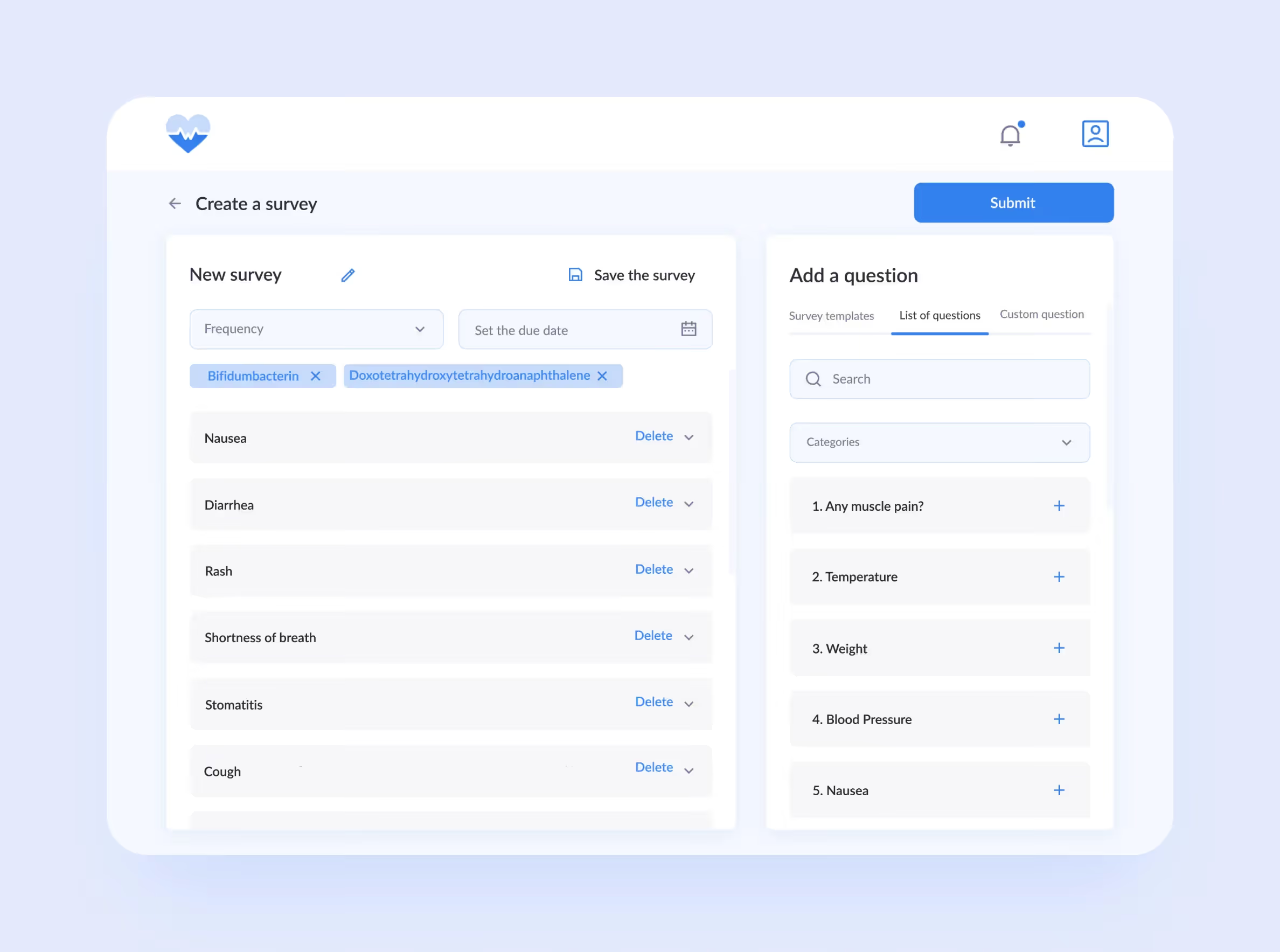
We added dashboards to make it easier for patients and doctors to monitor their health.
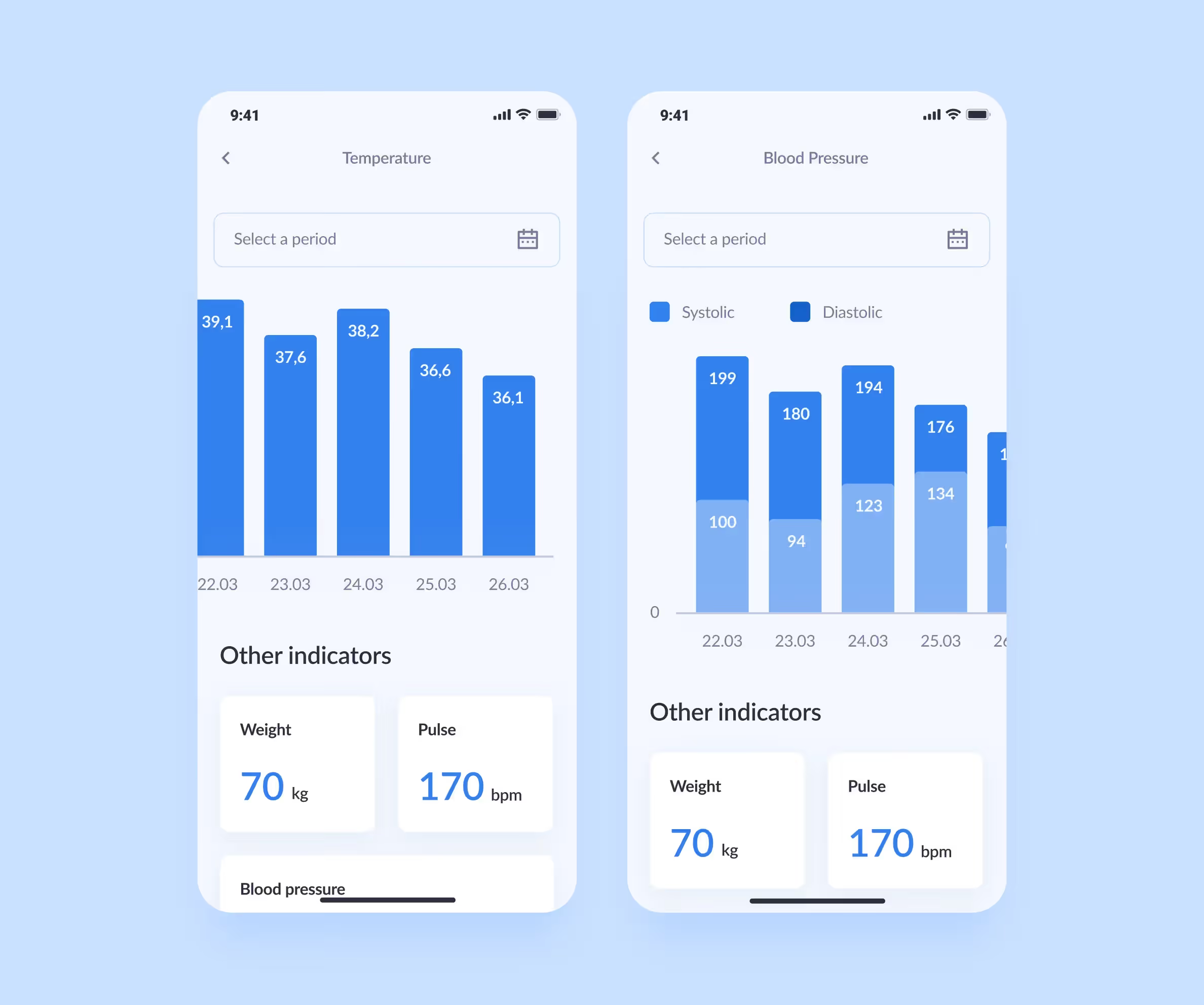
Initially, we only planned two roles for Medico: doctor and patient. That’s when integrations came: the platform needed to work with hospitals and clinics as a SaaS solution. To do that quickly and on a budget, we enabled external editing via Excel — such basic functions work great at the MVP stage.
💡If we were to add VR to this project, here’s what we could do:
Accurate anatomy and motion require specialist modeling, clinical review, and more testing time.
Each additional headset or medical device adds compatibility testing and performance work.
Connections to electronic health records or training platforms add backend, access-control, and security work.
Clinical products require additional documentation, security testing, and regulatory review for their intended market.
The main challenges are regulation, hardware access, and clinical adoption. Implementation of virtual reality works only when the product fits existing workflows and the facility can support its equipment. Teams need to resolve these constraints before clinical testing.
A VR product that affects care may qualify as a medical device. Its approval path depends on the launch market.
| Market | Regulations |
| United States | FDA |
| United Kingdom | Medical Devices Regulations 2002, overseen by the MHRA |
| Europe | Medical Device Regulation (MDR 2017/745). |
| Middle East | Varies for each country: MOHAP in the UAE, SFDA for Saudi Arabia, etc. |
Limited budgets, older equipment, and weak technical support can block adoption in smaller clinics.
The adoption of VR in healthcare slows when training is lengthy or workflows change. Clear healthcare UX design keeps tasks understandable for healthcare workers.
Medical VR is moving toward adaptive simulations, more realistic touch, and lighter hardware. In 2026, the strongest trend is convergence. AI adjusts the experience, haptics improve physical feedback, and mixed reality or extended reality connects immersive tools with real clinical settings.
AI can adjust difficulty and content based on patient progress or trainee performance, making each session responsive without manual reconfiguration.
Haptic systems let trainees feel resistance from virtual tissue and instruments, which makes procedural practice closer to clinical work.
Better displays, motion tracking, and medical imaging create clearer virtual environments for training, treatment planning, and rehabilitation.
VR in healthcare is already a practical tool for training, treatment, and patient engagement. “Whether to build” is no longer a question, but the challenge is how to do it fast, compliant, and scalable.
➡️If you’re exploring a VR healthcare product, Purrweb can help you validate the idea, build an MVP, and bring it to market without overengineering or delays. Share your vision and receive a free project estimation in 48 hours.
VR in healthcare means using immersive virtual reality headsets and software for medical purposes: training surgeons in risk-free simulations, treating pain and anxiety, supporting physical rehabilitation, and running exposure therapy for mental health conditions like PTSD and phobias.
VR fully immerses the user in a simulated environment, while AR overlays digital objects onto the real world. In healthcare, VR is mainly used for training, therapy, and pain management. AR assists surgeons during real operations by projecting scans and data into their field of view.
Some VR-based treatments are reimbursed when they are part of an approved therapy, for example, prescription digital therapeutics for pain or rehabilitation. Coverage depends on the specific product and insurer, so clinics should check current Medicare and private insurance policies before adoption.
VR lets medical students and practicing healthcare professionals rehearse procedures in realistic simulations without risking patients. Trainees can repeat operations, get instant performance feedback, and practice rare emergency scenarios that are hard to reproduce in a hospital.