Explore

Need help with your project?

Oops! Something went wrong while submitting the form.
Wealth management software helps advisors, family offices, and investment firms manage portfolios, reporting, planning, and client relationships in one platform. It is a B2B system: the user is the firm, not the individual investor. Building one means deciding which slice of it you actually need — the category spans everything from a portfolio dashboard to a full accounting ledger with a trading engine attached.

The capital behind this is not hypothetical. PwC projects global assets under management will climb from $139 trillion in 2024 to $200 trillion by 2030. The software administering that money is being rebuilt right now, and most firms are deciding whether to buy it or build it.
This guide covers what goes into that decision: the types of wealth management software and how they differ, the features that turn out to be non-negotiable, the tech stack, the compliance rules that quietly become engineering requirements, and what a build costs in real numbers. It ends with how to scope a lean MVP instead of paying for the full platform up front.
Wealth management software is the system a firm runs its advisory business on. It holds client positions across every custodian, calculates performance, and produces the reports that go to clients and regulators. It also models financial plans and tracks the relationship itself.
The defining trait is that it is a B2B tool. The user is the financial advisor or the wealth management firm, not the individual investor. A retail investing app shows one person their own holdings. Wealth management software shows an advisor a book of hundreds of households, and has to prove on demand that every recommendation in it was suitable.
The feature list looks the same from the outside. What changes is which part has to be strongest:
These two get conflated, and the difference matters when scoping a build. Financial software is the umbrella category, covering payments, core banking, lending, and accounting. Wealth management software is one branch of it, defined by what it manages: a client's assets and the advisory relationship around them.
A payments platform moves money. A wealth management solution decides where money sits, proves why, and reports on what it did. That is investment management, not payments, and the two sit in different corners of financial services. If the broader category is what you're scoping, our guide to financial software development covers it.
A wealth management platform is not one product. It is a stack of eight distinct categories of management tools, each with its own system of record, its own buyers, and its own vendors. "Wealth management system" is a label for the whole stack, not a thing you buy. The most expensive mistake at the scoping stage is treating them as a single build.
Consolidates holdings across custodians, asset classes, and legal entities into one view, then supports valuation, modeling, and client reporting on top of it. Its strength is handling complicated ownership: trusts, LLCs, multi-generational structures. That is why family offices anchor on it.
Builds goals-based plans for retirement, education, and estate, using cash-flow modeling and Monte Carlo simulation. The result expresses a plan's viability as a probability rather than one projected number. It models the future. It does not track what is held today.
The book of record, and the layer most investment management software is built around. It calculates NAV, books transactions and corporate actions, tracks cost basis and tax lots, and produces compliance-grade performance reports. Reporting tools sit on top of this layer and consume it. They do not replace it.
Runs the client from onboarding through KYC, periodic reviews, and eventual offboarding, with document collection and compliance workflow built in. A CRM owns the sales pipeline. CLM owns the regulatory path.
Handles the order lifecycle: creation, pre-trade compliance checks, routing, execution, and allocation across accounts. It earns its keep when trades are placed at scale, not when an advisor executes a handful by hand.
Ingests custodian and accounting extracts and turns them into performance reporting and branded client statements. Often white-labeled and bought as a service rather than built in-house.
The relationship layer: contacts, households, pipeline, notes, communication history. Its core object is the household, not the position. It pulls performance figures from the accounting system rather than calculating them itself.
A separate category, not a feature you bolt onto a mainstream tool. Illiquid assets have no daily price, so valuation is periodic and model-based, and cash flows are irregular (capital calls, distributions). IRR and MOIC replace time-weighted return as the primary performance metric. Portfolio software built for public markets quietly produces wrong numbers here.
| Type | Core object | Who anchors on it |
| Portfolio management | Consolidated position | Family offices, RIAs |
| Financial planning | Future cash flow | Planning-led advisors |
| Portfolio accounting | Transaction ledger | Asset managers, large RIAs |
| CLM | Compliance workflow | Private banks |
| OMS | Order | Firms trading at scale |
| Analytics & reporting | Client statement | RIAs outsourcing reporting |
| CRM | Household relationship | Every advisory practice |
| PE / alternatives | Capital call & NAV | Funds, family offices |
We designed and built Fintarget, an investment platform for the brokerage BCS. Investors filter published strategies by risk level and expected return, hand their money to a trust manager, and then watch how the strategy they picked actually performs.
Most of the design work went into one constraint. An investor still choosing a strategy and an investor already holding it look at the same records from opposite ends. One wants risk and expected return to compare against alternatives. The other wants to see what their money has actually done since.
We made the strategy itself the shared object. A single strategy page carries the numbers used to compare it before buying and the numbers tracked after it. The account view rolls up performance across every strategy a client has acquired. Discovery and performance reporting stopped being two products.
Investors compare strategies by risk and expected return before choosing a manager
Every vendor page lists the same key features, and that list is genuinely correct. It is also not where projects fail. Each of these carries an engineering consequence that only surfaces months in. Those consequences separate a platform that reconciles cleanly from one that quietly reports wrong numbers.
This is the layer everything else reads from. It pulls positions, balances, and transactions out of every custodian the firm works with. Those get merged into one continuously updated picture of what a client actually holds, across accounts, asset classes, and currencies.
The catch: custodians describe the same asset differently. Schwab reports a security type as EQ, Fidelity as EQUITY, Pershing as Stock. One generic parser will silently misclassify holdings, so every feed needs its own normalization mapping before the data is allowed anywhere near an aggregate.
Clients ask two questions, and the reporting tools have to answer both. The first is what the portfolio earned. The second is why, and that is what attribution exists for. Brinson-style attribution splits performance against a benchmark into two parts. The allocation effect shows which asset classes were overweighted. The selection effect shows which securities were picked inside them.
The catch: GIPS requires time-weighted return for discretionary composites. TWR strips out the timing of client deposits and withdrawals, which isolates what the manager actually decided. Money-weighted return, or IRR, is only permitted where the firm controls the cash flows, as in a closed-end PE fund.
So a platform serving both a liquid advisory book and illiquid allocations needs two return engines, not one, and has to know which to apply to which strategy.
Here the software stops describing the present and starts modeling the future. It projects a client's cash flows against their financial goals, then runs thousands of randomized market scenarios. The answer arrives as a probability of success, rather than one tidy projected number that nobody believes anyway.
The catch: that probability is a direct product of the assumed return distribution. Naive independent normal draws understate the risk of a long drawdown. Two planning engines fed identical client data will therefore hand that client different confidence numbers, and neither will show its work.
Between review meetings, the client wants to look at their own money without booking a call. The portal gives them that: holdings, performance, documents, on their own schedule. For most firms it is the client experience, because it is the surface clients actually touch.
The catch: the portal and the advisor console have to compute from the same book of record. The recurring bug is nastier than a plain wrong number, because both screens are internally correct. They simply read cached snapshots taken at different moments, and the client ends up quoting a figure their advisor cannot find anywhere on screen.
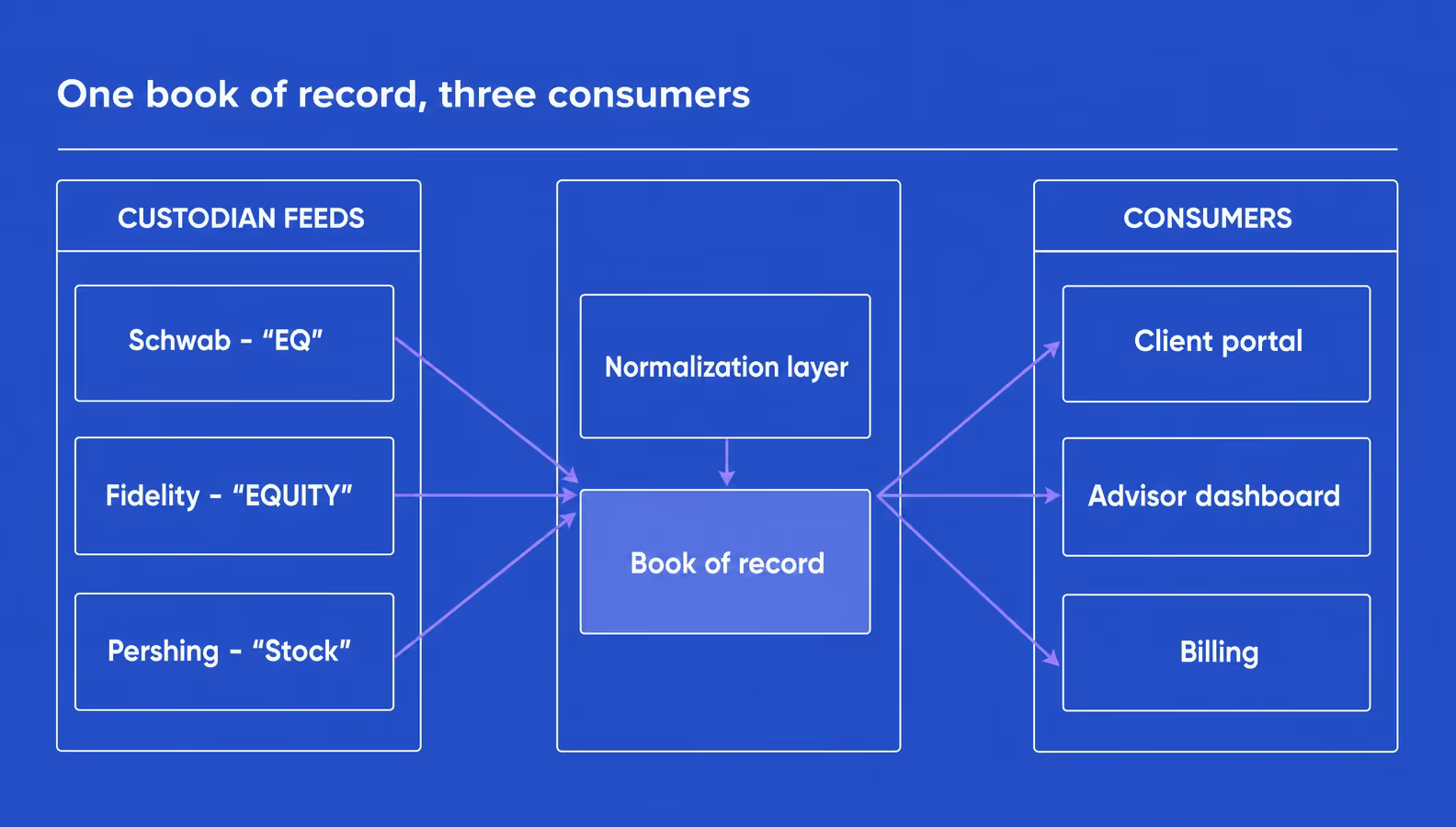
Every discrepancy a client notices starts with a break somewhere in this chain
The firm has to know how much risk a client can live with, and then be able to prove that the investment strategies it recommended actually matched that. This is where risk management stops being a philosophy and becomes regulatory compliance. FINRA Rule 2111 requires a reasonable basis for suitability, and SEC Regulation Best Interest raises the bar to an explicit best-interest obligation.
The catch: proving it means storing an immutable, timestamped chain. It runs from the questionnaire result, to the recommendation given, to the portfolio that was actually implemented. A risk score captured once at onboarding and never re-checked against subsequent trades proves nothing at all when an examiner asks.
An advisor carrying several hundred households cannot open each account every morning. The dashboard is the triage layer that decides where their attention goes: AUM, performance, exposure, and whatever is currently off-target. It is also where advisors expect real-time data and rarely get it.
The catch: recomputing every metric against live custodian feeds does not scale, so production systems pre-aggregate on a schedule. Most "real-time" dashboards are in truth "as of the last batch". The honest design choice is to show that staleness window, rather than let an advisor assume they are looking at this morning.
Markets move, so a portfolio drifts away from the asset allocation that was agreed with the client and documented as suitable. Rebalancing compares live weights against the target model and generates the trades that pull it back inside tolerance, ideally without triggering an avoidable tax bill. Firms automate this because doing it by hand across hundreds of households does not scale.
The catch: tax-aware rebalancing has to respect the wash-sale rule across the client's entire household, including IRAs and a spouse's accounts. The engine therefore needs household-level trade history. Account-level history will cheerfully disallow a loss the advisor was certain had been harvested.
Fees are how the firm gets paid, and getting them wrong is not a rounding error. The system applies the fee schedule to assets under management and produces the invoices debited at the custodian. Firms automate billing early, because manual quarterly invoicing breaks at exactly the point the business starts working. That is exactly the kind of process an SEC examiner enjoys sampling.
The catch: fee tiers are set by total household AUM, not by individual account. So the engine has to resolve household membership first, and membership changes over time, then allocate the blended household fee back down to each account for debit. That is a data-modeling problem long before it is a math problem, and it is why "household" ends up a first-class entity in the schema rather than a label on a contact.
No wealth platform lives alone. Custodians hold the assets, client relationship management software holds the relationship, planning tools hold the projections, and market data prices all of it. Whatever you integrate, the platform spends its life exchanging financial data with systems it does not control.
The catch: the decision to integrate is the easy half. Custodians report the same economic event with different codes, different timing, and different precision. So the platform needs break detection between what the custodian reported and what it computed itself. It also needs an exception queue where a human clears the mismatches. Skip that and drift accumulates silently until a client-facing report is visibly wrong.

.svg)

Advisors are not waiting to be convinced. Cerulli found that 42% of bank advisors already use AI in their practice, and 77% plan to within two years. Artificial intelligence has moved from pitch decks into the tools financial advisors open every morning.
The question worth asking is which of these capabilities earn their keep on the firm's side of the desk. A robo-advisor sold to consumers and a robo engine running inside an advisory platform are different products with different obligations. Everything below is the second kind. If the consumer-facing version is what you're weighing, we cover investment app development separately.
A firm with thousands of small accounts cannot put a human in front of each one and still make the economics work. Robo logic closes that gap, and it is the most common way firms automate investment decisions at the low end of the book.
What it automates is the routine allocation, not the judgment. A risk questionnaire produces a score, the score maps to a model portfolio, and the system rebalances toward that model without an advisor placing each order.
It is worth being honest about what is under the hood. Most of what gets sold as AI here is a deterministic lookup and an optimization, not a model that learns from your clients. Calling it AI oversells it. And it still has to produce a human-reviewable audit trail, because a regulator asking why a client ended up in portfolio 4 will not accept "the algorithm decided".
Clients rarely announce that they are leaving. They just log in less, answer more slowly, and move a little money out, and by the time an advisor notices, the relationship is already gone. Attrition models read those signals early, using data analytics over the firm's own history, and rank which relationships need attention this month. This is machine learning doing triage, not prophecy.
The limit is the training data. AI models learn from your firm's own history of clients who left, so a firm without enough of those events has nothing to train on. Any model also needs retraining as markets and advisor behavior shift. Vendors quote attrition reductions in the low teens. Those are their clients' results, not a promise about yours.
A client holding a position below what they paid for it is sitting on a deductible loss. Harvesting realizes that loss and buys something similar but not identical, so the portfolio keeps its market exposure and the client keeps the tax benefit.
This is the feature where AI gets least room to be clever, and where getting clever costs the most. The IRS wash-sale rule disallows the loss if a "substantially identical" security is bought within 30 days either side of the sale. That test runs across every account the client owns or controls, including IRAs and a spouse's accounts.
The IRS has never precisely defined "substantially identical", which means the similarity rule belongs to your lawyers, not to a model. A wrong call here is not a suboptimal trade. It is a tax-reporting error.
Compliance teams drown in alerts. Rule-based AML systems have been reported to throw false positives at rates as high as 95%, which trains everyone to click through them. The instinct is to automate the review away, and that is the one thing AI here cannot do. AI helps by ranking alerts instead of merely generating them, and reported reductions in alert volume run around 65%.
What it does not do is decide. A human compliance officer still signs off on a suspicious activity report. The same restraint applies to sentiment analysis on news and earnings calls, which produces a noisy input signal rather than a valuation. Both of these sort the queue. Neither closes a case.
The most expensive mistake in the wealth management software development process is made before anyone writes code. It happens in the first weeks, when the team agrees on which system is the source of truth for a position, and gets it wrong. Everything downstream inherits that decision, and unwinding it later means rebuilding the reporting layer on top of a different ledger.
The sequence itself is not exotic, and it looks much like any custom software workflow. It is what each stage is allowed to leave unresolved that decides whether the build holds, and whether what you ship is scalable.
| Stage | What happens | What it has to produce |
| Discovery | Custodians, jurisdictions, asset types, and the source of truth are settled | A data model the business model can actually fit inside |
| Requirements | Features are split into v1 and later, compliance obligations are mapped to features | A scope someone is willing to sign |
| UX and prototyping | Advisor and client interfaces are designed separately and tested on real data volumes | Screens that survive four hundred holdings, not four |
| Development | Core platform is built against the agreed book of record | Working software, feature by feature |
| Integrations | Custodian feeds, market data, CRM, e-signature are connected in parallel with development | Live data flowing, with breaks visible |
| QA and reconciliation | Standard testing, plus daily position-by-position matching against custodian records | Numbers that agree with the custodian |
| Deployment | Production rollout, usually to a pilot group of advisors first | A platform in real use |
| Support | Regulatory changes, feed changes, incidents | A platform that stays correct |
Below is a walk through the stages that carry the most weight, and what tends to get decided in each one without anybody noticing. The point of going through them upfront is that most of these questions are cheap to answer in week two and expensive to answer in month six.
Before scoping features, the questions that actually shape the build are unglamorous ones. Which custodians hold the assets. Which system owns the authoritative position, yours or theirs. Which jurisdictions the clients sit in, because that decides the compliance surface. Whether alternatives are in scope, because that decides whether you need a second return engine.
Teams that answer these in week two build once. Teams that defer them because they feel like plumbing tend to discover in month six that the data model cannot express what the business actually sells. This is also where a partner earns their fee. It is the phase we push hardest on in fintech software development work.
Integrations are not a phase that comes after the features. They are the thing most likely to break the schedule, so they run in parallel from the start. A custodian feed that turns out to deliver a nightly file rather than an API changes what the product can honestly promise. Better to learn that in month one than in acceptance testing.
Standard QA checks whether the button works. A wealth platform also needs a different kind of test. Does the number we computed match the number the custodian reports, position by position, day after day, including the days with corporate actions and cash movements? That is the test that finds the errors clients would otherwise find first.
There is no exotic stack here, and anyone selling you one is selling you risk. What follows is what a wealth management app development team actually builds from in 2026, and what each choice costs you in scalability. Two decisions inside it carry real consequences: how the mobile client is built, and which third-party data you depend on.
| Layer | Typical choice | Why |
| Web frontend | React, Next.js | Shares components with the React Native client |
| Mobile | React Native | One codebase for advisor and client apps on both platforms |
| Backend | Node.js/NestJS or Python; Java/Kotlin where the bank already runs on the JVM | Velocity for API glue, JVM where the integration teams already live |
| Transactional database | PostgreSQL | ACID guarantees for positions and ledgers |
| Market data | A time-series store alongside Postgres | Tick and NAV history behaves badly in a relational table |
| Event streaming | Kafka | Trade events, price updates, and an auditable event log |
| Cloud | AWS or Azure | Both run financial-services compliance programs |
| Auth | OAuth 2.0, OIDC, MFA | Standard across advisor portals and custodian APIs |
The advisor is the one who is rarely at a desk. They are in a client's office, in a car, between meetings, and the moment a client asks a question, the answer either exists on their phone or it waits until tomorrow. On the other side sits a client with several million under management. Their banking app shows a checking balance in real time, and they notice that their wealth manager sends a PDF once a quarter.
A responsive web layout does not close that gap. It handles the screen size and misses the point, which is push notifications, biometric login, and an interface built for a thumb rather than shrunk to fit one.
One codebase covering iOS and Android for both apps is roughly 30 to 40% cheaper than running two native teams. It also keeps the advisor and client apps in step, rather than letting them drift into different products.
The honest limits are worth naming, because they decide whether this is the right call. Heavy real-time charting is where React Native works hardest, and some banks pick Flutter specifically for chart rendering.
Anything touching the secure enclave, including parts of the biometric flow, still needs a native module rather than pure JavaScript. Offline behavior has to be designed deliberately too, along with a PIN fallback for devices without biometrics.
Four names come up in every conversation about which data to integrate, and each integration carries a constraint that is better known before the contract than after. The software platform you build is bounded by what these feed it.
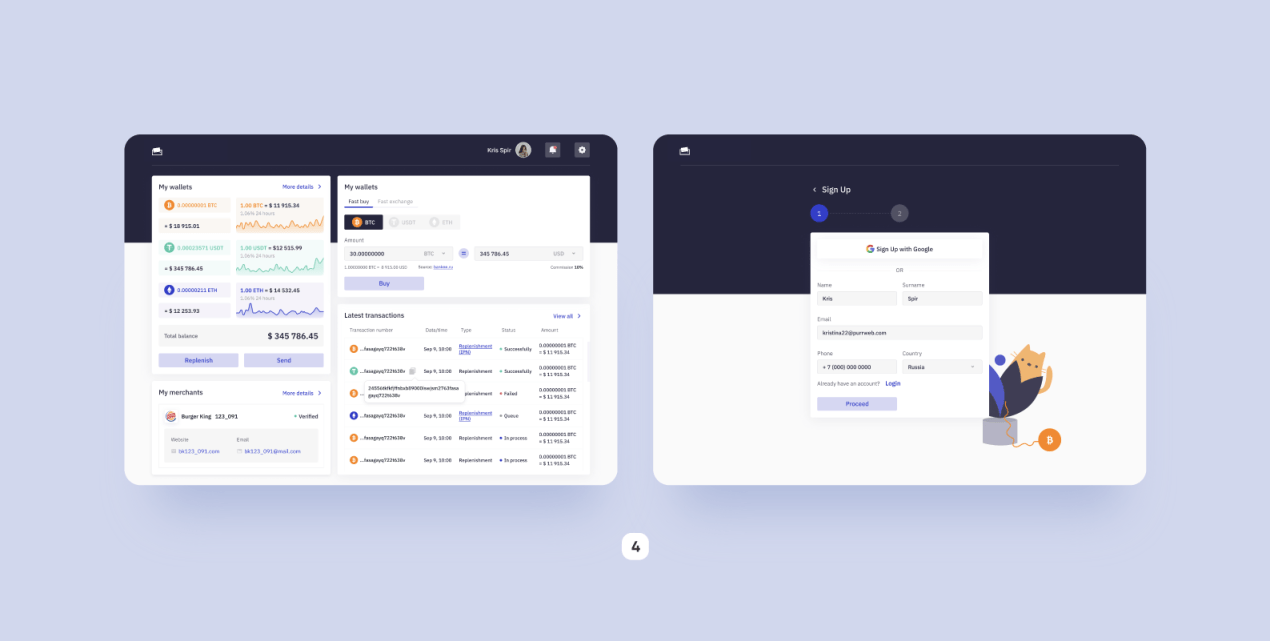
We built Broex, a multi-currency wallet where users buy, exchange, and monitor assets. It runs on React Native against the client's GraphQL backend, with biometric authentication on iOS.
The lesson that transfers to wealth platforms is about the balance screen. It looks like a list and behaves like a reconciliation problem. Several currencies, prices moving while the user watches, and a total that has to stay correct at the moment the number changes.
We solved it by deciding what the screen is allowed to show while data is still arriving, rather than blocking the whole view on the slowest feed. A portfolio screen has the same problem, with more asset classes.
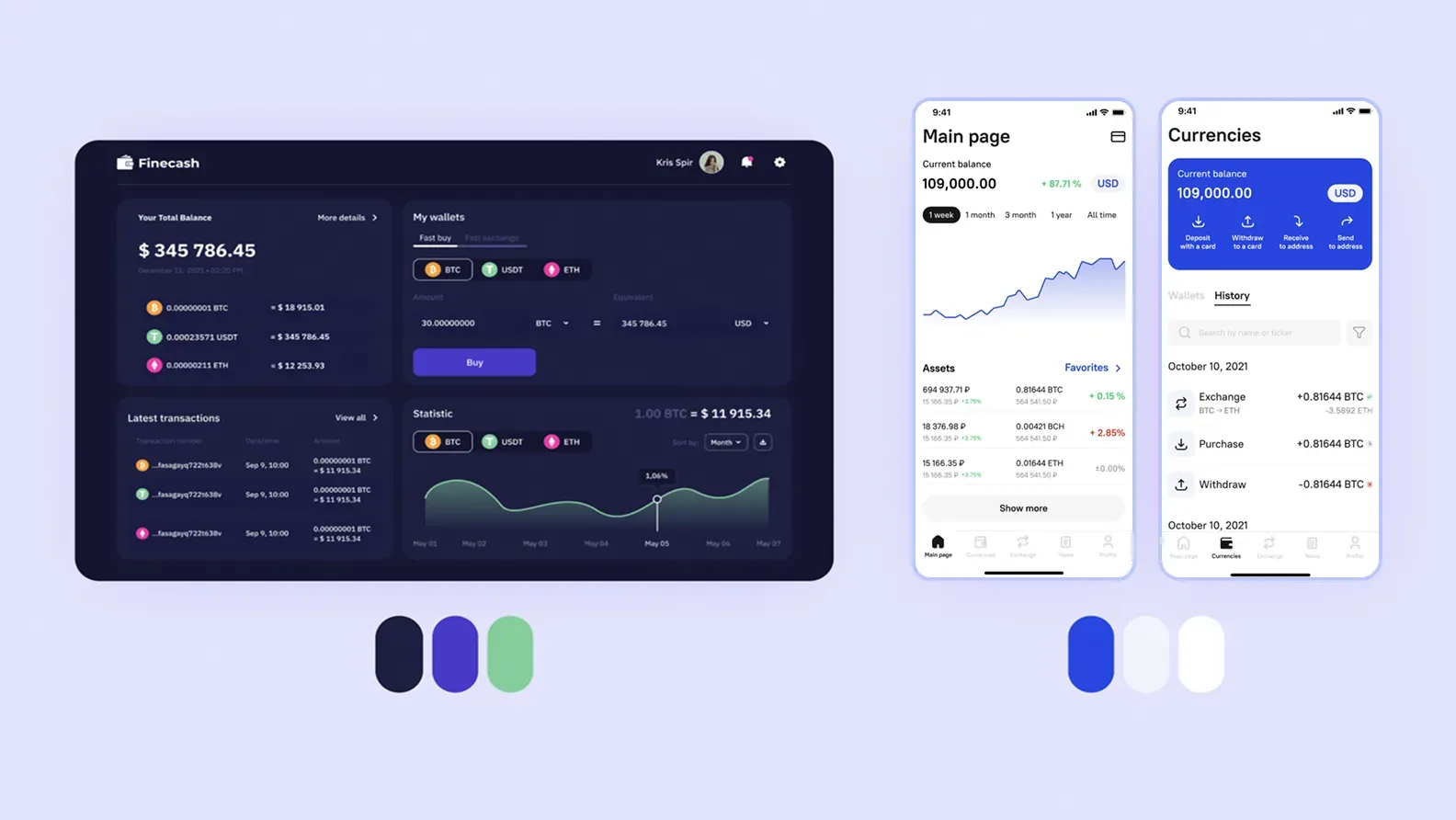
Crypto wallets usually go for steampunk design, but we didn’t want to fuel the stereotypes of the day — that’s why we chose something more like classical fintech applications
Regulatory requirements arrive at the engineering team as a list of features, not as a memo from the legal department. Every rule below turns into something concrete: a field that has to exist, a log that cannot be edited, a retention period that outlives the client relationship. Data security is part of it, but only part.
Firms that treat it as paperwork discover the requirements during an audit, which is the most expensive moment to find them.
| Rule | Jurisdiction | What the software has to do |
| SEC Rule 17a-4 | US | Store records as WORM, or in a system with a complete timestamped audit trail that can reconstruct any altered record. Communications kept at least 3 years, the first 2 readily accessible |
| FINRA Rule 4511 | US | 6-year retention floor where no other period is specified |
| Regulation Best Interest | US | Deliver Form CRS at or before a recommendation, and log the basis for every recommendation given |
| Marketing Rule 206(4)-1 | US | Any generated performance figure shows gross and net with equal prominence, over standard 1, 5, and 10-year periods |
| FCA Consumer Duty | UK | Ongoing outcomes monitoring, vulnerable-client flags in the CRM, versioned client communications |
| FCA COBS | UK | Client category (retail, professional, eligible counterparty) stored as a field that gates which protections apply |
| MAS TRM | Singapore | Notify the regulator within 1 hour of discovering a severe incident, root-cause report within 14 days |
| GDPR Art. 17 | EU | Right to erasure, subject to legal-retention exemptions |
| KYC / CIP, SAR | US | Verify identity at onboarding, retain 5 years past account closure, file a SAR within 30 days of detection |
| OFAC / PEP screening | Global | Screen at onboarding and on an ongoing basis, block on a true match, report a confirmed match within 10 business days |
Rule 17a-4 used to mean WORM storage, meaning media that physically cannot be overwritten. Since 2023 it also permits an electronic recordkeeping system, on one condition. The system has to keep a complete, timestamped audit trail that can reconstruct any record that was modified or deleted.
That condition is an architectural decision, not a storage setting. It means records are append-only by design, edits are new versions rather than overwrites, and deletion is a state rather than an operation. Retrofitting that into a platform that has been happily running UPDATE statements for two years is close to a rewrite.
The FCA's client categorization is the cleanest example. Whether a client is retail, professional, or an eligible counterparty is not a label for the compliance team's spreadsheet. It determines which disclosures the platform must show, which protections apply, and which products the client is even allowed to see. It is a field that gates behavior, and it has to be re-verified whenever a client asks to be re-categorized.
Suitability works the same way. A risk questionnaire that produces a score and nothing else is a form. A risk questionnaire whose result is permanently bound to the recommendation that followed it, and to the portfolio that was actually implemented, is evidence.
GDPR gives a client the right to have their data erased. Anti-money-laundering rules require the firm to keep customer identification records for five years after the relationship ends. A client who closes their account and asks to be forgotten triggers both at once.
Building a hard delete satisfies the first rule and breaks the second. The design that satisfies both is a restriction state. The data comes out of active use and becomes inaccessible to advisors and marketing. It stays locked for the retention period, and is genuinely deleted once that period expires.
That behavior has to exist in the data model from the beginning, because a delete button that really deletes is very hard to un-build.
Singapore's technology risk rules put a clock on it. A severe incident means material customer impact, material data loss, or more than four hours of downtime. It has to be reported to the regulator within one hour of discovery, with a root-cause report following in 14 days.
One hour does not allow for someone noticing in the morning. It requires monitoring that detects the incident, classifies its severity, and wakes a human, automatically. Financial institutions that treat alerting as a later problem discover this rule at the worst moment. The regulator has effectively specified your alerting stack.
We built KEM, a peer-to-peer money transfer app for a market where most people had no access to online banking, and connected it to local bank APIs. It raised $1M in its first round and has since passed 100,000 users.
What that project taught us applies directly here. The bank integration was never the hard part. Meeting the identity and verification requirements around it was.
Those requirements dictated what we could collect, when we could collect it, and what had to be retained afterward. Onboarding was designed backward from the compliance rules, not decorated with them at the end.
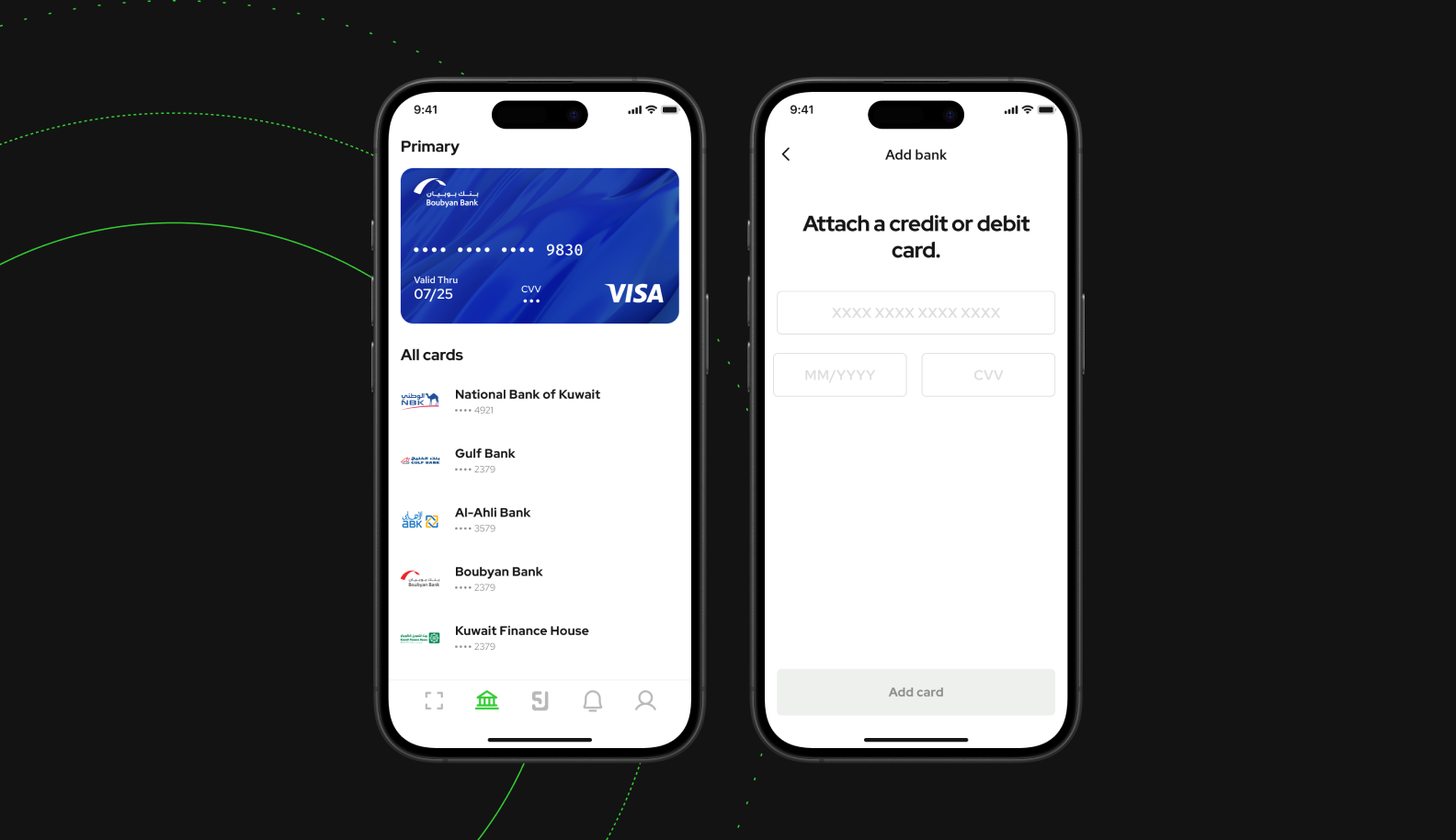
Onboarding was designed backward from what regulators required the app to retain
Published estimates for the costs of wealth management software disagree wildly, and pretending otherwise would be the least useful thing this guide could do. The same "mid-complexity wealth platform" is quoted at $100,000 by one agency and $400,000 by another, because they are quietly describing different products. What follows is the honest range, and then the part that actually controls where you land inside it.
| Scope | Range | Timeline |
| Basic MVP — portfolio view, client data, simple reporting, audit logging | $40,000 – $200,000 | 3 – 6 months |
| Mid-complexity — custodian integrations, CRM, KYC/AML workflows, analytics | $100,000 – $400,000 | 4 – 12 months |
| Enterprise — trading engine, advanced risk analytics, multi-custodial, full compliance | $300,000 – $600,000+ | 9 – 18 months |
The closest comparable build we publish a benchmark for is a trading or investment platform with real-time feeds, a brokerage API, and regulatory reporting. That runs $200,000 to $500,000 over 9 to 12 months. A fintech MVP covering core flows with basic KYC runs $30,000 to $70,000 in 3 to 4 months.
The gap between those two numbers is the entire subject of this section. For a wider view across fintech categories, we break down fintech app development cost separately.
Founders pricing custom wealth management software development expect the answer to be the feature list. It is usually the integration count.
The temptation is to build the platform you will need in year three. The firms that ship build the one that proves the data pipeline works, and add the rest once there are clients whose money justifies it.
Keep in v1:
Leave for later:
Choosing the right wealth management software gets framed as a budget question, and that framing is what leads firms to the wrong answer. There is no best wealth management software, only the one that fits how you actually work. The real question is whether you manage money differently enough from everyone else. If you do, software built for everyone else will quietly force you to manage it their way.
| Off-the-shelf | White-label | Custom | |
| Time to live | Weeks | 2 – 12 weeks | 12 – 18 months to MVP |
| 3-year cost | $150,000 – $400,000 | Vendor licensing, per advisor or per AUM | $2M – $5M+ fully loaded |
| Cost shape | Predictable subscription that rises with AUM | Subscription plus revenue share | Heavy upfront, cheaper at scale |
| Data control | Vendor's data model | Vendor's data model, your brand | Yours |
| Differentiation | None, by design | Cosmetic only | Whatever you choose to build |
| Ceiling | Vendor's roadmap | Vendor's roadmap | Your engineering capacity |
| Compliance burden | Largely the vendor's problem | Shared, and read the contract carefully | Entirely yours |
| Unusual assets | Poorly served, if at all | Poorly served | The main reason to build |
| Best fit | A standard workflow: onboard, model, report, bill | Testing a market before committing engineering budget | The differentiator lives inside the workflow, or licensing has overtaken build cost at your AUM |
| What you give up | Any process that differs from the vendor's | Your ceiling is someone else's roadmap | Time, and the cost of being your own vendor forever |
One caveat on those numbers, since it matters. The $2M to $5M three-year figure for custom comes from a white-label vendor, which has an obvious interest in the "buy" column looking better. Treat it as directionally real and specifically self-serving.
The firms that get this right are not the ones that picked the best framework. They are the ones that answered the boring questions early. Which system owns the truth about a position, which regulations turn into which fields, and which custodian they are willing to depend on first.
Everything expensive in a wealth management software platform traces back to one of those three. A feature can be added in a sprint. A data model that cannot express what the business sells is a rewrite, and no amount of engineering velocity gets that back.
The wealth management industry has no shortage of vendors promising a wealth management software solution that covers all of it. So the useful version of "how do we build this" is narrower than it looks. Not which features to ship, but which single pipeline to prove first, and what has to be true in the schema before the rest can safely arrive.
➡️ Scoping a wealth management build and want a number that reflects your real integrations and compliance surface? We'll put an estimate together in 48 hours.
It is the process of building the platform a firm delivers its wealth management services on. Development services cover consolidating client positions across custodians and reporting performance. They also cover financial planning and the evidence that every recommendation was suitable. The user is the firm, not the individual investor, which separates it from a retail investing app.
A basic MVP runs $40,000 to $200,000. A mid-complexity platform with custodian integrations and KYC/AML workflows runs $100,000 to $400,000. Our published benchmark for a trading or investment platform with real-time feeds and regulatory reporting is $200,000 to $500,000. The number of integrations drives that cost more than the number of features.
An MVP takes 3 to 6 months. A mid-complexity platform with custodian integrations and compliance workflows takes 4 to 12 months. An enterprise build with a trading engine and advanced risk analytics takes 9 to 18. Legacy data migration is the item most likely to add months that were not in the plan.
The non-negotiable set is portfolio tracking across custodians, performance reporting with attribution, and a client portal. Add risk profiling tied to suitability evidence, dashboards, rebalancing, and billing. Financial planning and integrations sit alongside them. Each one carries an engineering consequence that ends up mattering more than the feature itself.
Portfolio management software is one component of the wider category, and it consolidates and reports on holdings. Wealth management software wraps that in the rest of the advisory business: planning, the client relationship, compliance evidence, and billing. A portfolio tool answers what a client holds. A wealth platform also proves the advice behind it was suitable.
Off-the-shelf wins when the firm runs a standard workflow, because a software solution built for that workflow beats a first attempt at building one. Most wealth management companies fall here.
Custom wins when the differentiator lives inside the workflow itself, such as unusual asset types, or when licensing has overtaken build cost at the firm's AUM. White-label is a fast bridge with someone else's roadmap as its ceiling.
By treating each rule as a feature. SEC Rule 17a-4 makes records append-only with a timestamped audit trail. KYC requires identity verification at onboarding and five-year retention past account closure. That collides with GDPR's right to erasure, which is resolved with a restriction state rather than a hard delete. Encryption, MFA, and audit logging are designed in, not retrofitted.
React and Next.js on the web, with React Native for the advisor and client mobile apps. Node.js or Python on the backend, or Java and Kotlin where the institution already runs on the JVM. PostgreSQL for transactional data, a time-series store for market data, Kafka for events, AWS or Azure for infrastructure, and OAuth 2.0 with MFA.