Explore

Need help with your project?

Oops! Something went wrong while submitting the form.
A mobile-product brief can look straightforward until several agency pages promise the same broad service. The useful distinction lies in the mobile work behind the label. What did the provider contribute, does its platform approach fit the product, and who owns release responsibilities?
In this guide, we'll look at mobile app development partners for a Sydney product through the evidence that makes comparison useful. The central table and ten profiles focus on relevant mobile apps and each provider's portfolio contribution. They also cover platform fit, release ownership, and post-launch scope instead of broad service labels.

For a product brief, mobile app development services provide a useful starting point for comparing mobile scope. The table pairs each provider’s documented mobile focus with a buyer discussion point. Detailed company profiles follow the table, so the service labels can be read alongside specific portfolio evidence and engagement questions.
Apple reports that the global App Store ecosystem facilitated over $1.4 trillion in developer billings and sales in 2025. It includes commerce. The figure is not a local development-market estimate, Apple revenue, or revenue earned by any company in this comparison.
| Company | Mobile focus | Buyer discussion point |
| Purrweb | Product design and mobile MVPs | Demo scope and handover ownership |
| EB Pearls | iOS, Android, cross-platform | Design, engineering, and support ownership |
| Appetiser | Design, development, growth | Services included after a prototype |
| App Boxer | Discovery and mobile development | Discovery and early assumption testing |
| Designpluz | Mobile apps and integrations | Integrations, release, and maintenance scope |
| Appsquare | Mobile application development | Feature fit, code, and store-account ownership |
| VT Digital | Native and cross-platform apps | Store submission and maintenance ownership |
| Dr App | Custom mobile and operational workflows | Mobile versus supporting web responsibilities |
| SupportSoft | Mobile UX and backend/APIs | Mobile UX and backend/API contribution |
| Elegant Media | Android and iOS apps | Release management and support scope |
A mobile-focus label establishes the starting point, not the full contribution. The portfolio needs to show what the product did and what the provider delivered. Release and maintenance responsibilities then belong in the proposed scope.
For a product that must interact with equipment, a documented case can clarify the delivered scope. Cross-platform app development companies offer a wider framework comparison. Energo provides a narrower example of documented mobile and station work.
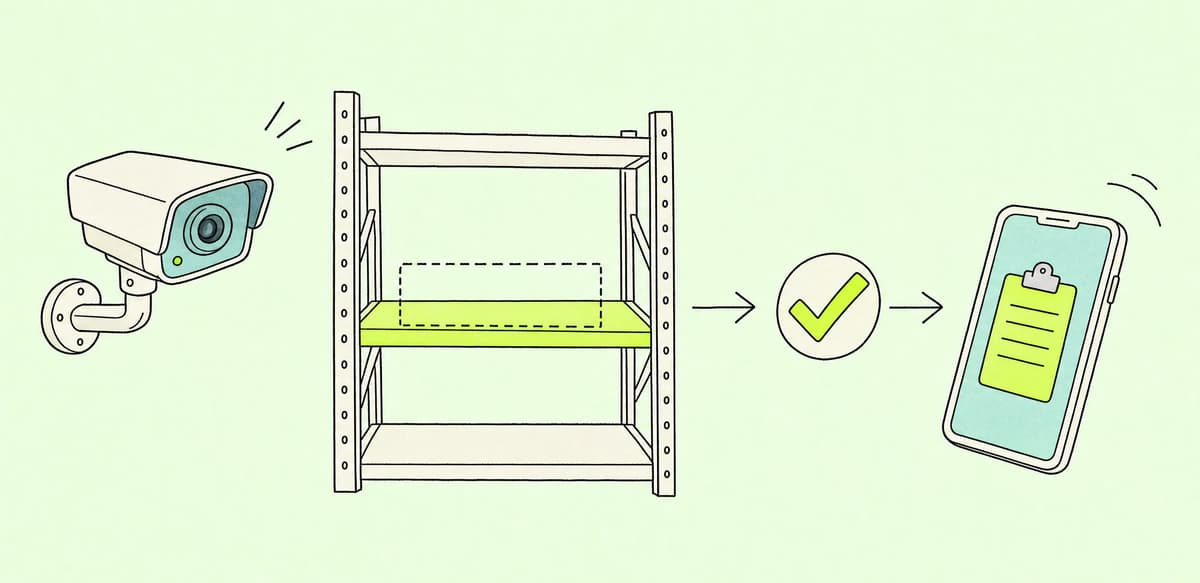
Power-bank rentals require the app to respond to a physical station. For Energo, we designed and developed a cross-platform iOS and Android app in React Native and integrated it with an Internet of Things (IoT) station. The published historical project later expanded from the customer app to advertising and maintenance apps.
For a buyer, the case documents an app-to-station interaction and Purrweb’s work. It does not establish current usage, station counts, uptime, network operations, or a hardware guarantee for every product.
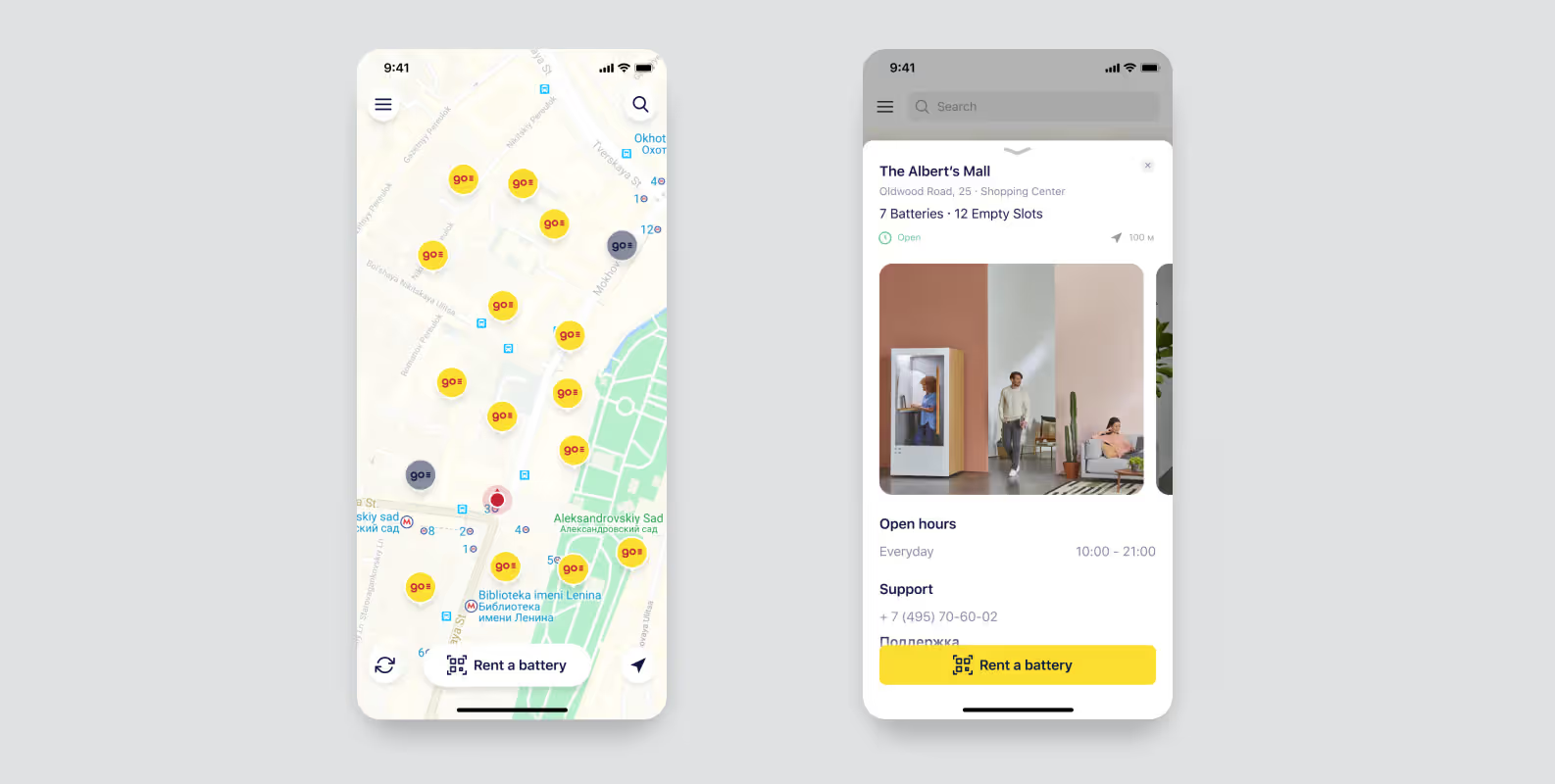
The case shows an app-to-station interaction without making a current-operations claim
At Purrweb, we build custom mobile apps and product design for startup teams and businesses. A mobile app developer on the team selects a native iOS and Android build or a cross-platform approach based on the product requirements. The relevant evidence is the contribution itself, including the boundaries that a polished demonstration does not cross.
KEM needed a peer-to-peer money-transfer concept that could demonstrate its intended flows. We designed and developed an MVP with illustrative data for KEM. The app supported the demonstration before the client took the project forward with real banking API work.
We handed over code and access to the client team. The case does not show a live banking integration, production payment processing, bank approval, or a production backend built by Purrweb. The interface demonstrates MVP flows, not systems the case does not attribute to us.
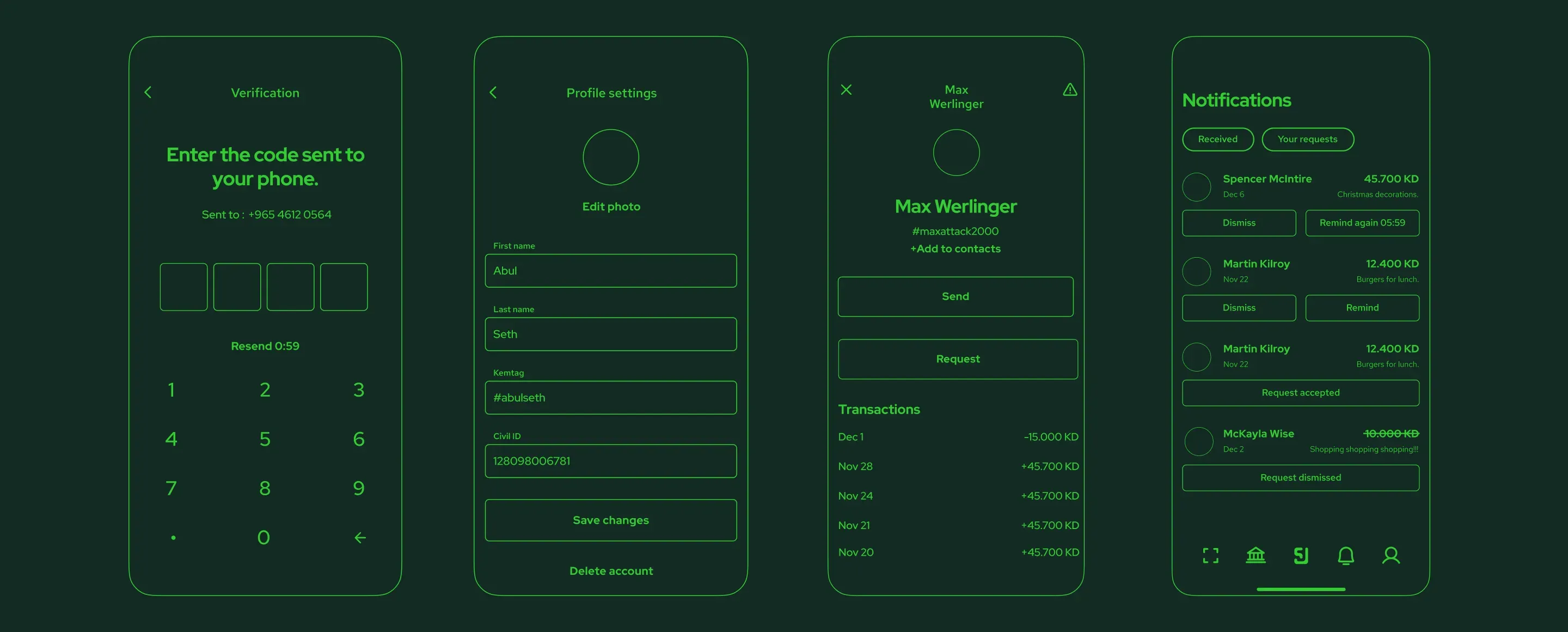
The interface demonstrates a verification flow for a demonstration MVP, not a live banking connection
That handover changes the questions worth settling in a new mobile engagement. The brief benefits from named owners for product decisions, design reviews, engineering, code repositories, store accounts, release tasks, and documentation. An app can have a client owner for one area while the development team owns another. Clear names carry more decision value than a generic service label.
Post-launch support also needs its own scope. Teams comparing responsibilities often use a mobile app development team guide to map roles before discussing a specific brief. The agreement then distinguishes initial delivery from maintenance, fixes, and the path for product questions after release.

EB Pearls lists iOS and Android app development, plus cross-platform apps, in its mobile services. It describes strategy, UX/UI, account management, and engineering as parts of that offering, and its portfolio includes a Vodafone mobile-app story.
That story gives the service description a named project reference. It does not define the responsibilities in a new engagement, where design, engineering, day-to-day delivery, and post-launch support can each have a named owner.
Appetiser describes design and development for web apps and mobile apps, alongside growth. Its portfolio includes Roamni and Youfoodz. Those app projects give the service description product context without becoming a promise for another brief. Growth work is a service category, not an automatic stage of every engagement.
The useful discussion starts after discovery or a prototype. It covers the product, web development, and growth responsibilities included, which are separate, and how the handoff between them works. That distinction keeps an early product conversation focused on business needs and the work being proposed instead of a broad list of services.
App Boxer groups hybrid, native, and iOS app work with UX/UI and discovery-oriented services. Its Optimize Mind Performance case gives that service list a product reference: a mobile app for athletes’ mental-skills training.
Its published material also describes a kick-off phase for understanding the product vision and requirements. A proposal becomes clearer when it identifies who leads discovery and how early assumptions are tested before the development process begins.

Designpluz lists iOS and Android app development, Flutter app development, React Native, and .NET MAUI as mobile options. It also names Anglicare and Site360 as examples of mobile and integration-related work.
Its service description includes testing, store submission, and maintenance. The engagement scope still determines the integrations, release tasks, and continuing responsibilities attached to a particular app.
Appsquare lists mobile application development and describes WHIZZ as a home-cleaning mobile app project with booking and invoicing flows. Those workflows make the portfolio reference more useful than a generic app category, while the supplied evidence does not assign the project a particular framework.
The buyer discussion stays practical: which approach fits the required features, who owns the source code, and who controls the App Store and Google Play accounts. Those decisions belong to the product scope rather than a portfolio label.

VT Digital sets out platform options rather than a single default stack. Its platform options include Swift and SwiftUI for iOS. They also list Kotlin and Jetpack Compose to build Android apps, plus React Native or Flutter for cross-platform work.
Its service description also includes operating-system updates, store-policy changes, fixes, and new features. A proposal can then make store submission, maintenance, and handover ownership explicit.

Dr App describes custom iPhone app development and Android apps alongside mobile and web tools for operational problems. Its service description also covers customer-facing apps and internal staff tools. Web portals and dashboards can form part of the broader operational workflow.
The key question is where the mobile build ends and supporting web responsibilities begin. A product scope can then name the contributors and the support that remains after delivery.

SupportSoft lists native and cross-platform iOS and Android work, product planning, design, updates, and improvements. Its Toumpa portfolio card identifies strategy and user experience, plus an iOS and Android app. It also identifies backend application programming interfaces (APIs), which let systems exchange data.
That contribution map separates the user-facing app from the systems behind it. The proposed scope can name the software development roles, the backend work, and the post-launch responsibilities instead of treating the stack as a default.

Elegant Media lists Android and iOS app development, and its homepage names Pnut as an iOS and Android mobile app project. That reference supports the mobile capability claim without defining the work for another product.
The proposed scope becomes more specific when it separates store releases and product communication from initial delivery, fixes, maintenance, and continuing support.
Businesses can compare a small, product-relevant group of mobile app development companies on the same brief. Start by checking what app development agencies actually contribute to mobile work. Then discuss fit with business needs, a scalable codebase, source code ownership, release responsibilities, and post-launch support.
For a fuller due-diligence framework, choose an app development partner. Teams looking for a dedicated software development team can hire mobile app developers. The next step is a product-specific conversation, not a universal winner.
➡️ Have a mobile brief to compare? Contact Purrweb to discuss the product and development team.
Sydney startups should compare evidence of relevant mobile work, platform expertise, product design, and delivery responsibilities. Give shortlisted teams the same brief and ask who will handle discovery, development, testing, and release. Review a comparable project and clarify post-launch ownership. A larger company or a nearby office does not automatically make a team the right fit for your product.
A Sydney app development partner does not need a local office if remote collaboration fits your requirements. Confirm working-hour overlap, a named project contact, demo routines, and access to project documentation. Ask where development actually happens and how urgent issues are handled. Distinguish a genuine local office from a city service page, and verify any on-site requirements before signing.
Many app developers serving Sydney offer both iOS and Android development, using native tools or cross-platform frameworks. Ask which approach suits your device features, integrations, accessibility needs, and maintenance plans. A shared codebase does not remove platform-specific testing. Request examples of released apps and clarify who owns the store accounts, source code, and submission process for each platform.
Sydney businesses should request a relevant mobile case study that explains the original problem, the agency's contribution, and the delivered result. Check whether the team designed the app, built it, or supplied only part of the work. Ask for a live product or a suitable demonstration where possible. Treat download counts and growth claims as dated project evidence, not guaranteed outcomes.
Post-launch support varies between mobile app developers serving Sydney, so confirm it in the agreement rather than assuming it is included. Ask about bug fixes, operating-system updates, store-policy changes, monitoring, and future feature work. Clarify response expectations, access to the original team, and the handover process. Separate the initial delivery scope from any ongoing maintenance arrangement before choosing a partner.