Explore

Need help with your project?

Oops! Something went wrong while submitting the form.
Choosing among app developers in Perth is harder than comparing a map pin with a portfolio. Perth businesses may find suppliers with Perth-facing pages, yet those pages don't show where the delivery team works or how mobile app development will be handled. The central question is whether the proposed arrangement fits the project.
In this guide, we'll look at app developers in Perth through two lenses: published mobile evidence and the delivery arrangement behind it. The comparison separates a confirmed local presence from service-area marketing or remote collaboration. It gives Perth businesses a clearer basis for comparing suppliers without treating every Perth-facing page as the same signal.
This comparison covers Purrweb, Adapptor, Apps People, Hatchet, The App Workshop, Techugo, Sparix Global, PixelForce, Itomic, and Concetto Labs. Their detailed profiles appear below. The table compares each company�s published location and delivery information, suitable project, mobile evidence, and the point to confirm before signing.
| Company | Location / delivery | Suitable project | Mobile evidence | Confirm before signing |
| Purrweb | Remote alternative, Perth office unverified | Mobile product design and engineering | React Native, iOS/Android, My Therapy Assistant | Perth collaboration, hours, contract, assigned team |
| Adapptor | Perth-based, according to company | Enterprise or government mobile app | Mobile engineering, Transperth, SharkSmart WA | Assigned team, support, integration ownership |
| Apps People | Perth, Sydney, Melbourne, according to company | Mobile product design and implementation | Swift, Kotlin, Flutter, Everythere | Delivery city, platform decision, current releases |
| Hatchet | Perth service-area page, office unverified | Mobile app with administration and API | Native iOS/Android, admin systems, maintenance | Release, API/admin ownership, support scope |
| The App Workshop | Perth-based consultancy, according to company | Organisation workflow app | iOS/Android portfolio, University of W.A. | Current releases, team, availability, support |
| Techugo | Perth service-area page, office unverified | Native or cross-platform mobile product | iOS, Android, React Native, JoshCam | Team location, Perth overlap, release/support |
| Sparix Global | Perth service page, USA/India offices listed | Native or cross-platform mobile app | Swift, Kotlin, Flutter, React Native, named case unverified | Published releases, role, location, support |
| PixelForce | Perth service area, Adelaide headquarters stated | iOS/Android or Flutter product | iOS, Android, Flutter, Mumsly | Assigned team, discovery, hours, support |
| Itomic | Founded in Perth, current office unverified | Mobile work subject to custom-delivery confirmation | Itomic Digital, Squash Players App maintenance | Current custom-delivery model, team, stack |
| Concetto Labs | Non-local alternative, Adelaide listed, Perth/remote model unverified | Android/iOS or Flutter app | Android, iOS/iPhone, Flutter, Transportation Mobile App | Team location, Perth collaboration, current releases |
The first detailed profile covers Purrweb.
Purrweb develops mobile products for iOS and Android
Purrweb develops custom mobile products for iOS and Android, alongside UX design and React Native development. Its mobile-development services cover product discovery, interface design, development, testing, and release support.
The team can work on consumer-facing products and services with different user roles. A project discussion can cover the required platforms, integrations, scope, and responsibilities before development begins.
We designed and developed My Therapy Assistant as an online therapy service across mobile and web. The product uses distinct interfaces for clients and therapists, so both roles get workflows suited to their tasks.
HealthCode integration was part of the development work. The supported release-stage result was a working service that connected people looking for therapy with participating therapists. The case's audience figures are not used here as a measure of current performance.
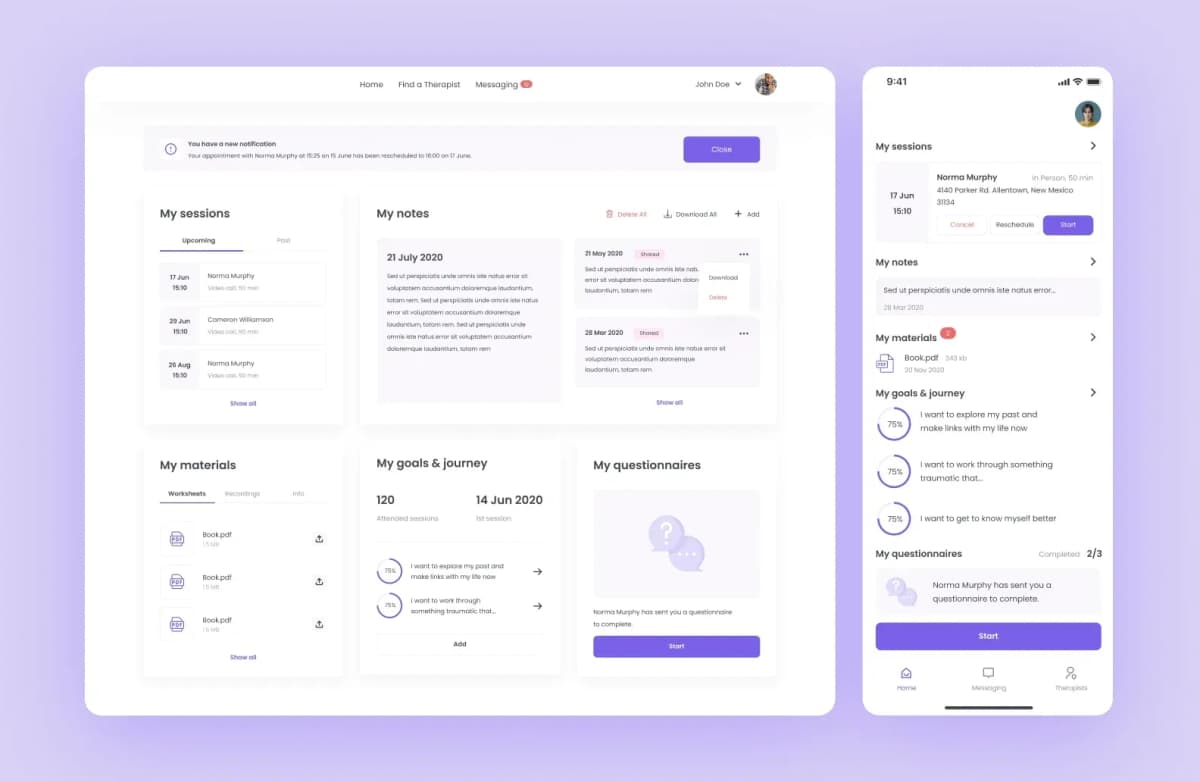
The My Therapy Assistant profile interface presents specialist details and availability
Adapptor's published portfolio points to enterprise and government mobile work
Adapptor's published services cover iPhone app development, React Native development, cloud services, testing, and maintenance. This scope suits products that need mobile development alongside an established process for testing and ongoing support.
Before development begins, define the platforms for the first release and assign responsibility for integrations, testing, and maintenance. Read our guide to native and cross-platform options.
Apps People works across native and Flutter mobile development
Apps People covers app design alongside iOS and Android development. Its published technology material names Swift, Kotlin, and Flutter, giving a buyer a starting point for discussing how the product will be built.
The next step is to turn that technology list into a delivery plan. Define whether the first release calls for native development or Flutter, who makes platform decisions, and how product and technical responsibilities are shared. Read our guide to evaluating an app development partner.
Hatchet covers mobile applications and supporting product systems
Hatchet's published scope includes native iOS and Android apps, web administration systems, API integrations, hosting, and maintenance. This combination is relevant when the mobile application depends on supporting tools rather than operating as an isolated product.
A project brief should clarify where the app ends and the supporting systems begin. Assign ownership for APIs, administration tools, quality assurance, release work, and maintenance. Read about roles in a mobile app development team.

The App Workshop develops custom applications for organisations
The App Workshop presents custom app development for organisations, including iOS and Android products. Its published material focuses on apps that support a defined service or operational need rather than a generic mobile template.
For this type of project, ask what will be included in the first release and how the product will be supported after launch. Current team availability, release planning, and operating-system updates belong in the scope discussion.
Techugo offers iOS, Android, React Native, and cross-platform development
Techugo lists iOS, Android, React Native, and cross-platform development among its mobile services. These options give a product team several implementation routes, but each route changes the work required for interface quality, testing, and long-term support.
A useful proposal makes the selected route explicit. It should explain which platforms are included, what will be shared across them, and who is responsible for release and support work once development is complete.

Sparix Global works with native and cross-platform mobile technologies
Sparix Global lists native iOS and Android development alongside Flutter and React Native. The published stack covers both platform-specific and cross-platform approaches, which gives a project team options before the delivery model is chosen.
The important comparison point is not the number of frameworks named. Ask which technology fits the first release, what experience the assigned team has with it, and how the company will maintain the product after launch.
PixelForce provides iOS, Android, and Flutter app development
PixelForce lists app design and development for iOS, Android, and Flutter. This offers a choice between native platforms and a cross-platform route, which should be decided from the product requirements rather than selected as a default.
Discovery is the point to establish that choice. The discussion should identify the first user flows, integrations, platform priorities, and the responsibilities that continue after the initial release.
Itomic supports digital products with mobile functionality
Itomic's published mobile material includes ongoing work on a mobile product with player connections and result-tracking functions. The available information focuses on product maintenance rather than a broad catalogue of frameworks or delivery models.
For a new application, clarify the current technical scope before comparing proposals. The discussion should cover the platforms, team roles, release plan, and the maintenance responsibilities expected after launch.
Concetto Labs builds mobile applications for Android, iOS, and Flutter
Concetto Labs lists Android, iOS, and Flutter mobile app development in its published services. That range can support either platform-specific work or a cross-platform build, depending on the product requirements and the intended first release.
The proposal should make the chosen approach practical. Confirm the target platforms, expected integrations, testing process, and the responsibilities that will continue once the application is live.
For an iOS or Android app, a useful comparison keeps each proposal tied to the same release, explicit ownership, and a defined handover.
Compare proposals only after every contractor has priced the same first release. A lower figure means little when one team prices the mobile app and another does not. The other proposal may leave backend endpoints, third-party integrations, QA, store submission, or access setup for later.
Put agreed user journeys and platform targets in both proposals, then mark boundaries and exclusions in writing. The document should state who owns the app, backend, integration work, test coverage, release tasks, and the accounts needed to operate them.
It should also define acceptance, handover, and support terms. Name the proof of completion, source code, credentials, technical documentation, defect coverage, and maintenance period. Assumptions and dependencies should be as plain as included work. That matters most when a mobile app depends on a physical system.
We designed Energo, a power-bank-rental mobile app, with React Native and UX/design work for iOS and Android. The product also had to integrate with an IoT power-bank station workflow.
That connection is the relevant contracting lesson. The mobile app and station workflow had to meet at an explicit integration boundary, rather than leaving the dependency outside the proposed scope. The delivered mobile application connected with the power-bank station workflow.
UX and design work shaped how that station-dependent flow appeared on iOS and Android. React Native was part of the mobile delivery, while the station integration remained a defined piece of product work. For proposal comparison, that boundary deserves a named owner, an interface description, and tests that cover both sides of the connection. It makes the question concrete without suggesting that a different product requires the same integration or technical approach.
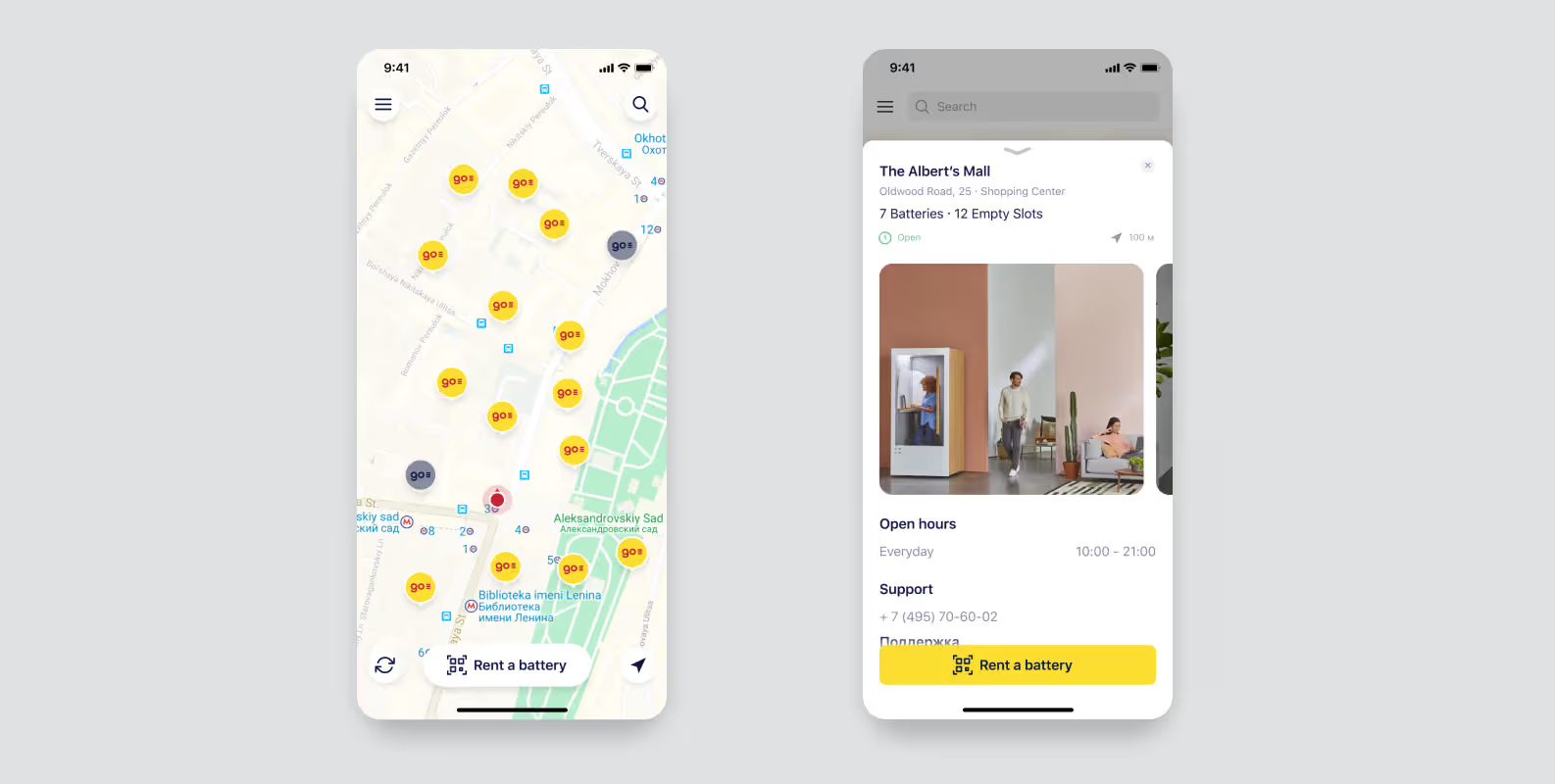
The Energo station and mobile interface support the power-bank rental flow
A useful proposal opens with an assumptions register, not a vague list of features. It records agreed journeys, platforms, and required client inputs. It also names exclusions that change effort, such as account migration, content entry, hardware procurement, or a new back-office tool. When two proposals use different assumptions, their totals describe different products.
Next, ask for a responsibility matrix with one accountable owner for every boundary. It should name the party responsible for the mobile app, backend or application programming interface, and integration configuration.
It should also assign test environments, test execution, store materials, release submission, and production access. A contractor can own several rows, and the client can own others. No item should sit under shared responsibility without a named decision-maker. That is where approval delays and unplanned work usually appear.
Dependencies need their own plan because a date alone does not show what could block delivery. For every external system, the proposal should state the required access, technical contact, data or documentation, readiness evidence, fallback path, and decision point.
The acceptance plan should turn the first release into observable checks. Connect each agreed user journey to test conditions, expected behavior, defect severity, and the person who signs off. Separate functional acceptance from app-store review, since store approval is an external process rather than a contractor-controlled test.
Finally, compare operations terms as closely as build terms. Handover should name the source repository, account ownership, build configuration, design files, interface documentation, release runbook, and credential transfer.
Maintenance terms should distinguish defect correction from new feature work. They should identify the support channel and response window, then explain who maintains third-party services after release.
These artifacts make a proposal comparable without forcing every contractor into the same technical approach. They show where the first release ends, who carries each dependency, and what the product team receives when delivery closes.
The strongest choice is not the company with the longest technology list. It is the one that can turn the product brief into a clear plan for platforms, user flows, integrations, testing, release work, and support.
Use the table and profiles as a starting point for that conversation. Compare what each company publishes, then make the proposed scope and responsibilities explicit before signing. Read our guide to outsourcing app development.
?? Tell us what you are building. Contact Purrweb to discuss scope, responsibilities, and next steps.
Start with teams that show relevant mobile products, explain who will deliver the work, and provide a clear support model. For a Perth project, check whether the team is actually local or works remotely. Use a shortlist to compare evidence against your requirements rather than treating a position in a list as a quality guarantee.
Compare the delivery arrangements, not just the address. Ask who attends workshops, which hours overlap with Perth, how decisions are documented, and who owns the source code and store accounts. A local team can support face-to-face collaboration. A remote team may still fit if communication, responsibilities, and contractual arrangements are agreed before work begins.
The scope of the product matters more than a city label. Platforms, interface complexity, integrations, data migration, quality assurance, and ongoing support all affect the estimate. Give each Perth supplier the same requirements and ask for assumptions, exclusions, and change-control terms. Separate initial delivery from maintenance, hosting, and third-party service charges when comparing proposals.
Choose the approach around your product requirements rather than the supplier's preferred framework. Native development can suit demanding platform-specific features, while cross-platform development can share parts of the implementation across iOS and Android.
Ask a Perth app developer to explain performance, device integrations, accessibility, testing, and maintenance using examples relevant to your planned application.
Look for a released product with requirements similar to yours, not just attractive screens. Ask what the team actually designed or built, whether the app is maintained, and who can confirm the work. For a Perth engagement, also establish which people from the case study would be involved and whether the proposed delivery model is comparable.
Agree on support responsibilities before launch. Perth businesses should ask about bug handling, operating-system updates, monitoring, security fixes, store submissions, and ownership of technical documentation. Confirm response arrangements and how additional work is estimated. Make sure another team could take over the product if needed, with access to repositories, credentials, and a documented handover process.