Explore

Need help with your project?

Oops! Something went wrong while submitting the form.
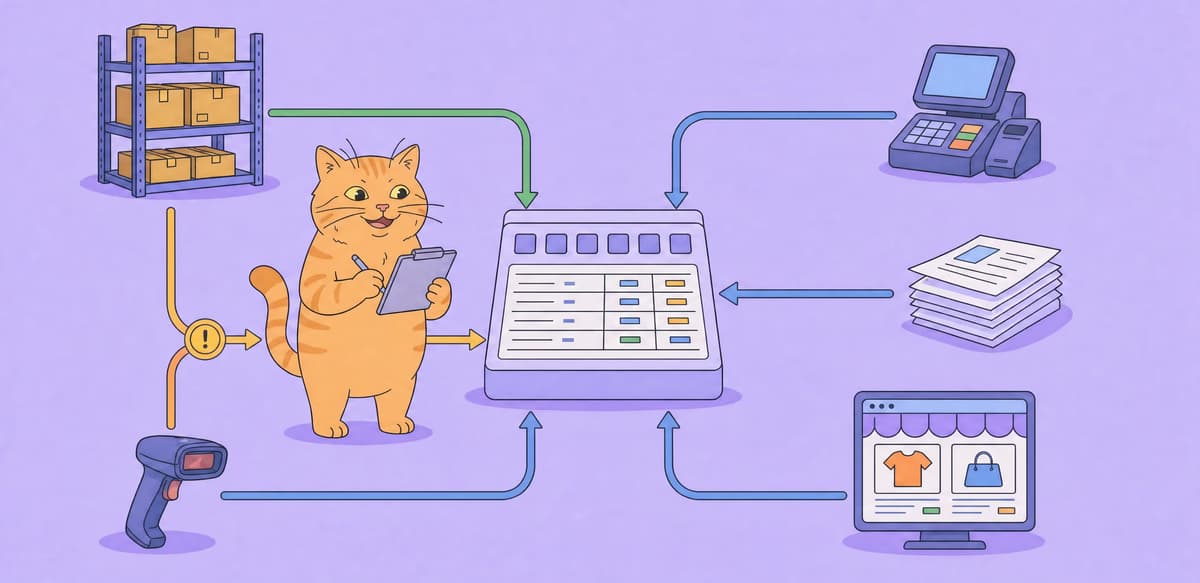
Computer vision in retail analyzes images and video, using object detection to locate products. A shelf alert helps staff find a gap that needs replenishment.
In this article, we explain how to assign shelf checks to store employees and measure whether their response improves availability during a pilot before rollout.
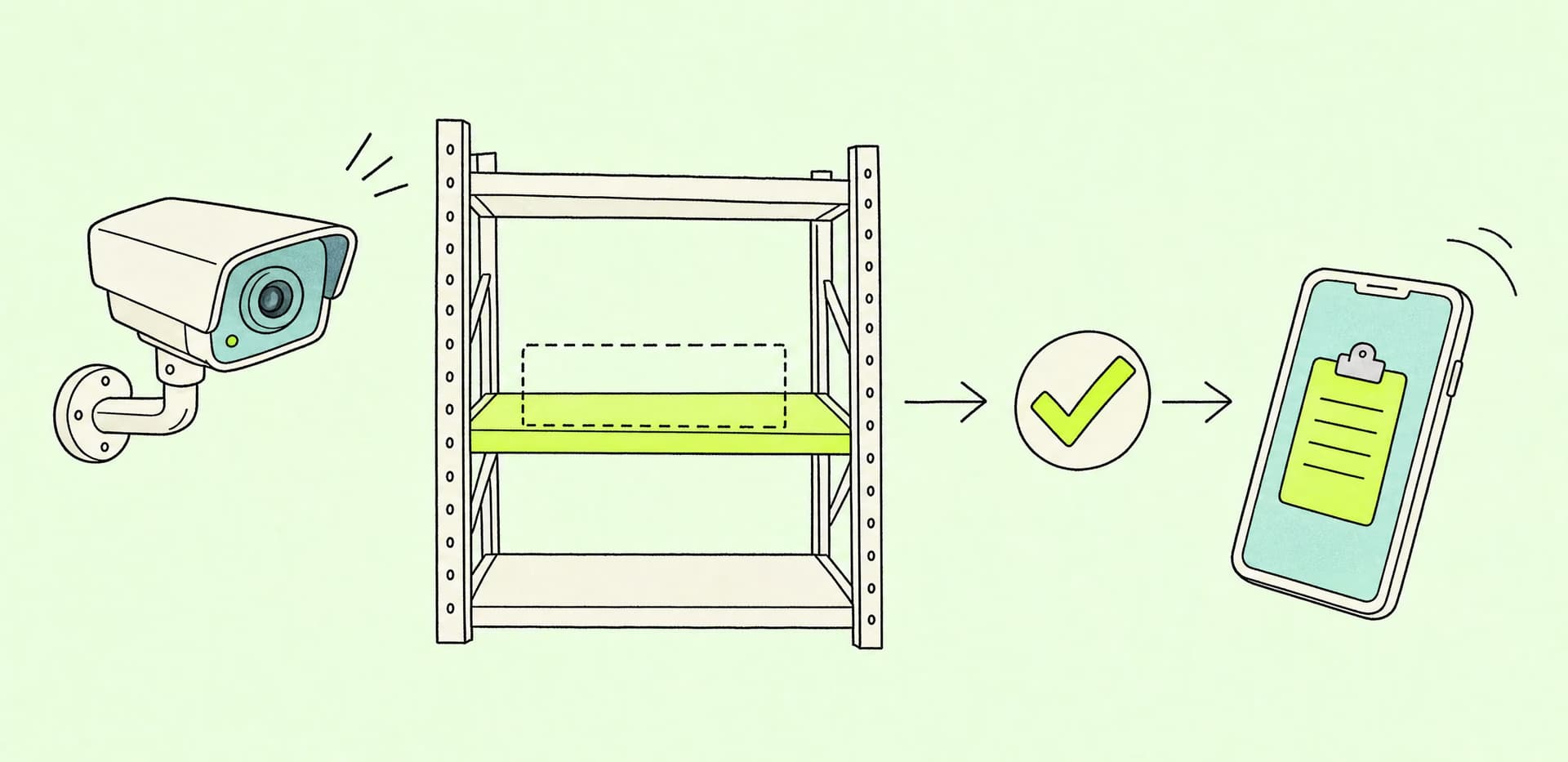
With computer vision in retail, images become observations that software rules route to staff. Object detection locates products or people within an image. A computer vision system uses tracking to follow them across frames, without establishing authoritative stock balances.
NVIDIA DeepStream separates detection from tracking, analytics, and output metadata: the event details sent to other software. For a shelf alert, those details describe what's visible, not what's in the backroom. Weight sensors add a different input by measuring weight rather than interpreting images.
An empty-shelf event can trigger a replenishment task without changing inventory records. Rules determine which employee receives the task. Uncertain observations go to human review under rules set for that application.
Our computer vision development services cover building the software that connects these observations to operational tasks.
High-value computer vision applications in retail connect visible problems to actions store teams can complete. In retail software development, a shelf alert belongs with an assigned replenishment task, not a separate camera dashboard. These six scenarios differ in what they observe and what still needs verification.
Shelf images reveal gaps and misplaced products, prompting store teams to check and replenish. A gap isn't a stock balance.
Connecting observations to inventory management software supports reconciliation with recorded quantities. Planogram compliance compares visible placement with the approved shelf layout. Pilot checks can measure on-shelf availability and alert precision, the share of alerts staff confirm.
Checkout verification compares the product recognized in video with the point-of-sale (POS) scan. A mismatch isn't proof of theft.
For loss prevention, a trained employee reviews the video against the transaction before deciding whether to intervene.
Proposed measures include confirmed exceptions per 1,000 transactions and false alerts. Staff need a usable task record to follow each exception through to resolution.
⭐ Our experience
We redesigned Journy, an app that merchandisers use to document store visits with geotagged photos and forms. The redesign addressed how staff navigate visit history and complete reports.
Calendar navigation helps merchandisers find earlier visits, while status indicators distinguish work to do, in progress, and completed. We also replaced an infinite survey screen with a multistep form, dividing reporting into separate steps.
The result gives staff a way to check what happened on an earlier visit and see which work still needs attention. Visit records support follow-up rather than remaining a collection of photos and answers.
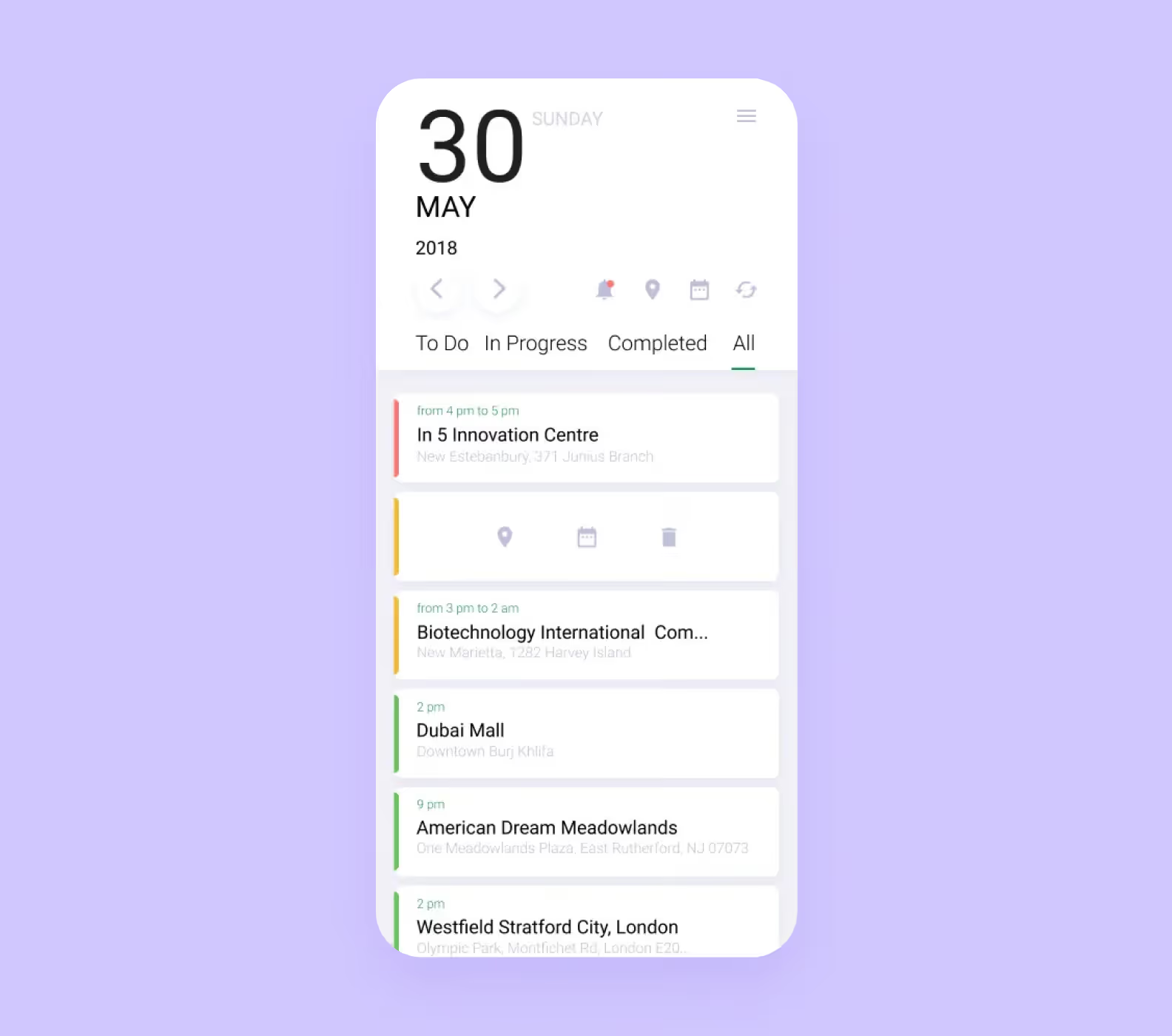
Status tabs separate visits to do, in progress, and completed
Aggregate foot traffic counts and customer movement patterns help managers test in-store staffing changes or store layouts. Retail heat maps show occupied areas, not shoppers' identities or intentions. Layout changes remain hypotheses until a comparison shows whether movement through the store actually improves.
Queue length isn't wait time. A pilot needs timed observations to check waiting-time estimates, plus manual counts to assess traffic-count accuracy before managers use the findings to change staffing.
At receiving, captured package images give employees evidence to compare with delivery records during inventory checks. Proposed measures include verified discrepancies per 100 receipts.
Produce quality needs dedicated inspection with suitable lighting, where quality teams assess appearance and visible defects against grading criteria. Ordinary surveillance cameras don't establish internal freshness or food safety. A quality pilot can measure agreement with inspectors' grading decisions.
Visual search compares a shopper's image with catalog photos and returns similar products, not guaranteed exact matches or available stock. Catalog records still supply availability. The e-commerce team can test search completion.
Camera-based virtual try-on is one subtype, using voluntary phone-camera input and augmented reality (AR) to overlay products on the view. It previews appearance, not verified fit. Controlled tests can compare customer engagement without promising better sizing.
Amazon describes Just Walk Out combining cameras and sensors to update a virtual cart, then charge customers on exit. The Internet of Things (IoT) connects devices that exchange signals, as explored in IoT in retail. Those signals don't replace payment authentication or POS integration.
Payment-system compatibility needs separate verification. Operations staff handle exceptions. A pilot can check receipt accuracy and service availability, rather than assuming cameras alone deliver checkout.
The table pairs each observation with its responsible team and proposed pilot KPIs, not achieved results.
| Use case | Visual input or event | Action and accountable team | Pilot KPI |
| Shelf availability | Shelf gaps or misplaced products | Store team checks and replenishes | On-shelf availability, alert precision |
| Checkout verification | Video event compared with POS scan | Trained employee reviews an exception | Confirmed exceptions per 1,000 transactions, false alerts |
| Queues and traffic | Aggregate counts, movement | Manager adjusts staffing or layout | Wait time, count accuracy |
| Receiving and quality | Package mismatch, visible damage | Receiving or quality team verifies | Verified discrepancies per 100 receipts |
| Visual search and virtual try-on | Catalog photos, voluntary images | Commerce team tests candidates or AR previews | Search completion, test engagement |
| Cashierless shopping | Camera events combined with sensor signals | Payments charge, staff resolve exceptions | Receipt accuracy, service availability |
A camera event becomes a task when application rules connect the detection to store records and assign someone to check it. POS integration links observations to point-of-sale records, giving the reviewer transaction context rather than leaving them with an isolated image.
Inference identifies a possible shelf gap from images captured by computer vision cameras. A rule assigns human review, and the reviewer confirms or rejects the prediction and saves their decision.
In a proposed replenishment workflow, accepting the prediction creates follow-up work, not proof of completion. A shelf recheck or recorded staff confirmation establishes whether replenishment resolved the gap.
Unlike generative AI in retail, which creates content, visual inference interprets images.
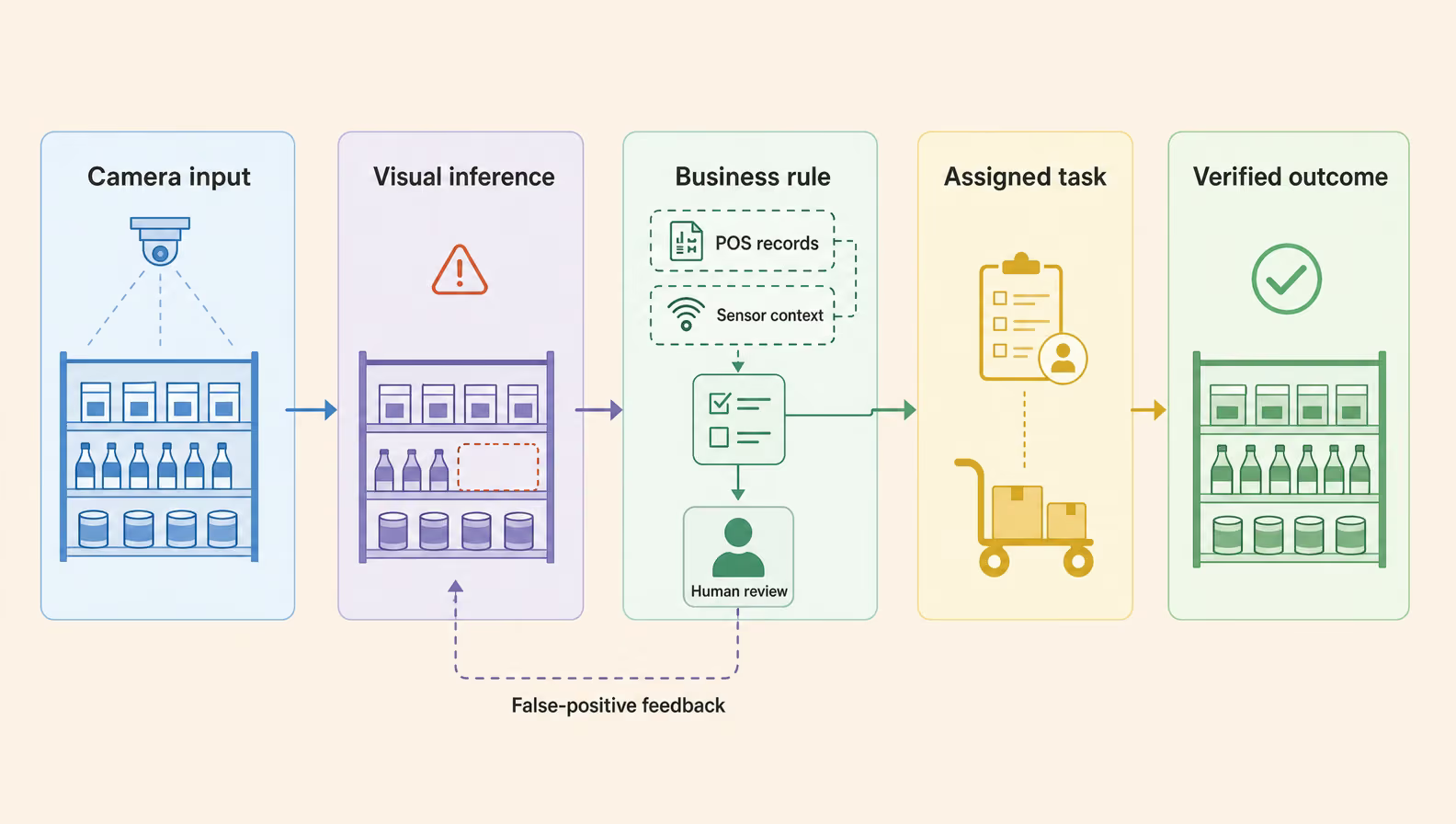
Accepting a prediction starts follow-up work. A shelf recheck or staff confirmation verifies completion
Edge computing keeps processing local, limiting network delay and video uploads. Cloud computing uses remote resources, adding transmission delay and requiring bandwidth and privacy controls.
NVIDIA DeepStream supports sending event details instead of video through a message broker. This delivery component relays the details to other software, such as the store's task application.
An application policy pairs event identifiers with timestamps to reject duplicates and alerts older than the agreed response window. During feed outages, an assigned operator checks the device state reported by the backend and coordinates manual checks. A missing notification alone doesn't establish whether a device has changed state.
⭐ Our experience
Vendify connects a mobile shopping app to smart fridges. We designed the app and built its React Native frontend, while the client supplied the backend.
The purchase flow lets customers check their selected goods and return items before payment. Closing the fridge door triggers the automatic charge, and stock accounting remains in the backend.
Hardware notifications can be lost, so additional requests check the fridge state. The application can then verify what happened through the backend instead of treating a missing message as confirmation.
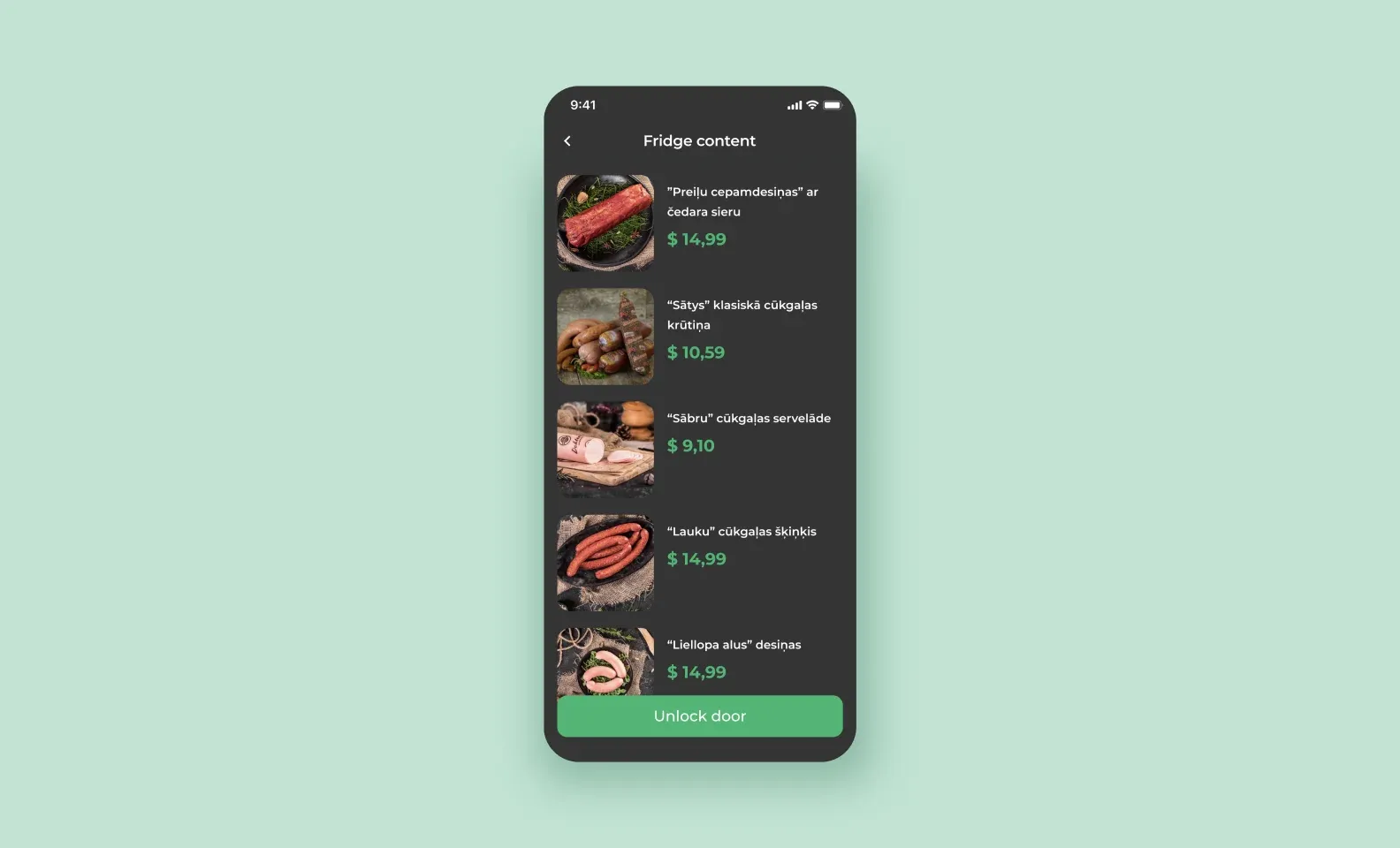
The product list is visible before the customer unlocks the fridge door
Pilot KPIs distinguish alert precision, staff response, and outcomes for store operations. Those measures answer different questions, so a pilot compares each with a relevant baseline or control. The benefits of computer vision depend on tolerable false alerts and an employee responsible for replenishment, not a universal accuracy score.
For a shelf pilot, reviewers assess detected alerts to measure precision, the proportion confirmed correct. Separate shelf audits include locations with no alert to find missed gaps. The team also records the share requiring review and response time.
On-shelf availability compares whether products are present on store shelves for shoppers, rather than whether staff accepted a prediction. A useful comparison matches stores and observation periods, with comparable assortment and staffing. A control helps distinguish the pilot's effect from other changes, though it doesn't settle attribution by itself.
Retail analytics connects that availability outcome to customer experience alongside detector metrics. The National Institute of Standards and Technology (NIST) recommends testing under deployment-like conditions. It also recommends comparing production with pre-deployment performance.
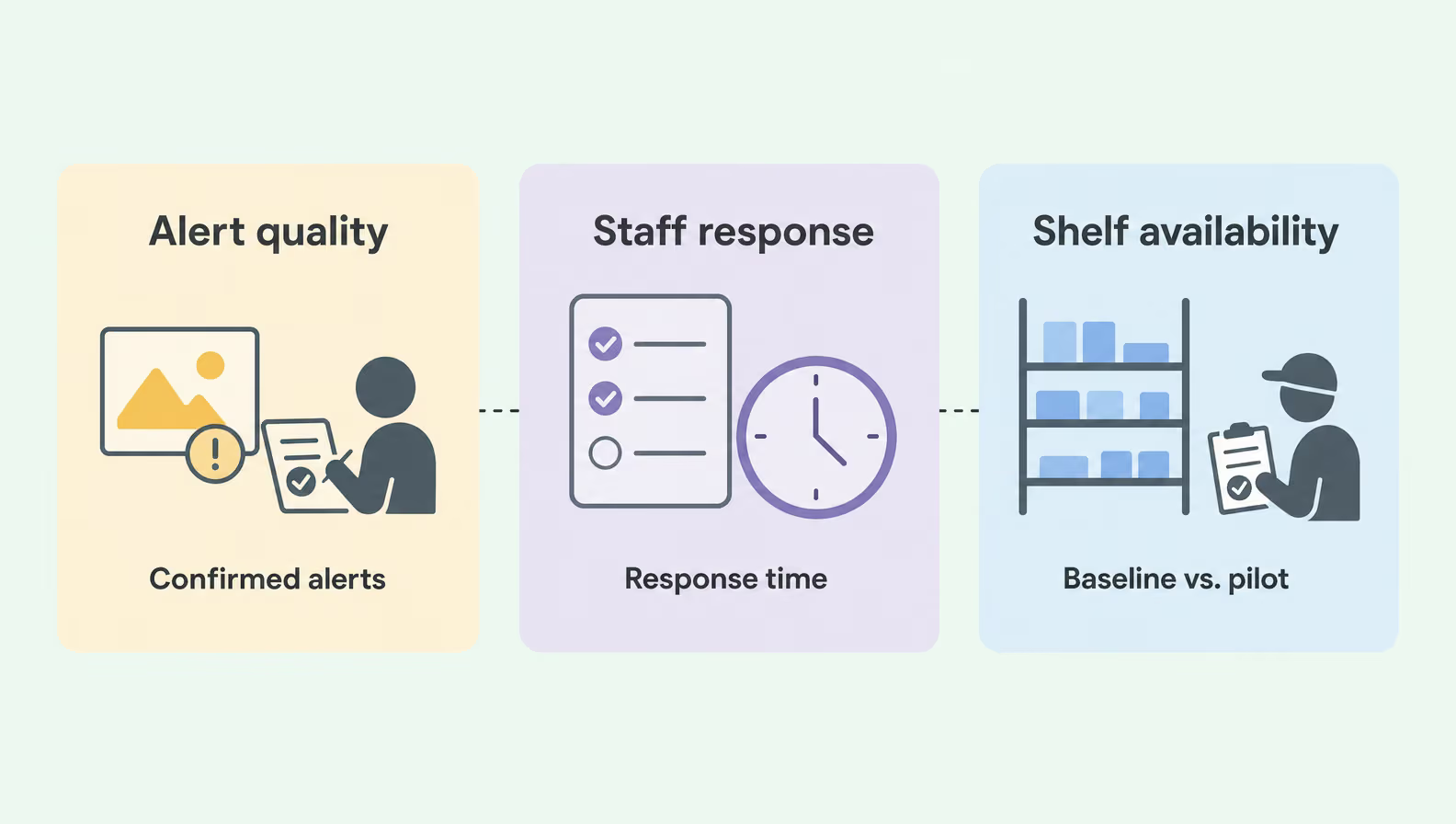
Confirmed alerts and faster responses do not by themselves establish improved shelf availability
Privacy starts with a defined purpose and consideration of less intrusive alternatives. Data minimization limits data collection and storage to the images or event details needed for that purpose. A designated owner sets footage access and retention, including who can review recordings and when they are deleted.
Aggregated counts don't guarantee anonymity when underlying footage identifies people, so local legal review assesses the proposed use. The boundaries exclude cameras in private zones, default facial identification, and inferences about sensitive attributes or shoppers' intentions.
Lighting changes and seasonal conditions can make store footage differ from the AI model's test data. New packaging can create another mismatch, contributing to model drift if changed conditions undermine the original assumptions. Testing camera angles and occlusion, where people or products block the view, helps establish which events staff can reliably verify.
For loss prevention, a model flag starts human review, not an accusation. Cameras have a limited view. A named reviewer checks the available evidence before staff act, while monitoring false alerts shows whether changing conditions are increasing the review workload.
For retail, readiness means repeatable results with accountable staff, not one accuracy score.
A fallback keeps work moving when staff can confirm events and enter missing information manually.
⭐ Our experience
We built a React Native parcel-management app for a delivery company's dispatchers. Their workflow covers receiving parcels and handing them out, with a confirmation recorded for each operation.
Scanning a barcode confirms receipt and updates the parcel's status. For hand-out, the interface accepts either a barcode scan or a manually entered order number.
The manual option keeps hand-out available when scanning cannot be completed. Dispatchers can still record the operation against an order instead of leaving the hand-over unconfirmed.
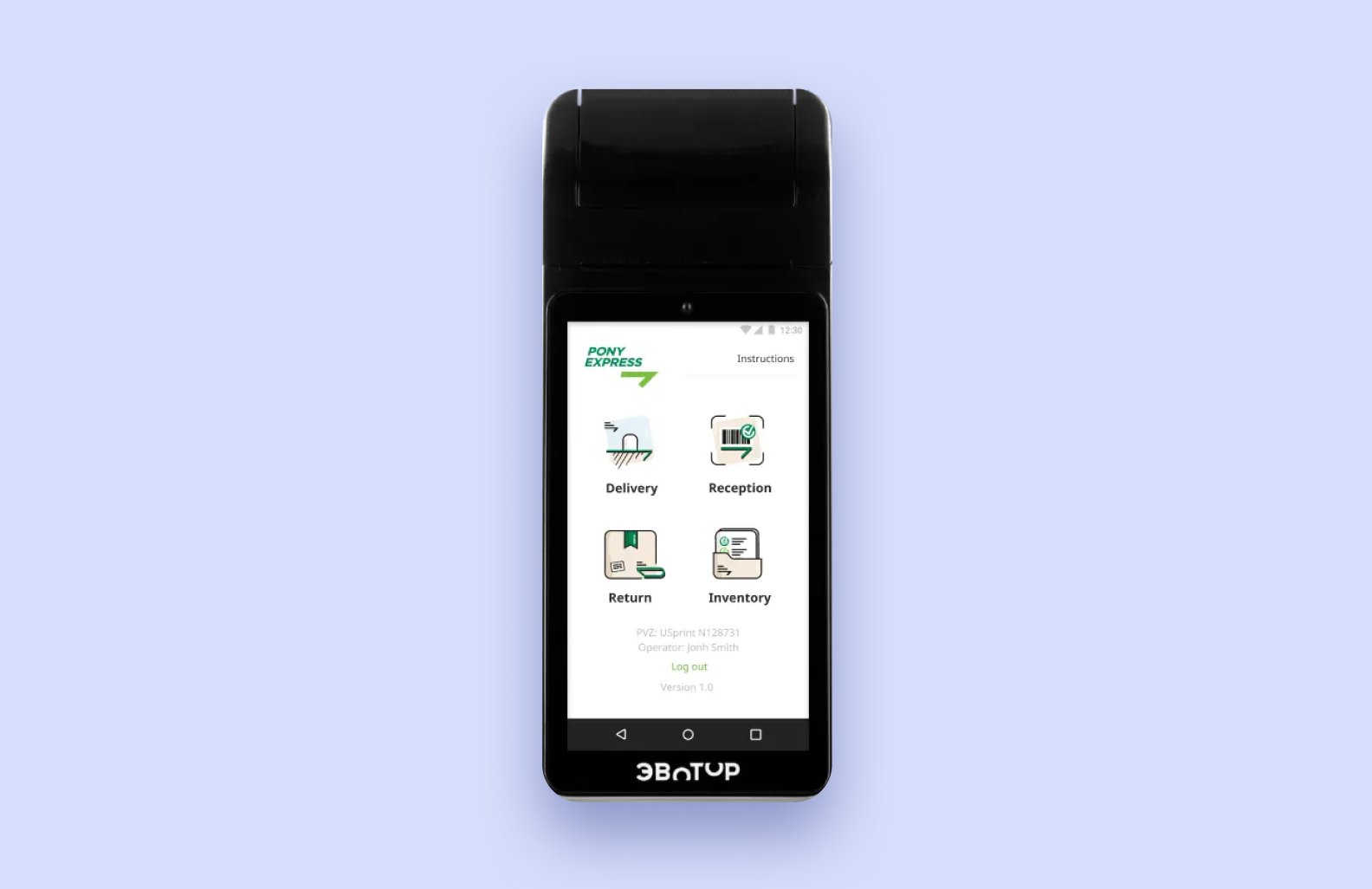
Separate receiving and hand-out actions keep parcel operations distinct
Computer vision in retail earns its place when a detected event leads to a verified store action. The practical test is whether staff can review the alert, resolve the task, and improve the chosen operational measure against a comparable baseline. Recognizing a shelf gap or checkout mismatch is only the start of that process.
The decision to expand depends on camera coverage, access permissions, and integration with existing retail systems. The scope of computer vision development services follows from these constraints, while a limited pilot tests whether the workflow holds under actual store conditions. Its results inform a rollout decision, not a guarantee of the same outcome in every store.
➡️ Planning a computer vision application for your stores? Let's discuss the scenario, the systems it would connect to, and how staff would act on reviewed alerts. Fill out the form for a free project estimate within 48 hours.
Retail computer vision analyzes images or video to detect products, shelf gaps, checkout events, queues, and movement patterns. A useful deployment connects each observation to an action, such as replenishment or staff review. It does not replace inventory records, establish a shopper's intent, or guarantee that every event is recognized correctly.
Sometimes. Existing cameras can support a pilot if their placement, resolution, frame rate, lighting, and access permissions match the task. Security footage suitable for reviewing an incident may be unsuitable for recognizing a small product. Test representative scenes before deciding which cameras, network connections, or processing hardware need to change.
Computer vision interprets visual data, while generative AI produces outputs such as text or images. IoT connects devices and collects signals, including camera feeds or shelf-sensor readings. They can work together, but the retailer still needs business rules, reliable system integrations, and people responsible for acting on uncertain or incorrect results.
Start with a business metric and the technical measures needed to trust it. Shelf monitoring may track on-shelf availability, alert precision, and replenishment response time. Checkout verification may track confirmed exceptions and false alerts. Compare against a baseline, include human review, and check whether results hold across store conditions and product changes.