Explore

Need help with your project?

Oops! Something went wrong while submitting the form.
Building a crypto exchange costs anywhere from $30,000 for a white-label setup to $300,000+ for a custom build from scratch. The biggest factor is which type of exchange you build. Demand isn't the question. Centralized exchanges hit a record $86.2 trillion in perpetual volume in 2025, up 47.4% year over year. Where your budget actually goes is the harder problem.

Development costs for crypto exchanges swing widely. This guide breaks crypto exchange development cost down by the levers that move it. Exchange type, feature module with real dev-hours, team rates, licensing by jurisdiction, and the ongoing costs founders usually forget.
The type of crypto exchange you choose sets the budget before a single feature is scoped. A white-label platform and a custom central exchange sit at opposite ends of the range, and the other types of crypto exchanges fall between them.
| Exchange type | Typical cost | Time to launch | Best for |
| White-label / clone script | $30k–$100k | 1–3 months | Fast launch, standard feature set, limited budget |
| P2P exchange | $50k–$120k | 3–5 months | Escrow-based marketplaces, lower liquidity needs |
| DEX (on existing protocol) | $50k–$150k | 4–6 months | Non-custodial, smart-contract trading |
| Custom CEX (from scratch) | $150k–$300k+ | 9–14 months | Full control, own matching engine, scale |
| Hybrid (CEX + DEX) | $200k+ | 10–16 months | Custody choice + on-chain settlement |
Figures are Purrweb internal estimates based on projects we've delivered, not an external benchmark.
A white-label or clone script is the cheapest route to market. You license a ready platform, rebrand it, and launch in weeks. That fits a limited budget and a standard feature set. A P2P exchange (peer-to-peer) costs a little more, because the escrow and dispute logic are custom-built. In return, it needs less liquidity than a full order-book exchange.
A decentralized exchange (DEX) settles trades through smart contracts instead of a company-held account. Built on an existing protocol, it shifts spend away from backend infrastructure toward contract work. For the full development process rather than the price tag, see our guide on how to build a crypto exchange. For the DeFi side, how to build a DeFi app goes deeper.
A centralized exchange (CEX) is one where the operator holds custody and runs the order book. The gap between a CEX and a DEX comes down to what you build from scratch. A custom CEX carries its own matching engine, custodial wallet, and admin tooling. That is why it opens at $150k.
A DEX inherits that infrastructure from the chain, so its money goes into contracts and the trading interface instead. A custom CEX tops the range because nothing is inherited. You own the matching engine, the custody stack, and the roadmap.
The exchange type sets the ceiling. The module list sets the actual number for a custom crypto exchange platform, and this is where cryptocurrency exchange development cost is really decided.
A custom minimum viable product (MVP) is the sum of discrete pieces. Think matching engine, wallet infrastructure, trading interfaces, and the compliance plumbing that holds them together. Here's where the hours and dollars go, at Eastern European rates of $90–100 per hour.
| Module | Effort | Cost range |
| Matching engine | 400–600 h | $40k–$60k |
| Wallet infrastructure (hot/cold custody) | 200–300 h | $20k–$30k |
| Web trading UI | 300–400 h | $30k–$40k |
| Mobile app (React Native, iOS + Android) | 300–400 h | $30k–$40k |
| KYC/AML integration | 100–150 h | $10k–$15k |
| Admin panel + reporting | 100–150 h | $10k–$15k |
| Security audit + pentest | 80–120 h | $8k–$12k |
| Infrastructure setup | 80–100 h | $8k–$10k |
| Custom MVP total | ~1,560–2,220 h | ~$156k–$222k (+ licensing) |
Figures are Purrweb internal estimates. Actual hours vary with feature depth and integrations.
Two lines move the total more than founders expect. The matching engine pairs buy and sell orders in real time. At 400–600 hours it is the single largest item, because latency and correctness under load leave no room for shortcuts.
The mobile app is where you claw budget back. Building it once in React Native for both iOS and Android saves 30–40% on the mobile line, since 80–95% of the code is shared. It also ships roughly 50% faster. A custom build at this scope needs a dedicated crypto exchange development team, not a solo contractor.
The wallet line deserves its own scrutiny. Hot and cold custody keeps most funds in offline cold storage while a hot wallet handles live withdrawals. It is a security-critical build. That is why crypto wallet development sits as a separate $20k–$30k budget item, not a feature bolted onto the backend.
The same goes for know-your-customer (KYC) and anti-money-laundering (AML) checks. This is the identity and transaction screening regulators require, and it runs $10k–$15k to integrate.
We built Abel, a non-custodial crypto and NFT wallet, as a React Native MVP in 1,268 hours — and shipped it with zero backend infrastructure. Instead of standing up custom servers, the app talks directly to Ethereum through free third-party APIs like Etherscan, CryptoCompare, and OpenSea.
The catch: those free tiers throttle hard. Etherscan caps requests at five per second, which breaks the moment real users pile on. We orchestrated several APIs behind each function and counted requests per device rather than per user, keeping the build inside free limits and cutting an entire cost center out of the budget.
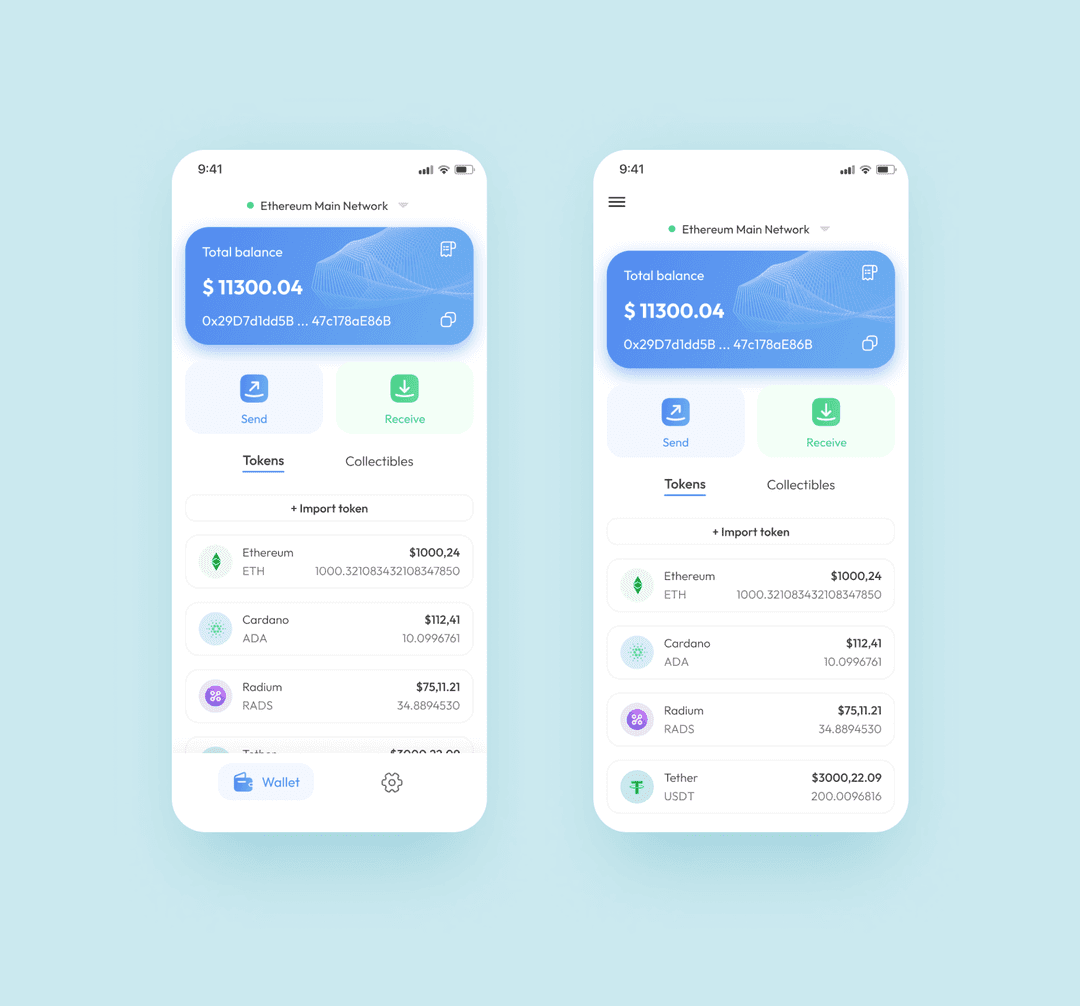
A serverless architecture kept Abel's backend line at zero, one of the biggest single savings on the build
Two crypto exchanges of the same type can still land $50k apart. The overall crypto exchange development cost comes down to the type of cryptocurrency exchange you build and the complexity and cost behind each lever below. Most of these are decisions you control.
This is the same cost logic behind any financial product. If you're weighing a broader budget, our fintech app development cost guide covers where these lines sit across fintech in general.
The type table shows the ranges. This is the decision behind them — which path fits your budget, and what each one quietly costs you later.
The number on the invoice isn't the whole price. White-label and clone deals usually carry a revenue share or per-transaction fee, so a platform that looked cheap upfront takes a cut of every trade for years. You are also tied to the vendor's roadmap, and in most licensing deals you never own the code, which means migrating off later is a rebuild. That is the trade custom buyers pay six figures to avoid.
When a Singapore studio came to us for Kaiju, a Web3 gaming wallet, the budget risk wasn't the feature list. It was scope creep. We handled the product design and scoped the MVP around one job: getting players who had never touched crypto through onboarding without friction.
Everything that didn't serve that job — the deeper marketplace, the token mechanics — waited for a later round. That discipline is why the client launched, secured investment, and pulled in first users within about two months, instead of burning runway on a full build first.
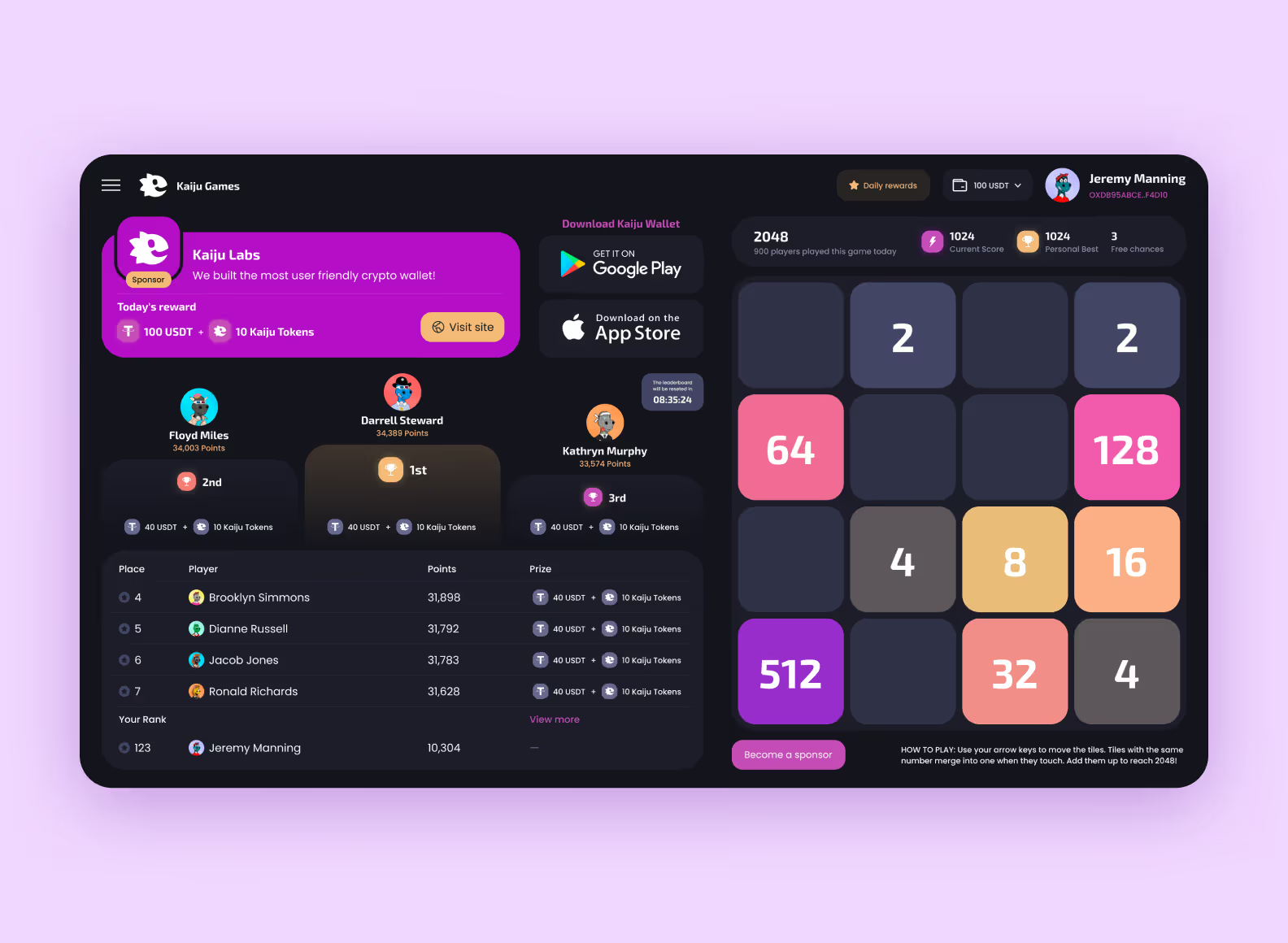
Scoping the MVP around a single job got Kaiju to investment in roughly two months
Regulatory budget is the line founders underestimate most. Depending on where you operate, licensing and compliance can eat 15–30% of your first-year spend before you write a line of trading code. This is the cost side only. For how to actually obtain each license, that process lives in our step-by-step build guide.
| Jurisdiction | License / registration | Ballpark cost |
| US (federal) | FinCEN MSB registration | Free reg + legal (~$5k–$20k) |
| US (per state) | State MTL / NY BitLicense | $10k–$200k+ per state |
| EU | MiCA / CASP authorisation | Fees + min capital €50k–€150k |
| UK | FCA cryptoasset registration | ~$5k–$30k + compliance setup |
| Dubai | VARA licence | ~$27k to apply + annual supervision |
| Lithuania | MiCA authorisation | €125k capital, low-cost EU entry point |
The US is the most expensive place to go legal. Federal registration as a money services business (MSB) with FinCEN is free, but it doesn't let you operate.
For that you need a money transmitter license (MTL) in each state you serve. Those run from a few thousand dollars to $200k+ once surety bonds and legal are counted. New York's BitLicense is the extreme case. The application fee is only $5,000, yet a realistic all-in runs past $100k.
Europe is more predictable. Under MiCA (the EU's Markets in Crypto-Assets regime), a crypto-asset service provider (CASP) needs minimum capital of €50k, €125k, or €150k. The tier depends on the services it offers, and authorisation fees come on top.
Lithuania has become the common low-cost entry point. It carries the same €125k capital floor, but faster processing and cheaper local setup than most of the bloc. The UK's FCA (Financial Conduct Authority) registration is lighter on paper but heavy on the compliance build behind it.
The Gulf is its own calculation. Dubai's VARA (Virtual Assets Regulatory Authority) licence starts around $27k to apply. Annual supervision fees climb with each activity you're licensed for.
Wherever you land, budget for KYC and AML vendors on top. Sumsub-style identity checks start near $1.35 per verification. Transaction-monitoring tools like Chainalysis or Elliptic run on annual subscriptions that reach six figures at volume.
Who writes the code, and where they sit, moves the budget as much as what you build. The same MVP can nearly double in price on developer rates alone.
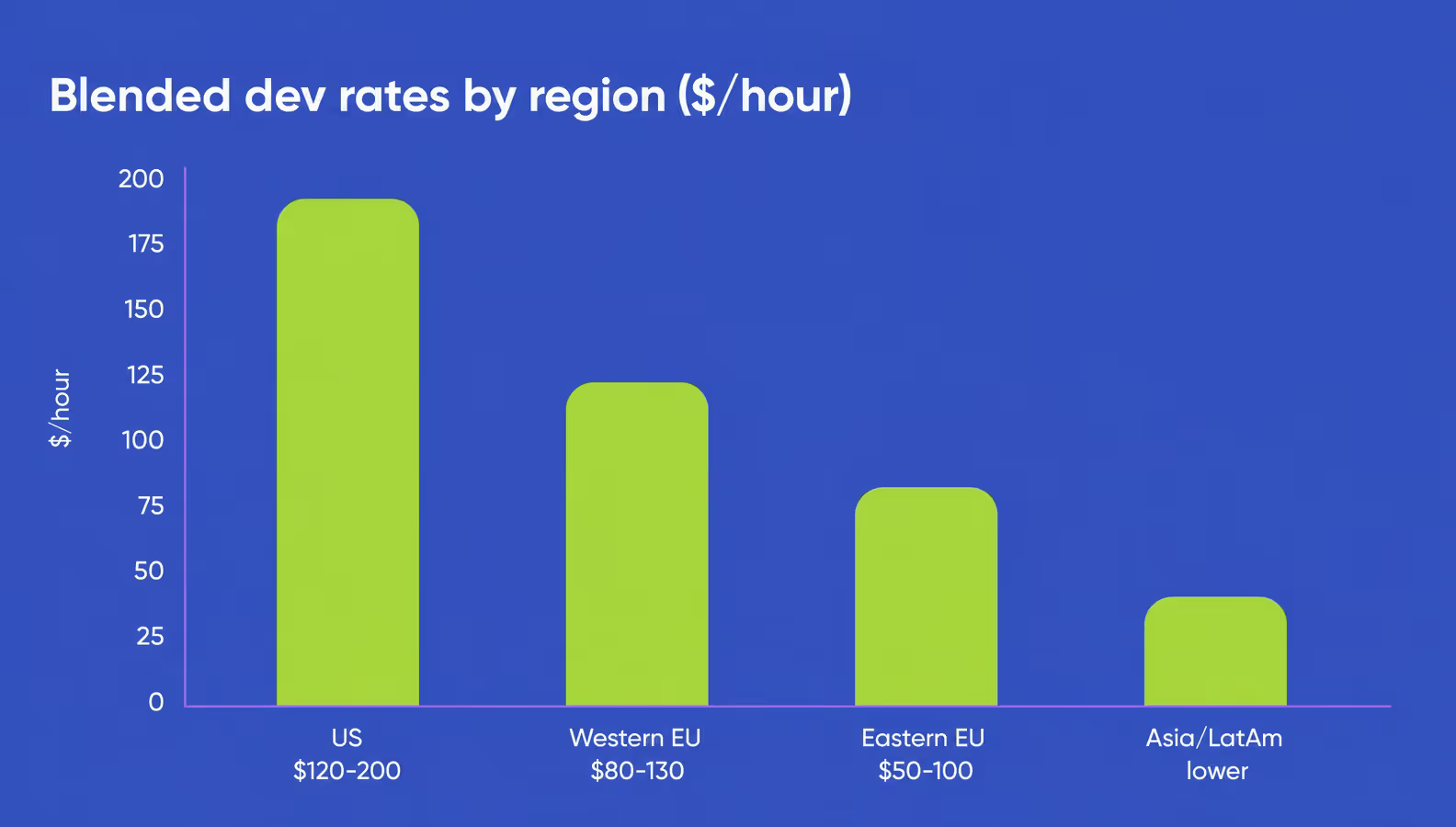
The same MVP scope can cost twice as much on US rates as on Eastern European ones
That spread is why most new crypto exchanges are built by an outsourced crypto exchange development company or a nearshore team. A custom MVP of roughly 1,800 hours lands near $270k at US rates. The same scope runs closer to $135k–$180k at Eastern European rates.
A typical exchange MVP team stays lean. Expect a project manager, two React Native developers, two backend developers, a blockchain engineer, DevOps, QA, and a designer.
The React Native line is where the team structure itself saves money. Two RN developers ship both the iOS and Android apps from one codebase. The native route needs four specialists for the same result, two for Swift and two for Kotlin. On a mobile build of 600–800 hours, that halved headcount takes 30–40% off the line.
Broex is a cross-platform crypto wallet we built for first-time crypto users, iOS and Android from a single React Native codebase. The budget trap was hiding in a small feature: the currency list. Off-the-shelf React Native UI libraries couldn't handle the extended list of coins and broke on it.
Rather than fight the library, we built a custom currency selector and reused backdrop elements across screens to keep sign-up short. It cost more than dropping in a stock component, but it was the difference between a clean onboarding and a broken one, and it kept the cross-platform saving intact instead of forking into native workarounds.
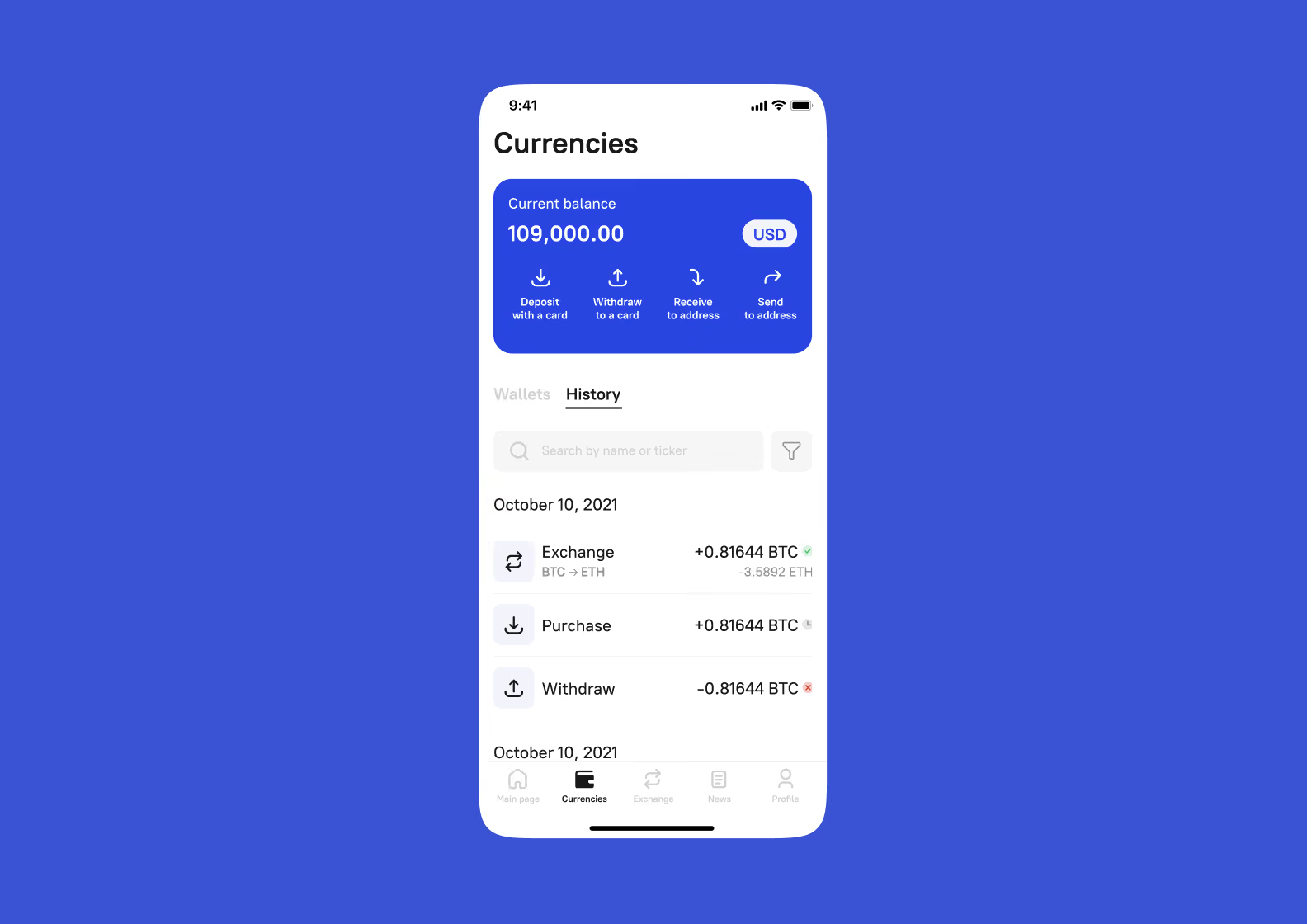
A custom currency selector was the one place a stock component wouldn't do, while everything else stayed shared across both platforms
The initial development cost buys you a working exchange. It doesn't cover what it takes to keep one running. Crypto exchanges require ongoing spend that a total cost of ownership (TCO) view captures and a launch budget often misses.
Custody is the ongoing line that hides the most risk. Keeping keys secure is not a one-time build. If you are weighing that side of the budget, our guide on how to build a crypto wallet breaks down what custodial security actually takes to maintain.
Put the paths side by side and the decision gets simpler. Here is what each build path costs at MVP scope versus full scale.
| Build path | MVP scope | Full-scale |
| White-label / clone | $30k–$50k | $50k–$120k |
| DEX (existing protocol) | $50k–$90k | $120k–$180k |
| Custom CEX (from scratch) | $150k–$220k | $250k–$500k+ |
Figures are Purrweb internal estimates. Your final number depends on scope, integrations, and jurisdiction.
The bottom tier buys speed. For $30k–$50k you get a white-label exchange live in weeks, with a standard feature set you don't control. The top tier buys ownership. For $150k and up you get your own matching engine, your own custody stack, and code that is yours to evolve. Most exchange platforms land in between these tiers, where the smart moves cut cost without cutting the things users feel.
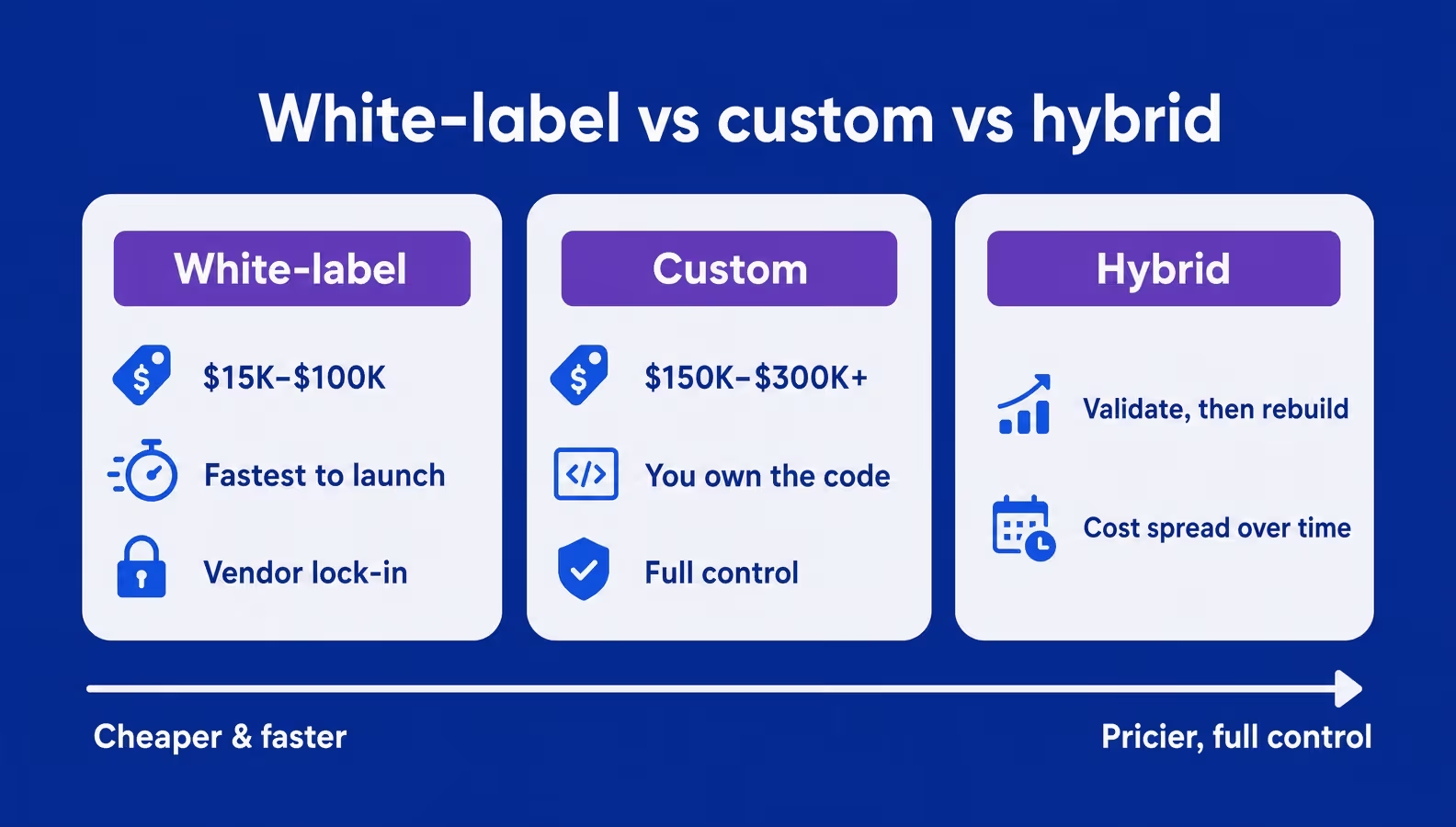
Build paths compared by cost and ownership, from white-label to custom
The cheapest way to launch a crypto exchange is to start narrow. A spot-trading MVP proves the market before you pay for margin and futures engines. Build mobile once in React Native instead of twice in native. Launch on a white-label or clone, then migrate to custom when volume justifies it. Keep the team in Eastern Europe and hire the compliance lawyer wherever you license. Each of these is a lever, not a compromise.
There is a floor, though. Skimp on the security audit or the liquidity, and the savings evaporate the first time users can't trade or can't trust you.
For a CFO, the number that justifies the build is the break-even. At a typical taker fee of 0.1–0.25%, a $200k exchange starts paying for itself once cumulative trading volume clears the low hundreds of millions.
And the demand for crypto exchanges is there to hit it. The cryptocurrency exchange market keeps expanding. The broader crypto market is projected to generate US$85.3 billion in revenue in 2026, with user penetration near 10%. On the trading side, derivatives volume on centralized exchanges set fresh records through 2025.
Building a crypto exchange is less one price than a series of budget decisions. The exchange type sets your ceiling, the module list fills in the real number, and licensing plus ongoing costs decide whether the launch holds.
You can develop a crypto exchange cheaply and fast with white-label, or build a cryptocurrency exchange from scratch for six figures and full ownership. The right answer is whichever one your market and runway actually call for.
➡️ Thinking through the budget for your own exchange? Tell us what you're building, and we'll turn it into a real estimate — dev-hours, team, and timeline — within 48 hours.
Building a crypto exchange costs from $30,000 for a white-label setup to $300,000+ for a custom build from scratch. The single biggest factor is the exchange type. A clone or white-label sits at the low end, and a custom centralized exchange with its own matching engine sits at the high end. Your build path, feature set, and licensing jurisdiction move the final number from there.
The cost to develop a crypto exchange is more than the development quote alone. On top of a $30k–$300k build, budget for licensing, from a free FinCEN registration to $100k+ for a NY BitLicense. Add seed liquidity of $100k–$500k or a market maker at $5k–$50k a month, plus cloud infrastructure. A realistic launch budget usually runs well beyond the development line.
A crypto exchange takes anywhere from 1–3 months for a white-label setup to 9–14 months for a custom central exchange. P2P and DEX builds fall in between at roughly 3–6 months. The development timeline tracks scope directly. The more modules you build from scratch, such as the matching engine, custody, and admin tooling, the longer and more expensive the project.
Yes, upfront. A white label crypto exchange costs $30k–$100k against $150k+ for custom, and it launches in weeks instead of months. The catch is ongoing. White-label deals usually carry a revenue share or per-transaction fee, lock you to the vendor's roadmap, and rarely include code ownership. Custom costs more at the start but avoids those recurring costs.
A custom centralized exchange (CEX) starts at $150k because it carries its own matching engine, custodial wallet, and admin tooling. A decentralized exchange (DEX) built on an existing protocol runs $50k–$150k. It inherits infrastructure from the chain, so it spends mainly on smart contracts and the trading interface. That makes a DEX the cheaper path in most cases.
Crypto exchange licensing costs vary widely by jurisdiction. In the US, a FinCEN registration is free, but per-state money transmitter licenses run $10k–$200k+, and a NY BitLicense passes $100k all-in. In the EU, MiCA authorisation needs €50k–€150k in minimum capital. Dubai's VARA licence starts around $27k. Licensing often takes 15–30% of a first-year budget.
Running a crypto exchange costs well beyond the build. Expect cloud infrastructure at $5k–$15k a month at modest scale. Add market-maker fees of $5k–$50k a month or seed liquidity of $100k–$500k. On top of that come recurring KYC and AML subscriptions and periodic security audits. Together these can rival the development cost within the first year or two.
Yes. You can create a cryptocurrency exchange, or launch your own crypto exchange. License a white-label platform for $30k–$100k, or commission a custom build from $150k. The path depends on budget, timeline, and how much control you need. White-label suits a fast, standard launch. Custom suits founders who need their own features, matching engine, and full code ownership.
P2P crypto exchange development costs $50k–$120k. To build a P2P crypto exchange, the range depends on the escrow and dispute-resolution logic, which is custom-built, and on how many payment methods you support. P2P crypto exchanges need less trading liquidity than a full order-book platform, which keeps their cost below a custom CEX. Their escrow system, though, is more involved than a simple clone.
Yes. React Native builds your cryptocurrency exchange app for iOS and Android from one codebase. That typically cuts 30–40% off the mobile line versus two native apps and ships around 50% faster. We used this approach on wallets like Abel and Broex. It saves most on the mobile portion of the budget, though a custom matching engine and backend still price the same.