Explore

Need help with your project?

Oops! Something went wrong while submitting the form.
Creating a crypto exchange means building a trading platform where people buy, sell, and swap digital assets. It also means building the compliance, custody, and liquidity that keep that platform running. You can build it custom or launch on white-label software, and the choice sets your budget, your timeline, and how much of the product you actually own.
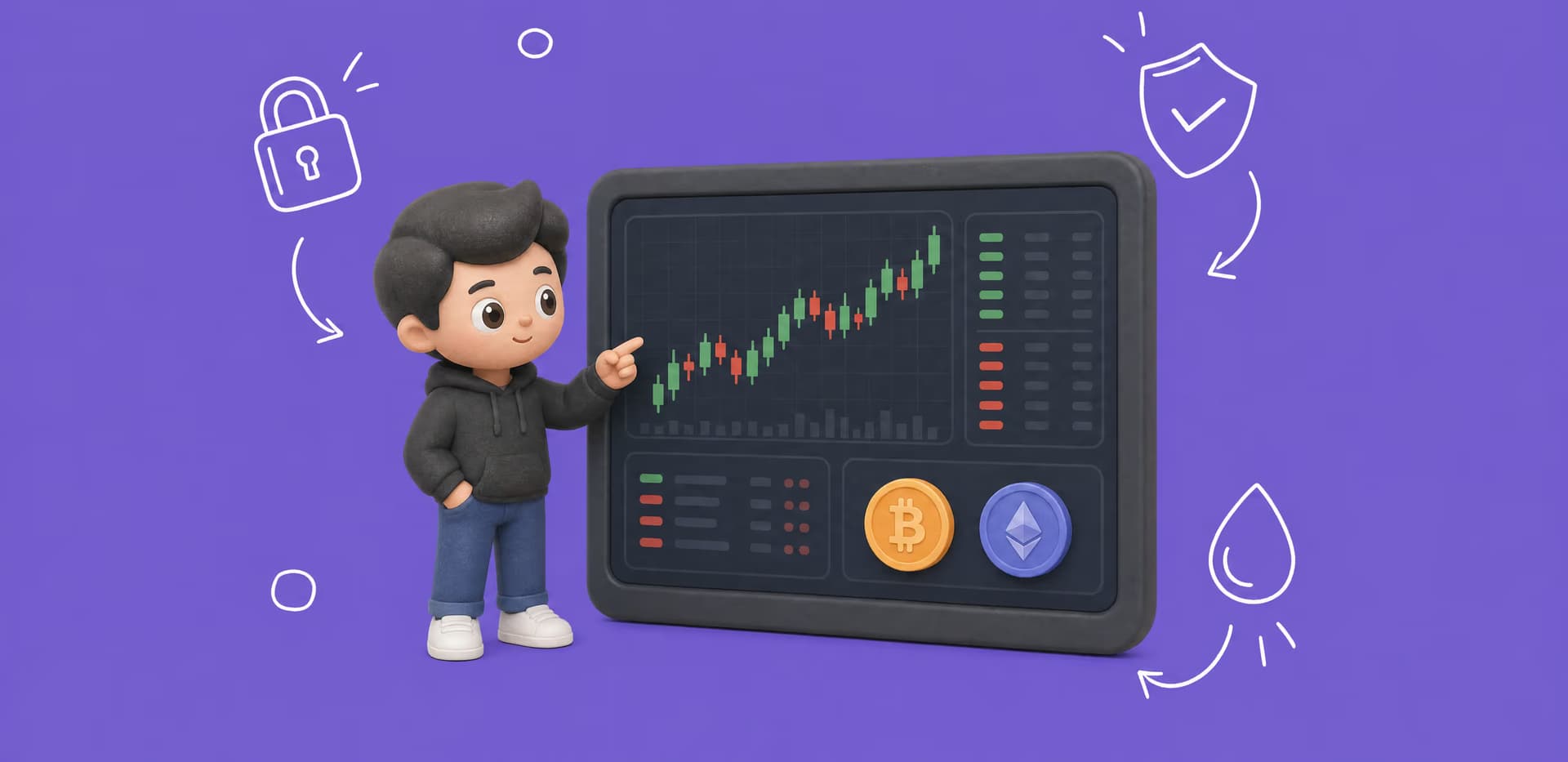
This guide covers the exchange types, must-have features, tech stack, step-by-step process, licensing, and the real cost of building one in 2026.
A cryptocurrency exchange is a platform that matches buyers and sellers of digital assets and settles the trade. Those assets range from Bitcoin and Ethereum to a stablecoin, a token pegged to fiat money like the US dollar.
On most platforms, matching happens through an order book: a live list of buy and sell offers. A matching engine, the software that pairs a buy order with a sell order at an agreed price, executes the trade in milliseconds. That engine, the wallets behind it, and the rules around both are what you're really building.
The bigger decision comes first: which type of exchange fits your business. The crypto market is projected to reach $85.3 billion in revenue in 2026, and each model captures it differently.
| Type | How trading works | Custody | Best for |
| Centralized (CEX) | Order book plus matching engine, run by you | You hold user funds | Retail trading, fiat on-ramps, high volume |
| Decentralized (DEX) | On-chain swaps via smart contracts | Users keep their keys | DeFi-native, permissionless token access |
| Hybrid | Off-chain speed with on-chain settlement | Mixed | Teams that want CEX performance and DEX transparency |
| P2P | Buyers and sellers match directly, with escrow | Users, released on confirmation | Emerging markets, local payment methods |
Most founders building a business start with a centralized exchange. It gives you control over the order book, fiat support, and the compliance surface regulators expect.
A decentralized exchange is a different animal. It moves custody and trading on-chain through smart contracts, an engineering problem closer to how to build a DeFi app than to running an order book. A hybrid blends the two. A P2P crypto exchange drops the shared order book entirely, matching buyers and sellers directly, with escrow holding funds until both sides confirm.
Pick the model that matches how you want to handle custody and market liquidity, because that choice shapes every section below.
Yes, you can create your own cryptocurrency exchange platform, and there are three honest ways to do it. Whether you plan to start a crypto exchange lean or launch a cryptocurrency exchange at full scale, the path you pick here matters. It sets a different budget, timeline, and level of ownership.
The honest rule of thumb: white-label to test a market quickly, custom when the exchange is the business. What tips most founders toward custom is ownership. With licensed software you're building on someone else's roadmap, and for a regulated financial product that dependency is a long-term risk.
Vendor software also caps how far you can differentiate, since every competitor on the same white-label stack ships more or less the same features.
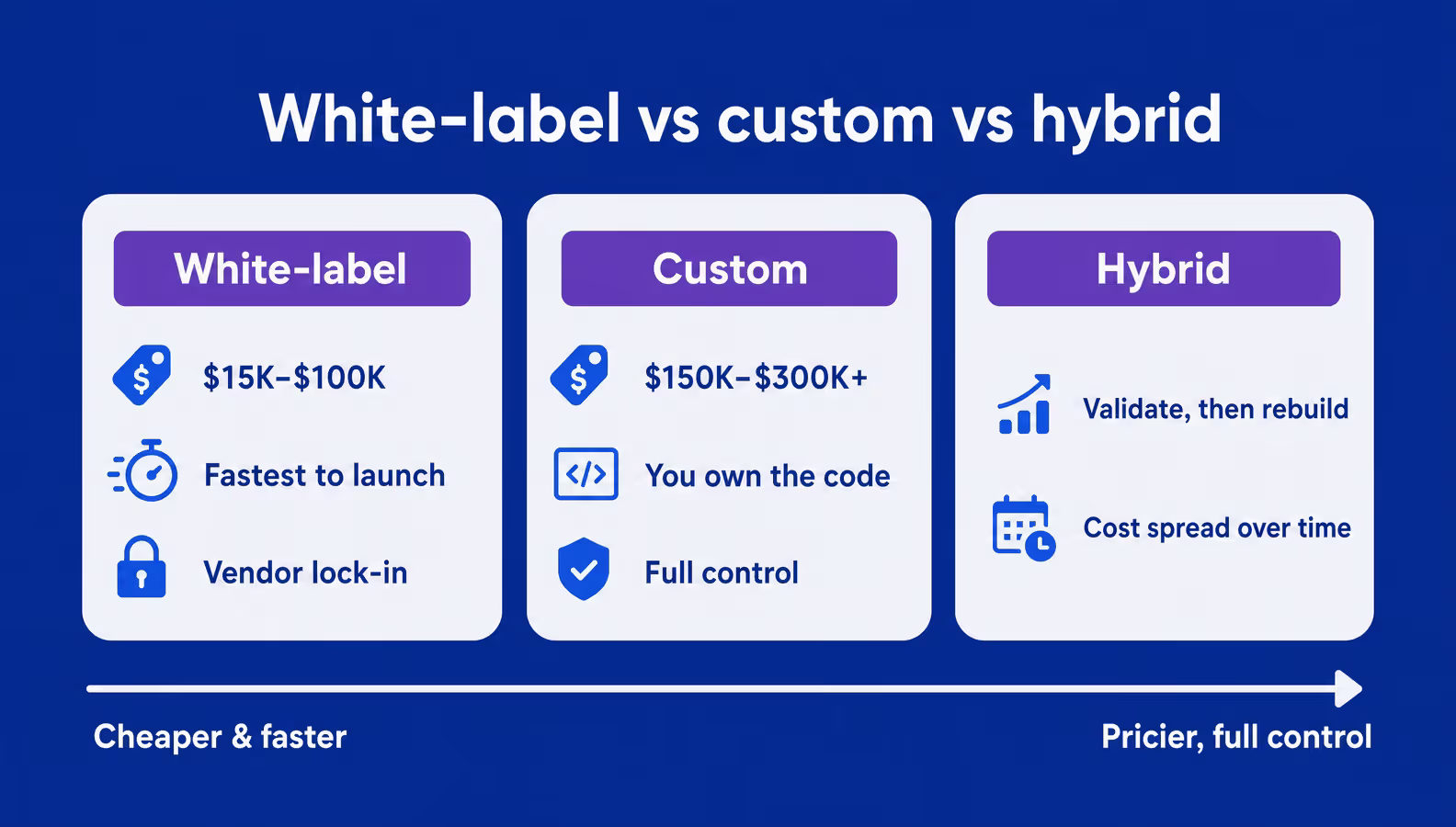
White-label gets you live fastest, custom is the one you own outright
Not every feature belongs in version one. The fastest way to blow a budget is to build margin trading and staking before anyone has placed a single order. Here's what a working cryptocurrency exchange platform needs at launch, and what can wait until you have users.
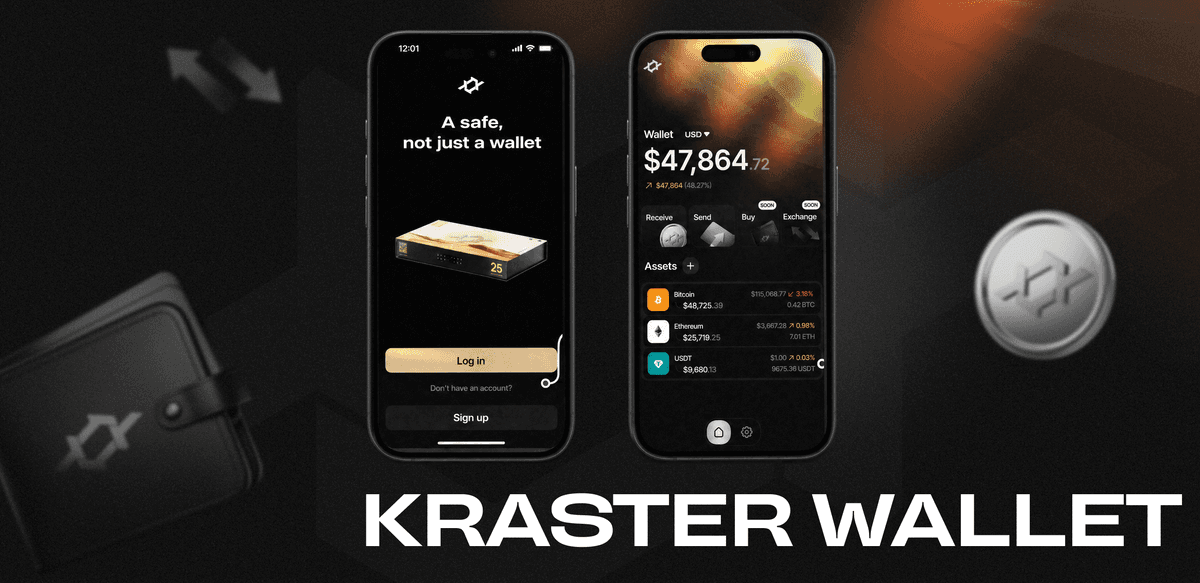
We built Broex, a multicurrency crypto wallet aimed at people entering crypto for the first time. Users sign in with email and password, pass verification, set a personal PIN, and then buy, exchange, and withdraw currency, with card support for buying and withdrawing.
The onboarding hit a wall on one detail: off-the-shelf UI libraries couldn't handle crypto's currency list, so the standard selectors broke. We built a custom currency selector instead, and reused a single "backdrop" element across screens to cut their number, which kept sign-up short.
See the full Broex case.
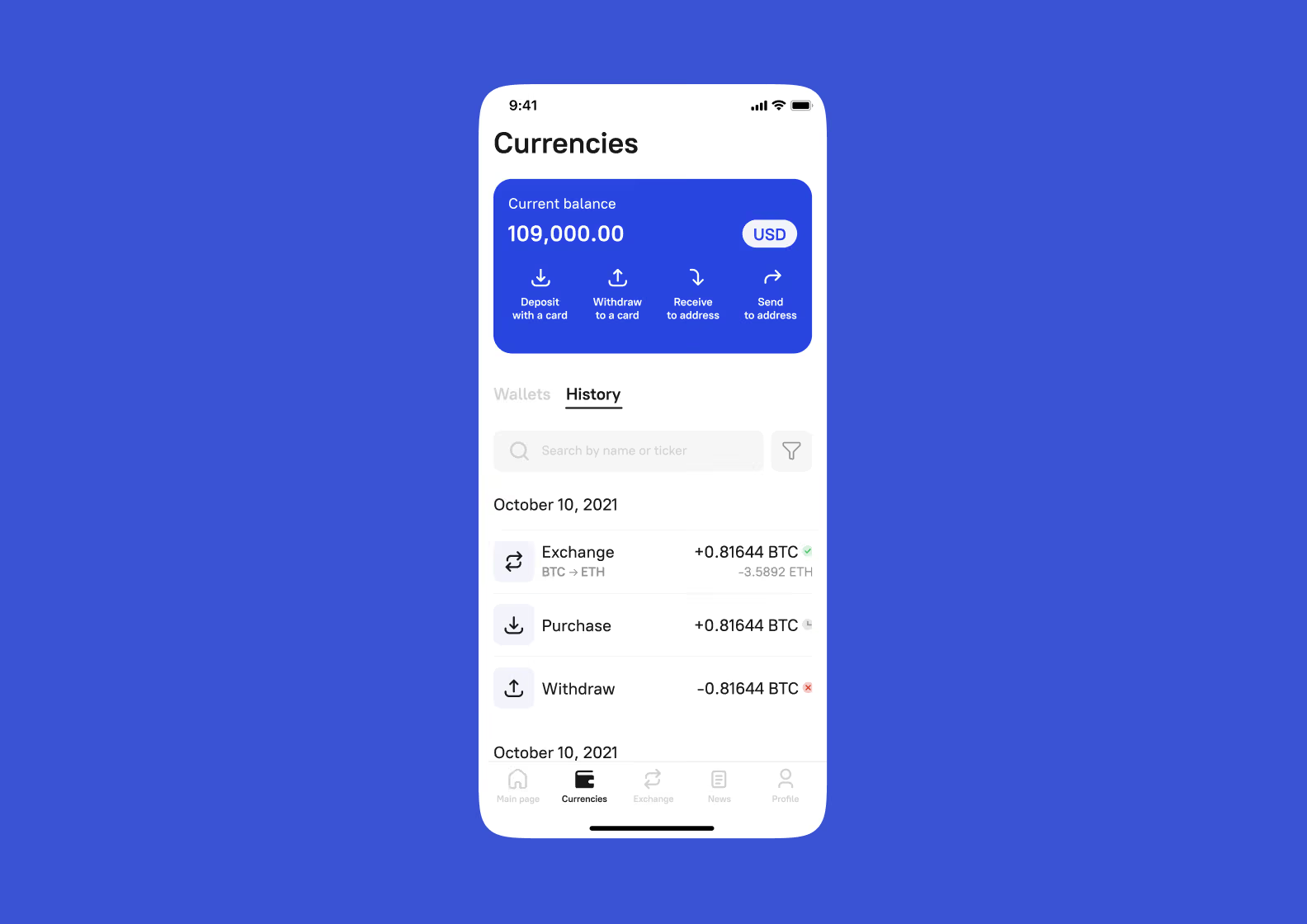
A custom currency selector was the difference between a clean onboarding and a broken one
The stack for cryptocurrency exchange development is chosen for one thing above all: latency. A trade that lands a few hundred milliseconds late costs the user money, so every layer is picked to move fast under load.
The backend usually runs on Node.js or Go. Both handle thousands of concurrent connections without stalling. Order data lives in PostgreSQL, often with TimescaleDB on top to store trade history as time-series data.
The real-time layer is where an exchange feels alive. WebSocket connections push price and order-book updates to every client, and Redis handles the pub/sub fan-out so one price change reaches thousands of screens at once.
Mobile is not an afterthought. Most crypto trading now happens on phones, so the app is a first-class product, not a shrunk-down website. React Native is the practical choice here. One codebase ships to both iOS and Android, which cuts the mobile budget roughly in half and keeps the two apps in sync.
Building a crypto exchange platform across all these layers is a real undertaking. Most founders bring in a crypto exchange development team rather than staff every layer in-house.
Underneath sits the blockchain integration layer: node management, transaction monitoring, and deposit or withdrawal handling for each network you support. Which chains to plug in is a design decision on its own, tied to the basics of blockchain app development.
The whole thing runs on infrastructure built for scalability. That usually means containers on Kubernetes across several regions, so a spike in one market doesn't take the exchange down.
We built Abel, a non-custodial crypto and NFT wallet where anonymity was the whole point. To keep it that way we used a serverless architecture: user data stays on the device and third-party APIs handle every operation, so no backend server ever holds keys or personal data.
Free blockchain APIs came with a hard limit: Etherscan caps requests at five per second. We orchestrated several APIs behind each function and counted requests per device instead of per user, which kept us under the limit while supporting unlimited users. The full MVP came to 1,268 hours with no backend infrastructure bill.
Read the Abel build breakdown.
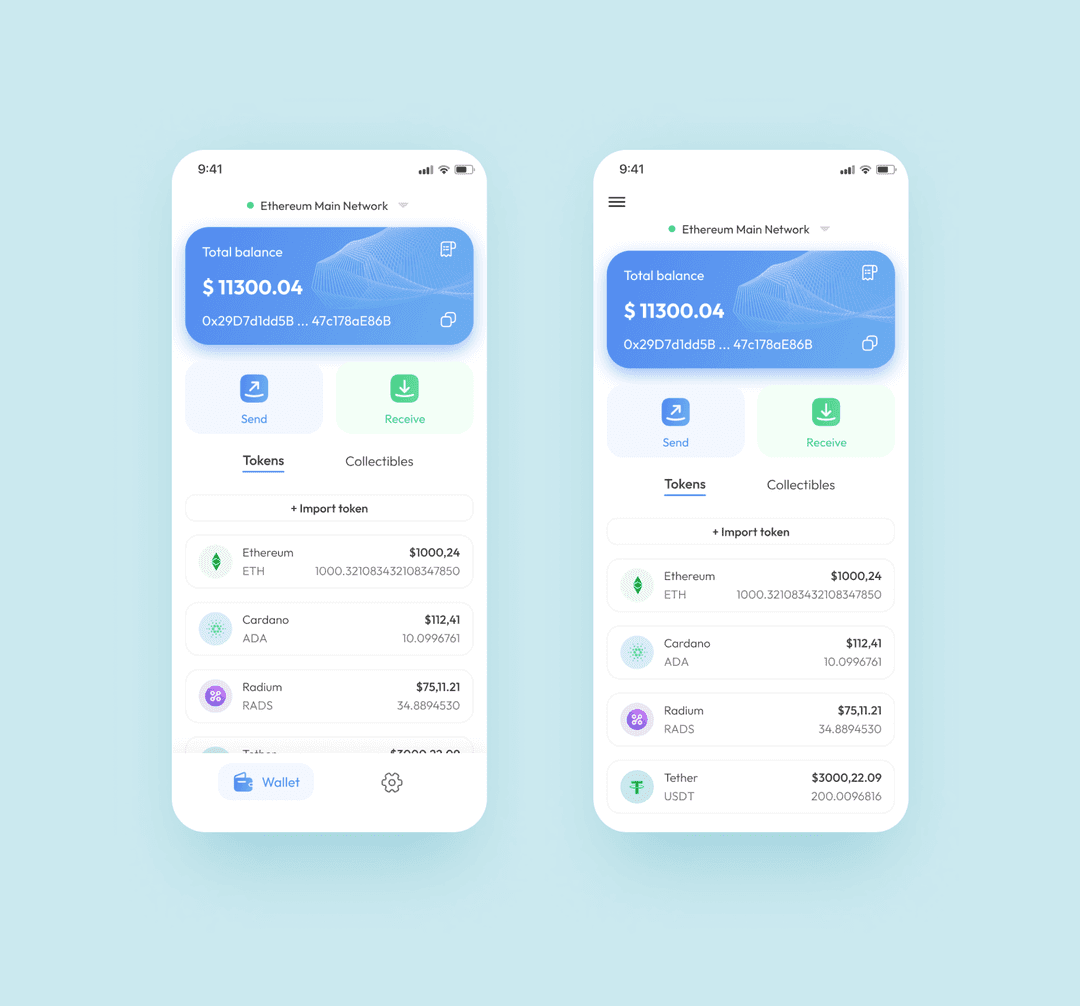
Counting API calls per device, not per user, is what let a serverless wallet scale for free
Here's the development process most custom cryptocurrency exchange platforms follow, with realistic durations for a lean build. Some phases run in parallel, which is how a cryptocurrency exchange platform built from scratch reaches launch in months rather than years. A minimum viable product (MVP) built this way is production-ready in roughly nine to fourteen months.
| Phase | Duration | What happens in it |
| Discovery & requirements | 2–4 weeks | Lock the scope, feature list, and target jurisdiction before a line of code is written |
| Compliance & licensing | From week 1, in parallel | Choose the jurisdiction and open the license track early, since it gates everything downstream |
| UX/UI design (web + mobile) | 4–6 weeks | Turn the scope into a clickable prototype for both platforms |
| Core backend (engine, wallets, API) | 10–14 weeks | Build the matching engine, wallet custody, and API. This is the heaviest phase |
| Mobile app (React Native) | 6–8 weeks, in parallel | Ship the iOS and Android trading apps from one codebase |
| KYC/AML integration | 3–4 weeks | Wire in identity verification and compliant onboarding |
| Security audit + pentest | 2–3 weeks | Get an independent audit plus fixes before real money touches the system |
| Liquidity + soft launch | 2–4 weeks | Connect market makers, seed the order book, and open to a limited group |
| Total (lean custom MVP) | ~9–14 months | A production-ready exchange |
The order of these steps matters more than their length. Teams that start building before the compliance track is moving almost always redo work later. A regulator's requirement can force a change to something that's already shipped.
We redesigned Pay Pay, a crypto e-wallet where users buy, hold, transfer, and swap one cryptocurrency for another in a single app. The client arrived with a working product built on a generic template that looked like everyone else's and didn't convert.
Rather than commit to a full rebuild up front, we shipped a simplified MVP first to see whether the redesign actually pulled users in. It proved in demand, and only then did we invest in the full UX and UI. That sequence keeps early spend tied to evidence, not assumptions.
See the Pay Pay case.
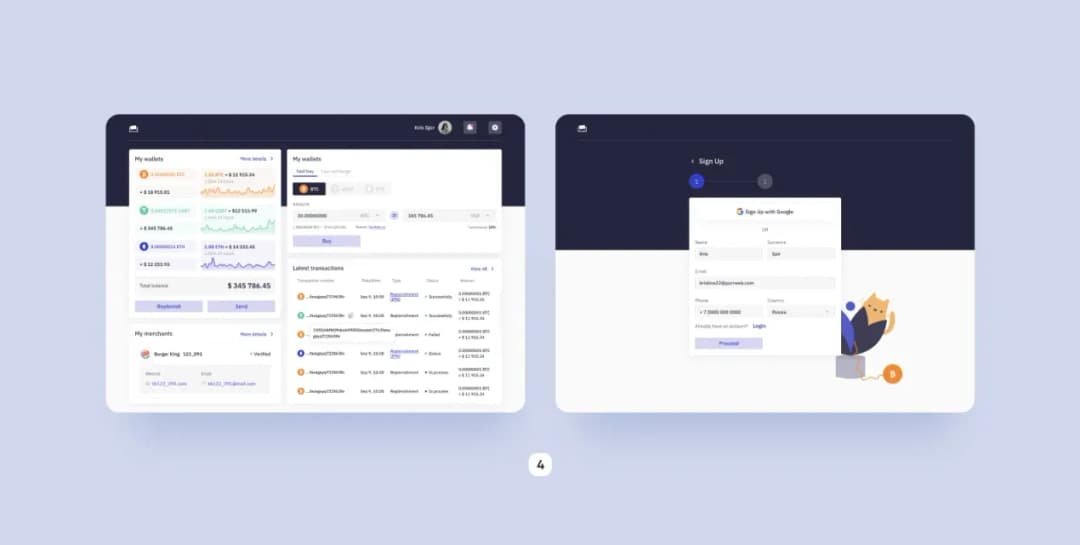
Shipping the MVP before the full build turned a redesign gamble into a measured bet
Licensing decides whether your exchange platform launches at all, and where. Requirements vary sharply by region, so the jurisdiction you pick shapes cost, timeline, and which users you can legally serve.
| Jurisdiction | What you need | Notes |
| United States | FinCEN registration as a money services business (MSB) plus a money transmitter license (MTL) in each state | New York's BitLicense is the strictest and slowest to obtain |
| European Union | Authorization as a crypto-asset service provider (CASP) under MiCA, the EU's Markets in Crypto-Assets regulation | One approval passports across all 27 member states |
| Dubai (UAE) | A license from VARA, the Virtual Assets Regulatory Authority | A purpose-built crypto regulator, popular with new exchanges |
| United Kingdom | Registration with the Financial Conduct Authority (FCA) | Centered on anti-money-laundering compliance |
| Singapore | A license from the Monetary Authority of Singapore (MAS) | A high bar, but strong regional credibility |
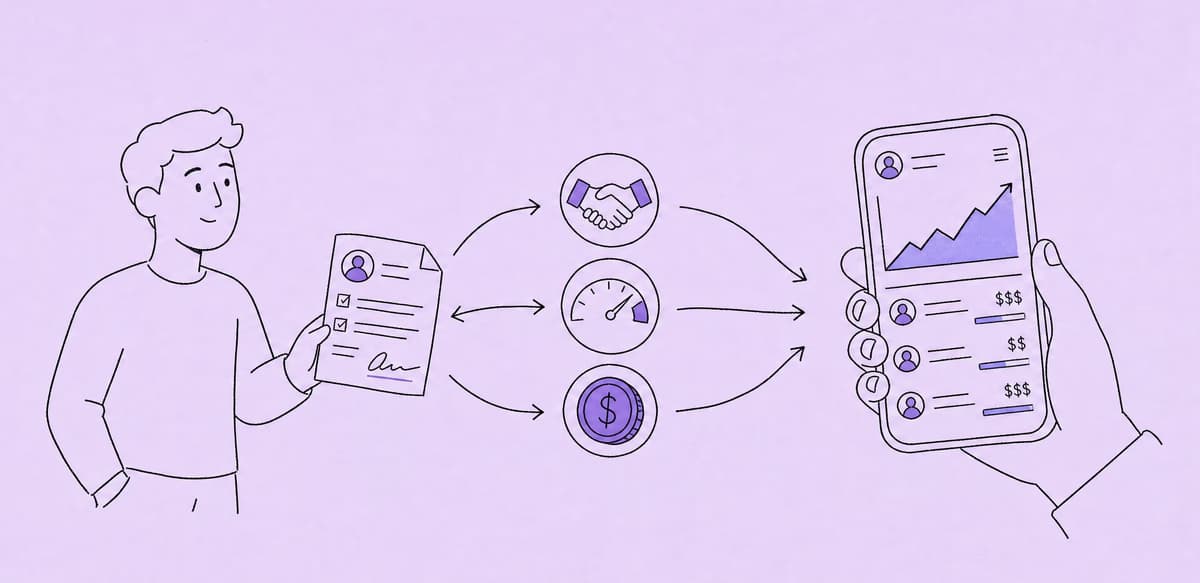
Two compliance functions run inside the product itself. Know Your Customer (KYC) verifies who your users are at sign-up, and anti-money-laundering (AML) monitoring watches transactions for suspicious activity. Both are usually bought rather than built: Sumsub for identity onboarding, and Chainalysis or Elliptic for on-chain transaction monitoring. Plan for a few weeks of integration plus a per-check running cost.
Licensing is rarely quick or cheap. Depending on the jurisdiction, approval can take several months. Fees and legal work run from tens of thousands of dollars into the hundreds of thousands for the strictest regimes. That is exactly why it belongs in week one, running in parallel with design rather than after the build.
The most expensive mistake here is writing code before the regulatory picture is clear. A single license requirement can dictate your custody model, your supported tokens, even which countries you can open in. This is the same discipline that governs any regulated fintech app development: the rules come first, and the build follows them.
An exchange holds other people's money, so a single breach can end the business. A few practices are non-negotiable from day one.
Custody itself is deep enough to be its own project, and most teams lean on a specialist provider rather than owning key security end to end. It's also worth pricing insurance on custodied funds early. Some banking partners and regulators increasingly expect that coverage before they'll work with a new exchange.
The single biggest factor in the price is the build path. White-label licensing starts around $15,000 to $100,000. A custom platform runs $150,000 to $300,000 or more.
Within a custom build, the heaviest line items are the matching engine, wallet custody, and compliance work. The number of supported blockchains and jurisdictions pushes it up from there.
That's the overview. A full breakdown by module, with hours and rates, is more than this section needs, and we cover it separately in a dedicated cost guide.
Deciding how the cryptocurrency exchange earns is a business model decision you make before development, not after, because it shapes which features you prioritize. Most platforms run several revenue streams at once, though a new exchange usually launches on trading and withdrawal fees alone and adds the rest as volume grows.
| Revenue stream | How it works | Typical range |
| Trading fees (maker/taker) | A percentage of each executed trade. "Makers" add orders to the book, "takers" fill them, often at different rates | ~0.1–0.5% per trade |
| Withdrawal fees | A flat or network fee when a user withdraws funds | Varies by asset |
| Listing fees | Projects pay to have their token listed | $50K–$1M+ on large exchanges |
| Margin / futures interest | Interest charged on leveraged positions | Varies |
| Staking / yield commissions | The platform takes a cut of staking rewards | A share of the yield |
| Data / API access | Paid market-data feeds for pro traders and firms | Subscription |
Trading fees are the backbone. At scale the volume is enormous: centralized exchanges cleared a record $86.2 trillion in perpetuals volume in 2025, up 47.4% year over year. Even a maker/taker fee of a fraction of a percent adds up fast. That's why fee design and market liquidity matter more to profitability than almost anything else on the platform.
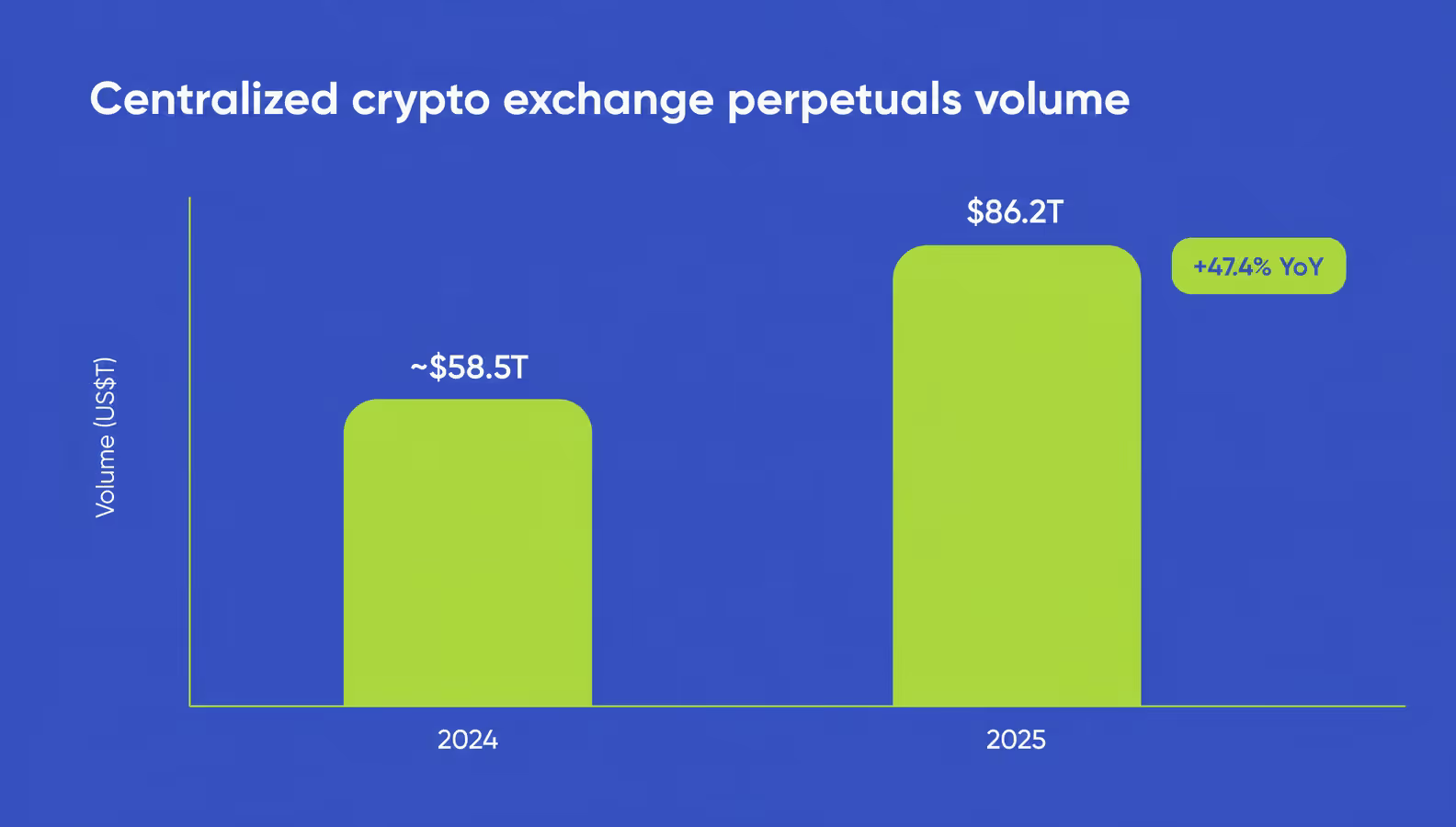
Record volumes are why even a 0.1% trading fee is a real business
Most cryptocurrency exchange projects that stall fail for reasons that were avoidable from the start. None of them are exotic. What separates a successful crypto exchange from a stalled one is usually avoiding these, not any single clever feature. They come from rushing the launch or underestimating how much of an exchange is compliance and liquidity rather than code. These are the ones that come up again and again.
Creating a cryptocurrency exchange comes down to a handful of decisions made in the right order. Choose which type to build, decide between white-label and custom, and get the exchange platform through compliance before development starts. From there it's a matching engine, secure custody, a mobile-first app, and enough liquidity to make the order book worth trading on.
Get the sequence right and a lean MVP is a nine-to-fourteen-month project, not a multi-year gamble.
➡️ If you're scoping a build, we design and develop crypto and fintech products and are happy to talk through the features, timeline, and cost for yours.
Yes. You can create your own crypto exchange as a custom build, developing the platform from scratch and owning the code. Or you can launch faster on white-label software you license and rebrand. The choice sets your budget, your timeline, and how much control you keep. Custom suits a real exchange business you plan to grow, while white-label fits a quick test of a market.
A white-label cryptocurrency exchange platform typically starts around $15,000 to $100,000, and a custom build runs $150,000 to $300,000 or more. The build path is the single biggest price driver, followed by how many blockchains and jurisdictions you support. We cover the full module-by-module breakdown in a separate cost guide.
A lean custom MVP is usually production-ready in nine to fourteen months. Discovery takes two to four weeks, design four to six, the core backend ten to fourteen, and the React Native mobile app six to eight in parallel. KYC integration, a security audit, and liquidity setup add a few weeks each before soft launch.
It depends on where you operate. In the US you need FinCEN registration as a money services business plus a money transmitter license in each state. The EU requires CASP authorization under MiCA, which passports across all member states. Dubai has VARA, the UK has the FCA, and Singapore has the MAS, each with its own bar.
A centralized exchange (CEX) holds user funds and runs trading through its own order book and matching engine. A decentralized exchange (DEX) lets users keep their keys and trade on-chain through smart contracts. A hybrid aims for the speed of a CEX with the on-chain settlement and transparency of a DEX, sitting between the two.
Yes, through white-label software. You license a ready-made platform and rebrand it, which gets you to market fastest and cheapest up front. The trade-offs are limited customization, no ownership of the source code, and vendor lock-in, often with a revenue share or monthly fee. It works well for validating a market before committing to a custom build.
Most new exchange platforms bring in professional market makers who continuously post buy and sell orders, so the order book is never empty. You can also connect to shared or cross-exchange liquidity through a provider's API, and design maker fee incentives that reward traders for adding orders. Liquidity is best arranged before launch, not after.
It can be. The main revenue comes from trading fees on every executed trade, plus withdrawal fees, token listing fees, margin interest, and staking commissions. Profitability depends on trading volume and fee design, which is why liquidity matters so much. A busy order book with fair fees earns steadily, while an illiquid platform struggles to cover its running costs.