Explore

Need help with your project?

Oops! Something went wrong while submitting the form.
Previously, organizations relied solely on local servers for data storage, computing, and database processing. Their powerful, proprietary computers for information processing tasks occupied entire floors. However, another option has emerged: enterprise cloud computing for storing and managing data, available wherever there is an internet connection.
Let’s find out what enterprise cloud computing is, whether your business needs it, what type to choose, and how it can benefit your company.

Enterprise cloud computing services for businesses are designed to help companies manage and process data and host applications. They store and process information like photos, videos, music, documents, spreadsheets, reports, user data, etc.
Services are provided over the Internet, typically on a pay-as-you-go basis. Business executives don’t need to rent offices for data centers or purchase hardware, making enterprise cloud computing a cheaper alternative to privately owned data storage.
The computing resources are based on scalable, flexible, and secure cloud infrastructure, tailored to the needs of large organizations. Users can create folders and repositories, move files between directories, grant access to selected team members, allow file editing, or restrict it.
Moving data to cloud storage is like uploading files to a website. In fact, it’s uploaded to multiple servers, which ensures that if one server fails, the data will still be available and ready to go. Enterprise clouds are focused on meeting the compliance, security, and performance requirements of enterprises.
You may realize that you require a professional enterprise cloud computing system simply based on the fact that your personal drive has run out of space, and you can’t give access to all members of your team or department.
Generally, working with data today is not about USB drives and hard disks. Sending files in messengers and saving hundreds of copies can also be inconvenient. So, almost any company will need a data warehouse, but these in particular:
Enterprise cloud computing is a part of the current outsourcing tendency, only for data storage and computational power. If you’re looking for someone to outsource some of your workload, like the development of a new IT product, fill out our form, and our expert will estimate your project for free.
Incorporating Enterprise cloud computing has many benefits. Here are some of the main ones.
Enterprise cloud computing makes it possible to scale computing capacity based on demand. For example, an online clothing store during a Christmas sale has to withstand a much greater load than at other times of the year, when unnecessary resources will only be a waste of money.
Companies don’t have to buy and maintain physical servers, and instead just pay for cloud services on a usage-based model. This provides more flexibility and leads to cost savings. The provider takes on the expense of server maintenance, while a business only pays for what it needs, raising cost-effectiveness even further.
Operations can be performed 24 hours a day, even at three o’clock in the morning, as long as you have an Internet connection. You’ll have access to company data from any device, which is valuable for remote workers and emergencies.
For the most part, it’s easy to switch between a provider’s services, sometimes, even between providers themselves. As you can move virtual servers and apps between different physical hardware without reconfiguration or compatibility issues, you can choose a provider that offers the most favorable terms.
Providers are taking full responsibility for the servers. They have to protect your data, maintain the physical part, and make sure that your data is available to you 24/7. It would take a lot of resources to achieve this level of stability for local servers.
Cloud providers also invest in security measures that often exceed what individual companies could implement. Enterprise clouds feature robust disaster recovery systems to ensure business continuity. For security reasons, enterprises also use blockchain technologies.
Considering the benefits a business gets, cloud-based enterprise solutions bring a competitive edge. For example, faster deployment of apps and services enables quicker responses to market changes and customer demands. Your company also gets access to a global network of data centers for better performance and latency.
Finally, you can store and process any amount of data in a secure environment with constant access from anywhere. This works well for managing app development, analyzing financial statements, and organizing team collaboration.
There are different types of clouds in the IT sky, some better suited to certain types of businesses than others.
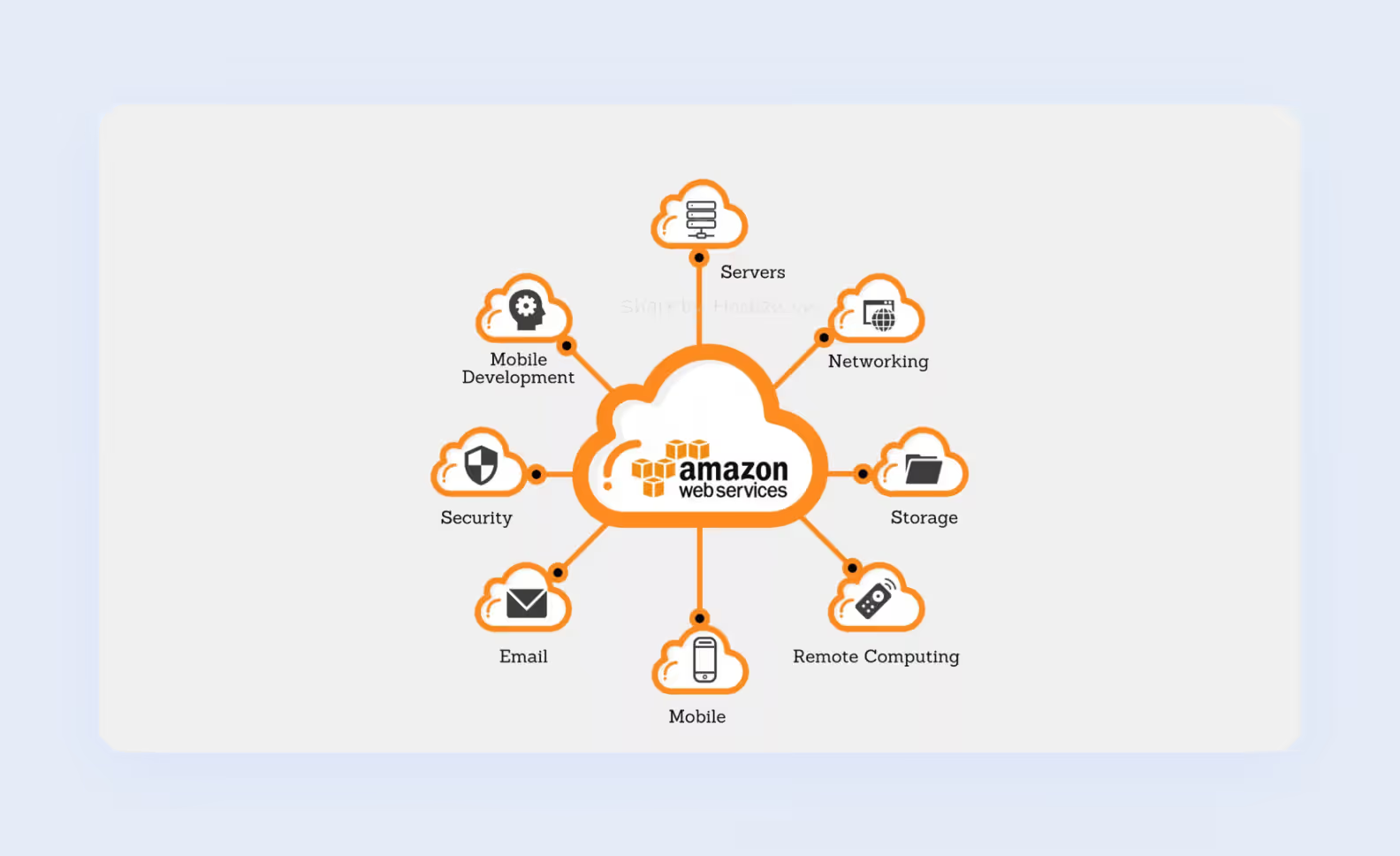
A public cloud is a system for remote data storage and computing power available to multiple clients. The provider’s customers get their share. They set up the virtual servers they need there. Usually for a reasonable price, since they're only charged for the actual used capacity. For example, AWS (Amazon Web Service) is a cloud platform of this type.
Public cloud architecture is often the choice for startups. They reduce time-to-market on a tight budget. A low rate is available until the company gains more users and finds it worthwhile to upgrade to a more expensive and powerful payment plan, which you can do with a few clicks. The main concern is data security. A public cloud infrastructure is potentially more vulnerable to theft of sensitive data than a dedicated private cloud.
Private cloud platforms are a virtual infrastructure that is wholly owned by a single customer. There are providers for private clouds as well, such as HPE (Hewlett Packard Enterprise).
Private data storage is the most secure. For example, law requires telecommunications companies to store their data in private cloud environments. They're also convenient for distributed IT corporations, as they allow for better capacity management — more flexible capacity allocation to different tasks.
But they have downsides, too. They cost more because the entire solution is paid for in full. Deployment of this enterprise cloud architecture also takes longer because it must be tailored to the needs of the organization. Lastly, scalability in a private cloud is more problematic. Capacity can’t be blown up forever without suffering the expense of unnecessary equipment bought for some project and now standing idle.
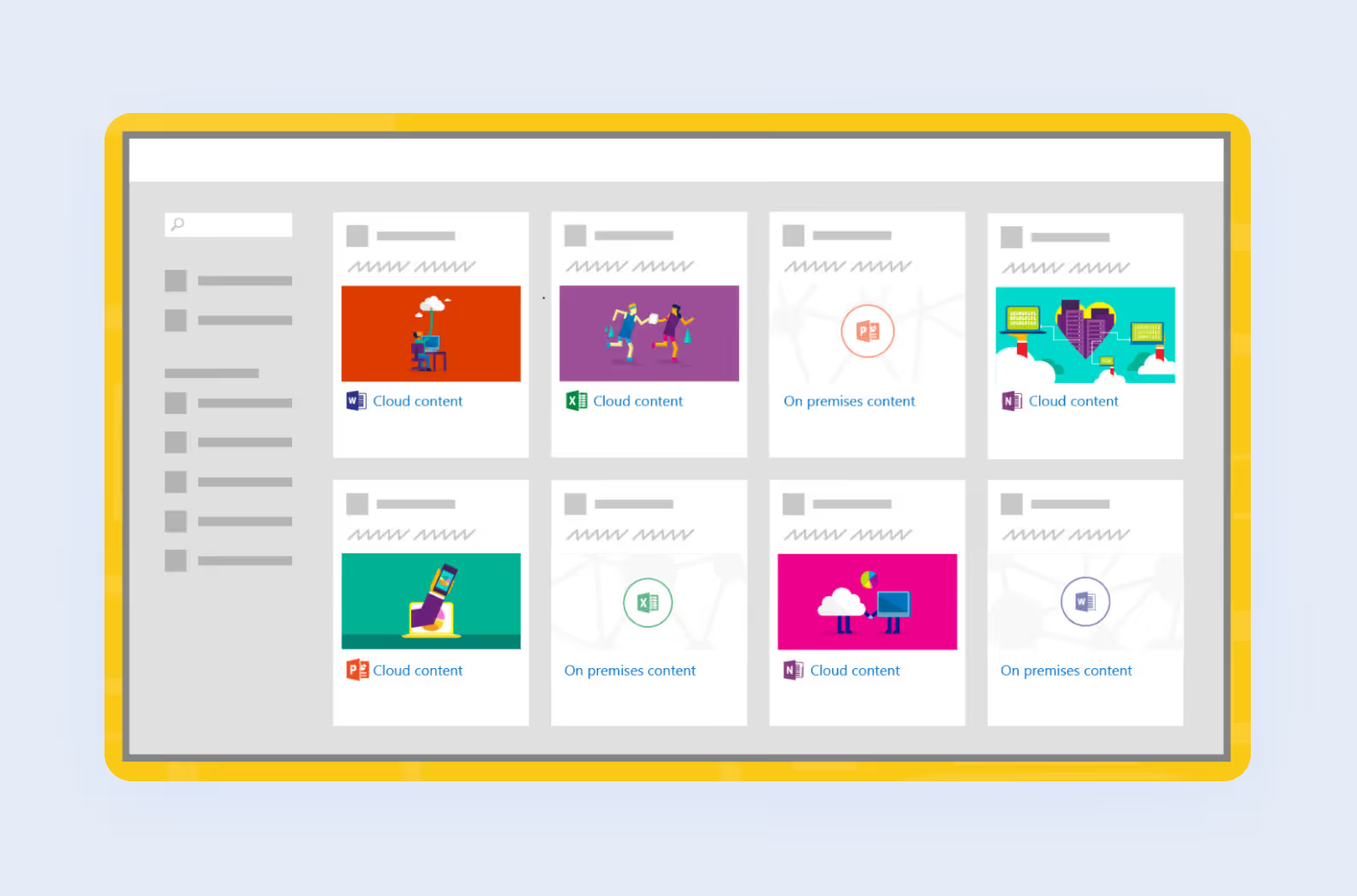
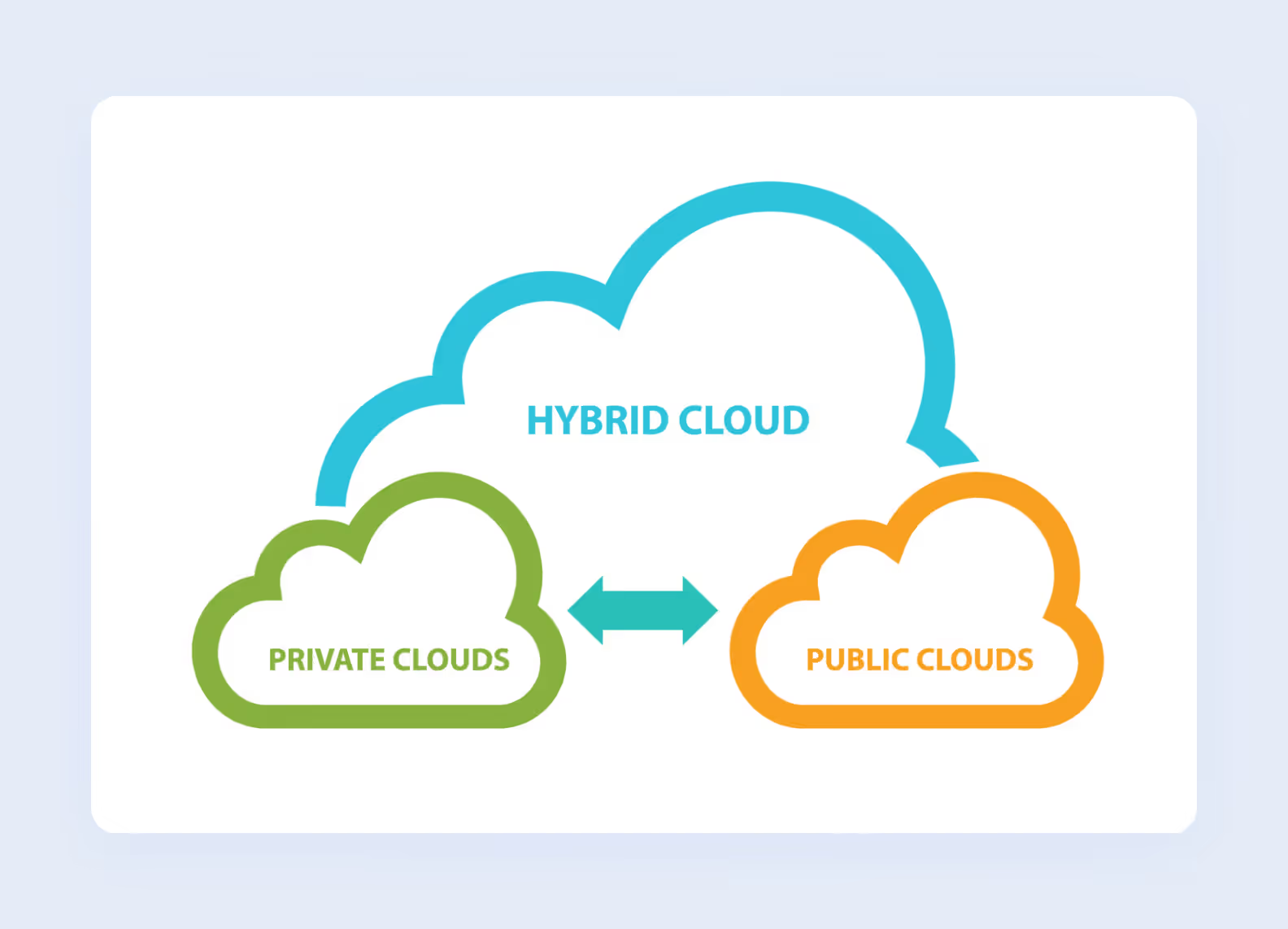
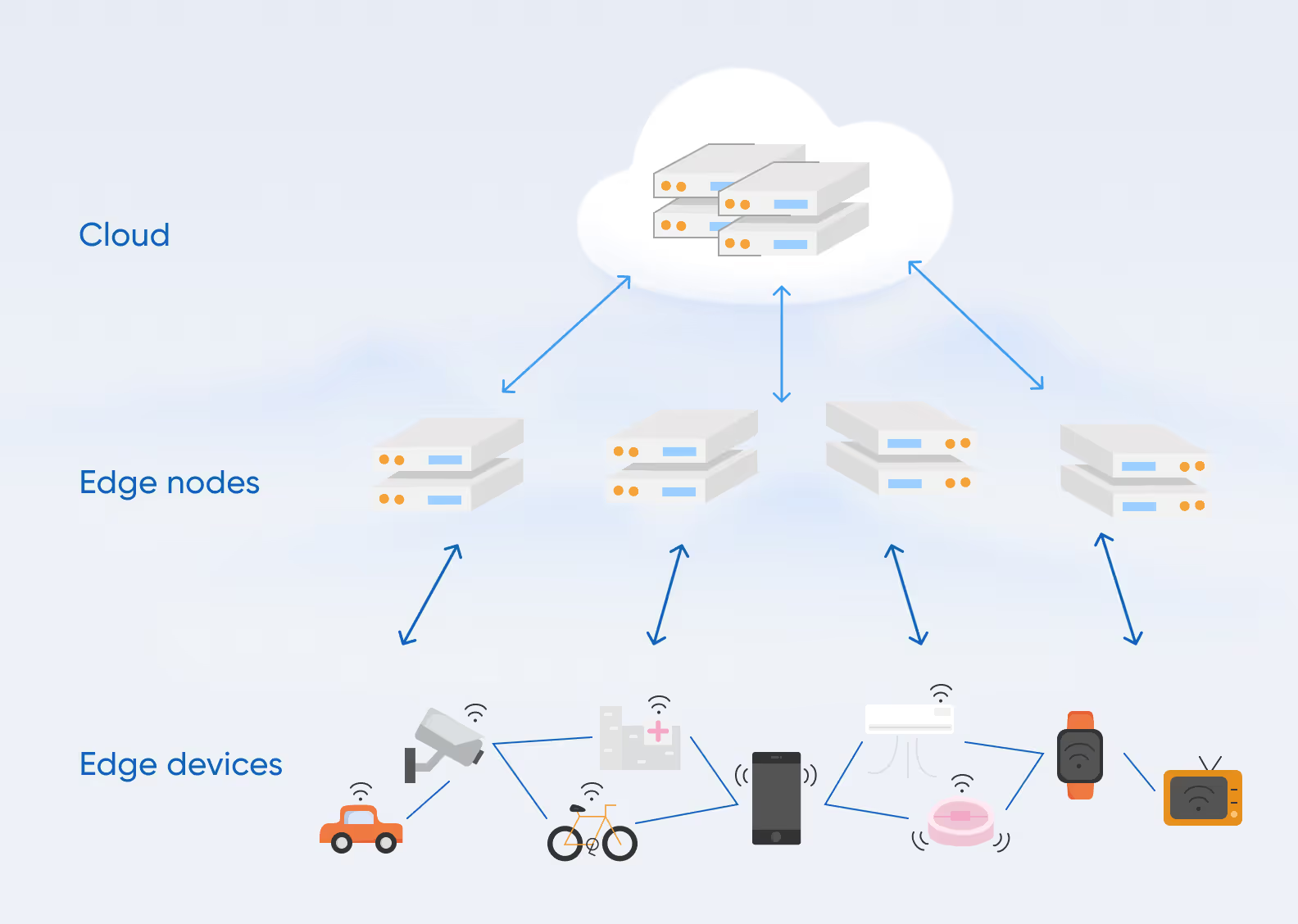
This enterprise cloud computing model involves using both private and external cloud resources. A company can keep critical databases and services in-house and run less essential operations in the public cloud. Microsoft, IBM, and many other market leaders offer and promote their own hybrid brands.
The main advantages of this approach include more control over sensitive data, easy scalability due to the public cloud, and low-cost testing of new developments. These benefits are offset by higher costs. Hybrid infrastructures also involve interoperability between public and private spaces, and it requires top-notch technical staff to make it seamless.
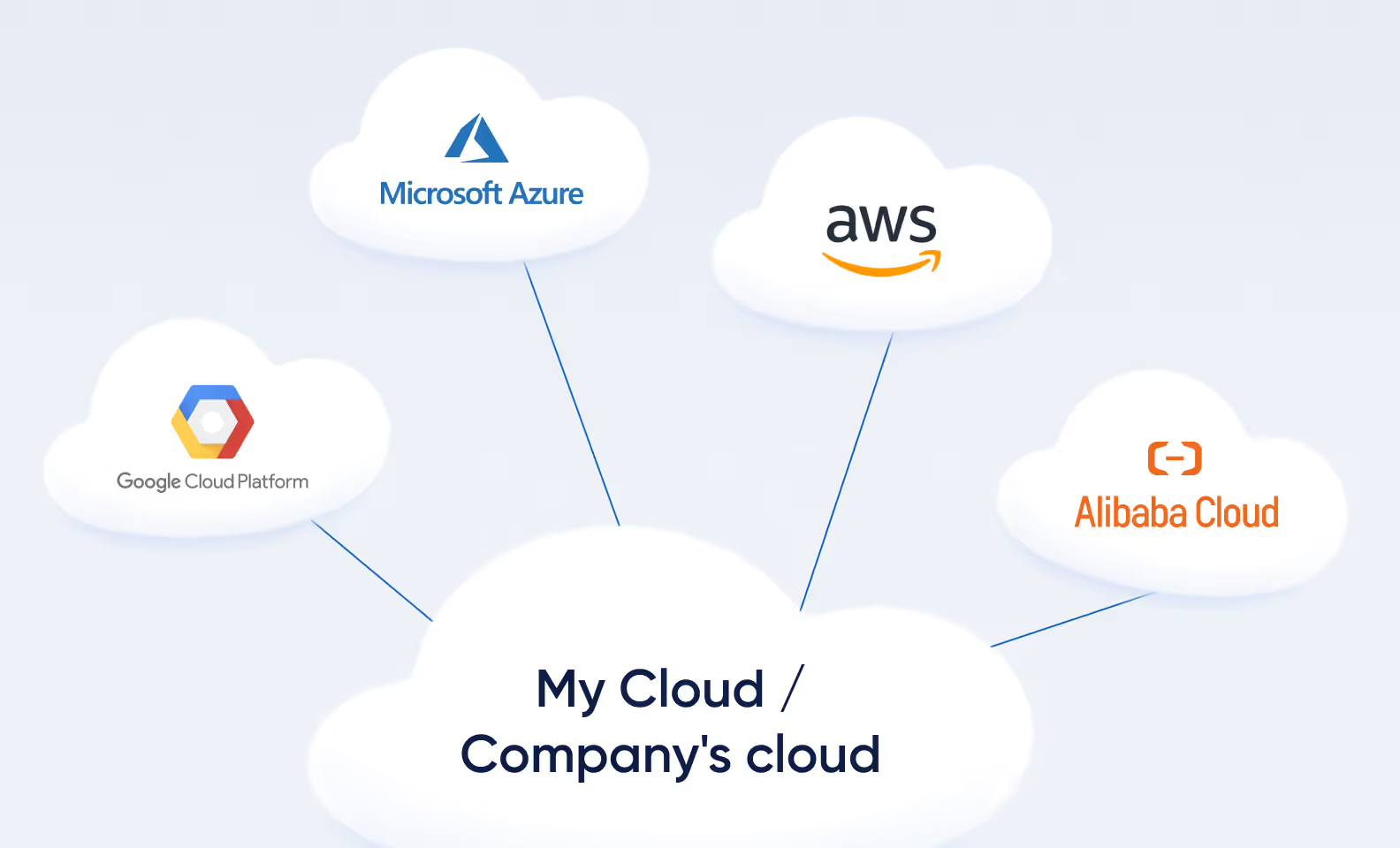
A multi-cloud approach means that a company subscribes to multiple services from public clouds, choosing providers with optimal terms for each. In the last few years, multi-clouds have come into vogue. Data distribution is thought to give decentralization and greater security.
They're useful as they allow companies to be more flexible without being tied to a single provider. In addition, they provide an extra level of reliability. If one of the servers fails, the rest can restore the data or the apps using their own resources. However, they place an additional burden on staff who have to communicate with multiple providers.The risk of data loss when transferring data between clouds is small, but it does exist.
A few words about cloud service market segments: IaaS, PaaS, and SaaS. You might have seen these three brothers mentioned somewhere before. The abbreviations stand for types of services one can expect from providers.
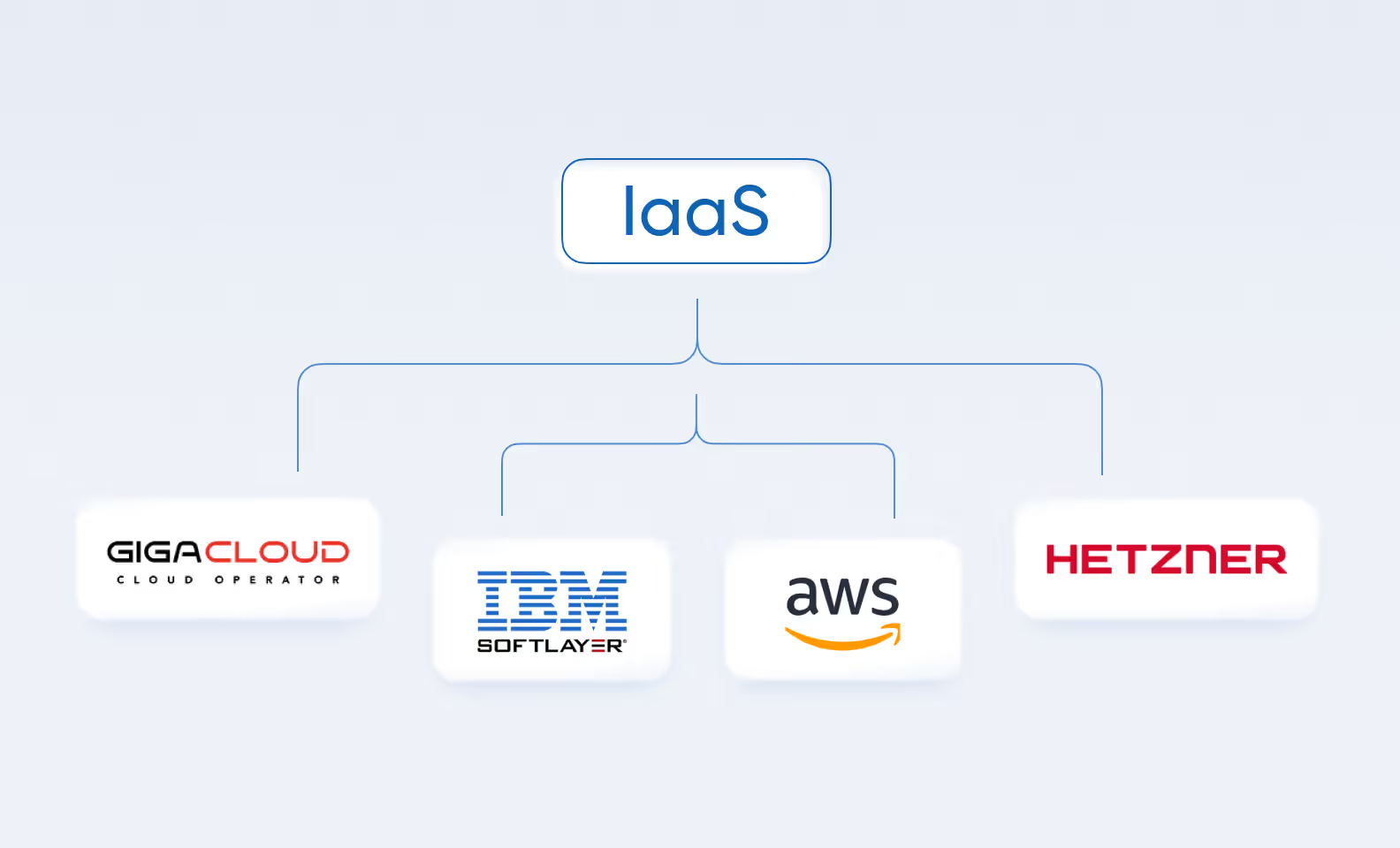
This segment includes the leasing of virtual storage and computing capacity. The provider isn't involved in enterprise app development, nor does it provide a platform for that. It only takes care of servers’ security, confidentiality, and upgrading. Customers have to manage their cloud products themselves. In essence, they're the system administrators.
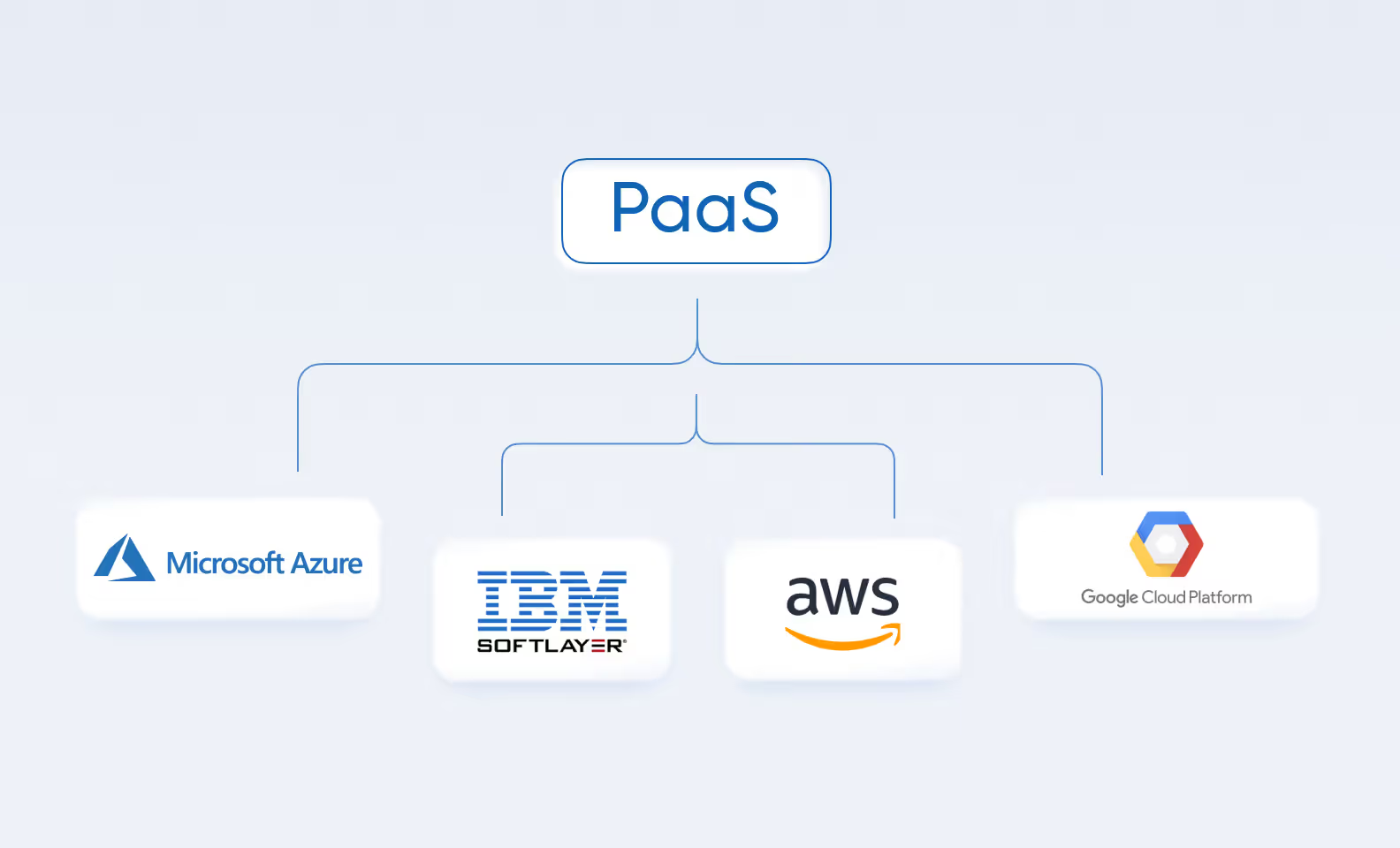
The IaaS model is standard in public clouds, offered by AWS, IBM Softlayer, GigaCloud, Hetzner Cloud, and other platforms.
This set of solutions includes storage, processor, and memory, as well as useful services for a software product: databases, operating systems, application development, testing, and release functions. This is the way Microsoft Azure operates. Platform-as-a-Service solutions come with development programs, analytic services, and automation tools.
Under the PааS model, the customer doesn't need to administer the cloud infrastructure of the enterprise, while developers receive ready-made tools to accelerate and facilitate their work.
The provider offers comprehensive enterprise cloud services, administers them, and provides technical support if necessary. The model can be targeted at both the B2B sector and individual users.
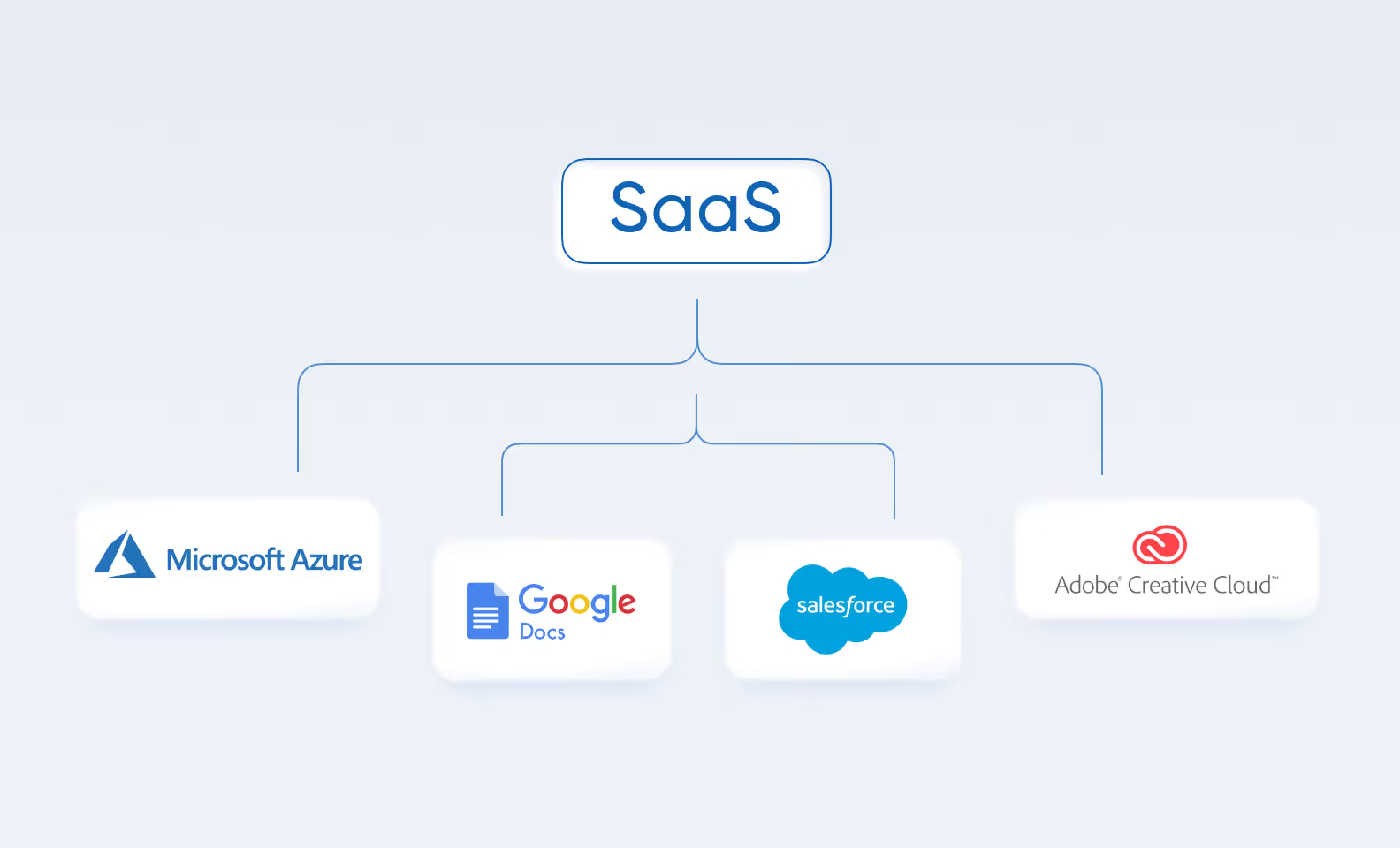
If you use Google Cloud, you know what SaaS services for individuals are, but there are still programs geared toward companies’ business needs. For example, enterprise cloud software such as cloud CRMs provides customer interaction by automating call answering, providing fast data processing, simplifying pricing, allowing for financial transaction reporting, and so on.
Top cloud vendors operate under different access delivery models and vary in pricing, so the choice between them often depends on an organization’s needs. AWS, Microsoft Azure, and Google Cloud control 63% of global cloud infrastructure, leaving the smaller providers only 37%.
AWS is the largest cloud service provider, with over 29% of the global market share. It delivers over 200 cloud services across multiple industries and tech categories.
Amazon Web Services is best known for its emphasis on Infrastructure-as-a-Service offerings and highly scalable public clouds. The platform also supports private, hybrid, and multi-cloud deployments and has over 100 availability zones across 36 regions.
Azure is the second-largest cloud provider with about 22% of the market share. It offers over 200 cloud services, including IaaS, PaaS, and SaaS solutions, as well as Edge and serverless computing.
The cloud computing platform is particularly appealing to enterprises using Microsoft ecosystems, as it boasts strong integration with Microsoft products like Office 365. Microsoft Azure has 126 availability zones around the world.
Google Cloud Platform is the third-largest cloud provider and offers a range of cloud computing services similar to AWS and Azure. Still, it has peculiarities: GCP is known for its strength in big data, analytics, and machine learning capabilities. The cloud computing platform is popular with smaller businesses that use services such as Google Docs, Spreadsheets, Google Drive, Gmail, and YouTube.
IBM is one of the top cloud service providers that focuses on hybrid cloud solutions and enterprise-grade cloud services delivered as IaaS. It helps companies that want to simultaneously stick to their familiar on-premises environment and seamlessly migrate to digital infrastructure.
IBM Cloud has about 4% of the cloud computing services market and offers more than 170 products for private and hybrid cloud deployment.
The pandemic was the time of a cloud revolution. Companies that had worked mostly offline had to turn to digital alternatives. And they had to do it quickly: staff training turned into distance learning, meetings became video conferences, paperwork went online, and more. Cloud computing made this digital transformation possible.
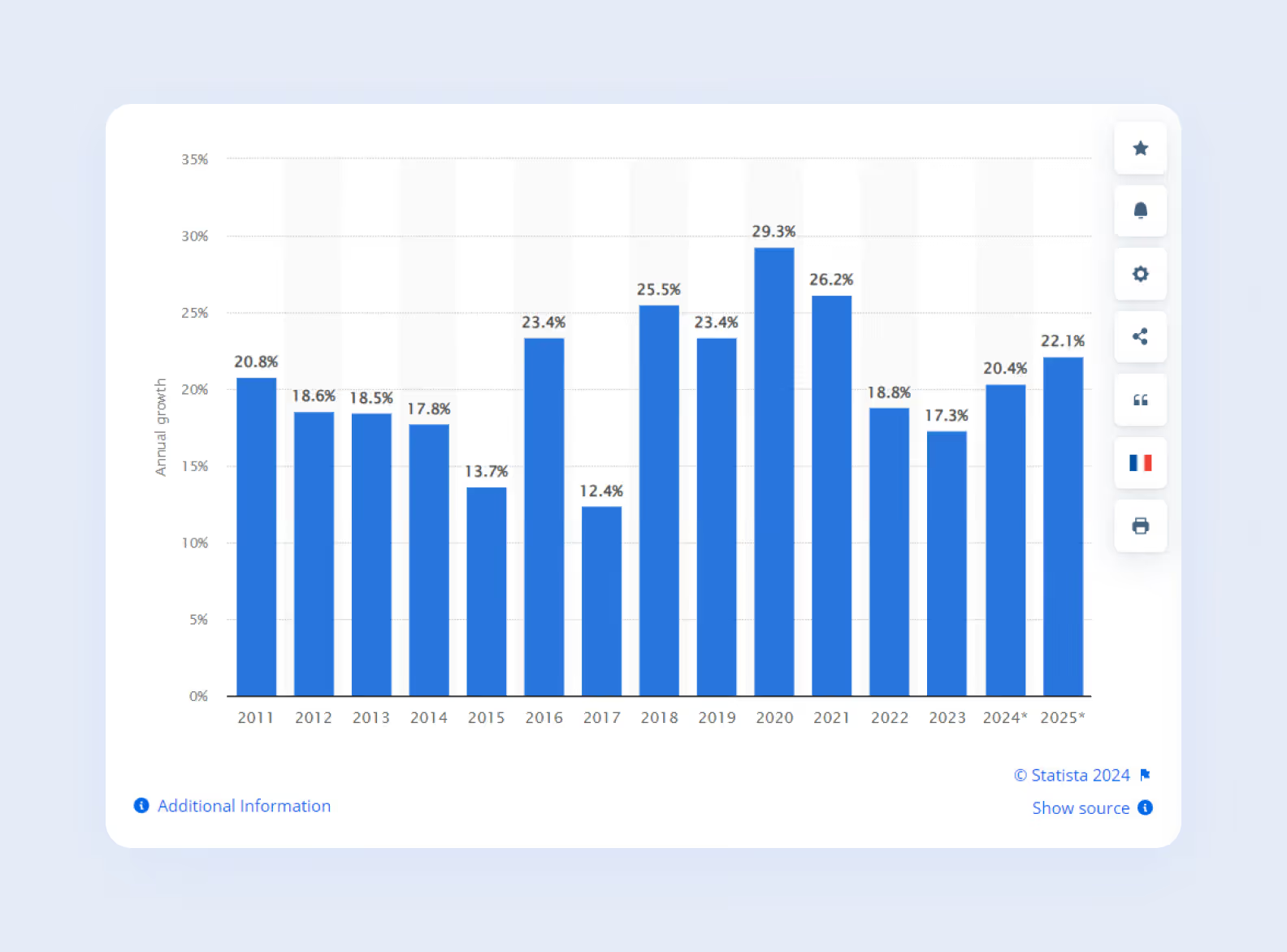
Demand spiked. Public cloud services generated about $631.84 billion globally in 2023 and will continue to grow at an 18.49% rate until 2029. Despite the relatively rapid growth of cloud services, they still represent a small percentage of the global IT market.
The cloud services market is growing due to high demand and an influx of new providers. 20% growth is expected for 2024 and 22% for the next year. After a forced transition to the cloud over the past 4 years, trust in providers has increased. Many companies have become convinced that cloud computing is safer, more convenient, and cheaper than on-premises infrastructure. Businesses have realized the value of cloud computing, which has become the “new normal.”
Several emerging trends, technology advancements, and evolving business needs will drive the future of enterprise cloud computing.
So, if you already like the benefits and your business needs to implement cloud storage, you need to think about a plan. There are 4 mandatory steps for successful cloud adoption.
Enterprise cloud benefits are clear, but it's also useful to observe how they address typical business issues. This table illustrates how cloud services can be the ideal answer to some of the problems that companies are facing.
| Business problem | How the cloud solves it | Example cloud service |
| High IT costs | Reduces the need for expensive in-house servers and hardware maintenance | Infrastructure as a Service (IaaS) |
| Slow deployment | Allows for rapid prototyping and deployment using pre-built tools and services | Platform as a Service (PaaS) |
| Lack of flexibility | Enables you to easily scale resources up or down to meet changing needs | Scalability of cloud platforms |
|
Manual updates |
Providers automatically update and patch the software, reducing your team's workload. |
Software as a Service (SaaS) |
You may increase productivity and free up resources to concentrate on core innovation and expansion by selecting the appropriate cloud solution.
Enterprise cloud computing is transforming how businesses operate, offering scalable, flexible, and cost-effective solutions with appropriate security measures. Businesses can enhance their agility, innovate faster, and maintain a competitive edge.
When we make apps, we usually offer customers the use of AWS. We’ve used it for a long time, and, for startups, the value is just right.
➡️ If you plan on developing an app in the cloud, contact us!
Enterprise cloud computing is the use of cloud infrastructure, platforms, and software services — delivered by providers such as AWS, Azure, or GCP — to run business-critical workloads at scale. Unlike consumer cloud tools, enterprise cloud environments are built for high availability, strict security controls, regulatory compliance, and integration with existing corporate systems. According to Gartner, global enterprise cloud spending exceeded $600 billion in 2023 and continues to grow at roughly 20% annually.
A public cloud runs on shared infrastructure owned by a provider (AWS, Azure, GCP) and billed per use — lower upfront cost, high scalability, less control. A private cloud is dedicated hardware operated for one organization, on-premises or hosted — maximum control and compliance, higher cost. A hybrid cloud connects both: sensitive workloads stay on private infrastructure while less critical services run on public cloud. Most enterprises today operate a hybrid or multi-cloud model to balance cost, compliance, and flexibility.
Enterprise cloud costs vary widely depending on workload size, provider, and deployment model. A basic AWS or Azure enterprise setup for a mid-size company typically starts at $5,000–$20,000 per month. Large-scale deployments with high compute, storage, and data transfer needs can reach $100,000+ per month. Most enterprises reduce costs 20–30% by using reserved instances or committed-use contracts instead of on-demand pricing. A cloud cost assessment before migration typically identifies 15–40% in immediate savings from right-sizing and unused resources.
AWS leads in market share (~31%) and breadth of services — best for organizations that need the widest ecosystem and most mature managed services. Microsoft Azure is the preferred choice for enterprises already running Microsoft 365, Active Directory, or on-premises Windows Server workloads, with seamless hybrid integration. Google Cloud Platform (GCP) excels in data analytics, machine learning, and Kubernetes-native workloads. Most enterprises use two or three providers simultaneously to avoid vendor lock-in and optimize for specific workload types.
The most common enterprise cloud security risks are misconfigured storage buckets or access controls (responsible for over 80% of cloud data breaches, according to Gartner), insufficient identity and access management, insecure APIs, and shared-responsibility misunderstandings — where companies assume the provider secures everything. Insider threats and unencrypted data in transit are also significant concerns. Enterprises mitigate these through zero-trust architecture, automated configuration scanning, and regular third-party security audits.
Enterprise cloud migration timelines depend on the scope and complexity of existing infrastructure. A focused migration of 5–10 non-critical applications typically takes 3–6 months. A full datacenter migration for a mid-size company (50–200 servers, multiple databases) averages 12–18 months. Large enterprises migrating hundreds of legacy systems can plan for 2–4 years. The longest phases are usually discovery and dependency mapping (weeks 1–8) and testing in parallel environments before cutover. Phased migration — moving workloads in priority batches — reduces downtime risk significantly.
IaaS (Infrastructure as a Service) gives your team raw compute, storage, and networking — you manage the OS, middleware, and applications. Examples: AWS EC2, Azure Virtual Machines. PaaS (Platform as a Service) abstracts the infrastructure and gives developers a managed environment to build and deploy apps without managing servers. Examples: Google App Engine, Azure App Service. SaaS (Software as a Service) delivers fully managed applications over the internet — your team uses the software without managing any underlying infrastructure. Examples: Salesforce, Microsoft 365, Workday. Most enterprises use all three layers simultaneously for different use cases.
Yes — "enterprise cloud" refers to the grade of infrastructure (security, SLAs, compliance), not company size. SMBs with 50–500 employees regularly use enterprise-grade cloud services through AWS, Azure, or GCP without owning datacenters. The pay-as-you-go model makes enterprise-grade infrastructure accessible from a few hundred dollars per month. SMBs benefit most from SaaS (no IT overhead) and managed PaaS services that eliminate the need for dedicated infrastructure teams. The main consideration is choosing the right service tier: many enterprise features like dedicated support, custom SLAs, and private networking have minimum spending thresholds of $15,000–$50,000/year.


.svg)