Explore

Need help with your project?

Oops! Something went wrong while submitting the form.
Physicians spend nearly half their day as data entry clerks, typing, clicking, and scrolling through electronic health records. The system turns the computer from a barrier into an assistant that listens, understands, and acts.
This article explains how the technology changes daily documentation, how it differs from traditional methods, and how to connect it to a clinic's existing processes.

Voice recognition in healthcare converts clinical speech into structured documentation, commands, or draft notes. Its value depends less on raw transcription speed than on specialty accuracy, safe handling of protected health information, record integration, and human review. Clinical teams should pilot the system on one process, measure correction rate and time-in-note against a baseline, and expand only when the tool improves documentation without introducing new safety or compliance risks.
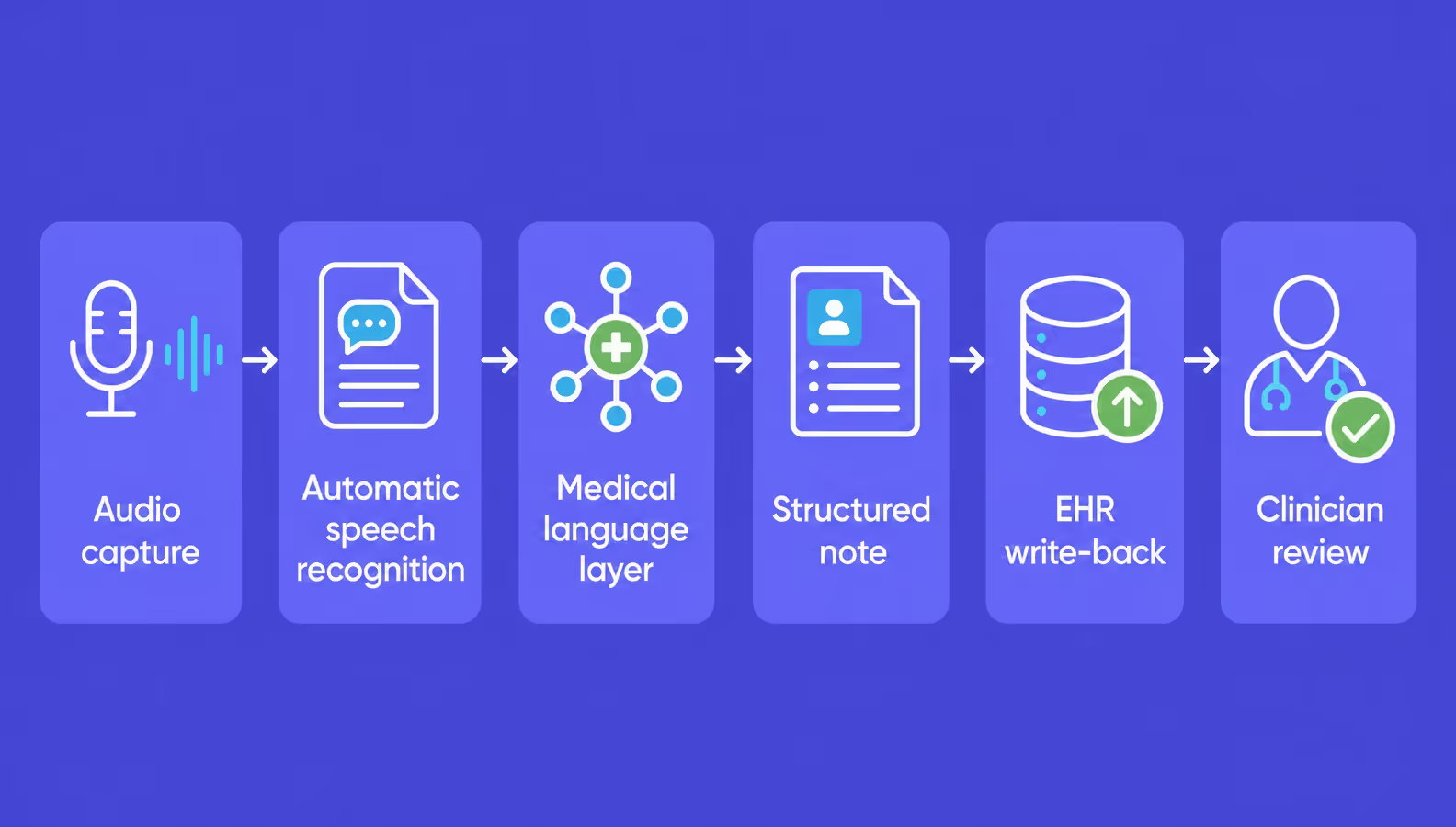
Speech recognition technologies turn clinical audio into a structured, approved note. ASR converts speech to text. Machine learning and natural language processing (NLP) handle medical vocabulary, speakers, negation, and context. A custom healthcare software development pipeline then writes the draft to the electronic health record (EHR) for review.
| Stage | What the system does | Clinical requirement | Failure to test |
| Audio capture | Records dictation or an ambient encounter | Clear consent flow, correct patient context, noise handling | Wrong speaker or poor-quality input |
| Automatic speech recognition | Converts speech into text | Specialty vocabulary, accents, abbreviations, medication names | Substitutions in clinically important terms |
| Medical language layer | Identifies entities and structures the note | Specialty templates, negation and context handling | Omitted or incorrectly inferred facts |
| EHR write-back | Sends a draft to the correct record and field | Supported APIs, mapping, retries, visible errors | Data in the wrong chart or silent sync failure |
| Clinician review | Confirms and edits the draft | Highlight uncertainty and preserve an audit trail | Unreviewed errors become part of the record |
Speech recognition in healthcare can reduce manual typing and make notes available sooner. The goal is to improve patient care through the clinical process, not transcription alone. If correction work or failed commands add effort elsewhere, the system has shifted the burden rather than removed it.
The comparison connects each expected benefit to the limitation that can cancel it and the metric needed to test the result.
| Expected benefit | How it may appear in practice | Main limitation | Metric to verify locally |
| Less manual typing | Draft notes are available during or soon after a visit | Corrections can erase the time saved | Time-in-note and after-hours chart time |
| More patient-facing attention | Provider spends less time looking at the keyboard | Ambient capture may affect patient comfort | Patient feedback and provider task load |
| More consistent documentation | Templates prompt required sections | Templates can produce repetitive or overlong notes | Same-day closure and edit rate |
| Hands-free software control | Staff can navigate or enter data while performing another task | Noise, masks, accents, and speaker overlap reduce reliability | Command success rate by environment |
Speech recognition systems in healthcare save time only when the corrected medical documentation reaches the right patient record faster than the existing process. A broader healthcare workflow transformation may also change templates and review responsibilities. Pilot metrics should cover that full path rather than raw transcription speed alone.
The tool earns its place when it removes a repetitive step without creating a new one. In practice, that usually means four jobs: charting, telemedicine controls, diagnostic reports, and radiology dictation. Healthcare professionals still check the result before it enters the record.
Providers dictate while details are fresh. The draft lands in clinical documentation modules in the record, where they check names, medications, and negative findings.
During a remote visit, voice commands can capture symptoms or open a form. The provider checks the summary before saving it.
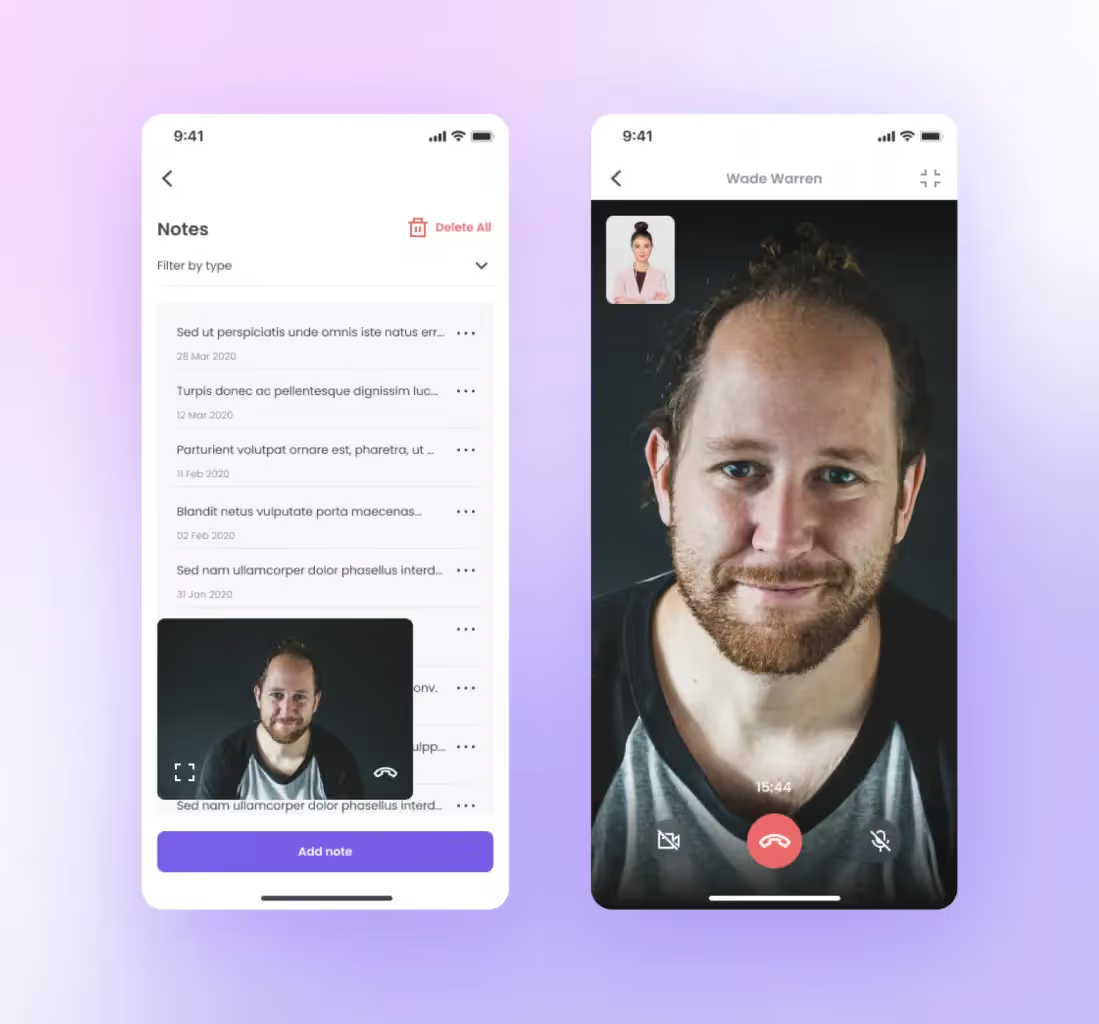
We built My Therapy Assistant to keep remote therapy sessions from feeling cramped on screen. The app combines scheduling, notes, chat, and video calls. A patient can shrink the video window and write without leaving the conversation.
We used adaptive layouts and flexible window controls for smaller screens. It does not use speech recognition, but it shows the point: a voice feature should support the conversation, not compete with it.
Voice input can turn a spoken lab or imaging finding into a draft report. A reviewer checks measurements and negation before saving it.
Radiologists can dictate while looking at images. Specialty vocabulary helps, but the radiologist still confirms anatomy, measurements, and the conclusion.
Using the tool with a clinical record is not just a matter of sending text. The app has to know which patient is being treated, where the note belongs, and what happens if the connection drops. A provider then reviews the draft before it becomes part of the record.
Healthcare providers need four production components:
The AI integration is ready when it writes to the right patient and field, shows a failed sync, preserves the draft, and records who approved it. See the practical options for integrating clinical speech recognition with an EHR.
The system is safe only when the team tests the words that can change care. An AI transcript can still miss a medication or turn “no allergy” into the opposite. Clinics should test specialty language, accents, devices, and room noise for algorithmic bias, then keep human review for treatment fields.
| Evaluation area | What to test | Evidence required before rollout |
| Specialty accuracy | Medications, diagnoses, abbreviations, negation, numbers | Test data from the clinic's specialties and working environments |
| Critical-field safety | Allergies, treatment, medication, patient identity | Field-level precision and recall plus clinician review |
| Robustness | Accents, masks, background noise, speaker overlap | Results split by user and setting instead of one average score |
| Privacy and HIPAA | Capture, transmission, storage, deletion, support access | Business associate agreement where applicable, encryption, access control, audit logs, retention policy |
| Clinical governance | Omissions, invented details, corrections, escalation | Named clinical owner, approval process, incident process, audit trail |
A 2025 evaluation of four automatic speech recognition engines used 40 simulated emergency medical services recordings. Field-level F1 ranged from 0.917 for allergies to 0.577 for medication. That gap shows why one overall score cannot justify fully automated documentation.
Health Insurance Portability and Accountability Act (HIPAA) compliance also depends on how protected health information (PHI) is captured, stored, accessed, and deleted. The team should document those rules before rollout.
Start with one job, not an artificial intelligence (AI) product. Measure how that note, report, or command works today, including correction time. The baseline makes demos easier to judge and gives the pilot a clear question: does this tool improve the real process?
Compare each speech recognition solution by team fit and ownership.
| Decision factor | Off-the-shelf product | Custom solution |
| Time to pilot | Usually faster | Longer discovery and build phase |
| Process fit | Depends on available templates and integrations | Can follow a specialty-specific process |
| Model and control | Limited to vendor options | More control over models, data flow, and interfaces |
| Compliance evidence | Review vendor documentation and agreement | Design and document controls directly |
| Ongoing ownership | Subscription and vendor roadmap | Internal or contracted maintenance responsibility |
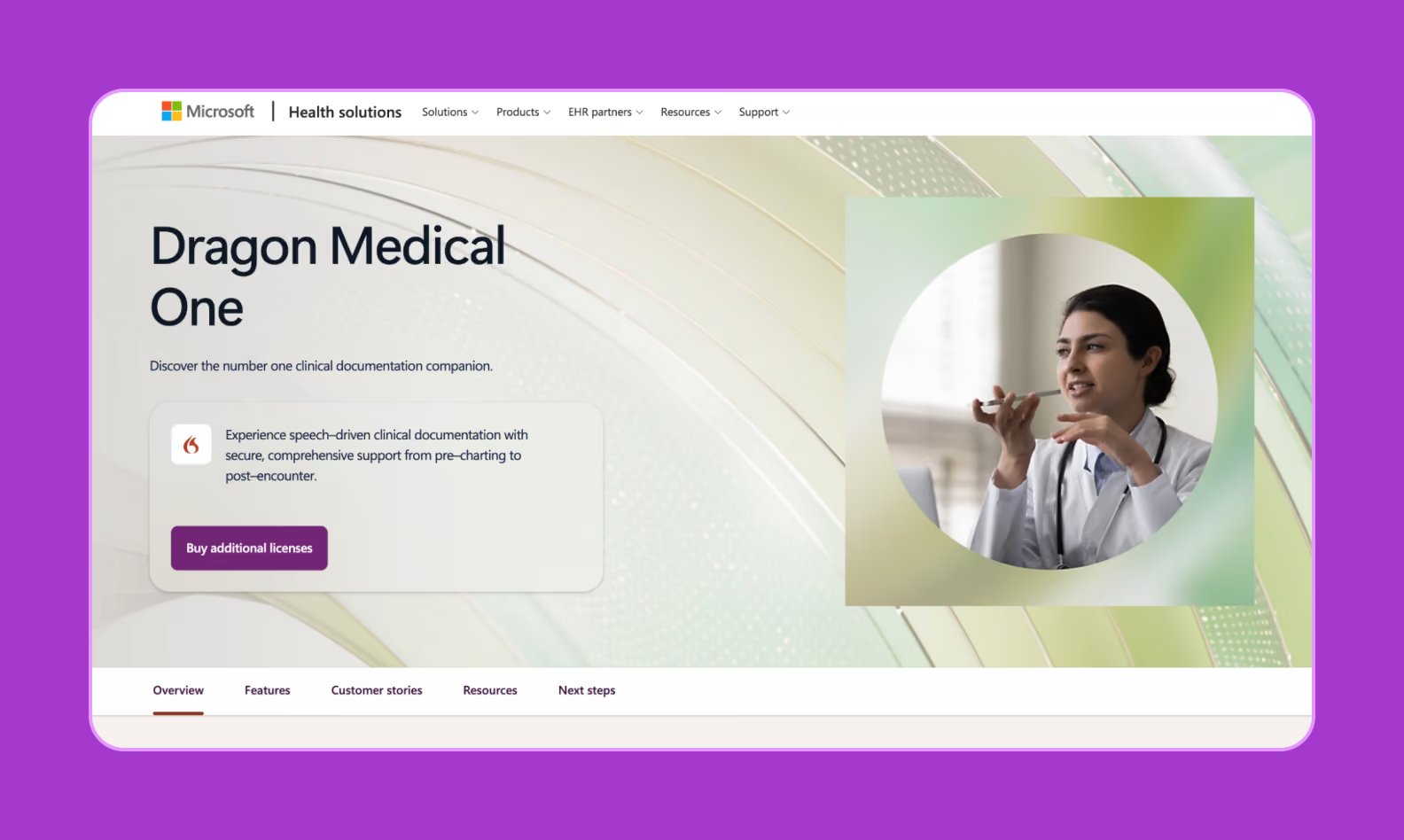
Test with local recordings, set acceptance thresholds before launch, and train a small group. Expand only after the team understands correction rate, time-in-note, and safety issues.
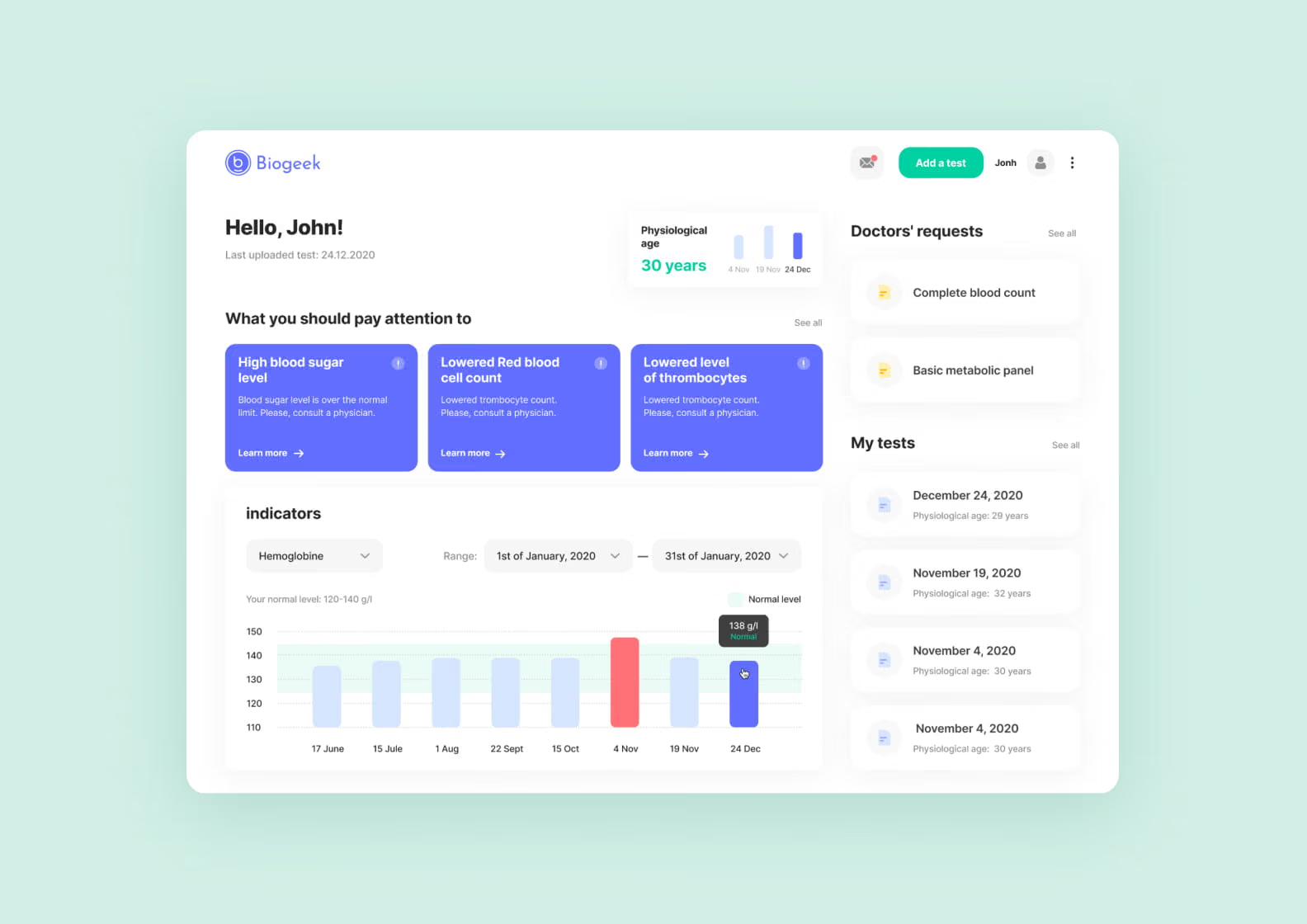
We built Biogeek to keep patient data, test results, and doctor interactions in one place. Because the client planned to expand, we designed the medical record for growth beyond the MVP.
Biogeek does not use speech recognition. The relevant lesson is structural: a custom voice feature has to work with the record and permissions already inside the product.
A useful pilot asks whether an AI tool improves a process after corrections. Baseline the current speech recognition process within the broader healthcare workflow transformation, then test everyday staff conditions. Expand only when the team can recover failed drafts and compare the result with that baseline.
Record time-in-note, correction rate, same-day closure, and task load.
Use a specialty data set and decide who reviews each draft.
Check patient data mapping, dropped connections, retries, audit logs, and draft recovery across clinical documentation modules in an EHR.
One 2025 randomized trial followed 238 outpatient physicians. One ambient scribe reduced time-in-note by 9.5%, while a second did not produce a significant change. Clinicians still reported occasional errors that could affect care. The result supports product-specific pilots, not a promise for every tool.
Roll out by process or specialty and keep tracking edits, incidents, and adoption.
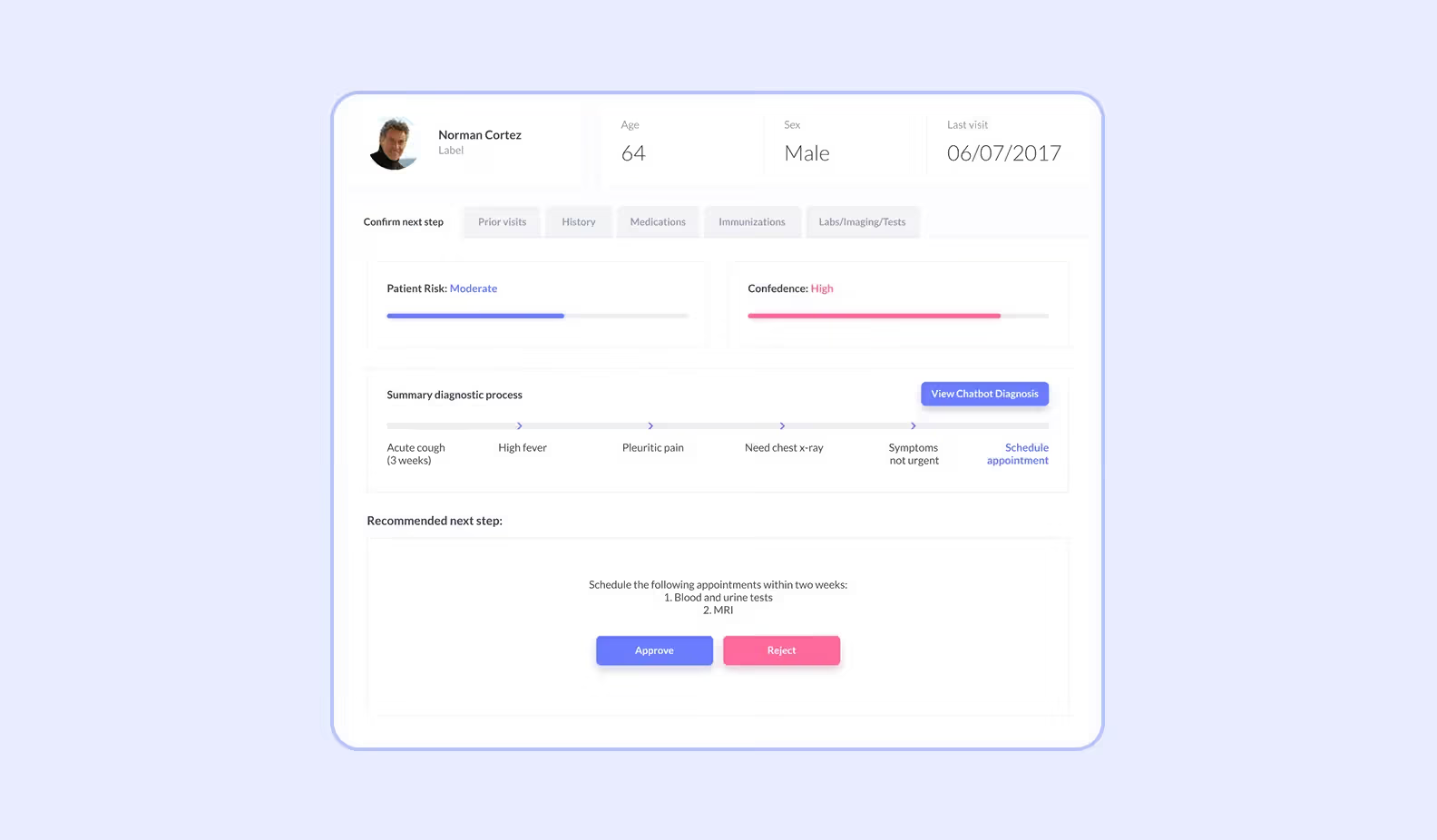
We designed the first clickable prototype for Lytic Health, now Clearstep. A user selects their symptoms, answers the chatbot's follow-up questions, and moves to appointment booking when the flow flags a potentially serious issue.
The founders needed something concrete enough to explain the product before investing in the full platform. We mapped the decision flow, designed the patient and clinician screens, and delivered the prototype in about two weeks for $1,500. They used it to raise $400,000.
Lytic Health was not a voice product, but the rollout lesson is relevant here: prove one end-to-end process with users before building the complete system.
The technology is useful when it fits a real process and leaves people in control of the record. Start with one task, test the language and conditions your team actually works with, and measure corrections before expanding. The documentation process can become lighter, but only when the record connection, review step, and privacy rules work together.
➡️ Planning a voice-enabled healthcare product? Tell us what you are building, and we'll help you define a pilot that can be tested before a full rollout.
The technology converts spoken clinical language into text, commands, or structured data. Clinical teams use it for draft notes, chart navigation, telehealth controls, diagnostic reporting, and other documentation processes. The output should receive human review before it becomes part of the medical record.
Care teams use the technology to dictate notes, populate record fields, create visit summaries, control systems hands-free, and support ambient documentation. The safest implementations start with one defined process and connect to the correct patient context. They also require human review for omissions, substitutions, or clinically significant errors.
Accuracy depends on specialty vocabulary, audio quality, accents, speaker overlap, microphone setup, and the task being measured. A system can transcribe general speech well yet miss medications or treatments. Clinics should test word error rate and critical-field accuracy on their own recordings before production use.
The technology is not automatically HIPAA compliant. Compliance depends on how protected health information is captured, transmitted, stored, accessed, and deleted. Organizations should review the vendor agreement, encryption, access controls, audit logs, and retention policy. They should also check the hosting location and incident-response process before deployment.
Record integration usually connects audio capture and speech recognition to a medical language layer, patient context, and templates. It reaches the record through supported APIs or interoperability standards. The system should write drafts to the correct record, preserve an audit trail, handle failures visibly, and require human approval before finalization.


.svg)