Explore

Need help with your project?

Oops! Something went wrong while submitting the form.
RPA in banking is software that does the rule-based back-office work a person used to click through. Pulling up documents for a KYC check. Retyping loan data from one system into another. Assembling the same compliance report every month.

The bots operate the same screens and APIs your staff already use. That is why robotic process automation in banking sits on top of a core banking system instead of replacing it.
Most banks don't get stuck choosing a bot. They get stuck on the process underneath it, and on the moment that bot has to reach into a twenty-year-old core. This guide covers the use cases that pay off, what an implementation really costs, where these projects break, and how RPA is merging with AI.
An RPA bot is not a physical robot and not a brain. It is a script that repeats a sequence a clerk used to perform by hand, step by step, in the same order, every time. Below is what that means inside a bank, and where the line sits between RPA and AI.
Software robots work through the interfaces a financial institution already has. A bot logs into the loan system with its own credentials and opens the application. It reads the applicant's income field, checks it against the credit bureau response, then writes the result back into the core. If a field is missing, it doesn't improvise. It stops and hands the case to a human.
That is the whole trick, and it's also the whole limit. RPA technology is deterministic. It automates the repetitive tasks of a business process you can write down as rules, and it fails loudly on anything you can't. Banks like this property more than they admit, because every action a bot takes is logged, timestamped, and replayable in an audit.
This article stays inside banking. For the wider view of RPA in finance across corporate workflows, payables and month-end close, see our guide to RPA in financial operations.
RPA follows rules. Artificial intelligence (AI) estimates. A bot moves a mortgage file between systems without judgment, while a model scoring that mortgage for fraud risk produces a probability, not a fact.
The two get stitched together, and that combination has a name: intelligent automation. Optical character recognition (OCR) reads the scanned passport. Natural language processing pulls the intent out of a customer email. The RPA layer then takes the extracted value and drives it through the workflow.
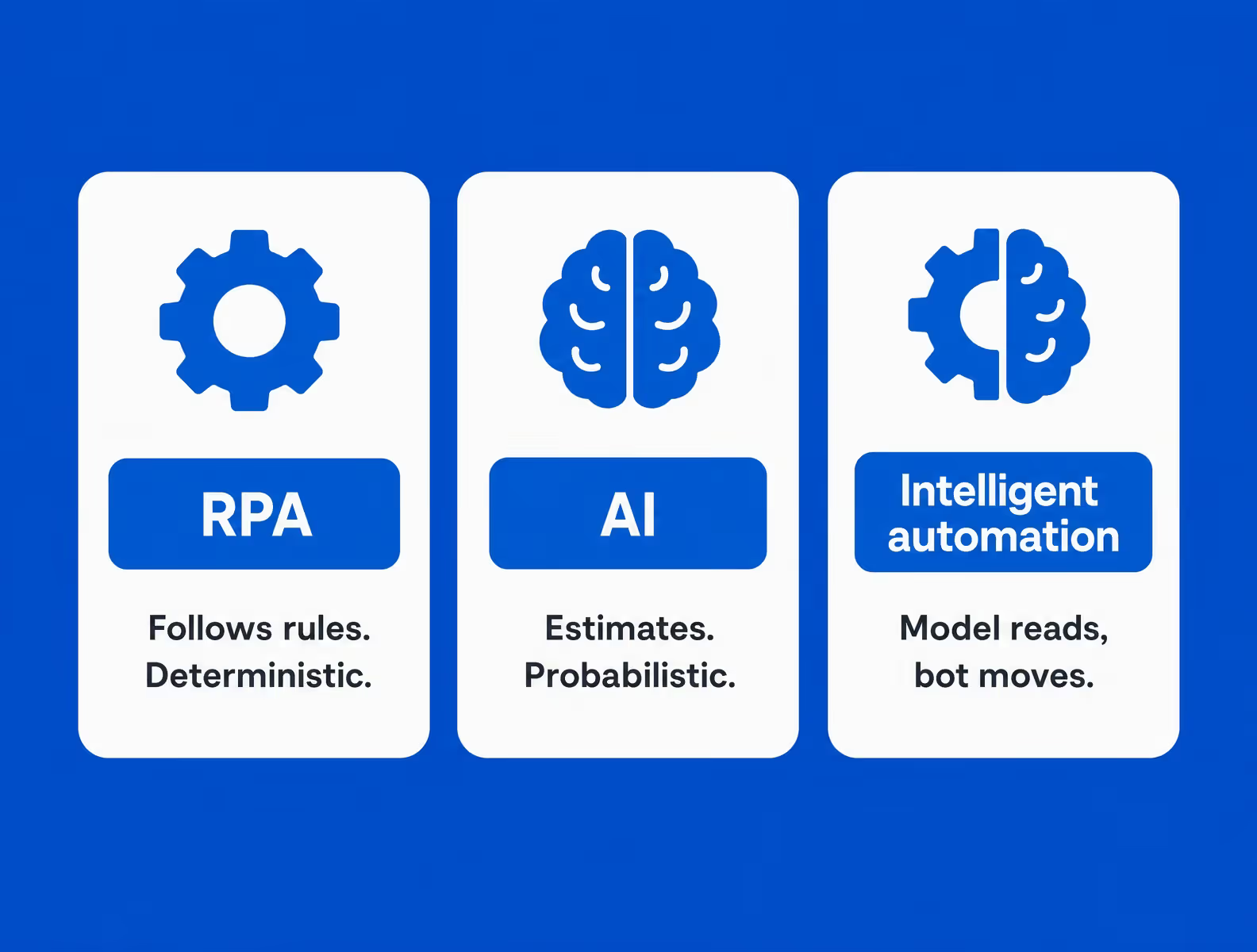
RPA never guesses. That is its limitation and the reason auditors like it
The practical consequence for a bank is simple. If a process has exceptions that need a human judgment call, RPA alone will break on them. You either narrow the process until the rules cover it, or you add a model in front of the bot.
The back office is where a bank's operational costs quietly live. A compliance analyst spends the morning copying transaction data into a reporting template. An onboarding clerk retypes the same customer information into three systems that don't talk to each other. None of these manual tasks are hard. They are just work that never ends, and it scales linearly with the number of customers.
The money is following that pain. The banking sector, with the rest of financial services, is the largest end-user segment of the automation market. The market is forecast to grow several times over by 2035. Automation is quietly becoming the load-bearing part of digital transformation in banking. Forecasts are forecasts. What they tell you is where the vendors are pointing, not what your bank will save.
Two things changed recently. Compliance reporting keeps expanding while headcount does not, and that squeezes a small credit union harder than a national bank.
Customers also judge a bank by how fast an account opens now, not by how thick the branch carpet is.
A bank that takes three days to verify a document competes against one that does it in ten minutes. That expectation drives spending on customer experience at the front end, from account opening flows to mobile banking app development. RPA is what keeps the back office from becoming the bottleneck behind that front end.

.svg)

The banking operations worth automating share a shape. High volume, clear rules, structured data, and a paper trail somebody has to produce anyway. The ten below are where banks put their first bots, ordered roughly by how commonly they show up as an entry point.
A KYC (know your customer) review is mostly retrieval. The bot collects the customer's documents and runs the name against sanctions and politically exposed person lists. It pulls the registry record for a business client, then assembles the file an analyst signs off on. The analyst still makes the judgment call. They just stop spending forty minutes assembling the evidence first.
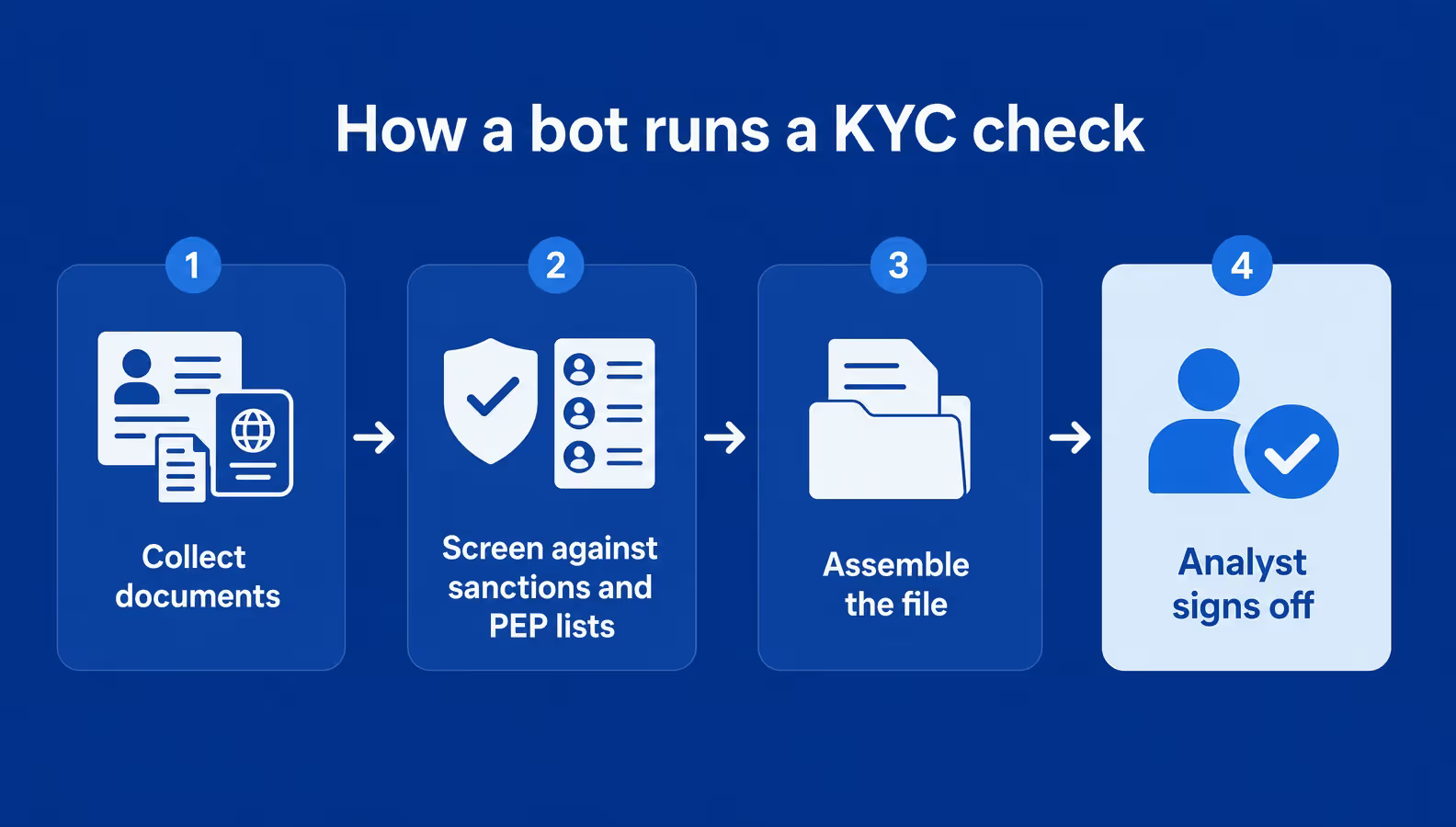
The bot builds the evidence, the analyst still makes the call
Customer onboarding breaks because the same data gets entered several times into systems that were never introduced to each other. This is where banks most often use RPA end-to-end. A bot takes the application, validates the fields, creates the record in the core, provisions the card, and triggers the welcome journey.
The back office is only half of it. The account-opening flow inside the app is its own discipline, and we cover it separately in banking app development.
We designed the sign-up flow for an Arabic-language crypto exchange. Verification there demands a passport, a bank card, biometrics, and utility bills, and the exchange is not allowed to ask for less.
That constraint is the interesting part. We couldn't shorten the compliance requirement, so we stopped trying. Instead we rebuilt what surrounds it: a guest mode that lets people explore the product before verification, an upfront screen that says exactly what will be asked and why, and a progress bar so the queue has a visible end.
The lesson transfers directly to bank onboarding. The regulated step is fixed. Everything around it is a design problem.
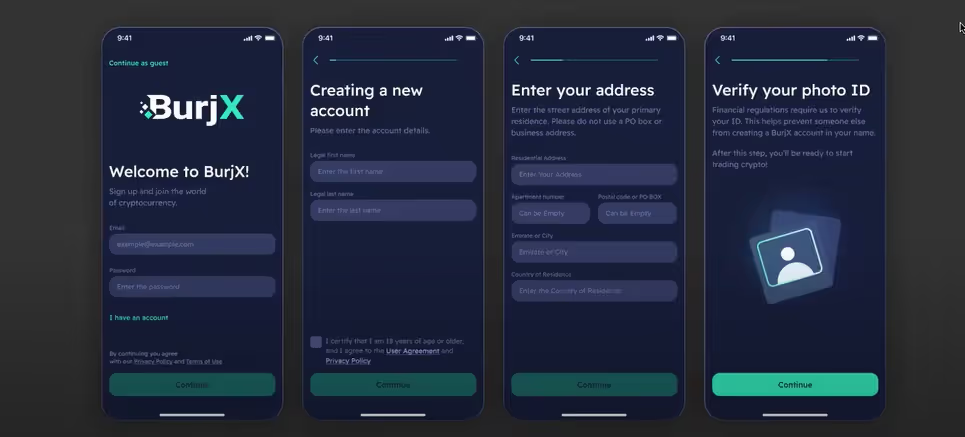
The compliance step is not negotiable, so the work goes into everything wrapped around it
Bots don't spot fraud. Models do. What the bot does is everything around the alert: pulling the transaction history, freezing the card, opening the case, notifying the customer, and filing the paperwork. That is why fraud detection is usually the first place a bank bolts a model onto a bot.
Loan origination is a relay race between systems. The bot pulls the credit score, extracts income figures from uploaded payslips, checks them against the application, and pushes a complete package to the underwriter. Underwriting stays human. The assembly of the file, which is where the days go, does not have to be.
This is where the automation pays for itself, because the deadlines are legal rather than internal. Anti-money laundering (AML) work is the bulk of it.
The Bank Secrecy Act (BSA) requires a Currency Transaction Report on cash activity above $10,000 and a Suspicious Activity Report within 30 days of detection. Under the Gramm-Leach-Bliley Act (GLBA), a breach affecting more than 500 people has to reach the FTC within 30 days.
Bots are good at exactly this: gather, populate, submit on schedule, log everything.
If the bank operates in Europe, two more land on the same pile. The revised Payment Services Directive (PSD2) forces banks to open account APIs to licensed third parties.
The Digital Operational Resilience Act (DORA) has been in force across the EU since January 2025. It requires a maintained register of every technology vendor contract, plus standardized incident reporting. Both are deadline-driven paperwork, which is exactly what a bot is for.
Card operations run on payment networks with fixed deadlines. A dispute arrives as a form and leaves as a decision, with the clock running in between. The bot opens the case, retrieves the transaction, and matches it against the merchant record. It issues the provisional credit and files the chargeback with the card network before the clock runs out.
Account reconciliation is comparison work: statement against ledger, line by line. A bot matches what matches and escalates only the exceptions. The team's day changes from finding the twelve breaks to resolving them.
Journal entries, intercompany postings, and month-end close involve moving numbers between systems on a calendar. Bots handle the posting and flag anything that fails a validation rule, which shortens close without touching the accounting policy behind it.
Closing an account touches more systems than opening one: the core, the cards, the direct debits, the archive, the retention clock. Missing one leaves a compliance tail. A bot follows the checklist the same way every time, which is precisely the property an auditor cares about.
Behind the chat window, most requests are lookups. A bot fetches the balance, resends the statement, updates the address across systems, and opens a ticket when the request needs a person. Agents keep the conversations that actually need a human on the other end.
The difference isn't only speed. It's what happens to the exceptions, the audit trail, and the people who used to do the clicking. Here is the same set of processes seen from both sides.
| Process | Manual today | With RPA | What actually changes |
| KYC review | Analyst gathers documents, checks lists, builds the file by hand | Bot assembles the file and the check results, analyst reviews and signs | The judgment stays human, the evidence-gathering stops being a job |
| Loan processing | Data is retyped between the application, the bureau, and the core | Bot extracts, validates, and hands the underwriter a complete package | Applications stop waiting in a queue for someone to open them |
| Compliance reporting | Data pulled by hand into templates, filed against a legal deadline | Bot gathers, populates, submits on schedule, logs every action | Deadline risk drops and the audit trail is generated, not reconstructed |
| Reconciliation | Analyst compares statement to ledger, line by line | Bot matches everything that matches, escalates only the breaks | The team resolves exceptions instead of hunting for them |
| Onboarding | Same customer data entered into several disconnected systems | Bot creates the record once and propagates it | Rekeying errors disappear because there is no rekeying |
One column is deliberately missing: a percentage. Vendor material tends to promise a fixed cut in handling time, but the number depends entirely on how standardized your process was before the bot arrived. A messy process automated is still a messy process, just faster.
Search this topic and you'll meet the same statistic everywhere: 25,000 hours and $878,000 saved a year. It traces back to a Gartner press release from 2019, and it was never about banks. Gartner was describing avoidable rework in a corporate finance department, priced against a team of 40. It gets quoted as if it were measured in your bank, last quarter.
So here are the benefits of RPA that hold up without a borrowed number attached.
Cost savings are real, but they follow the process work, not the software license. That is the honest version of the ROI story, and it is the one nobody puts in a headline.
Nobody can quote a price for "RPA" any more than for "software." What a vendor can do is name the parts of the bill, and say which one tends to surprise people.
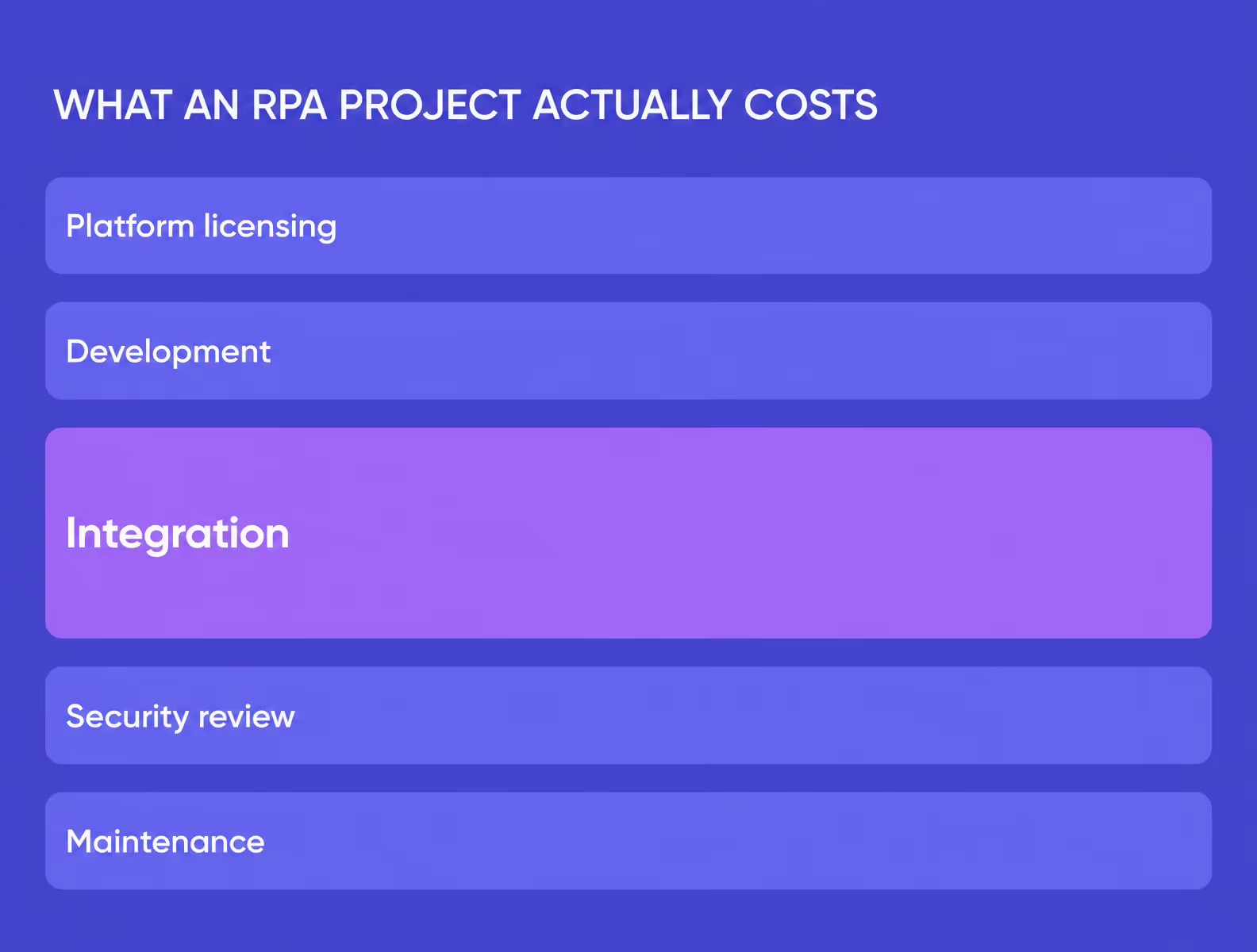
Everyone budgets for the license. The integration is the line that moves the date
Vendor pages like to headline a first-year figure for a mid-sized bank in the six-to-seven-figure range. Treat that as the price of a full program with a center of excellence, governance, and a portfolio of processes, because that's what it is measuring.
That is not how a sane first step looks. A proof of concept on a single process, with the integration stubbed or read-only, typically runs 2 to 4 weeks of a small team. Its job is not to save money. Its job is to find out whether the process you described actually behaves the way you described it, before anyone signs a platform license.
The ROI timeline follows from that. Automate one high-volume, boring, well-understood process, measure it honestly, and let the second one be funded by the first.
The order matters more than the tooling. Teams that implement RPA successfully spend their first weeks on the process and their last weeks on the software. Teams that do it the other way around end up with a licensed bot waiting for a decision nobody has made.
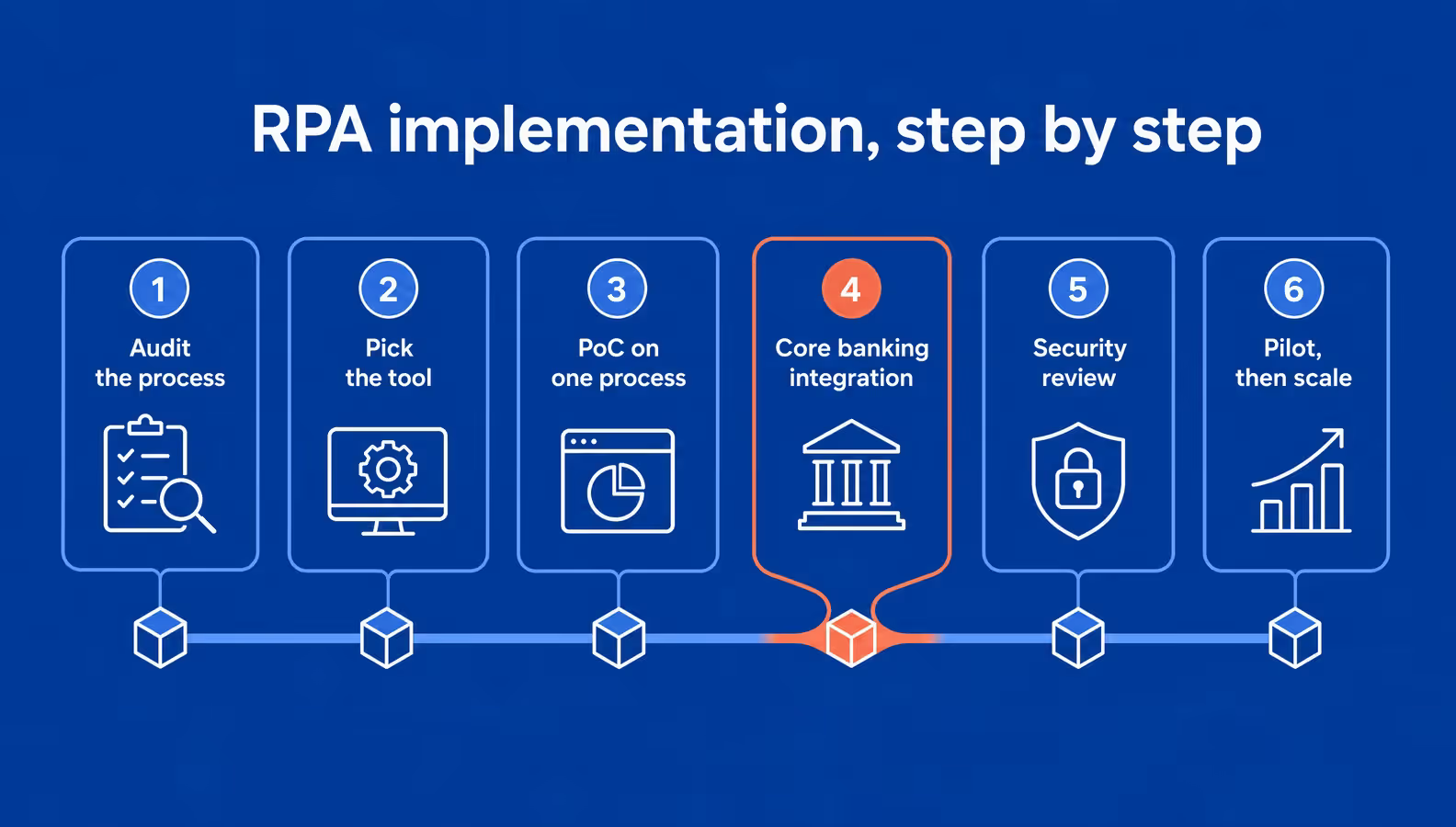
The tooling is step two. The first step is finding out what the process really does
Sit with the people who do the work and watch them do it. What you find is rarely the process in the manual. There's a spreadsheet on someone's desktop that the official flow doesn't mention, and three exceptions that "hardly ever happen" and happen daily. Automating the documented version of a process that isn't the real one is the most common way these projects fail.
Once the process is written down honestly, the tool choice mostly writes itself. A shortlist of platforms and what separates them is in the comparison further down.
One process, read-only where possible, a small team, a few weeks. The goal is evidence: does the bot handle the real exception rate, or only the happy path you were shown in the workshop.
This is where the calendar gets eaten. The integration surface is very different depending on what you run, and the marketing word "API-first" hides a lot.
Fiserv exposes a developer portal with a sandbox you can build against before signing anything. FIS publishes Code Connect, a large API catalog bridging mainframe systems. It exists precisely because the older way in was a dedicated network connection rather than a public endpoint.
Finacle offers an API layer with webhooks. Temenos, the fourth platform banks commonly run, publishes no comparable public integration detail, so what you get there depends on your contract.
Two failure modes recur. The legacy endpoint doesn't expose the field the bot needs, so someone proposes screen-scraping the UI. Now the automation breaks whenever the vendor ships a cosmetic update. Or the data lives in a system that was never meant to be read by a machine at all. Where the core sits also shapes this, which is its own topic in cloud computing in banking.
We built KEM, a peer-to-peer payment app for the Kuwaiti market, where users send money and link their cards.
The banks there don't hand out API access. Live access was conditional on the entire development team relocating to Kuwait, because of data-residency rules. We had a product to prove and no real bank data to prove it with.
So we built the backend against synthetic data and made the demo good enough to win the bank and investor conversation on its merits. The live-API phase was then handed to an in-country team hired for exactly that. The app went on to raise $1M and pass 100K users.
It is not an RPA project. But the shape of the problem is the one every banking automation hits: the institution's data is behind a door, and the engineering question is what you can honestly build before it opens.
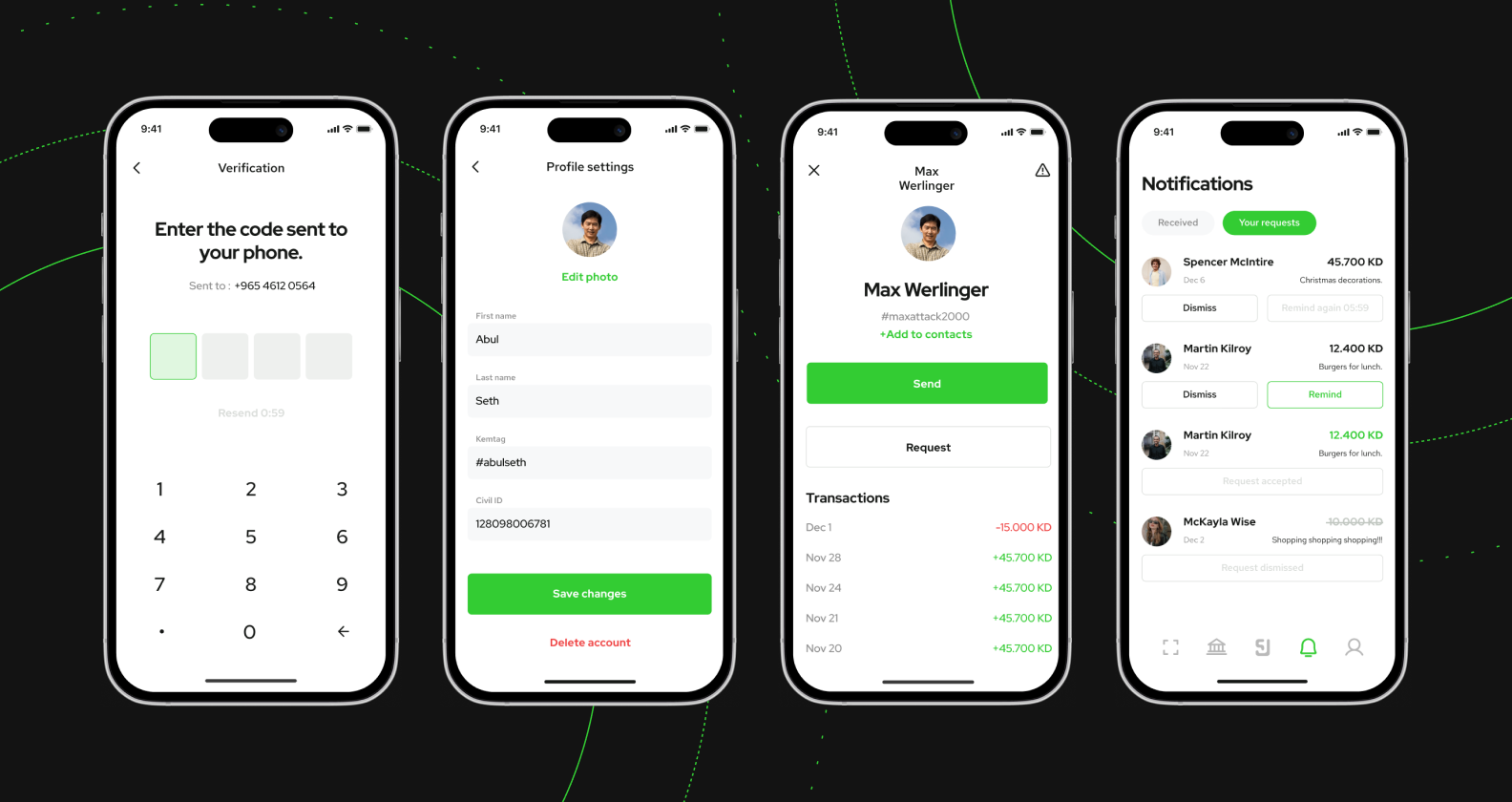
When the core won't open, the work is proving the product without it
A bot is a new user in your bank. It has credentials, permissions, and access to customer data, and it has to survive the same scrutiny a person would.
Teams that settle three questions early move through this fastest: who owns the bot's identity, how its secrets rotate, and what it is forbidden to touch. Security brought in at the pilot stage costs a fraction of security brought in after it.
The bots that scale run beside the humans first, not instead of them. What decides whether a banking institution can deploy RPA more widely is the exception rate, not the success rate. The second process comes after that number is known, not before.
None of these are reasons not to automate. They are the things that decide whether the second bot ever gets built.
| Challenge | What it looks like | How teams solve it |
| Legacy integration | The core won't expose the field the bot needs | Map the data path during the audit, not during the build. Treat screen-scraping as a last resort with a maintenance budget attached |
| Process standardization | Three branches run "the same" process three ways | Standardize first, automate second. The bot cannot average out a disagreement |
| Change management | Staff read the bot as a layoff memo | Give the bot the assembly work and leave the judgment with people, then say so plainly |
| Bot maintenance | A vendor UI update silently breaks the automation | Assign an owner per bot and monitor exception rates, not just uptime |
| Data security | A bot holds credentials to customer data | Give it its own identity, rotate its secrets, scope its permissions to the single process |
The one that catches teams off guard is a dependency they don't own. When your automation runs against someone else's system, their limits become your architecture.
On a crypto wallet build, the client wanted no backend, so every balance and price lookup went straight to third-party APIs.
That works until you read the fine print. One provider capped us at five requests per second. Another had a hard ceiling of 100,000 requests a month, so past a certain point the next user got an error instead of a balance. The product was fine. The ceiling wasn't.
We rerouted the heavy calls to a provider with more headroom and a cheaper call pattern, one request per lookup instead of two, at 25 a second instead of five. The quota-metered one we switched to count per device rather than per user. The app shipped on deadline, 1,268 hours of work, with no extra backend cost.
A bot hammering a core banking API it doesn't own hits the same wall. The limit belongs to somebody else, and you design around it or you pay for it.
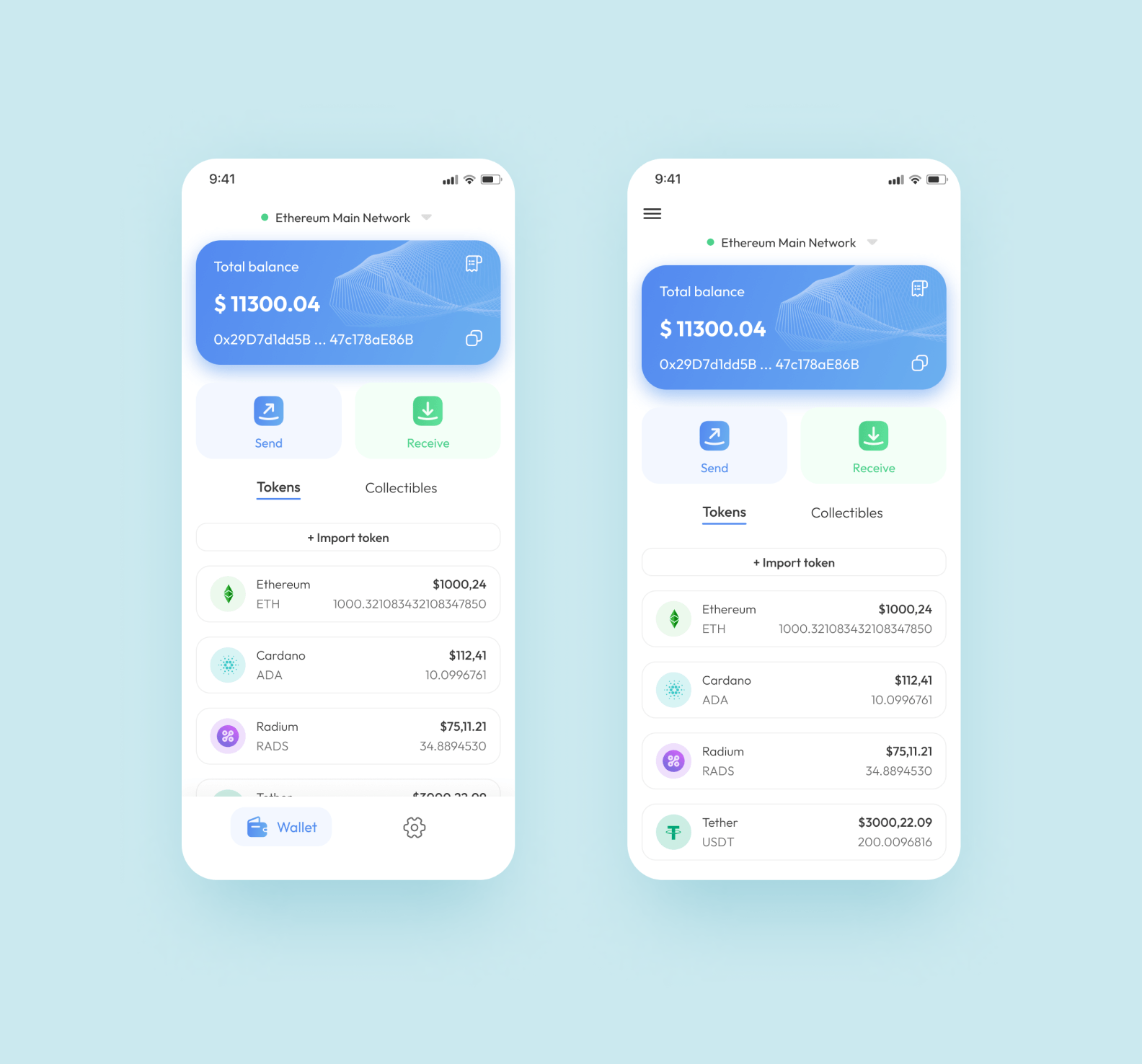
Somebody else's rate limit becomes your architecture the moment you depend on it
Plain RPA stops at the first thing it can't read. That is why most banking automation now ships with a model in front of it. OCR turns a scanned statement into fields. Natural language processing classifies an incoming complaint. Machine learning scores a transaction for fraud.
The bot still does the moving. The model handles the part that isn't a rule.
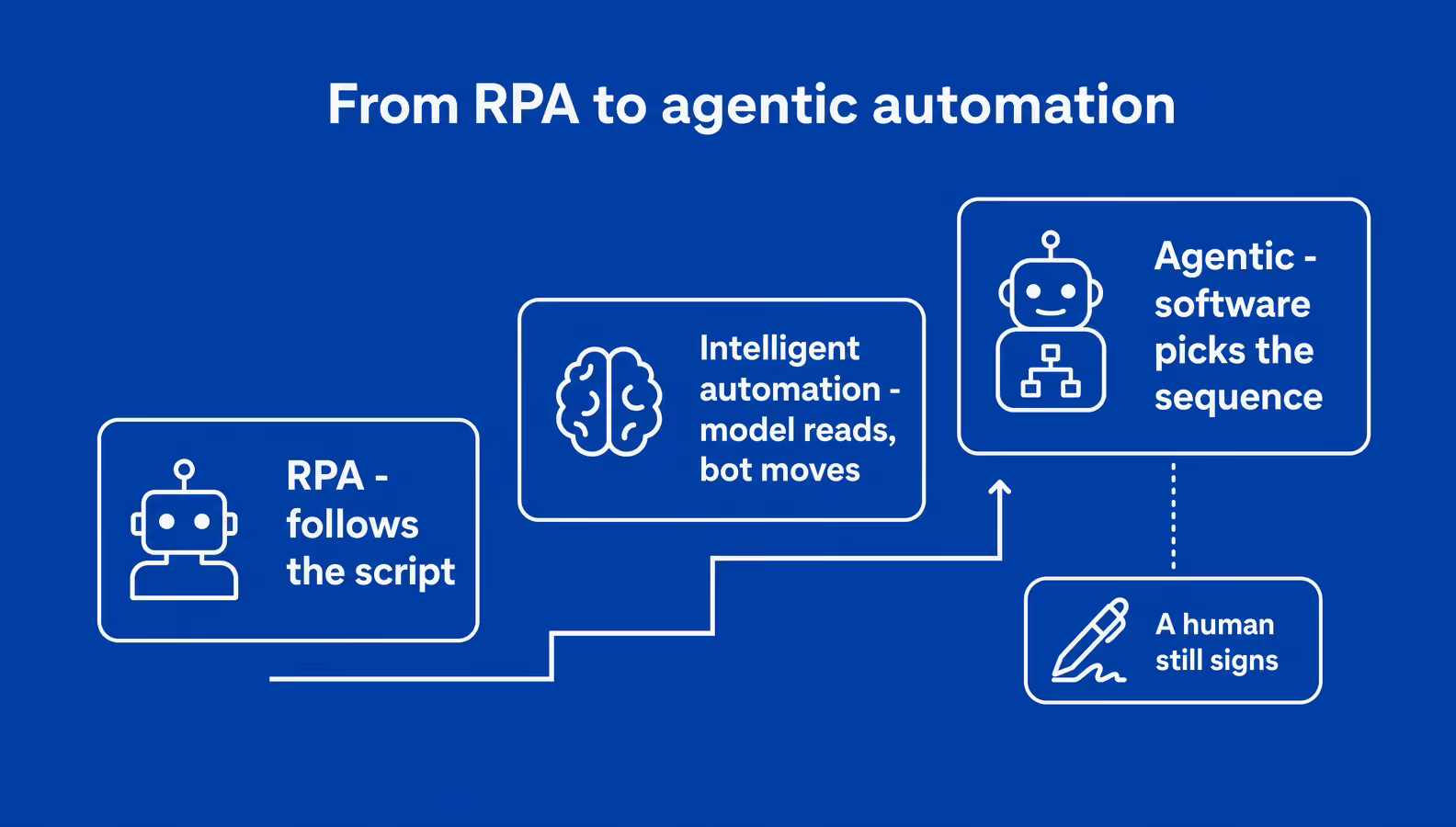
Each step up hands the software more judgment, and makes the audit trail matter more
The industry calls the combination intelligent automation, and the money is following it. In a Deloitte survey of 542 financial services leaders, 47% of the most advanced adopters said ROI from their generative AI work already exceeds expectations. That is self-reported, by the group most invested in the answer. Read it as appetite, not as proof.
The next label is already here. Vendors are rebranding toward agentic automation, where the software decides the sequence instead of following one.
For a regulated bank that raises an obvious question. Who signs off on a decision no human scripted?
Somebody in the bank still does, and the regulator will ask for their name. In practice that lands with whoever owns model risk, which is why agentic automation makes the audit trail more important, not less. Digital-first banks hit this question earliest, since automation sits in the operating model from the start rather than being retrofitted into one. That is part of what it takes to build a neobank.
We built a compliance reporting service that replaced a 100-page manual document with a role-based digital workflow.
The constraint was the filing deadline. It didn't move, and it compressed a six-month scope into four. Sequential sprints wouldn't have made it.
So we ran the build in parallel tracks and wrote a script that bulk-loaded reference answers out of an 800-page standard, instead of having people retype them. Later we added a GPT-4 layer that drafts an answer for the user to edit rather than starting from a blank field.
That is the intelligent-automation pattern in miniature: a script for the mechanical part, a model for the judgment-shaped part, a human on the sign-off.
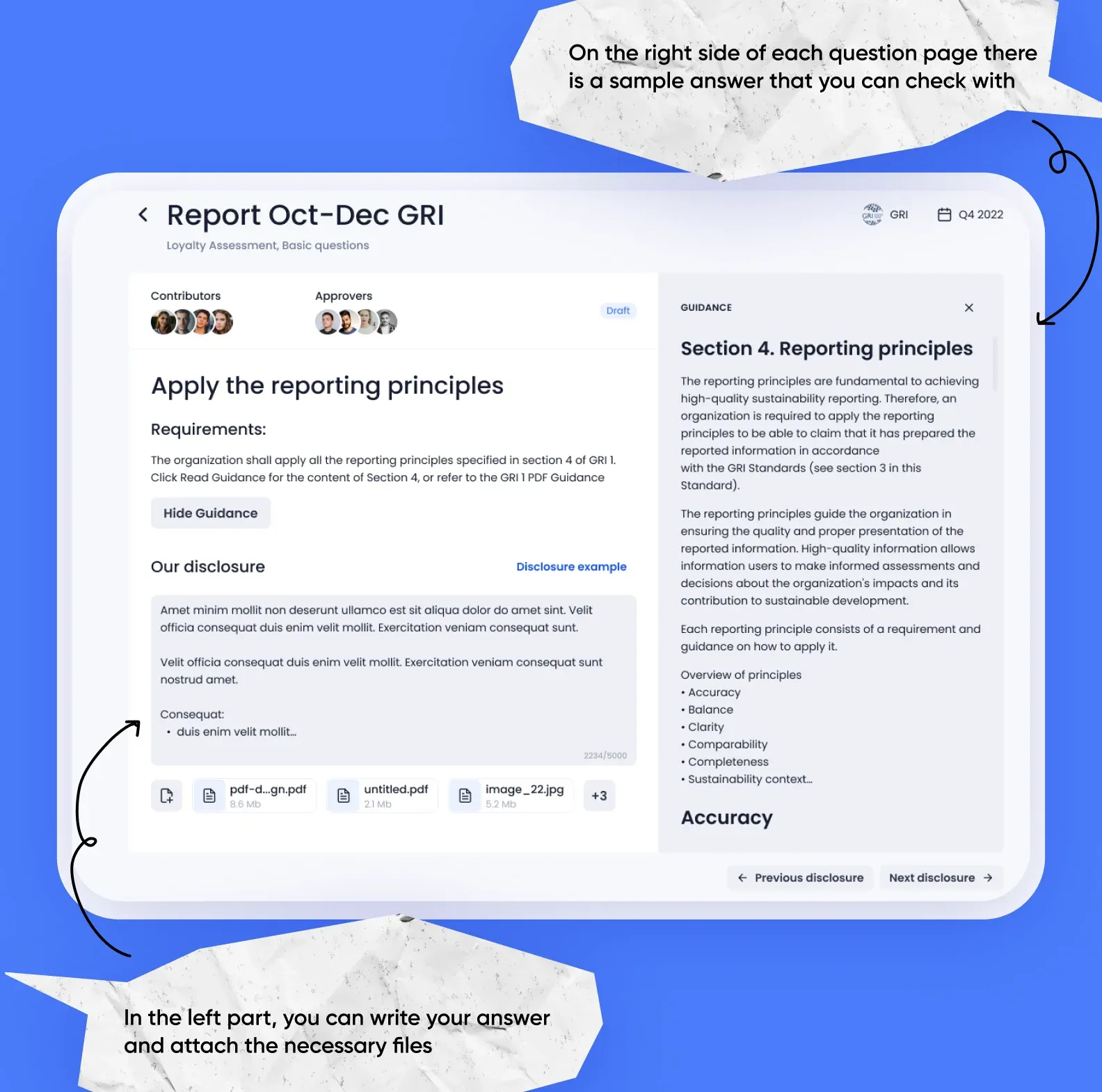
The script moves the data, the model drafts the answer, the human still signs it
We build custom software, so we have no vendor to sell you. Here is how the four RPA software platforms banks usually shortlist actually differ, and what separates one automation tool from another once you get past the demo.
| Platform | Best for | Banking integrations | Licensing model | Development complexity |
| UiPath | Broad enterprise programs with many processes | Large connector ecosystem, mature document processing | Per-bot and per-process, with a separate developer tier | Full development discipline, versioning and testing included |
| Microsoft Power Automate | Banks already standardized on Microsoft 365 and Azure | Deep into the Microsoft estate, weaker outside it | Bundled into Microsoft licensing, cheap to start | Low barrier, easy to sprawl without governance |
| Blue Prism | Regulated environments where control is the priority | Enterprise-grade, historically strong in financial services | Per-bot, enterprise agreements | Steeper learning curve, developer-centric by design |
| Automation Anywhere | Cloud-first deployments and mixed bot estates | Solid API and connector coverage, growing AI layer | Cloud subscription, per-bot | Mid-range, visual builder with a real SDK behind it |
The comparison that decides the choice is not on this table. It is whether the RPA solution can reach your core banking system the way you need it to, and only your integration path answers that. Prove it in the proof of concept, before the license renews for a second year.
RPA in banking is not a technology decision. The projects in this article weren't RPA builds, but they turned on the same two things any automation program turns on. How honestly the process was written down before anyone opened a tool. And what the system holding the data was actually willing to hand over.
The banks that get this right start with one process that is high volume, boring, and well understood. They watch the people who run it today, exceptions included, and they prove the integration path on a small scale before the license conversation starts. The second process gets paid for by the first.
➡️ If you want a second opinion on which process to automate first, or on whether your core will cooperate, talk to us. We'll scope it with you and come back with an estimate in 48 hours.
RPA stands for robotic process automation. In a bank it means software robots that do rule-based back-office tasks the way a clerk would. They open systems, read fields, move data between them, and log every step. The robots are scripts, not machines, and they work through the interfaces staff already use.
The platforms banks shortlist most often are UiPath, Microsoft Power Automate, Blue Prism, and Automation Anywhere. UiPath suits broad enterprise programs. Power Automate fits banks already standardized on Microsoft. Blue Prism is built for tightly controlled regulated environments. The right one depends on your core banking integration path.
The bill has five parts: platform licensing, development, integration, security review, and maintenance. Integration with the core banking system is the line that usually surprises teams. A proof of concept on a single process typically takes two to four weeks of a small team, and it should come before any platform license is signed.
RPA gathers the evidence and files the paperwork against legal deadlines. Bots assemble KYC files and screen names against sanctions and PEP lists. They compile reports such as the Currency Transaction Report and Suspicious Activity Report required under the Bank Secrecy Act. The analyst still makes the judgment call.
RPA follows rules, AI estimates. A bot moves a mortgage file between systems exactly as scripted, while a model scoring that file for fraud risk returns a probability. Combining them is called intelligent automation: OCR and NLP read unstructured input, and the bot drives the result through the workflow.
The best candidates are high volume, rule-based, and built on structured data, with a paper trail that has to exist anyway. KYC checks, account opening, reconciliation, compliance reporting, card disputes, and account closure all qualify. Processes that need human judgment on every case do not.