Explore

Need help with your project?

Oops! Something went wrong while submitting the form.
Finding a software development partner in Los Angeles means sorting through companies with very different strengths. Some focus on early products, while others build enterprise systems or AI solutions. The useful question is which team has delivered similar software and works in a way that fits your organization.
In this guide, we'll compare ten companies serving Los Angeles buyers by project fit, verified capabilities, delivery model, and support. We also separate market relevance from office presence and distinguish full delivery partners from teams that join an existing process.

We selected these custom software development companies through six weighted factors. The factors cover Los Angeles market relevance, verified product work, delivery quality, technical depth, and support. Office location alone did not increase a company's position.
The first three factors carry equal weight. Together, they show whether a provider fits the buyer, can build the required product, and supports its claims with real work.
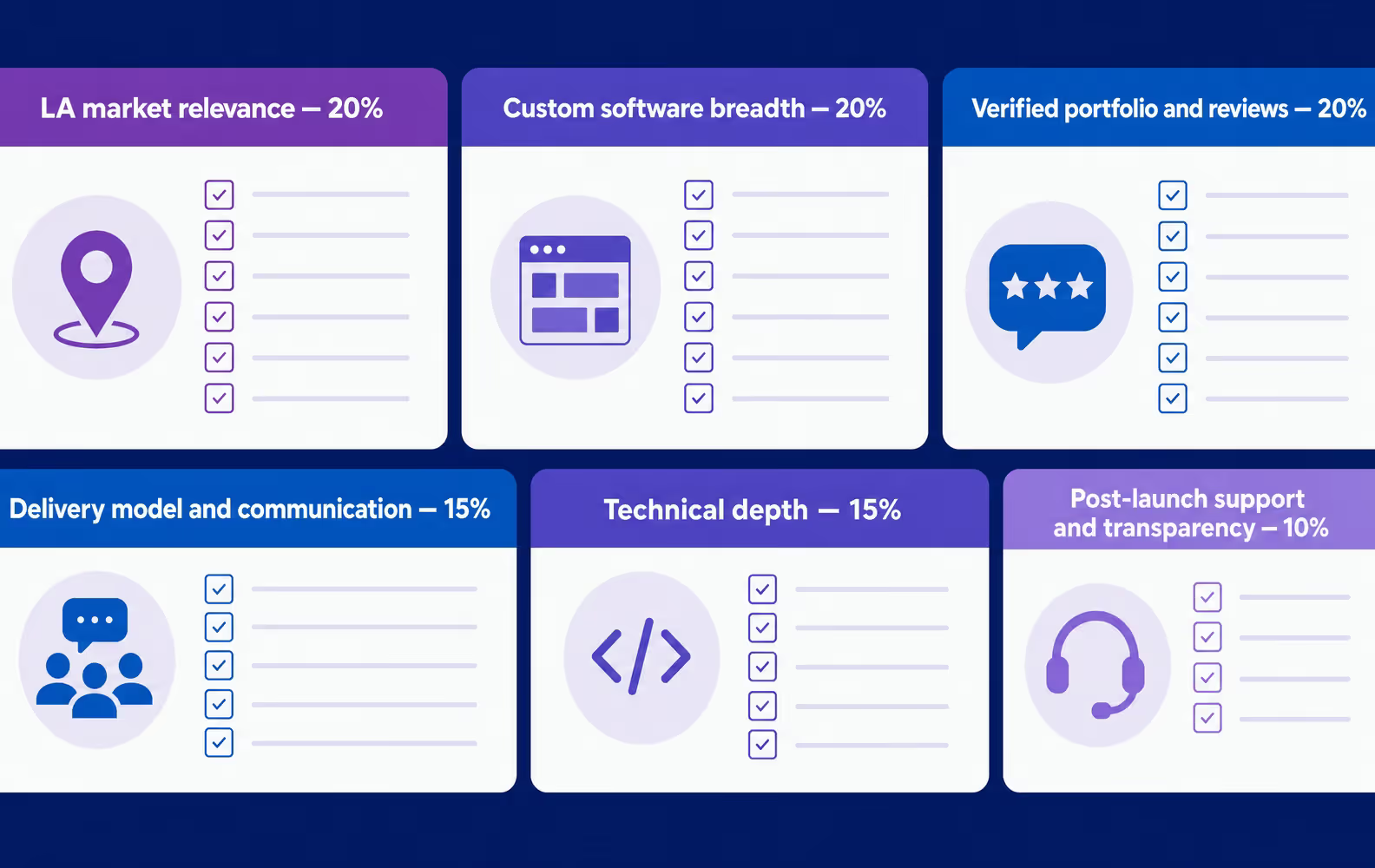
The scorecard separates market relevance from engineering and delivery evidence
Demand for engineering talent provides context for the size of the market. California's employment department projects 21.4% growth in software developer employment in Los Angeles County between 2022 and 2032. A regional labor report also identifies a critical need for software development, data analytics, artificial intelligence, and cybersecurity skills.
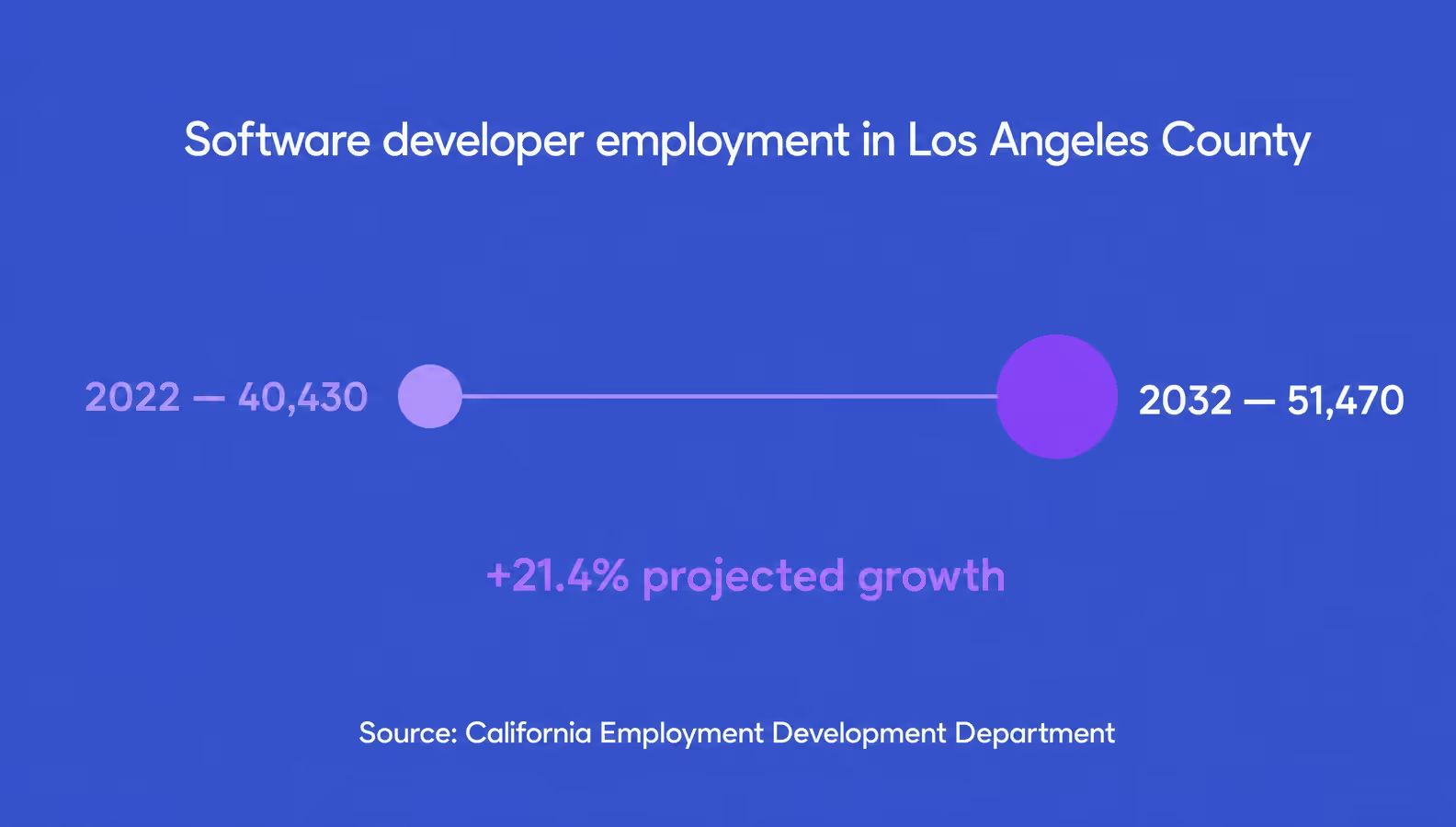
The projection adds 11,040 software developer roles over the decade
These figures do not affect individual company scores. They explain why buyers can compare local, remote, and nearshore teams within the same market.
Software development in Los Angeles spans companies with different product focuses and engagement models. This table maps software companies in Los Angeles to a practical use case before the detailed profiles. LA relevance means access to the market, not proof of a physical office.
| Company | Best for | Core services | Delivery footprint | LA relevance |
| Purrweb | Product validation | UI/UX, web, mobile, AI | Integrated product team | Remote US delivery |
| Goji Labs | Strategy-led products | Strategy, UX/UI, web, mobile, AI | Discovery-to-launch agency | Serves LA buyers |
| Saritasa | Cross-platform systems | Web, mobile, desktop, IoT, databases | Multidisciplinary engineering | Serves LA buyers |
| Rootstrap | AI and modernization | Product, AI, data, UX, cloud | Studio, sprint, or augmentation | LA ranking presence |
| Simform | Enterprise platforms | Cloud, data, AI, applications | Engineering and managed services | Serves LA buyers |
| Jelvix | Enterprise transformation | Enterprise, SaaS, mobile, AI, DevOps | Full-cycle or dedicated team | LA directory presence |
| ISBX | Connected products | Software, AI, MedTech, IoT, UX, QA | Strategy-to-launch team | Serves LA buyers |
| Serious Development | Operational workflows | Software, automation, AI, portals | Consulting through delivery | Serves LA buyers |
| Idea Maker | Custom products for SMBs | Web, SaaS, integrations, AI | Focused full-stack team | Serves LA buyers |
| Empat | Products and team extension | Validation, mobile, web, SaaS, AI | Full-cycle or augmentation | Serves LA buyers |
The profiles explain the evidence and trade-offs behind these top software companies.

Purrweb fits startups and product teams that want to validate an idea. It keeps product strategy, user experience design, and software engineering within one vendor. The studio's web development and mobile app development work extends to desktop and cross-platform software, including products with artificial intelligence features.
A typical development team covers product analysis, UI/UX design, engineering, quality assurance, and launch support. This setup gives the client one team responsible for turning an early concept or an existing specification into a working software solution. It also reduces the handoff gaps that appear when design and development are managed separately.
The model suits teams that want an active delivery partner for custom software solutions rather than engineers assigned to a predefined backlog. Purrweb can help clarify product scope and technical trade-offs before development, then continue with maintenance and feature work after launch.
For Los Angeles buyers, collaboration is remote. The trade-off is that organizations requiring frequent on-site workshops have to align on meeting cadence, time-zone overlap, and travel expectations before kickoff.
A marketplace project shows how this model works when launch speed and infrastructure constraints arrive together.
Purrweb designed and developed Contentplace, a web marketplace MVP, in three months. The work covered product logic, UI/UX, and engineering.
The marketplace lets creators sell rights to video content while buyers search for material suited to their projects. Purchased files remain available only to authorized users.
The difficult part was making catalog pages visible to search engines without exposing the videos behind them. Search visibility and paid access had to work together.
The solution separated searchable metadata from private files, moved storage and processing to AWS services, and used Stripe Connect for marketplace payments. Public pages could attract search traffic while paid video assets remained protected.
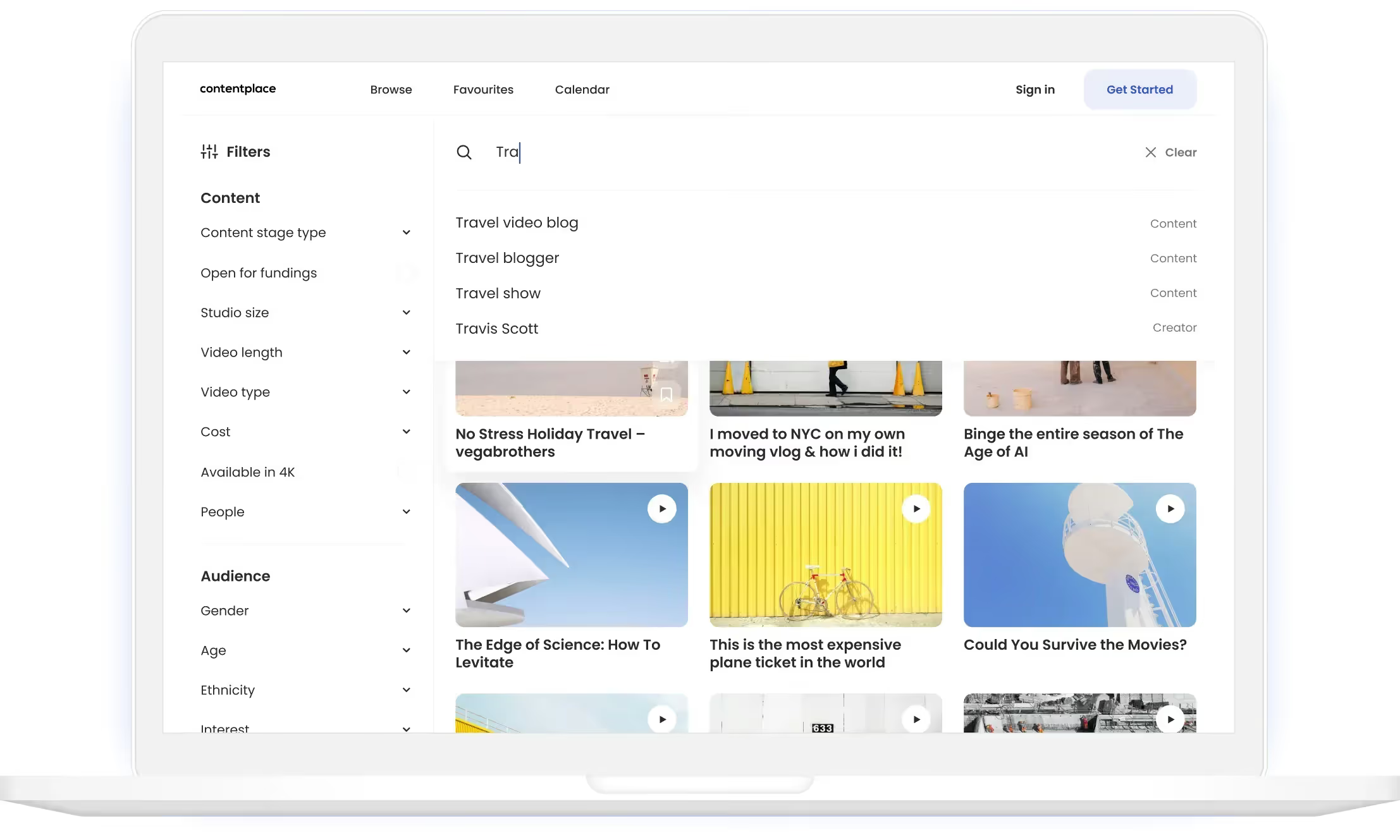
Searchable marketplace pages help buyers find content without opening access to the paid video files

.svg)

Goji Labs fits organizations that want product strategy and user research to shape the build before engineering begins. Its services combine product consulting, UX/UI design, custom software, mobile applications, and artificial intelligence product work.
Its software developers build web applications, SaaS platforms, APIs, internal tools, and consumer mobile products. Its official site reports more than 500 products launched. Published work spans healthcare, finance, education, logistics, government, and media, giving buyers useful references for different product requirements.
Strategy, design, and engineering stay within one software development agency. This suits teams still testing assumptions or refining a roadmap, not only those arriving with a fixed specification.
The trade-off is scope. A company that already owns product strategy may only need implementation. It should confirm how much research and design belongs in the engagement.
Saritasa fits organizations whose software spans platforms, devices, or existing business systems. Its capabilities include web, mobile, and desktop applications alongside cloud infrastructure and databases. The team also handles APIs, connected devices, and legacy modernization.
This range matters when software is tied to the client's operations. Saritasa can take over an existing system, replace outdated components, or build interfaces around databases and hardware. Published work includes freight-management software, medical inventory tools, and immersive training applications.
RV Halo is one example. The connected control system combines mobile software with vehicle hardware, giving users one interface for several functions.
The trade-off is breadth. A small product with a narrow feature set may not require several engineering disciplines. A clear technical scope keeps the engagement proportionate.
Rootstrap fits teams building an artificial intelligence product or modernizing software where data and automation shape the user experience. Its work combines product strategy, UX design, cloud engineering, data infrastructure, and production AI.
The company goes beyond model integration. It builds systems that retrieve information from company data, coordinates work across specialized agents, and designs interfaces around generated outputs. Engagements include product studios, focused sprints, and specialists joining an internal team.
For Hatch Coding, Rootstrap added AI-assisted features that help learners solve programming tasks and understand answers. The engagement also improved onboarding and modernized the underlying product.
The trade-off is relevance. A routine business application without meaningful data or AI complexity may not benefit from the full depth of Rootstrap's focus.
Simform fits enterprises and scale-ups that need to build, modernize, or operate a digital product over several stages. Its capabilities combine product engineering with cloud computing platforms, data systems, artificial intelligence, application development, and quality engineering.
Work can begin with strategy and discovery, continue through iterative development, then move into modernization or managed services. This gives buyers one provider for delivery and the longer operating period after launch.
Simform also offers build-operate-transfer. The vendor establishes and runs an engineering capability before transferring the team or operation to the client. This suits organizations that want external support first and stronger internal ownership later.
The trade-off is engagement weight. A small team testing a bounded prototype should confirm that the proposed process remains proportionate to the scope.
Jelvix fits organizations planning enterprise software development or modernizing systems in complex and regulated domains. Its services cover planning, prototyping, design, development, testing, deployment, modernization, and technical support.
The company works on enterprise systems, SaaS, mobile applications, artificial intelligence, and dedicated development teams. This lifecycle coverage helps when a project combines new functionality with changes to existing architecture. Discovery, implementation, and maintenance can stay within one engagement.
Published healthcare work includes platforms that connect medical data through industry standards, apply role-based access, and run analytics in cloud infrastructure. Other cases cover fintech, automotive, real estate, media, and secure document storage.
The trade-off is product scale. A lightweight website or small validation prototype is unlikely to require the enterprise process and domain depth highlighted in the portfolio.
ISBX fits organizations that want one team to move a web, mobile, or connected product from strategy through launch. Its capabilities include custom software, product design, artificial intelligence, health care technology, connected devices, quality assurance, and release support.
The custom software practice covers customer applications and their supporting systems. ISBX works on internal tools, APIs, automation, integrations, architecture, security, and ongoing support. This connects the user interface with the operational software behind it.
Published projects include opioid-treatment automation, remote clinical trials, warehouse-cleaning robots, and social learning. The work combines interfaces with data, hardware, or regulated processes.
The trade-off is service breadth. A company that only wants developers added to a fixed backlog should separate that requirement from the wider strategy-to-launch package.
Serious Development fits organizations replacing manual processes or disconnected operational tools with custom software. Its work covers web and mobile applications, automation, artificial intelligence, dashboards, messaging systems, databases, and integrations.
Engagements begin with consulting and use-case validation. The team maps the operation, identifies where software can reduce friction, and builds a delivery roadmap. This helps when the main problem is an inefficient process behind the interface.
For a regional health plan, Serious Development built a member portal that the company reports reduced support volume by 70%. Other published work includes scheduling, appointment reminders, provider onboarding, case management, and customer-service automation.
The trade-off is product orientation. A consumer team centered on brand and exploratory UX should verify that the operations-heavy portfolio matches the planned experience.
Idea Maker fits startups and small or mid-size organizations that need a custom web product, SaaS platform, or internal application. Its services cover product consulting, full-stack development, integrations, security, deployment, and support.
The company also works on artificial intelligence, automation, progressive web applications, and enterprise web software. Its process moves from design and prototyping through iterative development, launch, and maintenance. A smaller product team can keep technical planning and engineering with one vendor.
One published platform handles large spreadsheet imports, reporting, visualization, administration, and email automation. Other examples include e-learning SaaS and contractor scheduling and compliance software.
The trade-off is scale validation. A company planning a large platform program should examine the proposed team size, governance model, and long-term operating coverage during discovery.
Empat fits companies that want either a complete product team or additional engineers within an existing organization. Its services cover product validation, mobile and web applications, SaaS, artificial intelligence, outsourcing, and staff augmentation.
A full-cycle engagement moves from analysis and feature planning through design, engineering, launch, and maintenance. Buyers with an established roadmap can instead use dedicated developers. This lets the client choose how much product and delivery responsibility remains internal.
The portfolio includes Obimy, Dr. Alexa, Shadowbanking, Lumi, Trigga, Aurora, KnetMiner, and AirDoc. These projects span consumer applications, healthcare, fintech, retail, and research software.
The trade-off is governance. The contract should define ownership of discovery, roadmap decisions, delivery management, and post-launch priorities. Otherwise, responsibility can fall between the client and vendor.
The right software development firm matches the product's complexity and makes delivery responsibilities visible before the contract is signed. Evidence from comparable work matters more than a polished sales call. The same checks apply when choosing a custom software development partner for a new build or replacing an existing vendor.
When buyers compare Los Angeles software developers, a local office helps when procurement rules or frequent in-person workshops shape the engagement. Otherwise, remote teams can build software effectively when responsibilities are explicit and teams share enough hours for decisions. This often suits software development for startups, where founders need delivery coverage without hiring every role internally.
A useful comparison ends with two or three development firms whose work resembles the planned product. The final choice then depends on the proposed team, ownership model, estimate assumptions, release process, and support after launch. The same checks apply when comparing local providers with remote software outsourcing companies.
Discovery calls provide the clearest test. Each company can explain how it would approach the product, where the main risks sit, and which responsibilities remain with the client.
➡️ Planning a custom software product? Tell Purrweb what you are building, and we'll prepare a free project estimate within 48 hours.
The strongest options have verified custom software experience, relevant case studies, and transparent delivery practices. They also provide evidence that they serve the Los Angeles market. Compare each company by project fit rather than name recognition alone. Industry expertise, product strategy, engineering depth, communication, budget model, and post-launch support should determine the final list.
The range of software development services includes product discovery, UI/UX design, and custom web or mobile development. Many companies provide cloud engineering, AI features, API integrations, quality assurance, modernization, and ongoing maintenance. Capabilities vary by firm. Buyers can check whether the team has delivered products with similar complexity, compliance requirements, integrations, and user volumes.
Custom software budgets commonly start in the tens of thousands of dollars for a focused MVP. An enterprise platform with complex integrations, data migration, or compliance work can cost several hundred thousand dollars. The useful comparison is not one hourly rate. Review the scope, team composition, assumptions, milestones, change policy, and expected software development costs after launch.
Start with evidence of relevant work, then assess the proposed team, technical approach, security practices, communication cadence, and ownership model. Ask how the company handles discovery, estimates uncertainty, tests releases, manages scope changes, and supports the product after launch. A credible partner will explain trade-offs and risks instead of promising every feature on the fastest timeline.
Software developers in Los Angeles can support in-person workshops, but office presence is not automatically a quality signal. Remote and nearshore teams also work effectively with sufficient time-zone overlap and clear ownership. Reliable communication and appropriate legal and security processes matter as well. Evaluate delivery evidence and collaboration practices separately from the address.
Many firms offer maintenance, monitoring, incident response, performance optimization, security updates, analytics, and continued feature development. The contract can define the warranty period, support hours, and response targets. It should also cover hosting responsibilities and access to source code and infrastructure. Documentation should explain how to transfer the product if the client changes vendors.