Explore

Need help with your project?

Oops! Something went wrong while submitting the form.
Ask ten people what a Web3 wallet is and you'll get ten answers, most of them wrong. To your users it looks like a login button. To you, the founder building the product, it's the riskiest part of the whole stack — the one place where a single bug drains real money and there's no support line to call.

That's why more teams now build their own wallet instead of pointing users at MetaMask and hoping they come back. This guide covers how Web3 wallet development actually works — the wallet types, the features that matter, the tech stack, what it costs, and the security work that keeps funds where they belong. It's written for founders and product teams, not for end users setting up their first wallet.
A Web3 wallet is a tool that stores your keys, not your coins. Your digital assets live on the blockchain, and the wallet holds the private key that proves each digital asset is yours and lets you move it. That one design choice is what separates a Web3 wallet from the account inside a crypto exchange.
With an exchange, the platform holds your keys and can freeze or lose your funds. With a Web3 wallet, the user has full self-custody. They sign every transaction, and no one else can touch the assets.
The second defining trait is what the wallet talks to. A Web3 wallet is the login layer and digital identity for the decentralized web. It connects straight to decentralized applications (dApps), DeFi platforms, and NFT marketplaces, approving actions on-chain through Web3 protocols instead of logging in with an email and password. Popular non-custodial wallets like MetaMask, Trust Wallet, and Coinbase Wallet all work this way.
If you want the broader category first, see our guide on how to build a cryptocurrency wallet. For the bigger shift underneath it all, here's the difference between Web2 and Web3.
"Traditional crypto wallet" usually means a custodial one. You open an account, the provider generates and keeps the private key, and you log in with a password like any web app. It's easy, it's recoverable, and it's the model most exchanges use. The catch is that you don't really control the funds. If the provider gets hacked, freezes withdrawals, or goes under, your assets go with it.
A Web3 wallet flips that. The key is generated on the user's device and never leaves it, so no company stands between the user and their money. That's real ownership and true decentralization, but it moves the entire burden of security onto the user. Lose the seed phrase and the funds are gone for good, with no reset link.
MPC wallets are the middle path that has taken over serious products. Instead of one private key, the wallet splits it into several shares held by different parties. Transactions get signed collaboratively, without the full key ever being assembled.
There's no single seed phrase to steal or lose, and access can be recovered by re-provisioning a share. It keeps self-custody while removing the scariest part of the non-custodial experience.
| Custodial | Non-custodial | MPC | |
| Who holds the keys | Provider holds the private key | User, on their own device | Split into shares across parties, full key never assembled |
| Recovery | Password reset, like a normal app | Seed phrase only, no reset | Re-provision a key share, no seed phrase |
| Main risk | Provider hack, freeze, or insolvency | Lost seed phrase means permanent loss | Depends on the MPC setup and provider |
| Best for | Beginners, exchanges, onboarding-first apps | DeFi power users who want full sovereignty | Consumer apps and institutions wanting seedless self-custody |
Custody is only one axis. Once you've picked custodial, non-custodial, or MPC, a few other choices shape what you actually build and who it fits.
Instead of a plain key-pair account, the wallet is a smart contract on-chain. The ERC-4337 standard made this practical without changing Ethereum itself, and it unlocks the features users expect from a normal app:
Choose this when you're building a consumer product and onboarding friction is what's killing you.
Hot wallets keep keys online and encrypted on the device. Most software wallets, including almost every mobile Web3 wallet, work this way, and it's the default for anything users touch daily. Choose this for active, everyday use where convenience matters and balances are moderate.
Cold wallets keep keys fully offline. You rarely build the hardware yourself, but supporting a hardware wallet like Ledger as a signing option is a common trust feature. Choose this as an add-on for users holding larger balances they don't move often.
Supporting one network is simpler and cheaper. Supporting several blockchain networks across Ethereum, Polygon, Solana, and others is what most users now expect. It drives real architecture decisions we'll get into in the tech stack section. Choose this when your audience isn't loyal to a single blockchain, which is most of them.
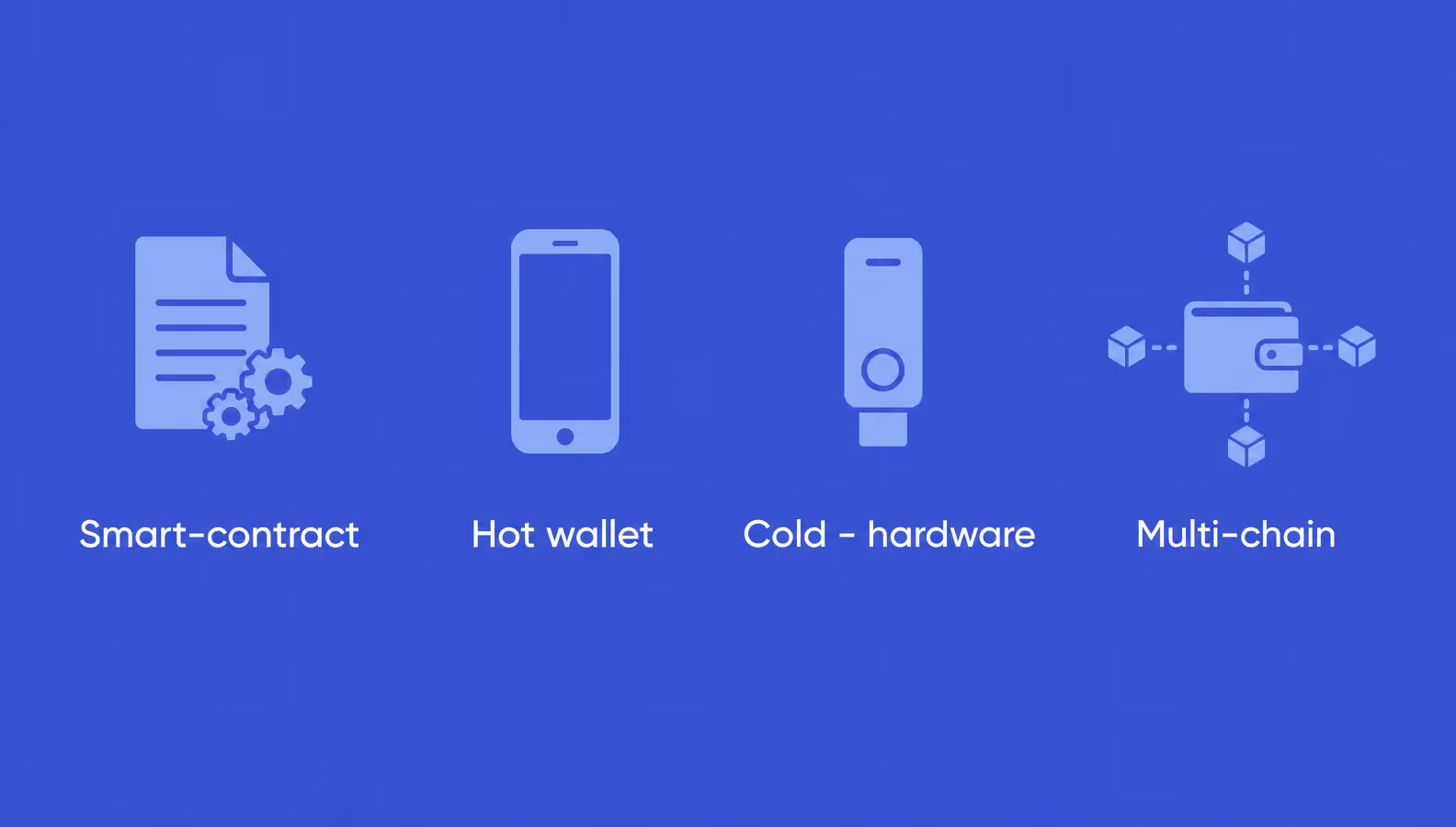
The main Web3 wallet types and when each one fits
The right mix depends on the product. If DeFi access is central to your idea, our guide on how to create a DeFi app covers that side in depth.
Features are where trust and retention are won or lost. It helps to sort them into three tiers: must-haves, advanced features that differentiate you, and UX details that decide whether people stay.
| Must-have | Advanced | UX polish |
| Multi-chain support | Token swaps and staking | Biometric unlock and PIN |
| Send, receive, and sign transactions | NFT and token gallery | Human-readable transaction previews |
| Seed phrase backup and recovery | dApp browser | Fiat on-ramp (buy with card) |
| Balance and transaction history | WalletConnect for dApp sessions | Push notifications and address book |
The must-have column is non-negotiable. If a user can't hold multiple crypto assets, send and receive safely, and recover their wallet, you don't have a product. Transaction signing is the core action, so it has to be both secure and legible. A user staring at a raw hex blob has no idea what they're approving, which is exactly how funds get drained.
The advanced column is where you compete. A built-in dApp browser and WalletConnect turn the wallet into a gateway to the whole Web3 ecosystem instead of a place coins sit. And the user experience column is what makes a crypto app feel like a normal one. Biometric unlock and a clean fiat on-ramp do more for adoption than any amount of on-chain sophistication.
We built Broex, a multicurrency crypto wallet aimed at people new to crypto. On a React Native front end with a GraphQL backend, we shipped the full must-have set: buy currency with a card, exchange, send and receive to an address, withdraw to a card, favorites, and a transaction history with filtering.
The hard part was giving newcomers real security without scaring them off, so we delivered in phases. Core functions came first, currency transactions next, and then we added biometric authentication on iOS on top of PIN access. Security landed as a smooth unlock, not a wall.
See the Broex cryptowallet case.
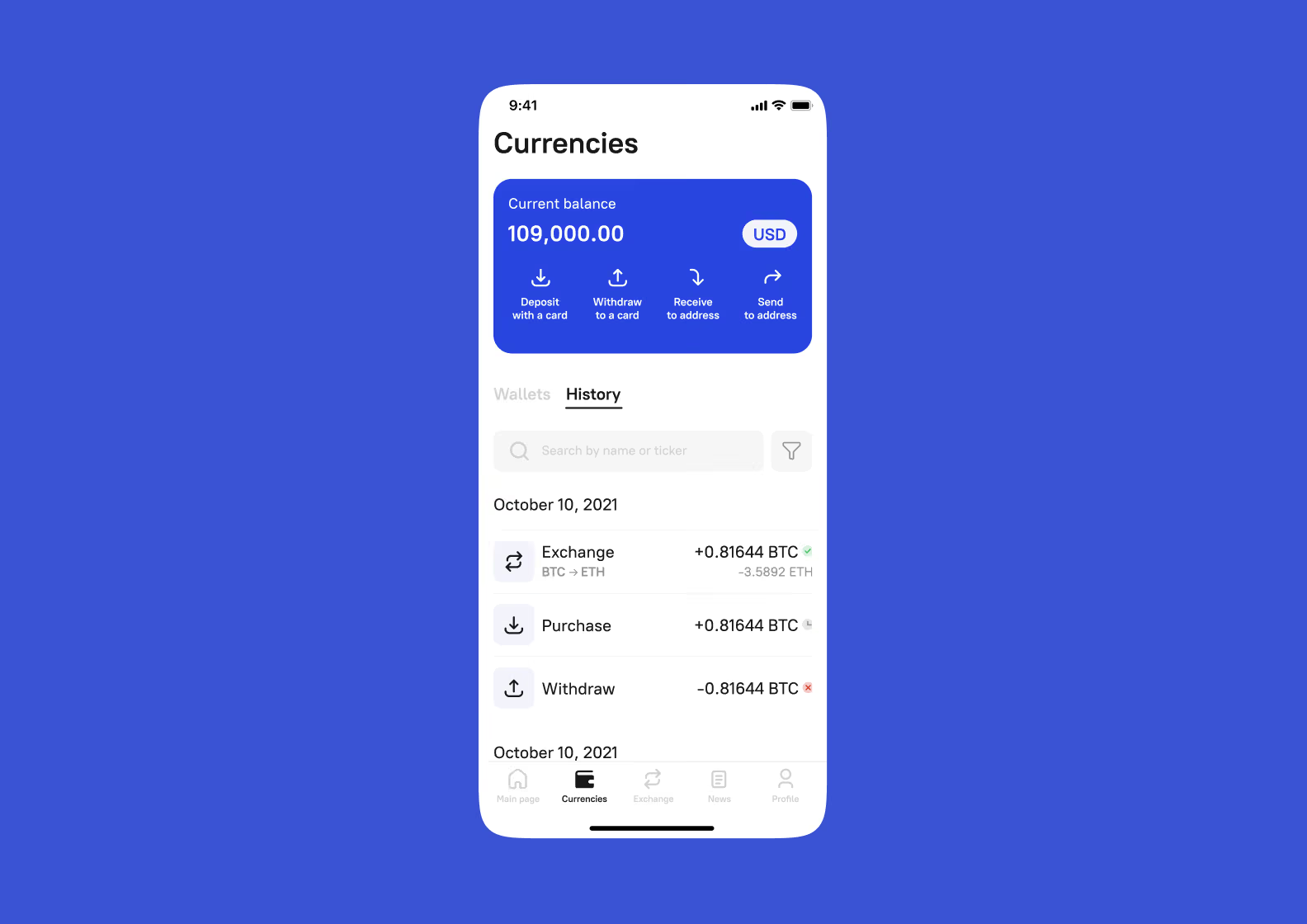
Broex, a multicurrency crypto wallet we built with card purchases and iOS biometric auth
For the broader mobile-wallet feature set beyond Web3, our guide on digital wallet app development goes deeper.
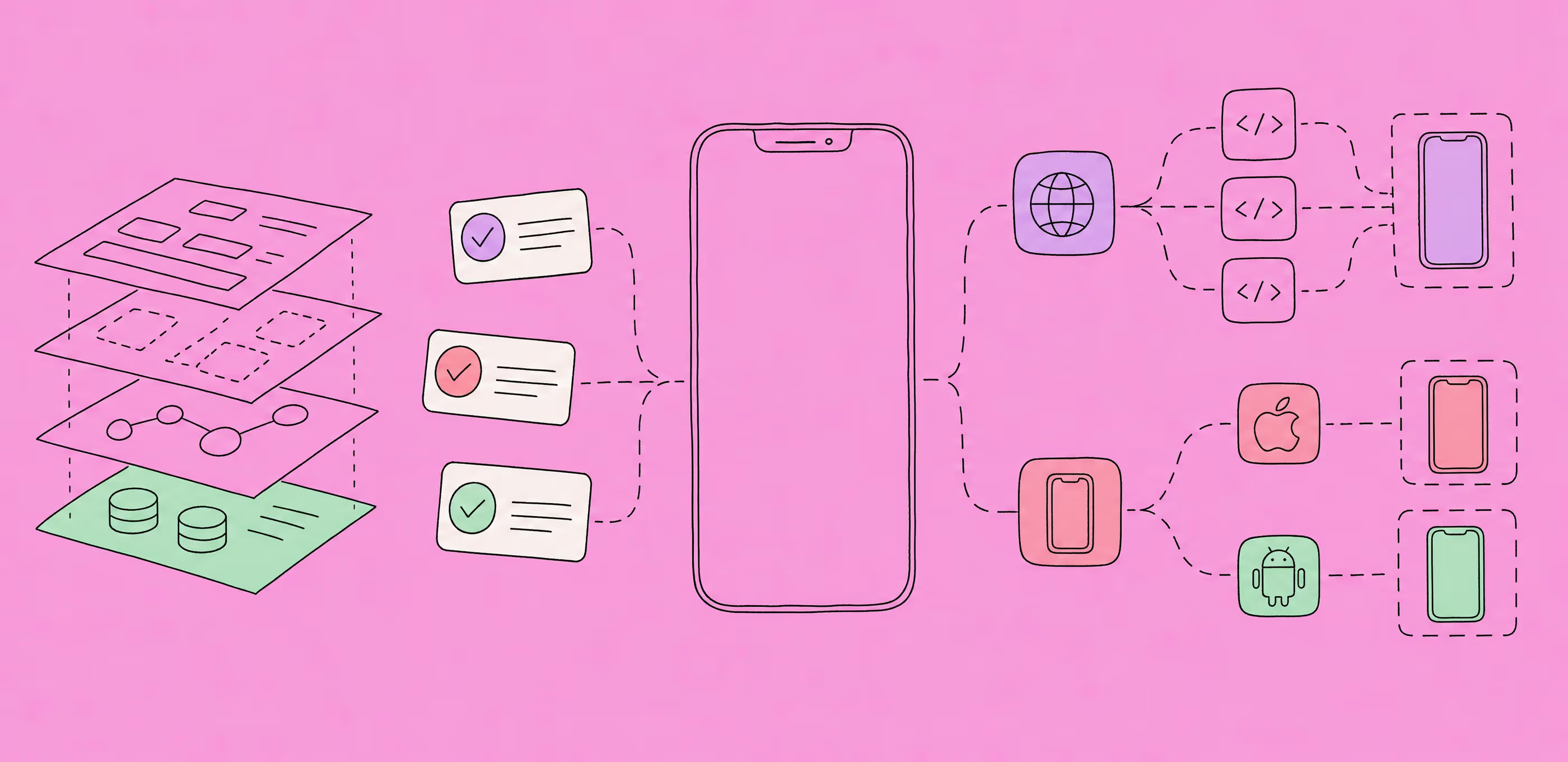
A Web3 wallet is really three layers stacked together: the client your users see, the wallet core that guards the keys, and the blockchain layer underneath. The middle layer is the one that matters most, because that's where private keys live, where public-key cryptography does its work, and where a mistake is unforgivable.
| Layer | What it does | Common technologies |
| Frontend / client | The app users interact with | React Native for mobile, React.js and Node.js for web, Electron for desktop, wagmi and viem for wallet connection, WalletConnect |
| Wallet core / key management | Generates keys, signs transactions, guards secrets | ethers.js, web3.js, viem, BIP-32/39/44 key derivation, MPC providers like Fireblocks and Web3Auth, HSM and secure enclave storage, biometrics |
| Blockchain / RPC layer | Reads chain state and broadcasts transactions | Managed RPC nodes from Alchemy or Infura, ERC-4337 bundler and paymaster infrastructure |
Which blockchains you support drives a surprising amount of the work, because each one exposes different blockchain technology under the hood. Ethereum, Polygon, and Binance's BNB Chain are all EVM-compatible. They share the same account model, signature scheme, and address format, so wallet code carries over between them with little change.
Solana is a different animal. It uses a separate key type, address format, and token standard, so it needs its own signing path built from scratch. Tron sits in between, with Ethereum-style keys but its own address format and TRC-20 tokens.
Every extra chain that isn't EVM-compatible is closer to a new integration than a config flag. That's why chain selection belongs in the discovery phase, not halfway through the build. This is also where an experienced web3 development company earns its keep. It scopes the chain and key-management architecture before a line of production code gets written.
The path from idea to a live wallet follows the same seven steps whether you build in-house or hire a team. The order matters, because the expensive mistakes almost always come from skipping the early ones.
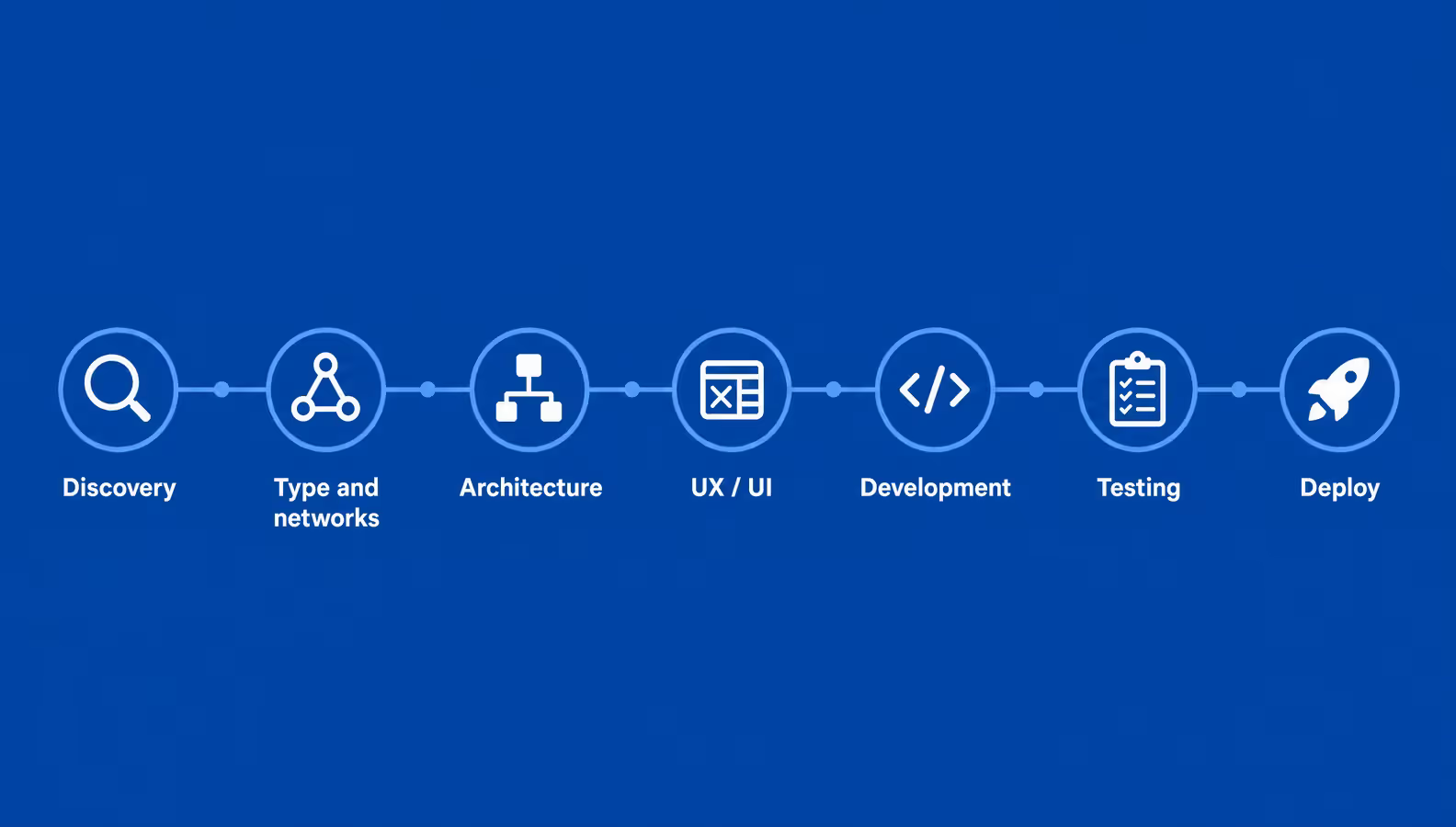
The seven steps of Web3 wallet development, in order
The biggest lever here is sequencing. Teams that treat security and chain selection as step-three decisions ship faster and audit cleaner than teams that discover them in step six.
Most competing guides stop at "use strong encryption." That's not enough to make real decisions. Here's the part that actually protects funds and keeps you on the right side of regulators.
The private key is the whole game. It should be generated on the device and never leave secure hardware storage. On iOS that means the Secure Enclave behind Face ID or Touch ID, and on Android the hardware-backed Keystore or StrongBox behind biometrics. The app should never see a raw key in plain memory longer than it must, and it should guard that moment against malware, phishing, and privacy leaks.
Seed phrases are the weakest human link, because a lost or phished phrase means permanent loss. This is the strongest argument for MPC, which splits the key into shares and removes the single 12 or 24-word secret entirely. For high-value actions, multi-signature adds a second line of defense by requiring more than one approval before a transaction goes through.
If your wallet uses smart contracts, an independent audit is mandatory before it touches real money. Firms like CertiK, Trail of Bits, and OpenZeppelin catch reentrancy, access-control, and logic bugs that are impossible to reverse once funds are gone. Following security best practices here is non-negotiable, so budget for the audit early, because a rushed one is worse than none.
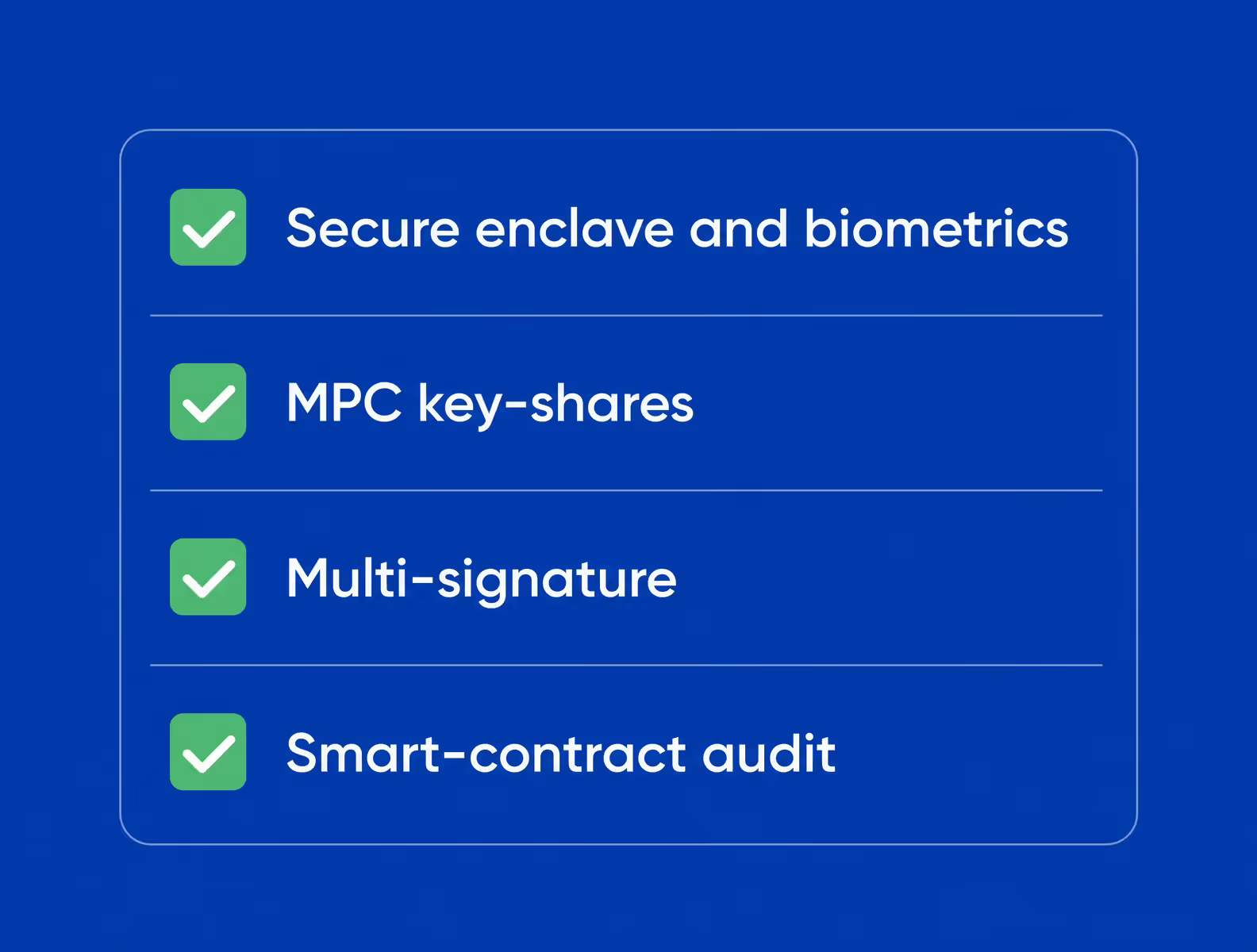
The security layers that protect a Web3 wallet
How much compliance you carry depends on custody. A purely non-custodial, self-hosted wallet sits largely outside direct obligations, since those attach to the intermediaries. The moment you hold user funds or act as a virtual asset service provider, the rules land on you.
Three frameworks come up most. AML and KYC require verifying identity, screening sanctions lists, and reporting suspicious activity. SOC 2 attests that your security controls actually work, with Type II proving they hold up over time.
The FATF Travel Rule requires service providers to pass originator and beneficiary details along with qualifying transfers, generally above a 1,000 dollar threshold. Getting these scoped early is exactly where fintech and blockchain experience pays off, and it's work we do on our own wallet and payments projects.
There's no single price, because a wallet's cost tracks its scope almost linearly. Four things move the number most: the custody model, how many blockchains you support, the depth of security and auditing, and overall feature complexity. Here's the range these map to in practice.
| Tier | What you get | Cost | Timeline |
| MVP | Core send, receive, hold, one or two chains | $15,000–$45,000 | 6–12 weeks |
| Advanced | Multi-chain, swaps, fiat on-ramp, NFT support | $80,000–$150,000 | 3–4 months |
| Enterprise | MPC, staking, custom security, audits, compliance | $150,000–$200,000+ | 4–6 months+ |
The single biggest swing factor is the wallet type. A non-custodial MVP on one chain is worlds cheaper than an MPC or smart-contract wallet with audits and compliance baked in. Security implementation and independent auditing alone can each add five figures, and every non-EVM chain is a fresh integration rather than a config change.
Build choices move the number too. A cross-platform framework like React Native can cut a meaningful slice of the mobile app budget versus building natively twice. For the wider picture across Web3 products, our breakdown of Web3 development costs goes deeper. And if you're weighing this inside a larger financial product, the economics of building fintech products overlap heavily.
We built Abel, an MVP crypto wallet, without a custom backend at all. On React Native with Redux and ethers.js, we connected the app straight to Ethereum through free third-party APIs: Etherscan for transaction data, Cryptocompare for pricing, and OpenSea for NFT collections.
The constraint was a tight MVP budget that still needed real token send and receive plus seed-phrase self-custody. Skipping a bespoke server and leaning on existing APIs cut backend cost to near zero and got a working wallet into testers' hands fast, without touching the security model.
See the Abel crypto wallet case.
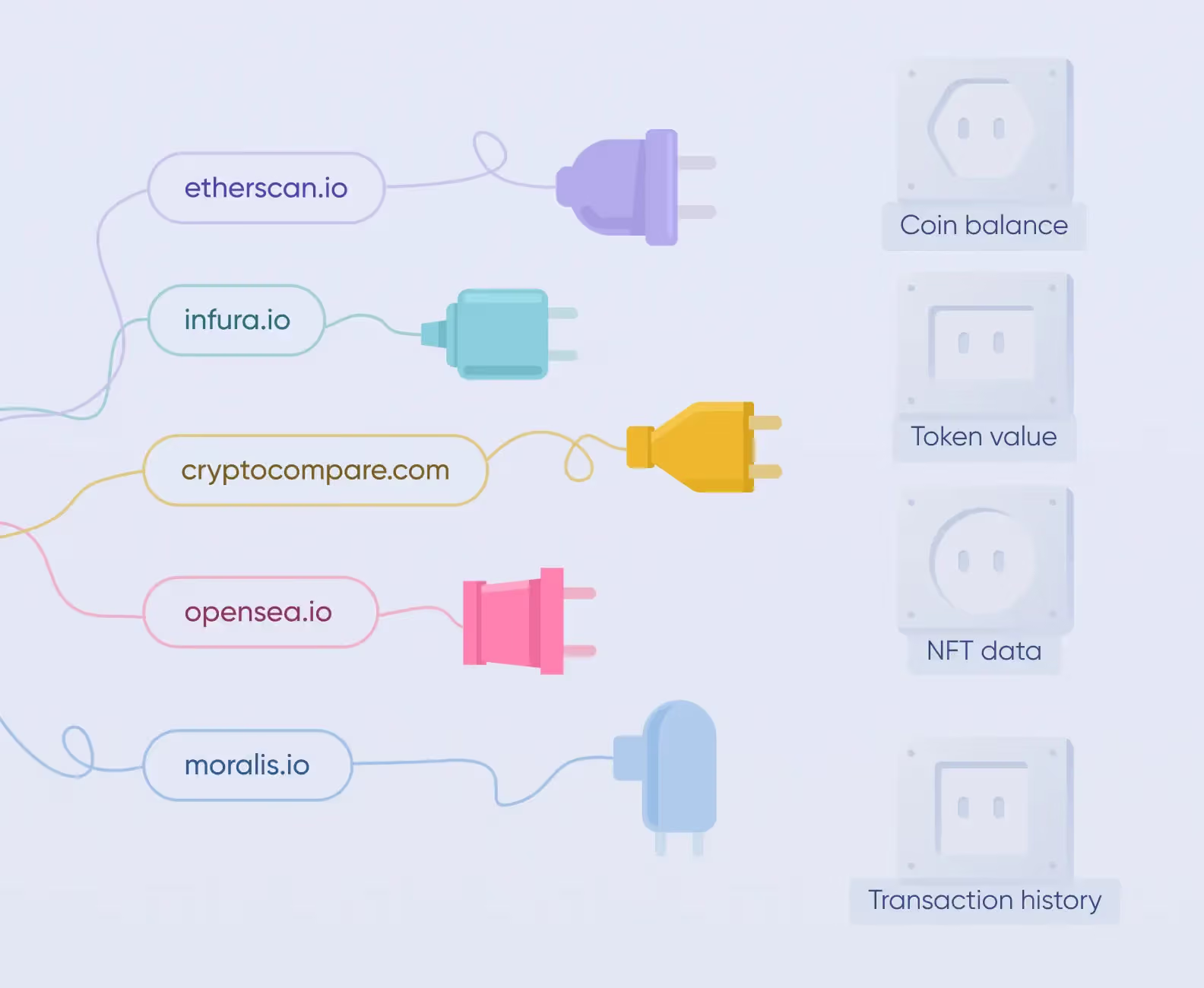
Abel, a backend-free MVP crypto wallet connected to Ethereum through public APIs
Before you cost anything, decide who builds it. There are three realistic paths, and they suit very different situations.
Hiring your own blockchain, security, and mobile engineers gives you the most control and keeps deep wallet expertise inside the company. The cost is time and money up front. Assembling a capable team can take three to six months of hiring before real work starts, and Web3 talent is scarce and expensive. This path makes sense when a custom web3 wallet is your core product and you plan to build on it for years.
Specialized web3 wallet development companies bring the security patterns, chain integrations, and audit relationships with them. That's why an experienced partner can put a working prototype in front of users in a few weeks instead of a few months. You trade some direct control for speed and lower risk. Their wallet development services fit most companies adding a wallet to a product or launching a new one without a standing crypto team.
If a wallet is a feature rather than the product, Wallet-as-a-Service lets you offer a branded web3 wallet solution through an API without heavy blockchain development. You get to market fastest and cheapest, at the price of flexibility and some dependence on the provider. It's the right call when speed beats differentiation and you don't need a custom security model.
| Path | Control | Speed to launch | Upfront cost | Best for |
| In-house | Highest | Slowest, 3–6 months just to staff | Highest | Wallet is your core product for the long term |
| Agency / outsourcing | Shared | Fast, weeks to a prototype | Medium | Adding or launching a wallet without a crypto team |
| White-label / WaaS | Lowest | Fastest | Lowest | Wallet is a feature and speed beats differentiation |
Most funded startups land on the middle path. Outsource the first version to move fast and prove the product, then bring it in-house later if it's clearly worth owning.
Adoption keeps climbing. Around 716 million people now own crypto, up 16% in a year, with mobile wallet usage at an all-time high. That growth is pulling in mainstream users who have zero patience for seed phrases and gas, and the wallet roadmap for 2026 is mostly a response to that pressure.
ERC-4337 smart wallets are moving from novelty to default for consumer apps. Gasless transactions, social recovery, and one-tap batched actions make a wallet feel like a familiar Web 2.0 app, which is the single biggest unlock for non-crypto users.
More products are embedding wallets instead of building them, offering branded wallets through an API. It lets a non-crypto company add Web3 features in weeks and pushes wallet infrastructure into the background where most users prefer it.
AI-powered fraud detection is showing up in wallets to flag suspicious transactions in real time, before a user signs. As phishing and drainer attacks get more sophisticated, real-time risk scoring and other enhanced security features are becoming a baseline expectation rather than a premium one.
MPC continues to spread as the way to offer self-custody without a seed phrase. Removing the single point of failure solves the biggest reason mainstream users abandon Web3 wallets, and it's quickly becoming the standard for consumer-grade products.
The common thread is invisibility. The winning wallets of 2026 hide the blockchain, not showcase it.
Our approach is boring in the ways that matter. We lock the custody model and chains in discovery. We design the security architecture before writing production code, and deliver in phases so a working wallet reaches users early. Our crypto wallet development track record in fintech and blockchain means compliance and key management are scoped up front, not discovered during an audit.
We built Kaiju, a Web3 wallet that lives inside a game. The wallet handles send and receive with QR support, card purchases, and dApp connections through WalletConnect on Ethereum with USDT support, alongside an NFT gallery and the project's own token.
The real problem was the one every wallet faces: people abandon setup before they ever use it. So we wrapped the wallet in an on-chain 2048 game with daily rewards and a leaderboard, and shipped a browser version of the game as a lead magnet. Onboarding became something users wanted to finish, and the founder went on to secure investment and bring in a first wave of users.
See the Kaiju Web3 wallet case.
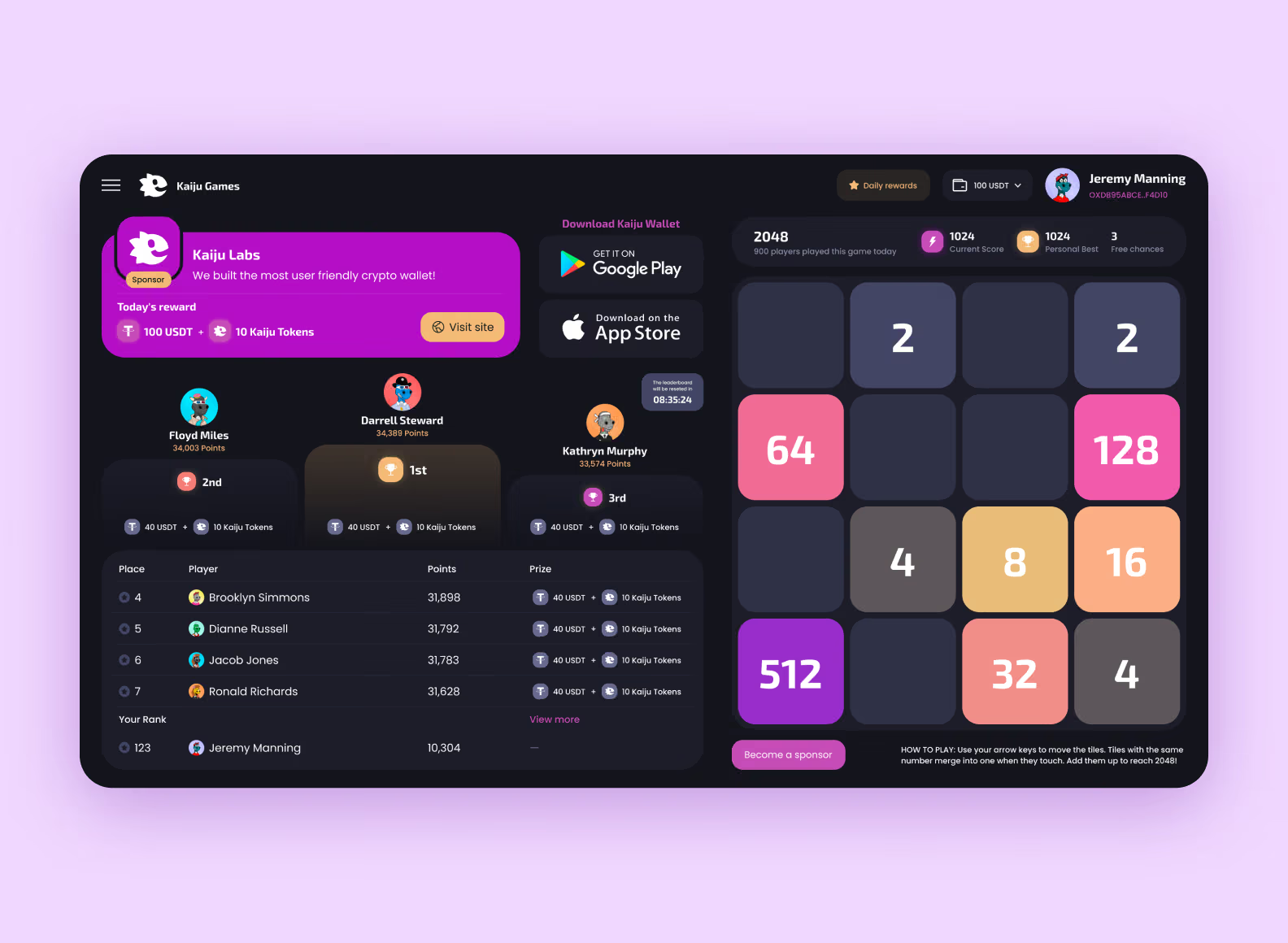
Kaiju, a Web3 wallet embedded in an on-chain game to beat onboarding drop-off

.svg)

Web3 wallet development comes down to a few decisions made in the right order. Pick the custody model, choose your chains, design security before you build, and treat compliance as a first-class requirement rather than an afterthought. Get those right and the rest is execution.
Whether you build in-house, outsource, or start with Wallet-as-a-Service, the wallets that win in 2026 are the ones that feel simple and stay safe.
Ready to scope yours? Get a Web3 wallet estimate from our team.
A Web3 wallet is a self-custodial app where the user holds their own private keys and connects directly to dApps, DeFi, and NFT platforms. A regular crypto wallet, like the one inside an exchange, is usually custodial, meaning the provider holds your keys. The difference is control: with Web3, no company can freeze or lose your funds.
A basic MVP typically runs $15,000 to $45,000. A multi-chain advanced wallet runs $80,000 to $150,000, and an enterprise-grade wallet with MPC, audits, and compliance costs $150,000 and up. The custody model, number of chains, and security depth move the number most.
An MVP takes roughly 6 to 12 weeks. Advanced and enterprise wallets take 3 to 6 months or more, largely depending on how many blockchains and how much security and compliance work are involved.
Choose custodial for the easiest onboarding and beginner audiences. Go non-custodial when true ownership is the point, and MPC when you want self-custody without the seed-phrase risk. For most consumer products today, MPC or a smart-contract wallet is the sweet spot.
Common revenue models include swap and transaction fees, fiat on-ramp commissions, premium features, and staking fees. Infrastructure providers also license a Wallet-as-a-Service API. The right mix depends on whether the wallet is your product or a feature of one.
A well-built Web3 wallet can be very secure, but security is a design choice, not a default. Keys should live in hardware-backed storage behind biometrics. Smart contracts must be independently audited, and options like MPC and multi-signature remove single points of failure.
Yes. Non-fungible token (NFT) display and DeFi (decentralized finance) access through a dApp browser or WalletConnect are standard features. Supporting them well is mostly about clean integrations and readable transaction previews so users know what they're signing.
Start with the chains your users actually use, usually Ethereum plus EVM chains like Polygon and BNB Chain, and add Solana or Tron if your audience needs them. A typical stack is React Native or React on the front end, ethers.js or viem in the wallet core, and managed RPC from Alchemy or Infura.
Yes. Wallet integration into an existing app happens through SDKs or a Wallet-as-a-Service API, connected to your current backend and user accounts. This is a common path for fintech and consumer products adding Web3 features.
A minimal software development team is a product manager, blockchain and wallet developers, front-end and back-end engineers, a security specialist, and a UI/UX designer. Custodial wallets add compliance expertise on top. Outsourcing to a team that already has these roles is why agencies can move faster than in-house hiring.