Explore

Need help with your project?

Oops! Something went wrong while submitting the form.
AI in fintech means letting models make the financial calls that used to run on hand-written rules. Approving a loan, scoring a payment for fraud, answering a customer at 2 a.m. An engineer no longer codes the threshold — the model learns it from data and keeps adjusting.

This guide covers the four types of artificial intelligence that financial services firms actually run, plus the six use cases that pay for themselves today. It also covers what an AI feature costs to build, and where the new EU rules change what you can ship.
Classic financial technology automation runs on rules a person wrote. Flag every transfer above $10,000. Decline anyone under a credit score of 640. The logic is readable and predictable, and it is blind to context. A contractor who wires $12,000 every payday gets treated like a first-time fraudster, because the rule only sees the number.
AI moves the rule from the engineer to the data. A machine learning model reads years of transaction history and works out what normal looks like for that specific customer. It scores the next payment against that baseline. The threshold stops being a line someone picked in a meeting and becomes a probability that updates as behavior changes.
That is the practical difference between plain automation and AI-driven systems. Rule-based software can automate a task someone already understands. AI systems handle the ones nobody can write down, and their accuracy improves with volume rather than degrading under it.
For fintech companies, this lands in decision-making that used to need an analyst and in work that used to need a queue of people. Founders working out how to start a fintech company now face that build question in year one, not year five.
"AI" covers four different technologies that fintech teams buy, build, and confuse for each other. They stack: each layer solves what the one below it cannot, and each adds a new failure mode. Knowing which of these ai tools a vendor is selling you is the difference between a two-week integration and a two-quarter research project.
The oldest layer, and still the one running most of banking. Logistic regression scores a loan. A Monte Carlo simulation prices risk. These ai algorithms are deterministic, auditable, and cheap, which is exactly why regulators like them and why they have not gone anywhere. They break when the pattern is too complex to write down.
The layer that learns the pattern instead of receiving it. Gradient-boosted trees and neural networks read a labeled dataset of past outcomes and predict the next one. This transaction is 0.3% likely to be fraud. This borrower is 12% likely to default.
Most production fintech AI lives here, and so does predictive analytics. These are the ai models that actually run in the fintech industry today. Deep learning sits on this layer too, and it earns its cost when the input is messy: voice, images, raw document scans.
The layer that produces language rather than a number. Generative AI in fintech drafts the suspicious-activity report, summarizes a 40-page prospectus, explains a declined payment to a customer in plain English. Generative AI in banking mostly writes, and it rarely decides. Natural language processing turns unstructured text into something the layers below can use. It is fluent and it is not reliably correct, so it belongs where a human reads the output.
The layer that acts. An agentic ai system takes a goal, plans the steps, and calls tools to execute them. Freeze the card, open the dispute, refund the merchant, notify the customer. Architecturally it is a generative model wired to your banking APIs through an orchestration layer, with permissions and spend limits around each call.
That wiring is where the engineering lives. AI agents need an audit trail of every action, a rollback path, and a human checkpoint on anything a compliance officer would want to sign. An agent that can move money and cannot explain why is not a product feature, it is an incident waiting for a date.
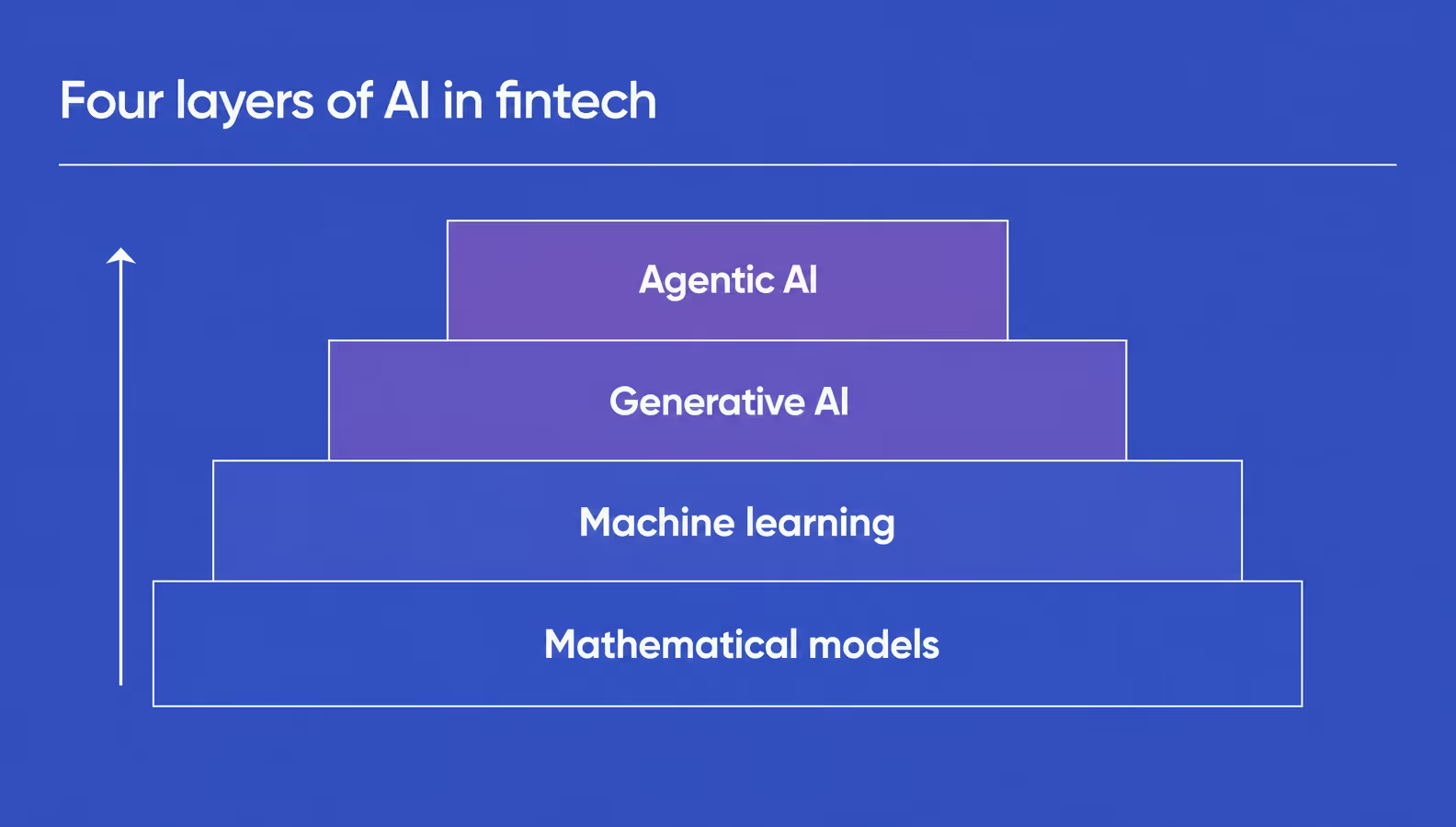
The layers stack — each one solves what the layer below it cannot, and adds a failure mode of its own
| Layer | What it decides | Typical fintech job | Where it breaks |
| Mathematical models | A number, by fixed formula | Credit risk, pricing, capital ratios | Complex or shifting patterns |
| Machine learning | A probability, learned from data | Fraud scoring, churn, default prediction | Needs volume and labeled history |
| Generative AI | Language | Reports, summaries, customer replies | Fluent but not reliably accurate |
| Agentic AI | A sequence of actions | Dispute handling, onboarding flows | Permissions, audit, rollback |

.svg)

Six use cases for AI carry almost all of the return today. Each one replaces a specific manual job, or a specific rule that stopped scaling. Teams that come to us for fintech software development usually arrive with one of these ai use cases already on the roadmap.
The flagship use case, and the easiest to justify. A model scores every transaction in the milliseconds before authorization. It weighs device, location, merchant, and the customer's own history at once.
Mastercard's generative model, Decision Intelligence Pro, lifts fraud detection rates at financial institutions by 20% on average. Some deployments report gains up to 300%. Fraud prevention works because the model reviews what no analyst has time to open.
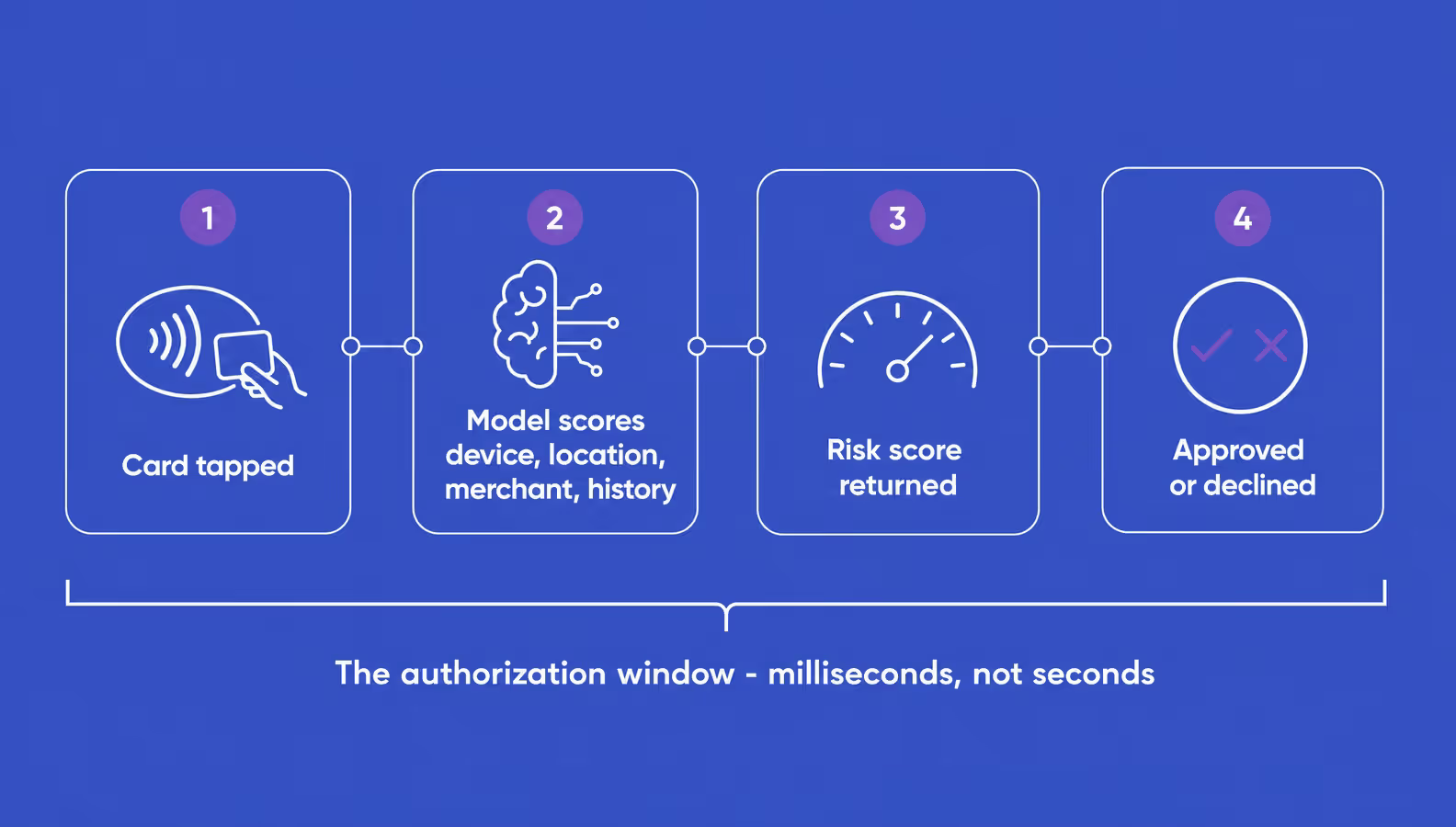
The entire fraud decision happens before the terminal finishes beeping, which is why no human sits in this loop
Traditional scoring sees a thin file and says no. A model prices credit risk from cash-flow data, rent, and payment behavior, and finds the borrowers that score missed. Done well, this is financial inclusion with a business case attached.
Upstart approves 44% more applicants than a comparable traditional model, at 36% lower average APRs. Commonwealth Credit Union, running Zest AI, automated 70–83% of its consumer loan decisions. Its delinquency came in 30–40% below what traditional credit scoring would have produced. This is also the use case regulators watch hardest, which we come back to below.
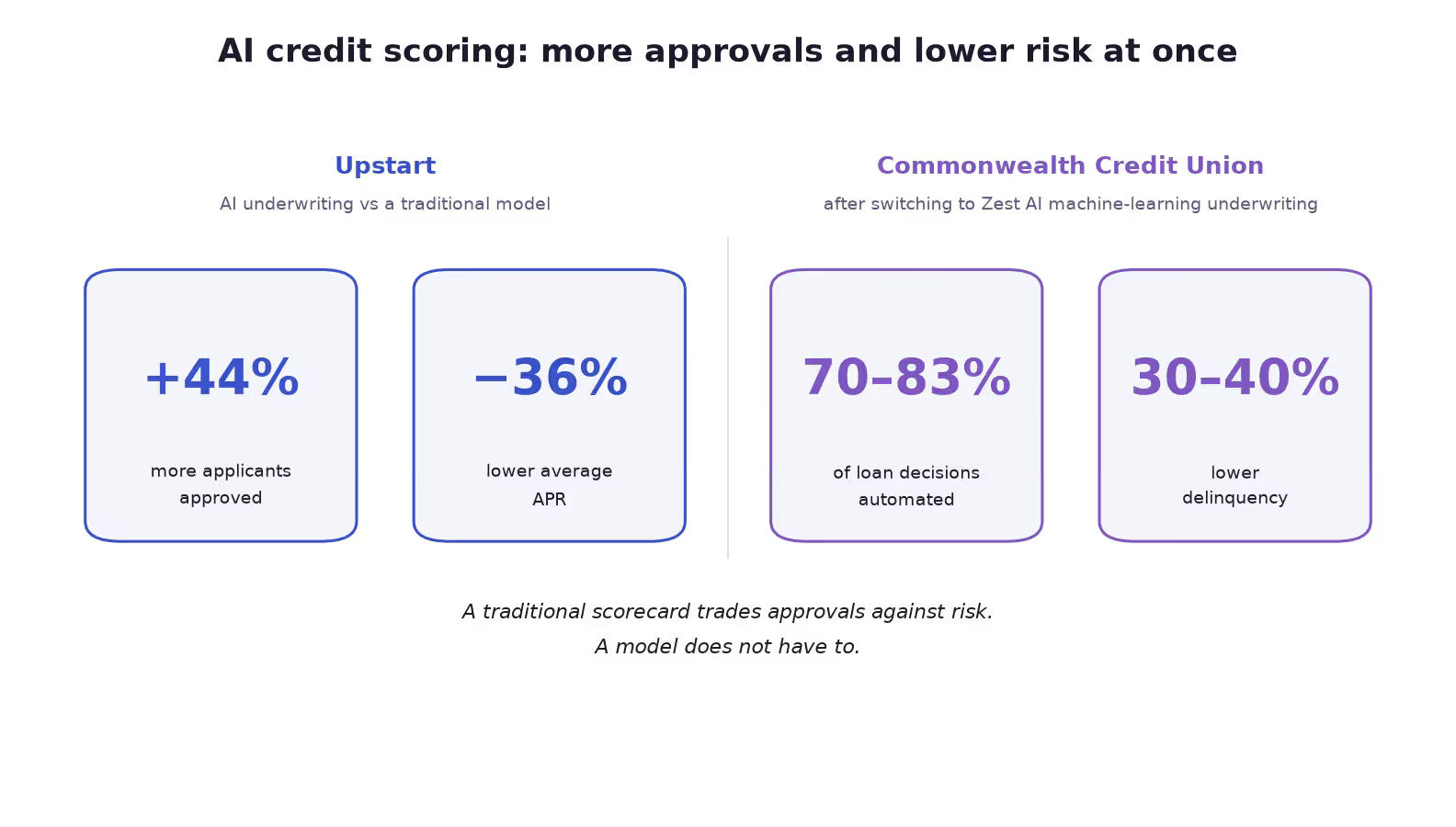
More approvals and lower delinquency at the same time is the part a traditional scorecard cannot do
In investment management, AI mostly sizes and times, rather than decides. Models forecast volatility, rebalance portfolios against a risk budget, and execute orders without moving the market against themselves.
A robo-advisor applies the same logic to retail wealth management, at a fraction of what a human financial adviser costs to employ. The investment strategies stay rules-based, and the model handles portfolio drift and tax-loss harvesting. Plenty of what gets sold as "AI trading" is still automation with a model bolted on.
A brokerage client came to us with a copy-trading product. Retail users pick a strategy, and their account mirrors it automatically.
We built Fintarget as a React Native mobile app, with the matching and execution logic sitting server-side. Investment management, in other words, without an investment manager.
The project is a clean illustration of where the line falls. Copy-trading is algorithmic execution: deterministic, auditable, no model in the loop. Adding real AI would mean predicting which strategy suits which user, and that is a different product with a different risk profile.
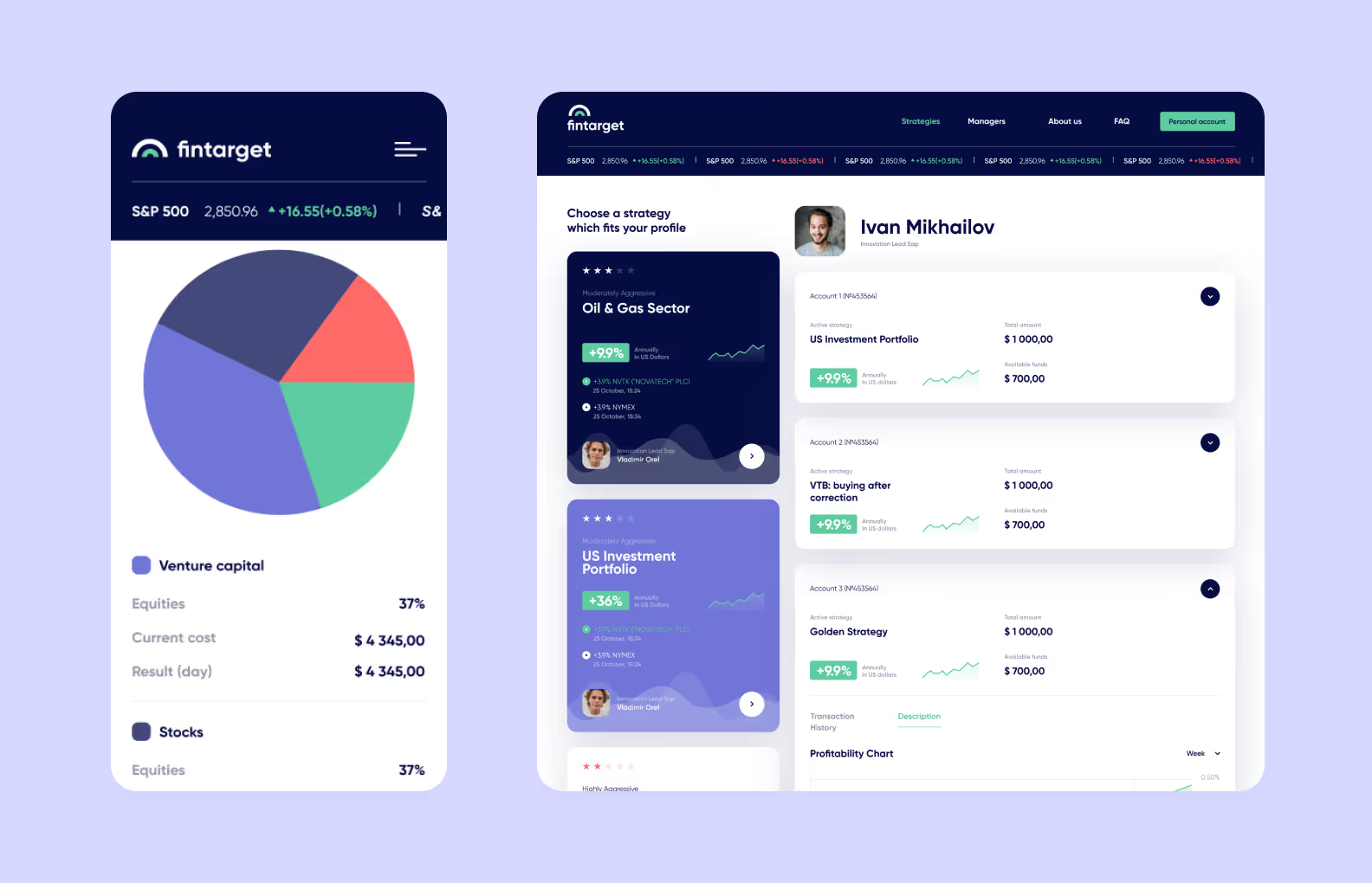
Copy-trading is fully automated and still contains no AI, which is a useful reminder that the two words are not synonyms
Conversational ai moved from deflecting tickets to running the front door of digital banking. Bank of America's assistant Erica handled 676 million client interactions in 2024, across roughly 20 million clients.
The value is not the chat window. A chatbot that reads customer data in context answers "why was I charged this" without a human pulling the ledger. Banks use AI here to personalize the answer, not just to route the ticket, and personalized financial guidance is what keeps people inside the app. The win is fewer customer interactions that need a person at all.
Legacy rule-based anti-money laundering systems commonly run false-positive rates above 95%. Analysts spend the week clearing alerts that were never risk in the first place.
A model ranks alerts by actual likelihood, so the queue opens with the ones worth investigating. That single change reorders the whole compliance workflow. Know your customer checks follow the same path: AI can automate document extraction and identity matching, which are now routine machine work.
The most under-covered use case, and the one closest to the money. AI scores risk inside the authorization window. It routes each payment through the acquirer most likely to approve it. It underwrites buy-now-pay-later decisions in the time a page takes to load.
Visa detected roughly $1 billion in scam transactions in the second half of 2025, and scams are now the largest category of consumer payment fraud. That is the pressure every new wallet mobile app ships against.
We built KEM, a peer-to-peer payments app, for a client in Kuwait. The hard part was never the interface.
Direct bank-API access was closed to a young company, so the product had to work around what it could legally reach. The app went on to raise $1M in seed funding and pass 100,000 users.
The lesson transfers straight to AI. In payments, the constraint is rarely the model. It is which data you are allowed to touch, and how fast you have to answer.
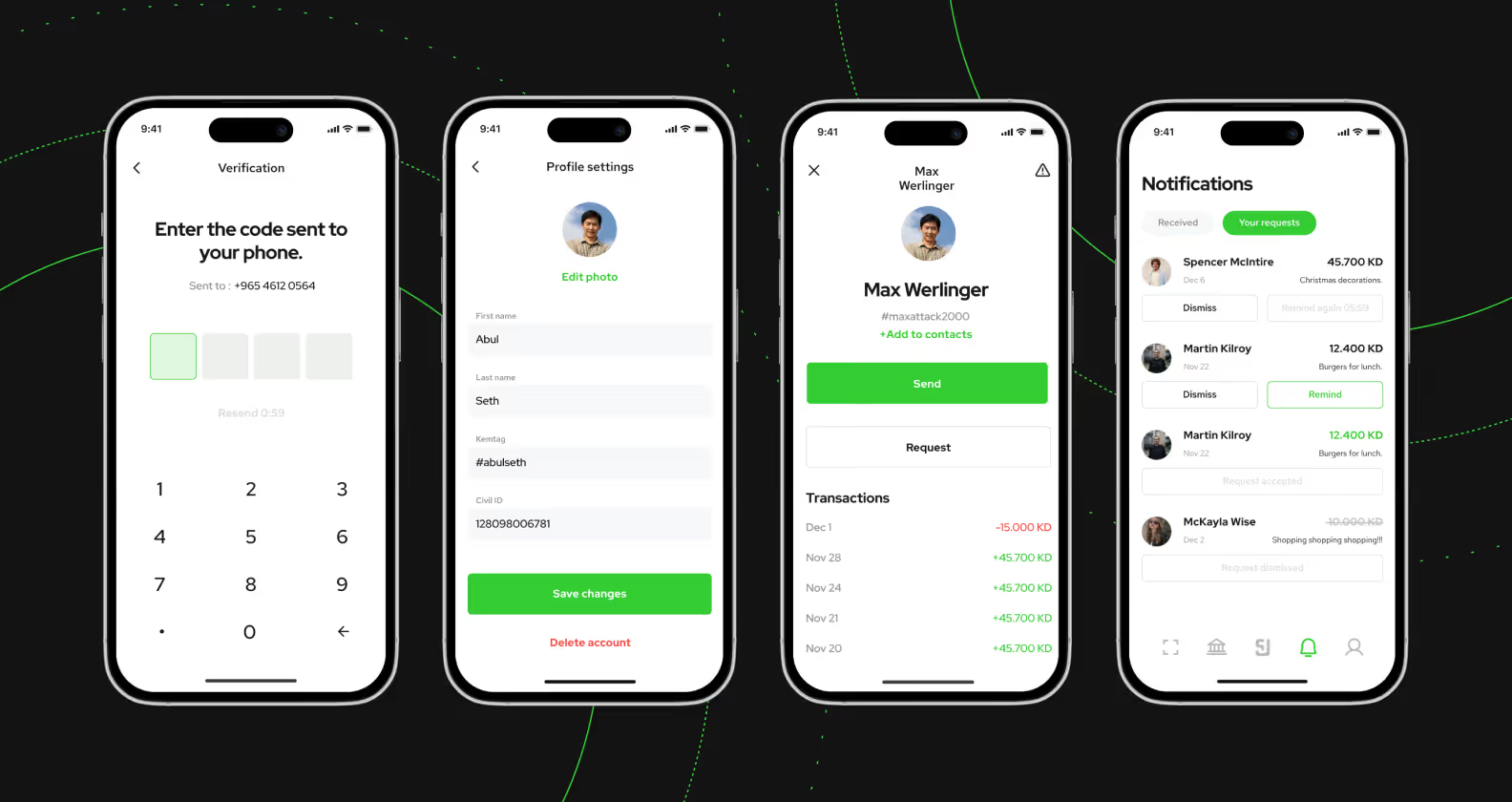
Payment infrastructure access shapes the product long before any model does
The pattern in the field is that the biggest wins are internal, not customer-facing. They are also less photogenic than the demos.
JPMorganChase rolled out an internal generative tool, LLM Suite, and onboarded 200,000 employees within eight months. Nothing about it faces a customer. It drafts, summarizes, and searches, and it moves an enormous amount of analyst time. Bank of America's Erica, from the previous section, is the counter-example that does face customers, at 676 million interactions a year.
Both are large institutions with data and headcount most startups will never have. The useful read for a smaller team is not the model choice. It is that both products started against an existing system, not a blank page. Every ai application in finance does.
A client came to us wanting a crypto wallet, and the obvious path was to build the backend infrastructure ourselves. We went the other way.
We assembled Abel out of existing free APIs, stitched together behind one interface. Total build: 1,268 development hours, and a launch the client could afford.
That is buy-versus-build in its purest form, and it is the same call every founder now makes about AI. The question is not what you could build. It is what you gain by building it yourself.
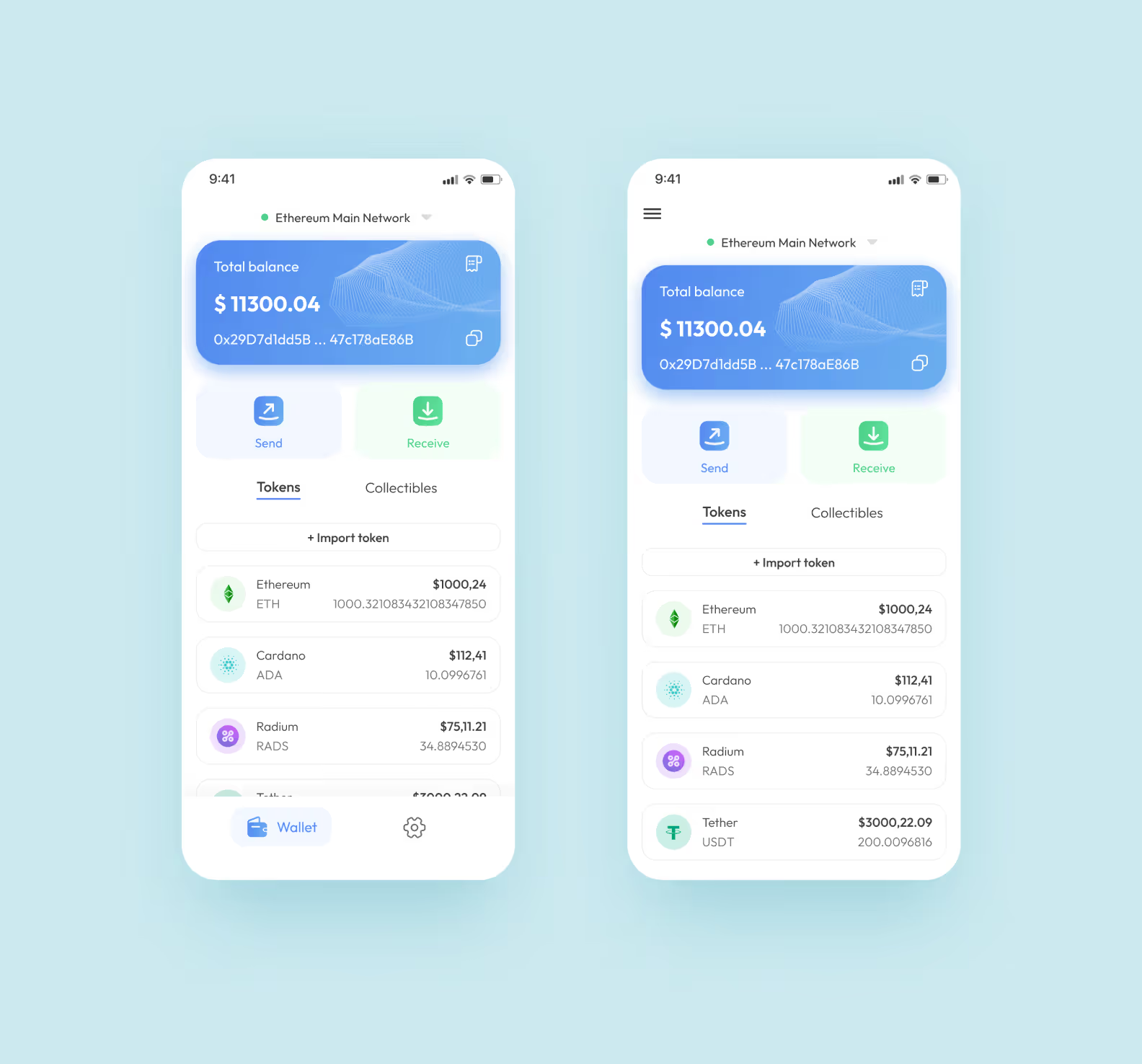
Stitching existing APIs shipped the wallet in 1,268 hours — the same logic applies to reaching for a model API before training one
The benefits are easy to list and hard to bank. Each one below is tied to a number from the use cases above, because a benefit no one measured is a slide, not a result.
The last one is where most business cases go wrong. AI rarely removes a cost line. It changes what a unit of work costs, and that only shows up at volume.
Four risks show up in every fintech AI project, and the regulation now attaches to two of them. Treat this as risk management, not as a legal chore.
Data privacy. Financial data is the most regulated input a model can eat. Where your AI data lives, who can query it, and what leaves your perimeter when you call a third-party API are architecture questions, not legal ones.
Algorithmic bias. A model trained on past lending decisions learns past lending decisions, including the ones a regulator would call discriminatory. Bias does not announce itself. It shows up as a rejection rate that correlates with a protected class through a proxy nobody flagged.
Hallucination. Generative models produce fluent, confident, wrong answers. In a chat assistant that is embarrassing. In a compliance report it is a filing.
Explainability. "The model said so" is not a reason a lender can give a rejected applicant, and it is now not a defense either.
That last point is where the regulation lands. Under the EU AI Act, an AI system used to evaluate creditworthiness or set a credit score is classed as high-risk under Annex III. High-risk brings a full package: conformity assessment before launch, technical documentation, data governance, post-market monitoring, and human oversight with logging.
Two details here are worth more than the rest of this section. First, fraud detection is explicitly carved out. A fraud model built on the same machine learning is not automatically high-risk, while the scoring model sitting next to it is.
Second, the deadline moved. Full obligations for stand-alone Annex III systems were due August 2, 2026. The Digital Omnibus pushed them to December 2, 2027, and the Council of the EU signed off in June 2026. The transparency rules in Article 50, telling users they are dealing with AI, were not delayed.
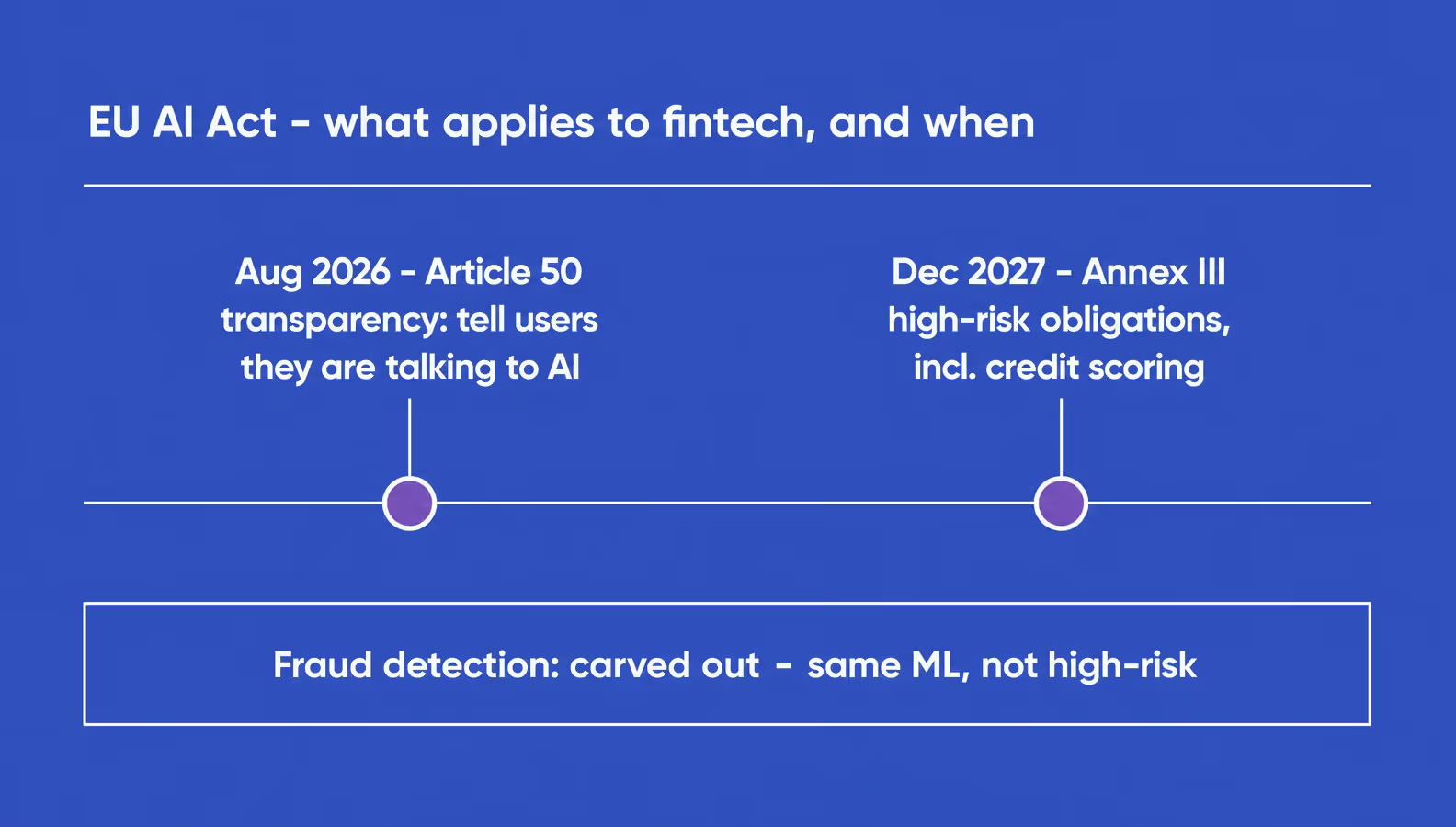
Most articles still print the old August 2026 deadline for credit scoring — the Council moved it in June 2026
So responsible ai is a build decision, not a compliance sprint at the end. Adding explainability and oversight logging while the model is still a prototype costs a fraction of retrofitting them into a live underwriting system.
Three paths to an AI solution, and most teams pick the wrong one for the wrong reason. The table below is the whole decision, including the part nobody prices in: what any ai development project does to your architecture.
| Call a third-party API | Fine-tune an open model | Train your own | |
| Time to first result | Days | Weeks | Quarters |
| What you pay | Per token. Tiers span 25x: $0.20–$5 per 1M input tokens, $1.25–$30 per 1M output. Batch jobs run at half price | Training compute on top of your inference bill | Team, infrastructure, data acquisition |
| Biggest cost lever | Which model tier you pick | Volume — it only pays off at scale | Everything |
| Your data leaves the perimeter | Yes, unless self-hosted | Optional | No |
| What it adds to your architecture | An API dependency and a fallback path for when it is down | Model serving, a retraining loop, drift monitoring | All of that, plus a data pipeline and an ML team |
| Latency you can expect | Whatever the provider gives you | Tunable — this is often the reason to do it | Yours to control |
| Fits when | Language tasks: reports, summaries, support replies | Narrow, high-volume, latency-bound tasks | The model is the product and you own unique data |
| Skip when | The task is latency-critical or the data cannot leave | Volume is low | Almost always |
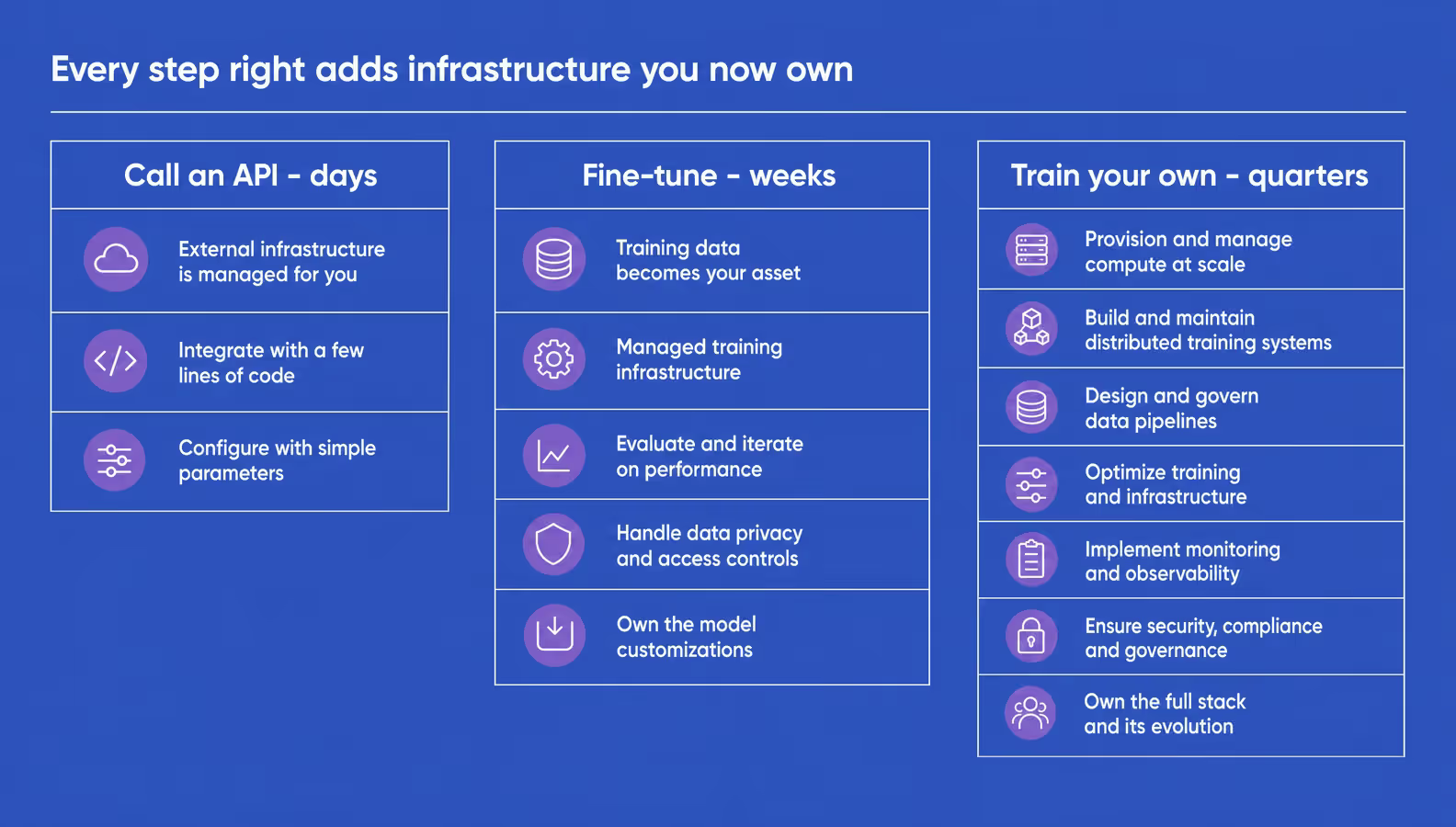
Each step right adds infrastructure you now own forever, not just a bigger bill
Two things the table cannot hold. A fraud score has to return inside the authorization window, not in three seconds, and that single constraint disqualifies more architectures than cost ever does. And no public benchmark isolates what fine-tuning an advanced ai model costs versus an API call for a fintech task. Anyone quoting you one made it up.
A compliance-reporting client asked for something that sounded simple: turn raw company data into a written business report. Not fintech, but the same shape as a regulated-document problem.
We shipped it on the GPT-4 API in four months, with React, Node, and NestJS around it. The full case study has the detail.
Almost none of those four months went into the model. They went into context enrichment: deciding what to feed the model, in what order, and how to keep it inside the boundaries of what it actually knew. That ratio holds for fintech too. The API call is the cheap part.

The model took days to wire up and months to make trustworthy
Budget the integration, not the model. Our breakdown of fintech app development cost covers the surrounding build, and how to create a fintech app covers the product around it.
The fintech market for AI is growing 22% a year, from $36.61 billion in 2026 toward $99 billion by 2031. McKinsey's read on the next age of fintech is that AI is the accelerant behind that growth. Small teams now ship what used to need a division.
Of all the fintech trends in play, the one everyone is pointing at is autonomous finance: an agent that does not suggest the transfer but makes it. Move the idle balance into the higher-yield account. Dispute the duplicate charge. Rebalance when the drift crosses a threshold. Adoption of AI in finance has been steady for a decade, but this is the first shift that changes who acts.
The gap between that demo and that product is governance. An agent that moves money needs a permission scope, a spend limit, an audit trail, and a human checkpoint on anything irreversible. Those are the same four controls a bank puts around a junior employee, which is a useful way to think about it.
Regulation is already there. From August 2026, Article 50 of the EU AI Act requires that users be told when they are dealing with an AI rather than a person. An autonomous agent that quietly acts on a customer's account is not a compliance question you get to answer later.
AI in fintech is no longer a question of whether the technology works. Fraud scoring, underwriting, and customer assistants already run at scale at institutions that publish their numbers. The models behind them are available to a team of five.
What separates the fintech solutions that ship from the ones that stall is the boring part. Which layer of AI the job actually needs, what the latency budget allows, where the data is permitted to go, and what the regulator will ask to see. Those four questions decide the architecture, and they are worth answering before the first prompt is written.
➡️ We build AI features into fintech products, from a scoring model behind an existing app to an assistant that reads a customer's own transaction history. Tell us what the feature has to do, and we will come back with a scope and an estimate within 48 hours.
The role of AI in the fintech industry is to take over financial decisions that used to run on rules a person wrote. Artificial intelligence in fintech scores a transaction for fraud before authorization. It judges creditworthiness from cash-flow data rather than a thin file, and answers customer questions in context. The role is not to add a feature. It is to make decisions at a volume and speed that headcount cannot reach.
Four layers, and they stack. Mathematical models score risk deterministically and still run most of banking. Machine learning learns patterns from history and handles fraud and default prediction. Generative AI in fintech, built on natural language processing, produces reports and customer replies. Agentic AI takes actions through your APIs. Most production fintech AI is machine learning, not the generative layer that gets the coverage.
Traditional automation executes a rule an engineer wrote: decline every transfer above $10,000. AI-driven automation infers the rule from data and adjusts it: this customer wires $12,000 every payday, so that is normal for them. Rule-based systems are predictable and blind to context. Learning-based systems get more accurate with volume instead of degrading under it.
Six use cases for AI carry almost all of the return. Fraud detection, credit scoring, algorithmic trading and portfolio management, personalized customer experience, RegTech covering AML and KYC, and payments. Fraud detection is the easiest to justify. Payments is the most under-served, and the closest to revenue. Most fintech firms start with one and add the rest as the data allows.
Four recur. Data privacy, because financial data is the most regulated input a model can take. Algorithmic bias, because a model trained on past lending decisions inherits them. Hallucination, where a generative model produces a confident wrong answer that becomes a filing. And explainability, because "the model said so" is not a reason a lender can give a rejected applicant.
Responsible AI means the decision can be explained, overridden, and audited. In practice it is explainability built into the model, human oversight with logging, and documentation of what the system was trained on. Under the EU AI Act, credit-scoring systems are high-risk and carry these obligations by law. Fraud detection is explicitly carved out of that classification.
The model is rarely the cost. API pricing spans a 25x range between tiers, from about $0.20 to $5 per million input tokens, with batch jobs at half price. The spend goes into the integration: data pipelines, model serving, latency engineering, monitoring, and retraining. Our fintech app development cost breakdown covers the surrounding build in detail.
Autonomous finance, where an agent acts instead of suggesting: moving idle balances, disputing charges, rebalancing a portfolio. Of the future trends in the fintech landscape, this is the one that changes the product rather than the interface. The technology is closer than the governance. An agent that moves money needs a permission scope, a spend limit, an audit trail, and a human checkpoint on anything irreversible. From August 2026, EU rules also require telling users when they are dealing with an AI.