Explore

Need help with your project?

Oops! Something went wrong while submitting the form.
A crypto banking app looks simple from the outside: one mobile product to hold, send, and spend both fiat and cryptocurrency. The hard part sits underneath. It fuses a neobank-style account with a blockchain wallet, so custody, on-chain settlement, and strict KYC/AML compliance all have to line up at once.
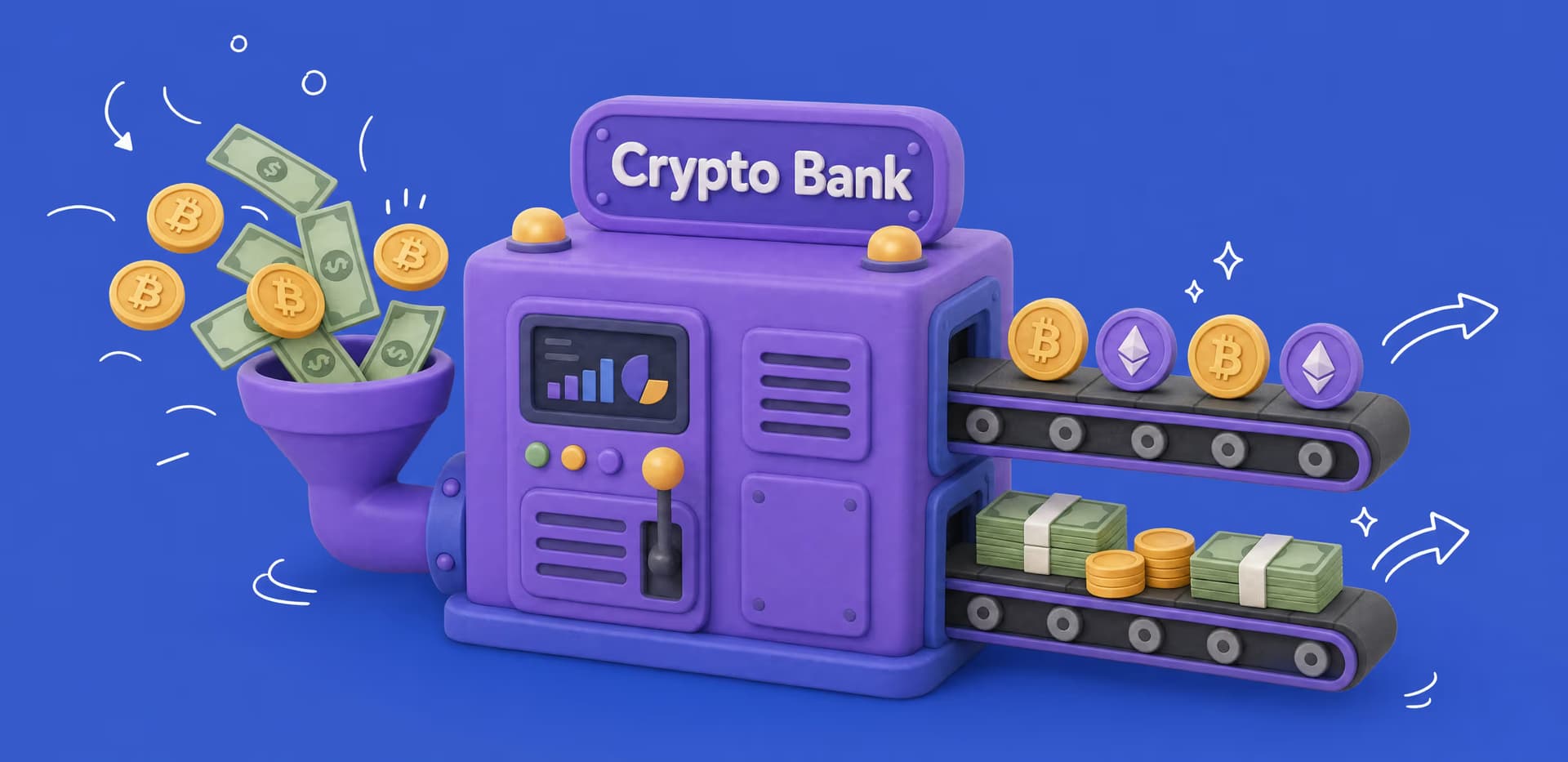
This guide breaks down the must-have features, tech stack, step-by-step process, and cost of crypto banking app development.
A crypto banking app is a mobile product that holds both fiat money and cryptocurrency in one account. Users get the everyday banking services of a neobank: a balance, a card, and payments. They also get a blockchain wallet that can send, receive, and settle crypto directly on-chain.
In financial technology terms, it's a digital banking product with a blockchain settlement layer built in. It brings crypto into everyday financial services. Four things set it apart from a traditional banking app:
That last point is also why this isn't the same as plain digital asset banking run by big institutions, or a standard neobank that never touches crypto.
The demand behind all of this is no longer hypothetical. There are now an estimated 716 million crypto owners worldwide, and mobile crypto wallet users hit an all-time high in 2025, up 20 percent year over year. Statista projects digital-asset market revenue of $100.8 billion in 2026. Institutions from Visa to Mastercard to JPMorgan are already shipping crypto banking products of their own.
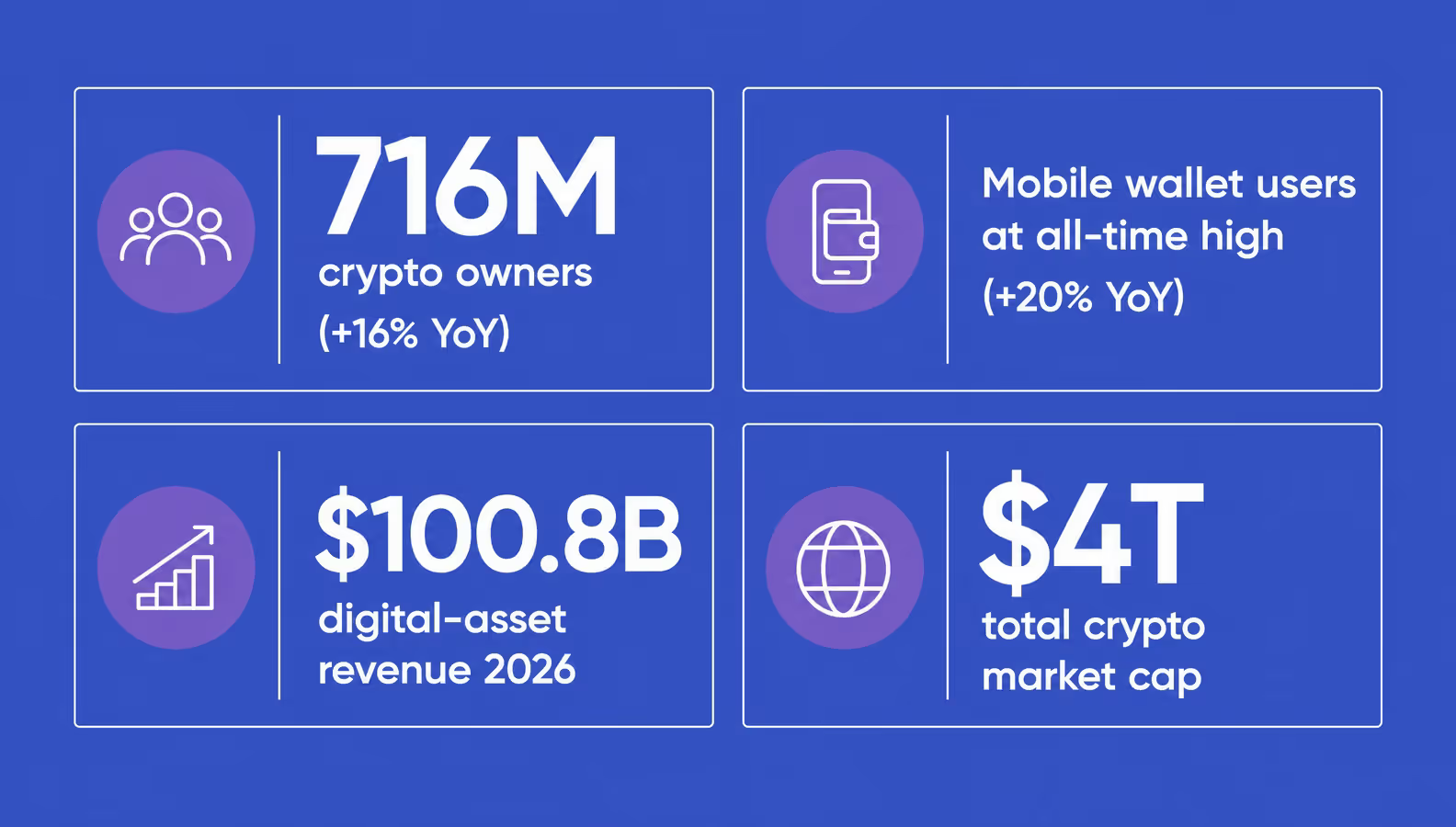
Crypto's user base and market size are both at record highs heading into 2026
Readers who want the mechanics of a conventional build will find them in our guide to mobile app development for banking. This article stays on what's specific to crypto.
Two decisions shape everything downstream: who controls the keys, and whether you build the platform or license one. Together they set your security spend, your licensing load, and how much of the product you actually own. The sections below walk through both, plus the architecture choice that sits between them.
Custody answers a single question: who holds the private keys. In a custodial app, you or a custody provider hold them, the way a bank holds deposits. In a non-custodial app, the user holds them, and your servers never touch the funds.
| Custodial | Non-custodial | |
| Who holds keys | The provider | The user |
| Account recovery | Provider can restore access | A lost seed phrase means lost funds |
| Licensing load | Heavy (MSB, state MTL, CASP) | Lighter, often out of scope |
| Best fit | Neobank-style products with cards and fiat | DeFi-native and privacy-first apps |
The choice isn't only technical. As the compliance section shows, a custodial model triggers the full licensing stack. Many regulators treat non-custodial wallets as out of scope entirely.
We built Abel, a non-custodial crypto and NFT wallet where anonymity was the whole point. To keep it that way, we gave it a serverless architecture. User data stays on the device, and third-party APIs handle every operation, so no backend server ever holds keys or personal data.
The catch was cost. Free crypto APIs throttle hard, and Etherscan caps you at five requests per second. We assembled a "free backend" by orchestrating several APIs per function. Then we counted requests per device instead of per user, which kept everyone under the free limit while still supporting unlimited users.
The full MVP came to 1,268 hours with no backend infrastructure bill at all. Read the full crypto wallet case.
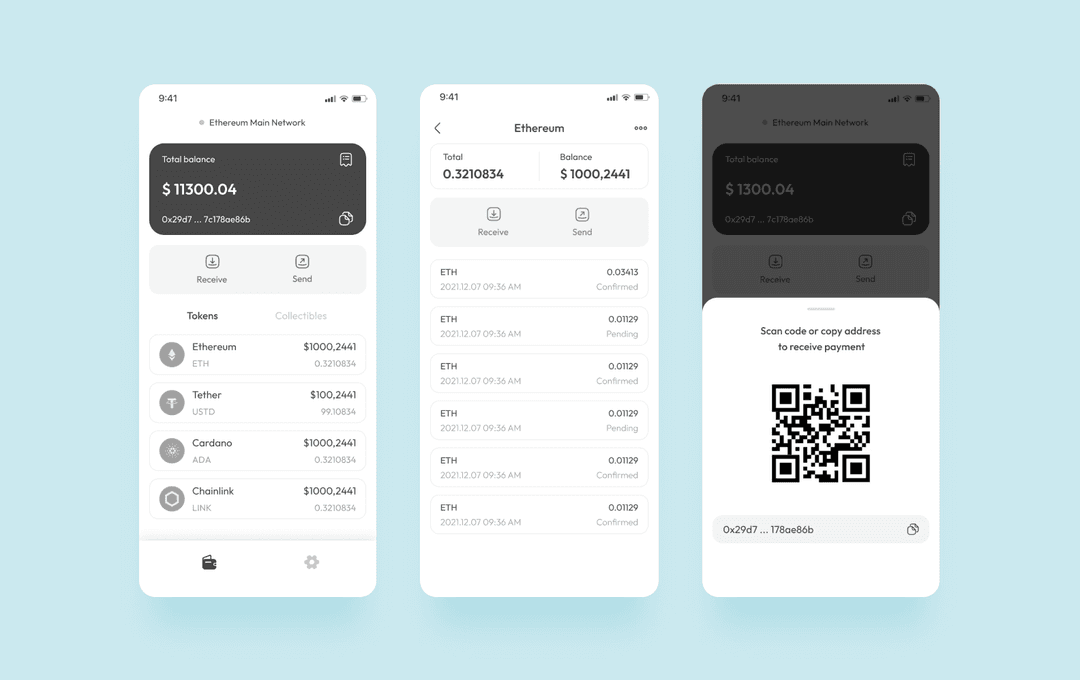
A non-custodial design removes the backend as a target, but it moves recovery risk onto the user
A DeFi-native app connects users straight to decentralized finance (DeFi) protocols for swaps, lending, and yield, with no middleman in between. A hybrid neobank wraps crypto around a familiar account instead: a fiat balance, a card, and a managed crypto wallet living side by side.
Most consumer products are hybrids, because that's the shape mainstream users already understand. If the neobank route is what you're after, our guide on how to create a neobank covers that base product in full.
Not every team builds from scratch. A white label crypto banking platform gets you live in weeks. These ready-made banking platforms lock you into another vendor's roadmap and fee schedule. Custom platform development costs more and takes months, and in return you own the product, the data, and the differentiation.
The common middle path is to license the commodity parts, such as KYC and custody, and build custom only what sets you apart. That's usually the user experience and the card program.
A crypto banking app earns trust in the first session or loses it. The features below are the ones users expect on day one, grouped from account setup through the security layer that has to hold all of it together.
Onboarding is where custodial apps meet the law. Know Your Customer (KYC) and Anti-money laundering (AML) checks are mandatory before a regulated app can let anyone transact. KYC verifies a user's identity. AML screens for illicit funds. The design problem is that verification adds friction exactly when a new user is least committed.
We designed a mobile and web cryptocurrency exchange for the Middle East where mandatory KYC ran across 95 screens. That's a serious abandonment risk, so we reshaped the flow rather than the requirement.
A warning screen set expectations up front. A progress bar showed users how far they'd come. A Guest Mode let people browse before registering. Together, that got the core buy-and-sell path down to two clicks.
We also built Arabic "twins" of every English component in Figma, so the interface flips to right-aligned Arabic in one click. See the crypto exchange case.
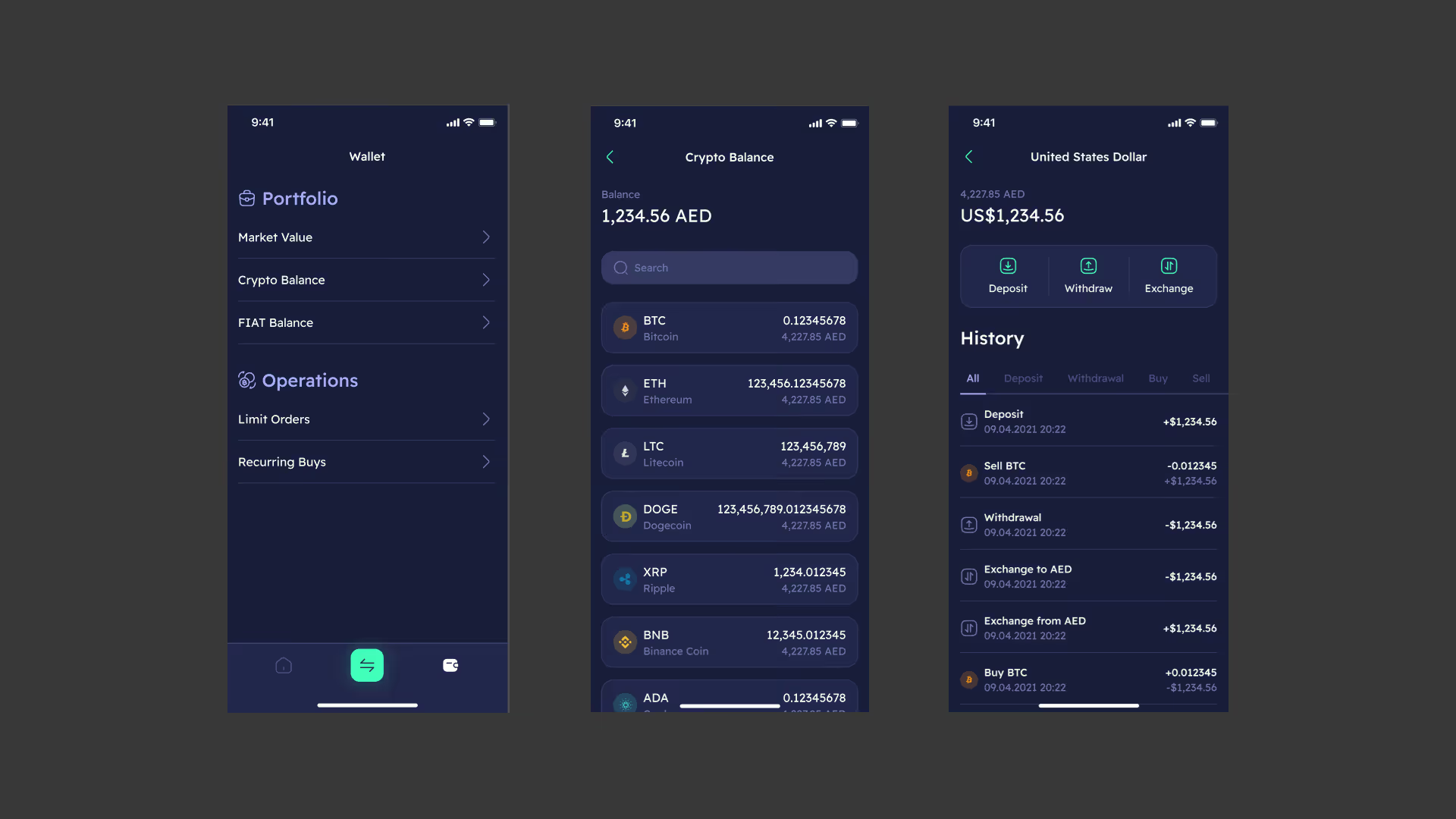
Cutting steps wasn't an option under KYC rules, so the work went into making the required steps feel shorter
The digital wallet is the core. It generates addresses, stores keys or key shares, and signs transactions. Custody design decides how much of that lives on the user's device versus your infrastructure. This is deep enough to be its own project, and we cover it in our guide to crypto wallet integration.
Users want to move between crypto and dollars without leaving the app, so a crypto-to-fiat exchange, basic crypto trading, and on/off-ramps are table stakes. Pair that with a debit card and add contactless payment. Near-field communication (NFC) is the tap-to-pay standard that makes spendable crypto feel like a normal account.
Balances and transfers have to update in real time, or the banking application feels broken next to a regular one. Underneath, biometrics carry the login. FIDO-based passkeys replace passwords with a device-bound credential unlocked by Face ID or a fingerprint. Because that credential never leaves the device, this kind of authentication resists phishing in a way passwords can't.
Fraud detection has quietly become an AI problem. Most US banks now run AI-based fraud detection, and the pressure is only rising, since the same generative models help attackers too. Deloitte projects that generative-AI-enabled fraud losses in the US could reach $40 billion by 2027. Real-time transaction scoring and behavioral checks are becoming standard rather than premium.
Crypto banking software development spans four layers that rarely share a specialty. There's the mobile client, the backend, the blockchain layer, and the security that wraps all three. The setup below is the one we reach for on mobile-first products, starting with the front end.
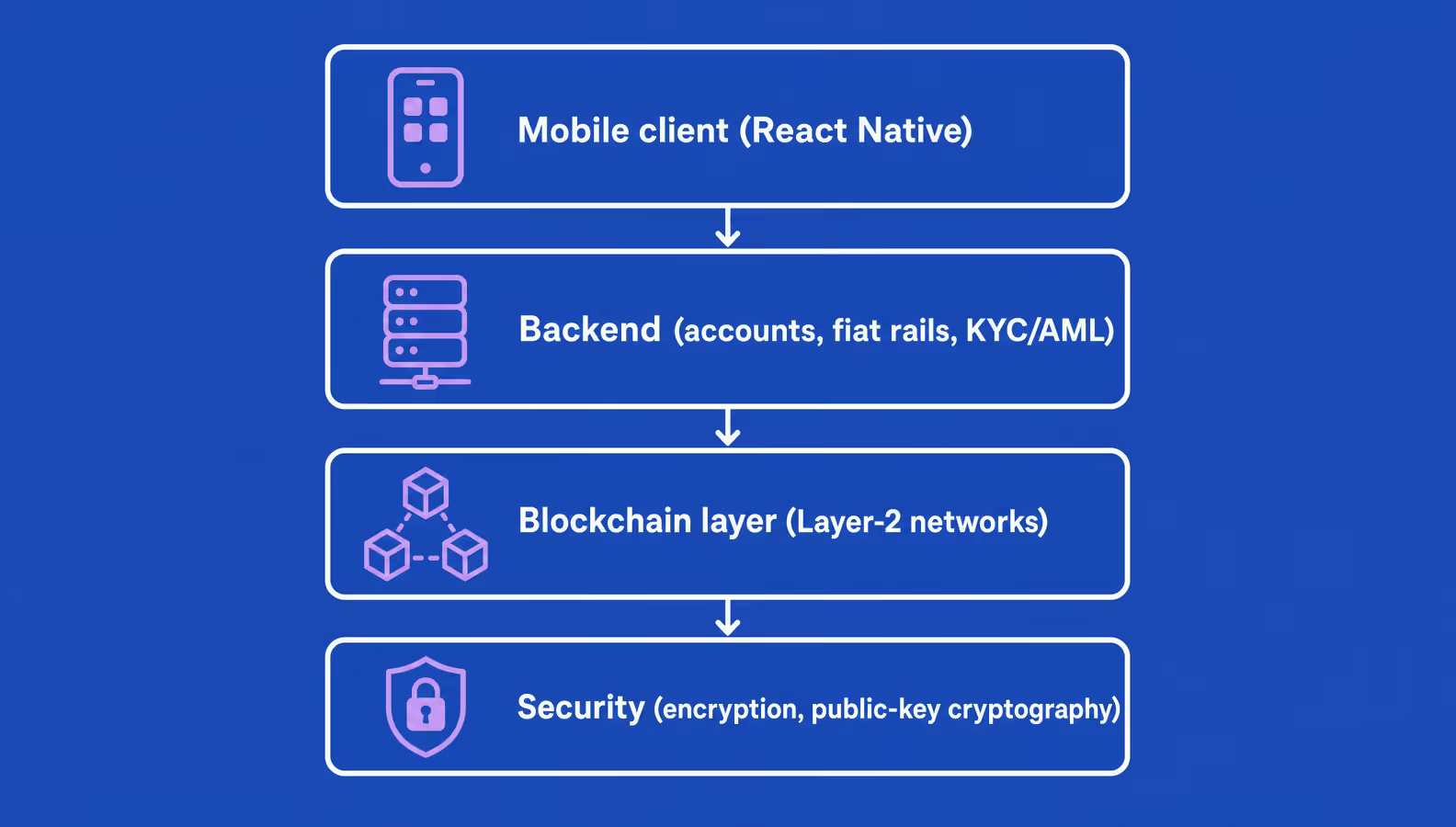
One React Native client sits on top of a backend, a blockchain layer, and a security layer that touches all three
Most crypto banking apps live or die on mobile, so the client is where we start. We build with React Native, which runs one codebase across iOS and Android. For a startup, that's the difference between hiring one mobile team and hiring two.
Cross-platform work also keeps feature parity across both stores without double the effort. Teams that ship this way get to market faster, which matters when licensing already stretches the timeline. It's the same reason React Native anchors most of our mobile banking app development work.
The backend handles accounts, transaction history, fiat rails, and the KYC/AML pipeline. The blockchain layer connects to the chains you support and often leans on Layer-2 networks, which settle faster and cheaper than a base chain like Ethereum. This is where blockchain development gets specialized. The fundamentals behind that choice are their own topic, and we go deeper in our guide to blockchain app development.
Security is not a separate layer so much as a property of every layer. Public-key cryptography, the math that pairs a private signing key with a public address, underpins the wallet. Encryption protects data in transit and at rest. The API surface between the mobile client and your core banking systems is hardened against the attacks that specifically target money apps.
Broex is a React Native crypto wallet we built for newcomers to the space. One codebase covers iOS and Android, with four core actions: buy with a card, receive to an address, send to an address, and withdraw back to a card. It connects to the client's backend over GraphQL and adds iOS biometric login.
The interesting problem was the currency selector. Off-the-shelf React Native libraries couldn't meet crypto-specific requirements. So we built a custom selector instead of bending a generic component to fit.
Full build details are in the Broex case.
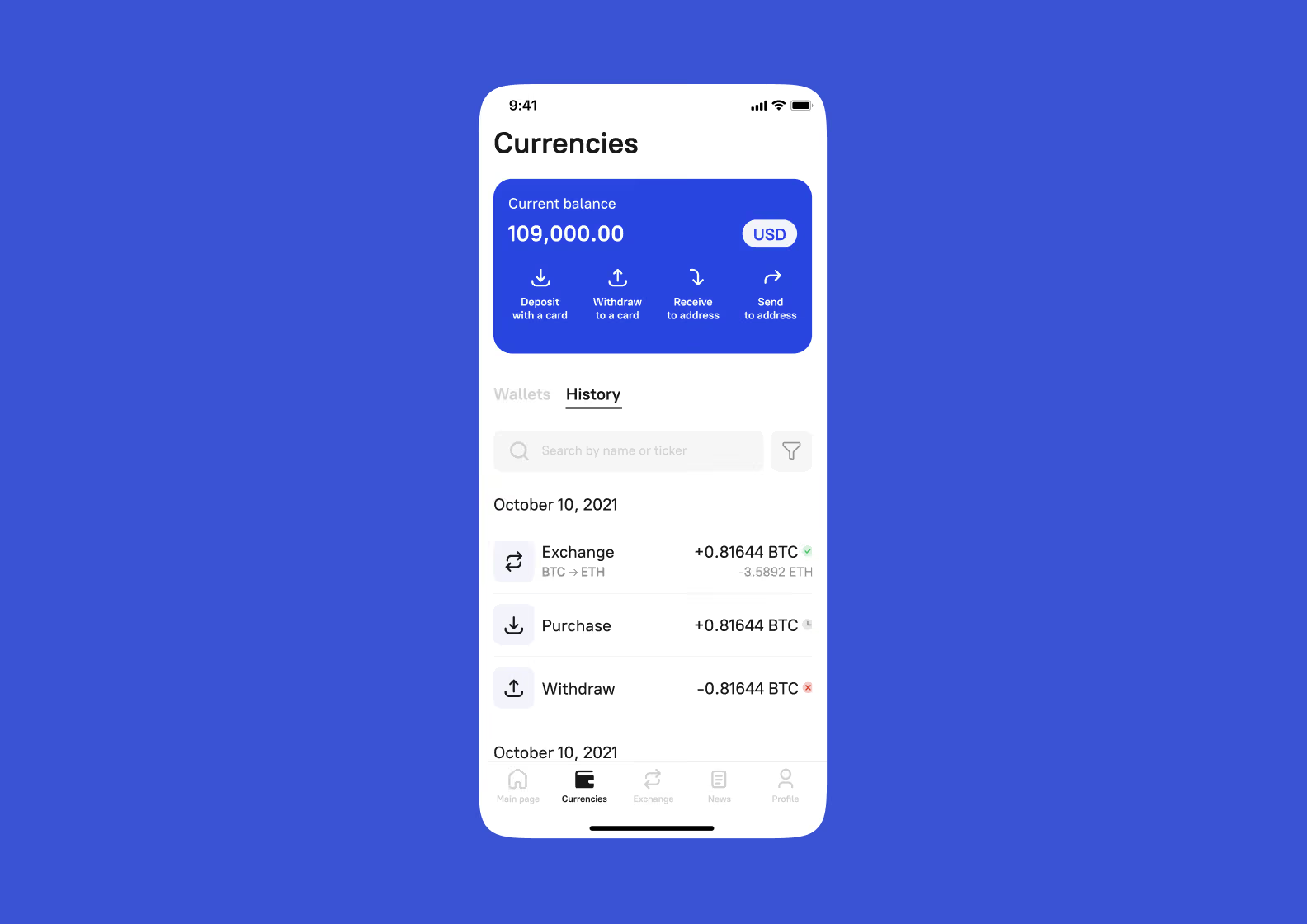
A custom component cost more up front than a library, but it removed a wall the ready-made options kept hitting
The development process for every crypto banking app we've shipped followed roughly the same arc. The order matters, because a compliance decision made in week two changes what you build in month four.
For a custom MVP, that sequence usually lands in three to six months end to end.
Compliance is the part that decides whether a crypto banking app launches at all, and it's the part founders most often underestimate. The rules below are the ones that shape the build, starting with the two frameworks a US or EU launch runs into first.
In the EU, the Markets in Crypto-Assets regulation (MiCA) now governs the space. Its rules for crypto-asset service providers came into force on 30 December 2024. Since then, a firm needs a Crypto-Asset Service Provider (CASP) authorization to offer crypto financial services in the bloc.
Minimum capital runs from €50,000 to €150,000 depending on the service, and one authorization passports across all 27 member states. Firms already operating under national rules have until 1 July 2026 to transition.
In the US, a custodial crypto banking app almost always counts as a money transmitter. Under FinCEN guidance, that makes it a Money Services Business. It has to register federally within 180 days, file reports on large and suspicious transactions, and usually hold money transmitter licenses state by state.
Running an unregistered money-transmitting business is a federal crime, so this is not a corner to cut. Custody, key storage, and who can touch user funds all fall under the same scrutiny.
We built KEM, a peer-to-peer payment app for Kuwait, and the hardest constraint on the project was regulatory, not technical. Kuwaiti banks require any developer touching their banking APIs to be physically located in Kuwait, which we, working remotely, could not satisfy.
So we shipped an MVP running on simulated data. It demonstrated the full flow to banks and investors without needing live banking-API access. We then handed the codebase to KEM's new in-house team with a month of support. The app went on to raise $1 million in seed funding.
The full story is in the KEM case.
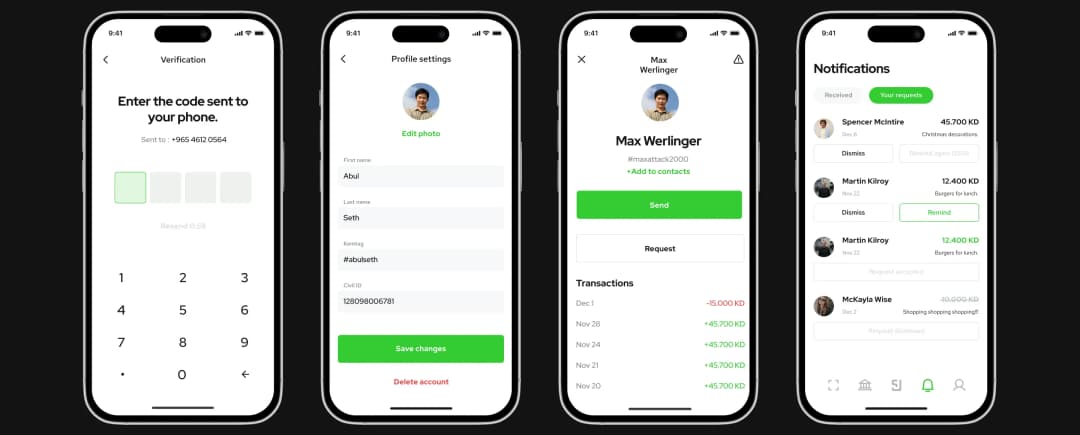
When a regulation blocks the real integration, a working simulation can still prove the product to the people who fund it
Cost tracks the decisions above more than any feature list. A custodial MVP with basic send, receive, and card features typically runs $60,000 to $100,000. A non-custodial, multi-chain build with its own key management and mandatory audits pushes to $120,000 to $250,000.
Security and compliance alone eat 20 to 30 percent of the budget, which surprises most first-time founders. Three things move the number most: the custody model, the number of chains you support, and how much licensing your markets demand. Team location matters too, since an offshore development company can run 2 to 3 times cheaper than a US one. For a full cost breakdown across fintech products, see our guide to fintech app development cost.
Timeline is the figure competitors rarely give in real numbers, so here it is by stage for an MVP. Discovery runs one to two weeks. Architecture takes about a week. UX/UI is one to two weeks. Core development and integration run two to three weeks. Testing and audit add one to two weeks, and launch fits inside a week.
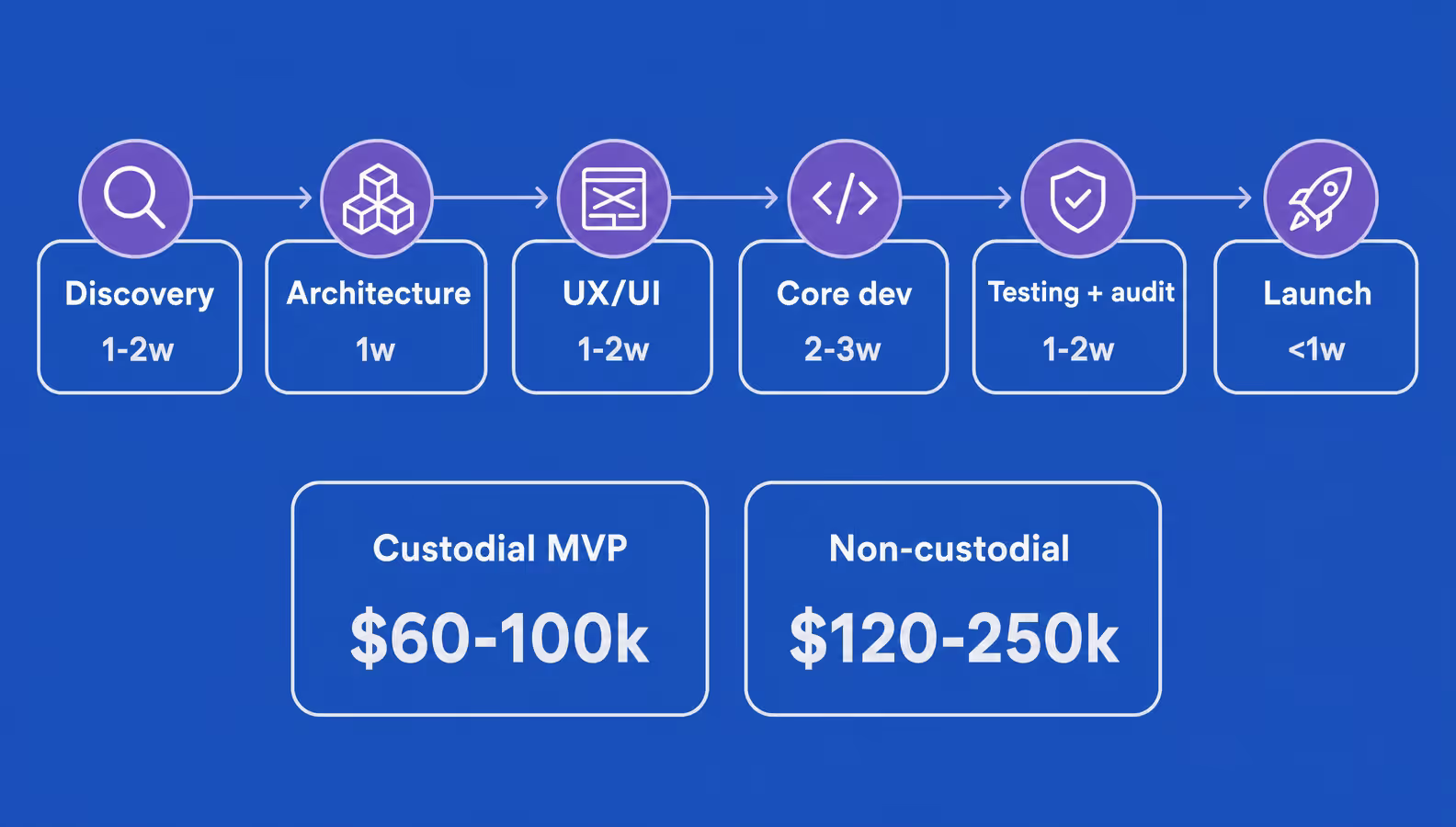
A custodial MVP fits in three to six months, while non-custodial and multi-chain builds push both time and cost up
End to end, a custom MVP lands in three to six months. A production-ready build with several chains and full licensing can run past a year.
The mistakes that sink crypto banking apps aren't exotic. They cluster around three things: underestimating compliance, mishandling custody, and forgetting that the app stores have their own rulebooks.
App store policy is the one teams discover too late. Apple's guideline 3.1.5 requires a crypto wallet to ship from an Organization developer account, not an individual one. It only allows exchange features in regions where you hold the right licensing. ICO and crypto-securities features have to come from an established financial institution, and on-device mining is banned outright.
Google Play tightened up in October 2025. Custodial exchanges and wallets now need to declare their licensing, though self-custody wallets stay exempt. A rejection at this stage can cost weeks right before launch.
The other two pitfalls compound each other. Underestimating compliance is where most development companies stretch the timeline and the budget. Custody mistakes turn into the kind of security incident a young brand doesn't survive. Both trace back to decisions made in the first two weeks, which is why discovery earns its place at the front of the build.
A crypto banking app is a neobank and a blockchain wallet fused into one product. The hard parts are custody, compliance, and shipping fast enough to matter. Get the custody model and the licensing right early. Build mobile-first so one team covers both platforms, and treat security as a property of every layer rather than a phase at the end.
➡️ If you're planning a crypto banking app and want a mobile-first team that has shipped wallets, exchanges, and payment apps, let's talk. We'll give you a free project estimate within 48 hours.
A custodial MVP with core send, receive, exchange, and card features usually runs $60,000 to $100,000. A non-custodial, multi-chain app with its own key management and security audits runs $120,000 to $250,000 or more. The biggest cost drivers are the custody model, how many blockchains you support, and how much licensing your target markets require. Security and compliance together account for 20 to 30 percent of the total.
For a custom MVP, plan on three to six months. By stage, that's roughly one to two weeks of discovery, a week of architecture, one to two weeks of UX/UI design, two to three weeks of core development and integration, one to two weeks of testing and security audit, and under a week to launch. A production-ready app with multiple chains and full licensing can take a year or more, since each extra chain and each new market adds time.
Start with discovery: define the product, the markets, and above all the custody model, because it drives everything after. Begin licensing applications early, since they run in parallel with development. Then design the flows, build the wallet and blockchain layer, integrate core banking, harden security with an audit, test the failure paths, and launch. The build section above walks through all eight steps in order.
It depends on the market. In the EU, you need a Crypto-Asset Service Provider (CASP) authorization under MiCA, with minimum capital of €50,000 to €150,000 depending on the service. In the US, a custodial platform typically has to register with FinCEN as a Money Services Business and hold money transmitter licenses state by state. Many products also need an e-money or banking license for the fiat side. Non-custodial wallets often fall outside these requirements.
It comes down to who holds the private keys. In a custodial app, the provider holds them and can restore access if a user loses their credentials, much like a bank. In a non-custodial app, the user holds the keys and has full control, but a lost seed phrase means lost funds with no recovery. Custodial apps carry a much heavier licensing load, while non-custodial wallets are often exempt.
Yes, and it's a strong fit. React Native runs one codebase across iOS and Android, so a single mobile team covers both platforms with feature parity. For a startup, that cuts cost and speeds up time to market, which matters when licensing already stretches the schedule. The security-sensitive parts, such as key management and biometric login, integrate through native modules where needed, so cross-platform doesn't mean cutting corners on security.
Three stand out. Underestimating compliance is the most common, since licensing gates launch and can stall a finished app. Custody mistakes are the most dangerous, because a key-management failure becomes a security incident. And app store policy catches teams off guard, since Apple and Google both have specific crypto rules, and a rejection can cost weeks right before launch. All three are easier to manage when addressed in discovery.
Use a white-label crypto banking platform. It packages custody, wallets, and often compliance into a product you brand as your own, which gets you to market in weeks instead of months. The trade-off is control: you inherit the vendor's roadmap, fees, and feature limits. A common middle path is to license the commodity pieces, like KYC and custody, and build custom only the parts that differentiate you, usually the user experience.