Explore

Need help with your project?

Oops! Something went wrong while submitting the form.
If you've started pricing a crypto wallet, you've already hit the problem. Ask five agencies and you'll get five quotes that don't share a single zero. One says $20,000, the next says half a million, and both sound equally sure of themselves. That spread isn't vendors guessing. It's that "crypto wallet" stretches from a thin app on an existing SDK to a custodial platform holding real customer funds under a license.

So the honest opening line is that it depends, and it depends on things you actually control. What kind of wallet you're building, how many blockchains it touches, how much security and compliance sit on your shoulders, and who writes the code. The rest of this guide walks each lever the way a founder spends the money: real ranges, timelines, and the costs that stay quiet until they hit an invoice.
Crypto wallet development is the work of building an app: a cryptocurrency wallet, sometimes called a blockchain wallet or digital wallet. It lets people store, send, receive, and manage digital assets like Bitcoin, Ethereum, or Solana tokens. Each digital asset lives on a blockchain, and the wallet is the key to it.
Under the hood, a wallet never really "holds" coins. It manages the private keys that prove ownership of assets on a blockchain, using public-key cryptography. Whether you build a simple bitcoin wallet or a multi-chain app, that private key is the thing you are really protecting. Building one well means getting key management, transaction signing, and security right, then wrapping it in a user experience an ordinary person can navigate.
The first fork in the road is custody. A custodial wallet keeps users' private keys on your servers. That's simpler for the user, but it puts you on the hook for safeguarding funds and, usually, for compliance. A non-custodial wallet hands key control to the user, so they alone can move their money. That's lighter on your legal exposure and heavier on the UX work of helping people not lose their seed phrase.
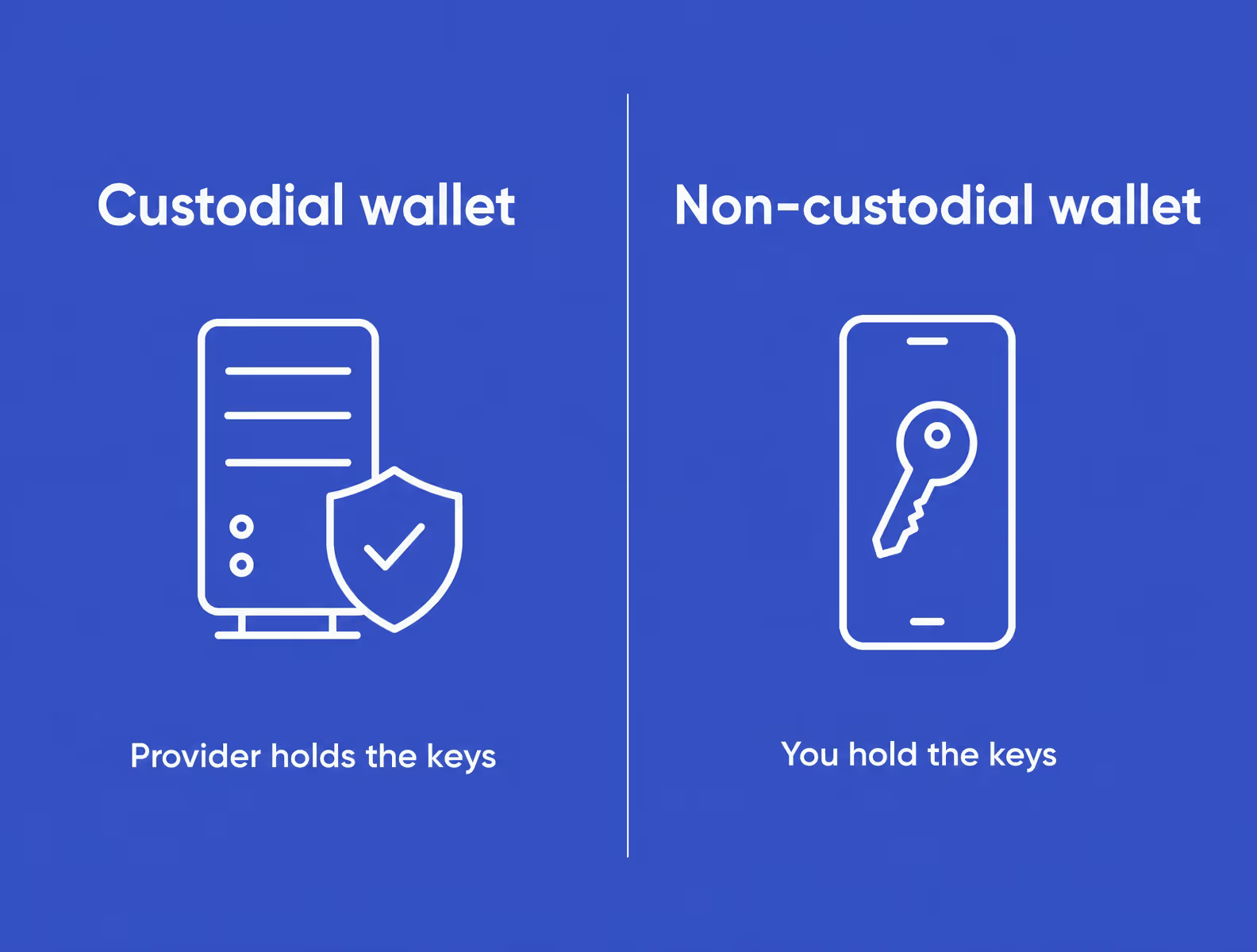
Custody decides who guards the keys, and that single choice shapes the rest of the build
Why build your own secure crypto wallet instead of pointing users at ready-made crypto wallets like MetaMask? Because the wallet is where your product lives. It's the layer that owns the customer relationship and the branding. It's also the on-ramp to whatever you're really selling: an exchange, a decentralized finance (DeFi) service, or a fintech account.
With crypto ownership climbing from 659 million people in 2024 to 741 million in 2025, that owned surface is worth more every year. For teams already building here, a wallet is often the natural extension of a broader fintech development company roadmap.
This guide stays on cost. If you want the technical, step-by-step path instead, our how to create a crypto wallet guide covers building one from scratch.
A crypto wallet costs $15,000 to $500,000+ to build in 2026. Most crypto wallets fall into three price tiers. A basic MVP runs $15,000–$50,000. A mid-level multi-chain wallet lands at $50,000–$150,000, and an enterprise wallet with full compliance starts at $150,000. Where you land depends far less on the app's screens than on what happens behind them: key custody, chain count, and how much regulation you take on.
| Wallet tier | Typical cost | Timeline | What it covers |
| Basic / MVP wallet | $15k–$50k | 2–4 months | One or a few chains, non-custodial, create/import wallet, send/receive/buy, PIN + biometrics, transaction history |
| Mid-level wallet | $50k–$150k | 4–7 months | Multi-chain, in-app swap and staking, favorites, push, KYC, polished UX |
| Enterprise wallet | $150k–$500k+ | 7–14 months | Custodial or MPC/multi-sig infrastructure, full KYC/AML, external audits, multi-currency, admin panel, DeFi integrations |
Treat these as planning baselines, not a quote. This cost breakdown reflects senior Eastern-European build rates and assumes a cross-platform app, so your total cost moves with both. The assumptions shift the moment your team or region changes, which is exactly what the next sections unpack.
It's worth putting that spend in context. The global crypto wallet market is on track to grow from $15.5 billion in 2025 to $100.8 billion by 2033, a 26.6% compound annual growth rate, per Grand View Research. It reaches roughly $19.3 billion in 2026.
Cryptocurrency wallet development isn't a side feature anymore. It's a product category with its own economics. That's why teams increasingly scope it as a dedicated crypto wallet development services engagement, not a bolt-on.
Wondering how much it costs to develop your crypto wallet? After 550+ completed projects, we can design an app in any niche. Contact us and get a free project estimation in 48 hours. Get an estimate.
Two teams can build what looks like the same wallet and land $100,000 apart. The tier table gives you a starting point. These are the factors that move you up or down inside it. The key factors are three: the type of wallet you choose, the blockchains and tech stack behind it, and how deep your security and compliance go. Each gets its own section below, because each one can quietly double a budget.
The custodial vs non-custodial wallet decision is the first cost lever, because it decides how much infrastructure you own. A non-custodial wallet, where the user holds the private keys, keeps your backend lean. There's no vault of customer funds to guard, but it pushes hard work onto security and recovery UX.
A custodial wallet flips that. You hold the keys, so you take on secure storage, monitoring, and usually KYC/AML, all of which add backend and compliance cost.
Layered on top of that is where the keys live. A hot wallet stays connected to the internet for instant transactions, the standard and cheaper default. A cold wallet keeps keys offline, which means integrating hardware or air-gapped signing and drives cost up. Many serious crypto wallets ship a hybrid: a hot mobile wallet for daily use, cold storage for reserves.
Understanding hot wallet vs cold wallet trade-offs early keeps that decision from becoming a costly rebuild later.
| Wallet type | Who holds the keys | Cost impact |
| Non-custodial | User | Leaner backend, but heavier secure-key UX and recovery work |
| Custodial | You (the provider) | Adds secure storage, monitoring, and KYC/AML, so higher build and ongoing cost |
| Hot wallet | Online (app/server) | Standard, cheaper default |
| Cold wallet | Offline (hardware/air-gapped) | Adds hardware or air-gap integration, so cost goes up |
Only about a quarter of competing guides break this down, yet it's the single choice that shapes everything after it.
The blockchains you support and the stack you build on quietly set your budget floor. Backing a single chain like Ethereum is the cheap path. A multi-chain wallet that also speaks Solana, Polygon, Bitcoin, and BNB Chain (Binance) means separate integrations, testing, and node infrastructure for each blockchain network.
Every added chain is another surface to build, secure, and maintain. That's why multi-chain support is one of the clearest lines between a $30,000 wallet and a $150,000 one.
The client-side stack matters just as much. Native iOS and Android means two codebases and two teams building the same features twice. React Native collapses that into one shared codebase that ships to both platforms. It trims the mobile line by roughly 30–40% and ships about 50% faster than a native pair.
For a wallet, where the app is the product, that saving lands on your single biggest cost item. The same trade-offs drive our wider blockchain app development cost breakdown, and they scale up fast in web3 wallet development and heavier Web3 development budgets.
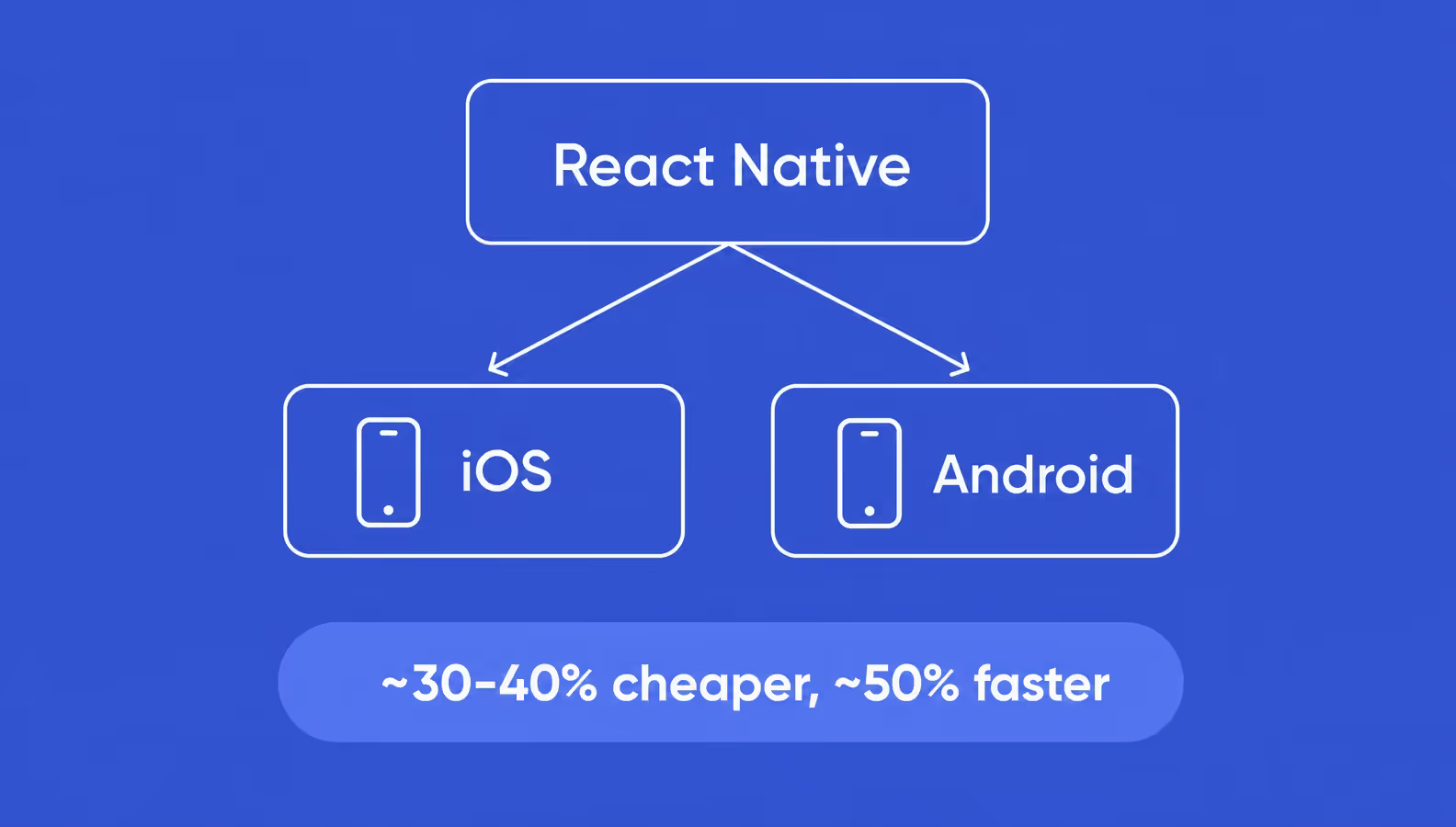
One React Native codebase ships to both platforms, trimming the biggest line in the budget
Broex, a multi-currency crypto wallet built for newcomers, is a clean example of the stack choice paying off. We built it in React Native with a GraphQL backend, so a single codebase covered both iOS and Android the whole way.
Rather than one big launch, we shipped in phases: the core wallet first (auth, balances, send and receive), then buy, exchange, and withdraw, and finally iOS biometric login. Each release funded one cross-platform build instead of two.
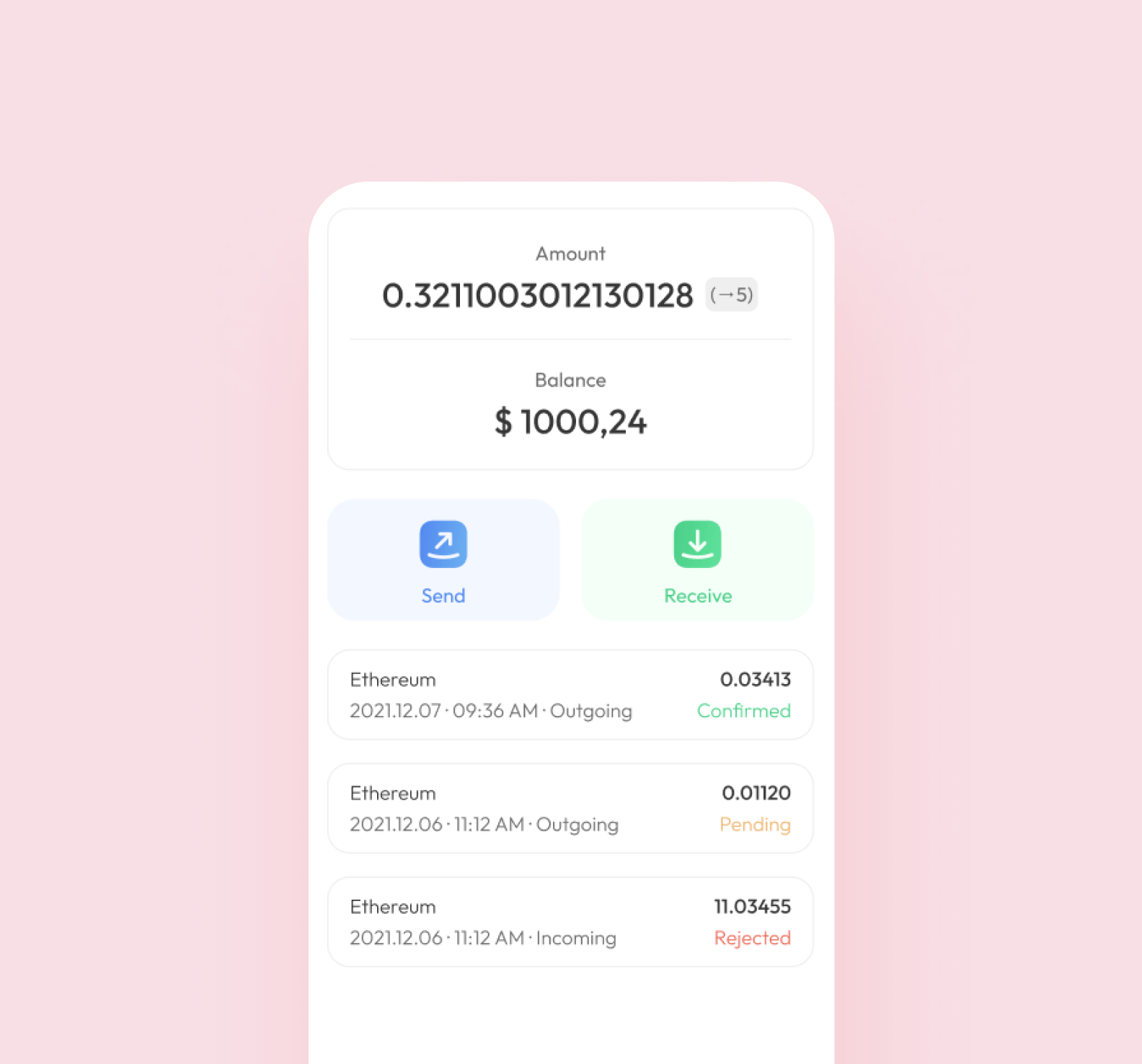
A single React Native codebase carried Broex across iOS and Android through every phased release
Security isn't a feature you can trim. In a wallet, it's a budget category of its own. And the moment you touch custody or fiat money on-ramps, Know Your Customer (KYC) and Anti-Money Laundering (AML) checks stop being optional too. Here's where the money actually goes:
None of this is optional in a product that moves money. Budget security and compliance as their own line from day one. Teams that treat it as a rounding error at the end almost always reopen the checkbook later.
Once you've picked a wallet type and stack, the cost turns into a build sheet. This is where an estimate stops being a single number and becomes a list of modules a crypto wallet actually needs, from wallet creation to swap integration.
The breakdown below splits an MVP into those modules with rough effort and cost at senior Eastern-European rates. These are our internal planning estimates, not a vendor quote, so read them as a baseline you adjust from.
| Module | Effort | Cost range |
| Onboarding + wallet creation (key gen, seed phrase, PIN/biometrics) | 100–180 h | $5k–$12.6k |
| Send / receive / address management | 80–140 h | $4k–$9.8k |
| Buy / swap / exchange integration (on-ramp + DEX/CEX API) | 120–200 h | $6k–$14k |
| Multi-chain & token support | 100–180 h | $5k–$12.6k |
| Transaction history + activity feed | 40–80 h | $2k–$5.6k |
| Security (encryption, key management, MPC/multi-sig) | 100–200 h | $5k–$14k |
| KYC/AML integration | 100–150 h | $10k–$15k |
| UI/UX design | 150–300 h | $7.5k–$21k |
| QA + security testing | 100–200 h | $5k–$14k |
| Admin / back-office (custodial) | 100–180 h | $5k–$12.6k |
| Custom MVP total | ~990–1,810 h | ~$54k–$130k (+ licensing/audit) |
The three tiers map cleanly onto how many of these modules you switch on. A basic wallet ($15k–$50k) is a lean slice: onboarding, send/receive/buy, one or two chains, and a clean UI. A mid-level wallet ($50k–$150k) turns on multi-chain, swaps, the option to stake, and KYC.
An enterprise wallet ($150k+) runs the full sheet plus custodial infrastructure, external audits, and multi-currency support. The features are the dial, and the tier is just where you set it.
A crypto wallet takes 3 to 5 months for an MVP and 7 to 14 months for an enterprise build. The engineering is only part of the clock. Security audits and, if you're custodial, regulatory sign-off often stretch a timeline more than the code does. Here's how a typical MVP breaks down by stage.
| Stage | Duration |
| Discovery & design | 2–4 weeks |
| MVP development | 2–4 months |
| Testing + security audit | 3–6 weeks |
| Release + store approval | 1–3 weeks |
These stages overlap in practice. Design keeps refining while development runs, and testing starts before the last feature lands. The single biggest schedule risk isn't a feature. It's approval. App Store review, a security audit that surfaces findings, or a regulator that wants another document can each add weeks that no Gantt chart predicted.
Building cross-platform on React Native helps here too, since one codebase to test and ship means one review cycle, not two.
We built a full payment ecosystem for a Montenegro-based fintech team: user-to-user transfers, QR-code payments, transaction history, a referral program, and physical branded cards. The features weren't the hard part. Integrating them under local regulatory constraints was.
The build ran about 10 months and reached 98% completion, with release held for regulatory sign-off. On any product that moves money, compliance, not code, is usually the critical path, and the part of the timeline founders underestimate most.
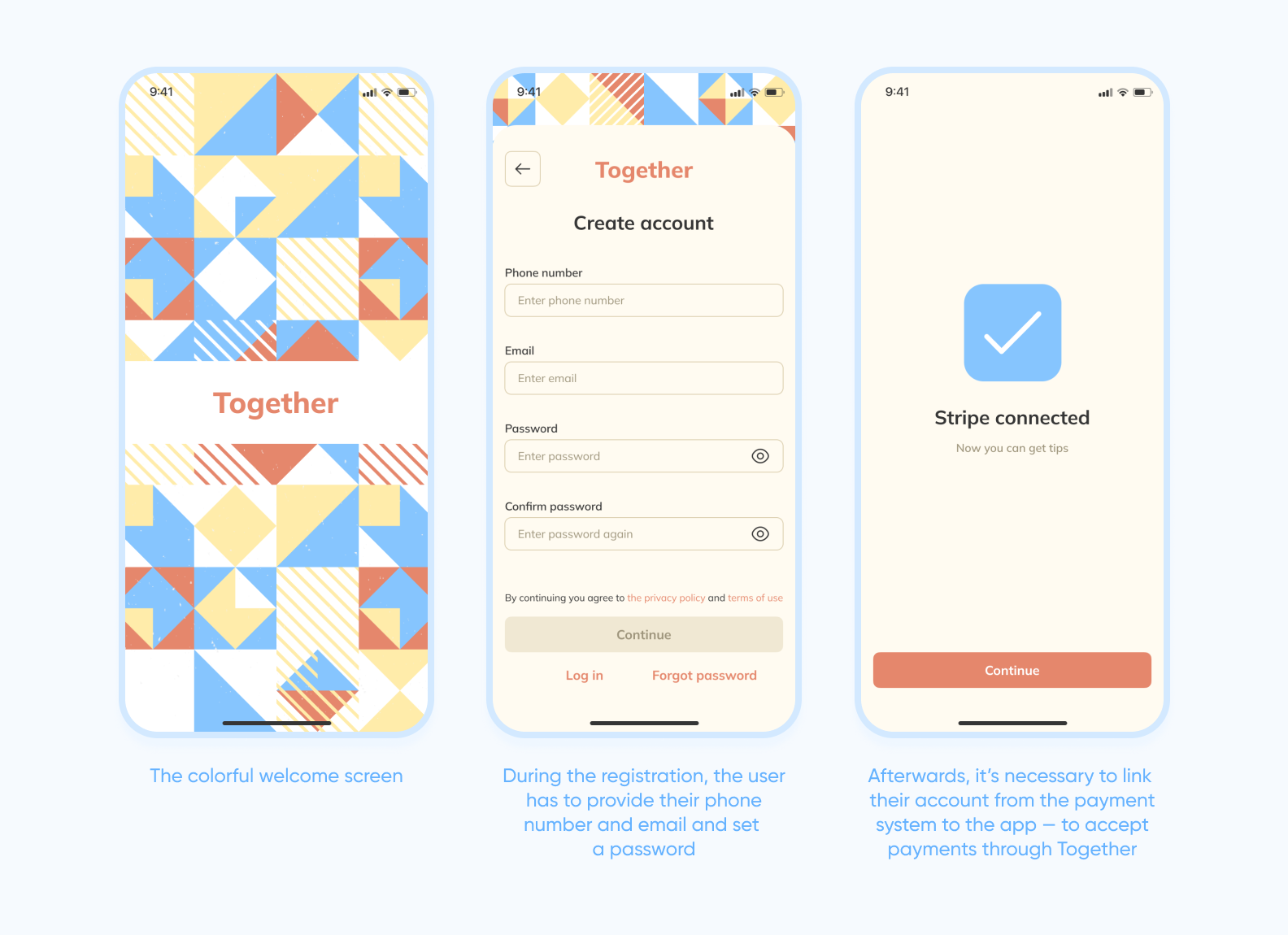
Compliance sign-off, not the feature work, set the release date on the Together build
There are three ways to get a crypto wallet, and they sit far apart on cost, speed, and control. Custom development builds the wallet to your spec, white-label rebrands a ready-made product, and wallet-as-a-service embeds someone else's infrastructure through an SDK. Here's how each one works and where it wins.
| Model | Typical cost | Time to launch | Control |
| Custom development | $50k–$500k+ | 3–14 months | Full control over security, chains, and UX |
| White-label | $30k–$100k | 1–3 months | Fast, but limited differentiation and licensing ties |
| Wallet-as-a-service | Low upfront + per-transaction or subscription fees | Days–weeks | Fastest, least control, runs on a provider's SDK |
Building from scratch is the expensive, slow option upfront. It's also the only one that hands you full ownership of security, supported chains, UX, and unit economics. It's the right call once the wallet is core to your business and you want no ceiling on what it can become. Most serious products end up here eventually, even if they don't start here.
A white-label wallet, or white label crypto wallet, is the cheapest and fastest route to something that works. You rebrand a proven product and launch in weeks. The catch is that you customize the skin, not the engine, so you're shipping what thousands of others also ship. Differentiation and roadmap control are limited, which matters the moment you want a feature the platform doesn't offer.
Wallet-as-a-service, or WaaS, goes furthest on speed. You embed a provider's wallet infrastructure through an SDK and can be live in days. The trade-off arrives later. You rent the rails and pay per transaction, so the cheap start becomes a running tax as volume grows. It's ideal for validating demand, less so for owning your economics long term.
The honest rule of thumb is simple. Start on white-label or WaaS to test demand cheaply, then migrate to custom once the product is core and per-transaction fees start to sting.
The build sheet covers software. It doesn't cover the right to move money, list a token, or keep the lights on after launch, and that's where first-year budgets quietly overrun. These are the costs that rarely make it into an early estimate:
The pattern is consistent. The code is the visible half of the budget, and the license-and-operate layer is the half that surprises people. The fix is boring but effective: budget these as their own category before you start, not when the first regulator emails you.
Plan for crypto wallet maintenance to run roughly 15–20% of the initial build cost per year. Launch isn't the finish line. A wallet is live software touching live money, so a second, quieter budget starts the day you ship and never stops. The main lines are steady and predictable:
Across a year, ongoing support commonly lands anywhere from $20,000 to $100,000+, depending on scale.
One cost founders almost never price in is expansion. Every new market can mean new compliance, new languages, and new layout work.
BurjX, a crypto exchange we built for the MENA market, is a clean example of designing that expansion cost down. Instead of re-laying out every screen for a new language, we built the Figma with master components and Arabic twins.
The result: the whole interface flips to a right-to-left Arabic layout in one click. What is usually a costly re-layout for each new language became a near-automatic switch, the kind of upfront decision that keeps the ongoing bill low.
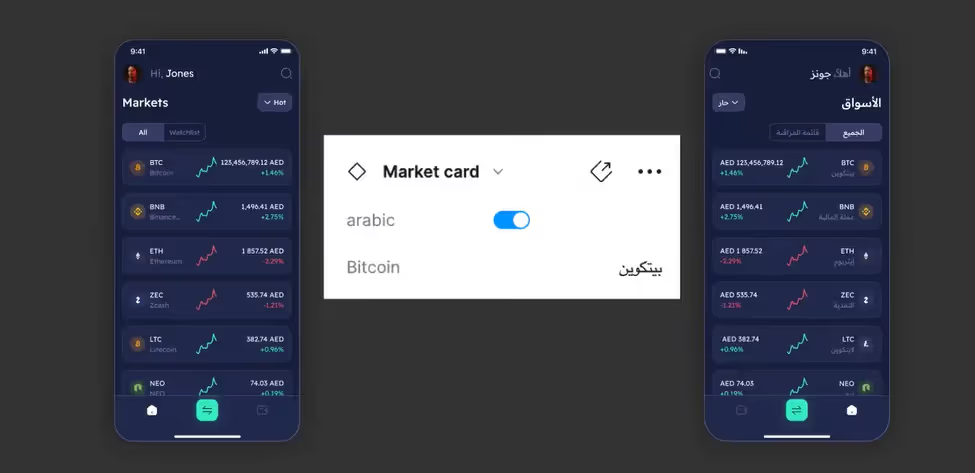
Master components let BurjX flip to a full Arabic layout in one click, instead of re-laying out every screen
Who builds the wallet moves the bill as much as what they build. There are three staffing models, and the cheapest one depends on how much crypto engineering you already have in-house. Below is how they compare, then where geography fits in.
| Model | Cost profile | Best when |
| In-house team | Highest fixed cost, since you carry salaries between projects, not just during them | The wallet is a long-term core product and you already have blockchain talent |
| Agency / development company | Mid cost, fixed scope, one accountable partner | You want a fast start and a proven process without hiring |
| Freelance / individual outsourcing | Cheapest per hour, highest coordination risk | Small, well-defined scope you can manage yourself |
An in-house development team gives you the most control and the highest standing cost. The team has to be paid whether or not there's a wallet to build that quarter. An agency trades some of that control for speed and a fixed, scoped budget.
You get a working crypto wallet without carrying engineers long term. Individual outsourcing is the lowest hourly rate on paper. But it moves integration, quality, and security risk onto you, which in a money-moving app is not a small thing.
Then geography sets the multiplier. The same senior blockchain developer runs about $100–200/hr in North America, $70–120 in Western Europe, $40–80 in Eastern Europe, and $20–50 in South Asia. On a 1,500-hour wallet MVP, that spread alone is a six-figure swing before a single feature changes.
That's why many teams outsource the build to strong Eastern-European studios and keep only product and compliance close to home.
Let's start building your crypto wallet today! We'd be glad to help. Contact us and get a free project estimation in 48 hours. Contact us.
Crypto wallet development companies vary widely, and plenty of general app development companies take on crypto wallet app development without the security depth it needs. The right partner is the difference between crypto wallets that ship and ones that stall at the audit. Price matters, but for a product holding real money, a few things matter more. Weigh a crypto wallet development company against these before you weigh the quote:
The strongest signal is a portfolio with real numbers and outcomes behind it, not adjectives. The best wallet development companies show you shipped work, not promises.
A company that can point to what it built, how long it took, and what happened next is telling you how your project will go.
KEM is a good example of what a focused build can unlock. We shipped a payments MVP (user-to-user transfers, card linking, PIN login, and transaction history) lean enough to move fast but solid enough to demo to banks.
That MVP was enough to secure API access into Kuwait's banking system. After that, the client raised $1M in seed funding and moved the product to their own in-house team, with a month of transition support from us. The right first build doesn't just launch. It opens the next door.
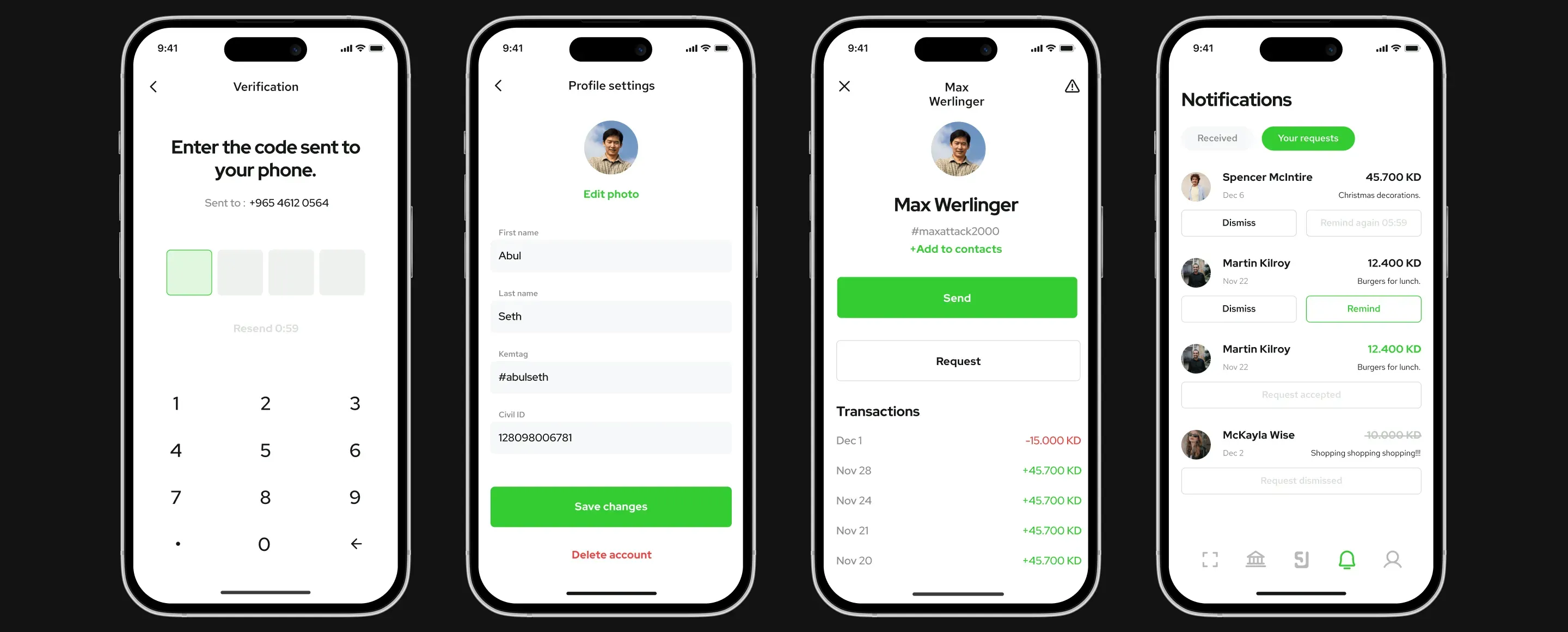
A lean payments MVP was enough for KEM to secure bank API access and raise a $1M seed round
You can cut a wallet budget hard without cutting the product that matters. The trick is trimming where cost hides, not where users look. A few moves do most of the work:
The throughline is sequencing. Spend on security and compliance early, defer everything optional, and let real demand, not a wishlist, decide what you build next.
The honest answer to "how much does it cost" is still a range, $15,000 for a lean MVP and $500,000 and up for an enterprise wallet. But by now the range should feel less like a mystery and more like a set of decisions. Wallet type, chain count, security depth, and where your team sits are the dials that set your development costs, and you control every one of them. The right wallet solution is the one scoped to the decisions you actually need.
Get the sequencing right: security and compliance early, optional features later, cross-platform from the start. Do that and you buy a wallet that ships without a budget that spirals.
➡️ If you're pricing a crypto wallet and want a number grounded in real projects, not a lump-sum guess, we're happy to walk through your scope and send a free estimate. Reach out for a crypto wallet development services estimate.
A crypto wallet costs $15,000 to $500,000+ in 2026. A basic single-chain MVP runs $15,000–$50,000. A mid-level multi-chain wallet with swaps and KYC lands at $50,000–$150,000. An enterprise wallet with custodial infrastructure and full compliance starts around $150,000.
An MVP typically takes 3 to 5 months, and an enterprise wallet 7 to 14 months. Security audits and, for custodial wallets, regulatory sign-off often stretch the schedule more than the development work itself.
A non-custodial wallet keeps your backend leaner because users hold their own keys, but it demands more secure-key and recovery UX work. A custodial wallet adds secure storage, monitoring, and usually KYC/AML, which raises both the build cost and the ongoing bill.
White-label ($30k–$100k) and wallet-as-a-service (low upfront plus per-transaction fees) get you live fastest and cheapest, but with limited control. Custom development ($50k–$500k+) costs more and takes longer, yet gives you full ownership of security, chains, and economics. Validate demand cheap, go custom once the wallet is core.
Budget roughly 15–20% of the initial build per year. That covers cloud and node infrastructure ($500–$5,000 a month early on), KYC checks at $1–$3 per verification, blockchain upkeep, and support. All in, it commonly runs $20,000 to $100,000+ a year depending on scale.
A third-party security audit runs $5,000–$50,000+, and MPC or multi-sig key management, encryption, and secure storage add more on top. KYC/AML integration is a further $10,000–$30,000 to build. In a wallet, security is its own budget category, not a line item.
Every extra blockchain means a separate integration, its own testing, and node infrastructure. That makes multi-chain support one of the clearest lines between a $30,000 wallet and a $150,000 one. Expect the token-support module to scale with each chain you add.
Significantly. A senior blockchain developer runs about $100–200/hr in North America, $70–120 in Western Europe, $40–80 in Eastern Europe, and $20–50 in South Asia. On a 1,500-hour MVP, that spread alone is a six-figure difference.
A crypto wallet stores, sends, and receives digital assets. A Web3 wallet does that and also connects to decentralized apps, DeFi protocols, and non-fungible token (NFT) platforms, signing on-chain interactions. A Web3 wallet is essentially a crypto wallet with more integrations, and more build work.
Licensing depends on jurisdiction. A US money services business is licensed state by state at $10,000–$200,000+ each, while the EU route needs an e-money license with reserve capital. Add legal counsel ($20,000–$200,000) and per-user KYC checks ($1–$3). None of it appears in a developer's estimate.