Explore

Need help with your project?

Oops! Something went wrong while submitting the form.
Peer-to-peer apps (P2P) makes every day money movement, like paying rent to a landlord, giving a friend $5 back for a coffee or chip in for party supplies much easier. All done within seconds in apps like Venmo, Paypal or Cash App.
There is no doubt in the market demand for such platforms, but the real question is: How do you approach p2p payment app development and stand out in a saturated market? We plan on discussing these points and more in this article.
If you want to learn how to develop a mobile app that customers will love, what features to choose from, and what competitors to study before the launch of your payment app. We’ve got it, let’s go!
.avif)
P2P payment app development is the process of building a peer-to-peer payment app that lets users send and receive money in real time, without going through a bank branch.
This guide covers the must-have features, security (PCI DSS, KYC, AML), the tech stack, cost benchmarks, and a step-by-step build plan for a modern fintech app.
Peer-to-peer apps allow users to send and receive money directly, without the middleman, such as a traditional bank. Usually these platforms are mobile (like Zelle or Venmo), but some services support a desktop version too — PayPal, for example.
A peer-to-peer payment app is a digital payment product that moves money between two individuals through mobile devices. It sits at the intersection of consumer banking and financial technology (fintech).
Instead of processing paper checks or waiting for bank rails, p2p transactions clear in seconds through card networks or real-time payment schemes.
Peer-to-peer apps are ideal for many everyday tasks: from sending cash birthday gifts to splitting the dinner bill and paying rent.
Most people are already familiar with money-transferring functionality: half of all Americans and a third of British people use a peer-to-peer app and there is always demand for innovation within P2P solutions.
Adoption is already at scale. The global P2P payment market was valued at $3.63 trillion in 2025 and is projected to reach around $18.44 trillion by 2035, at roughly 17% CAGR. That is the tailwind for anyone building in this space today.
The user journey in a cash transferring app is simple. Just 5 steps to transfer money:
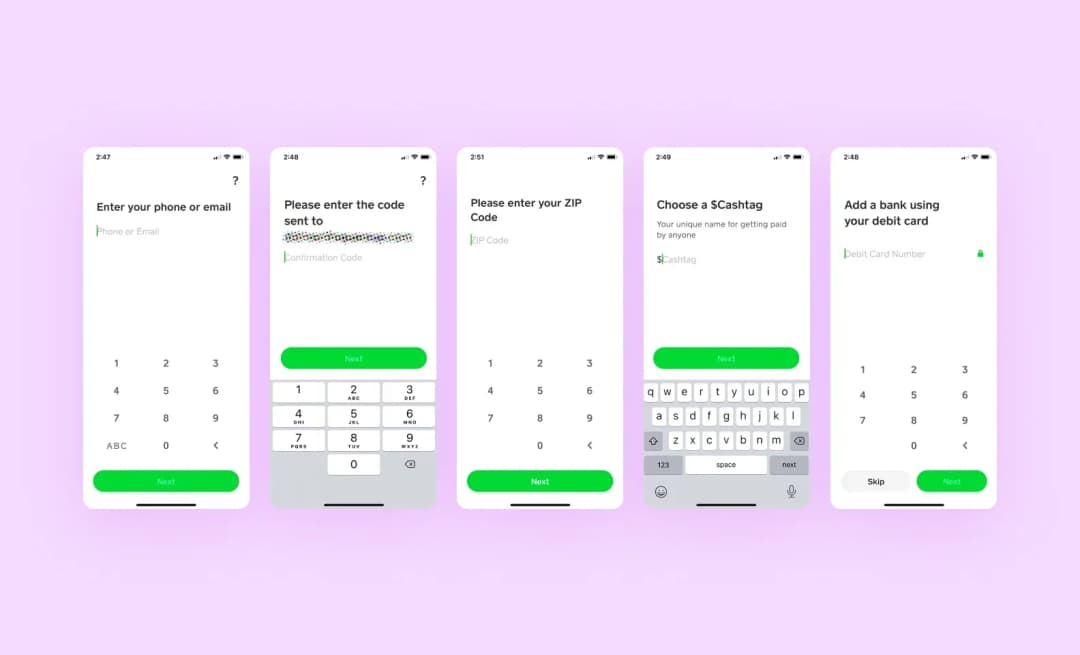
1️⃣ Users create an account and input their name, email and phone number. Most P2P payment apps ask customers to create a unique username or a tag so others can find the correct person when transferring.
2️⃣ Next, adding a card or linking a bank account. Some platforms, like Revolut or Apple Cash, let users use contactless payment methods (Apple Pay or Google Pay) to add money to their accounts.
3️⃣ Now users can search for a friend or a relative by using a phone number or a username.
4️⃣ Users choose the amount of cash to send and confirm the transaction.
5️⃣ Tah-dah! Now a user can see a confirmation of the transaction, as well as see it in the history.
Behind the scenes the flow looks different from what the user sees. When a sender initiates a transfer, the app tokenizes the card or bank credential and routes the request through a payment gateway.
The gateway forwards to a payment processor, which validates funds with the sender’s payment service provider (PSP) or issuing bank. Once cleared, the money settles on a real-time payment rail (Zelle in the US, SEPA Instant in the EU, FedNow for domestic instant transfers, UPI in India), and the recipient’s app posts the credit within seconds.
This sender → gateway → processor → PSP → recipient chain is why sub-second UX takes a serious backend to build.
Before jumping to the P2P payment app development, it is crucial to know which competitors are dominating the market. They set the trends, develop users’ habits and therefore determine what technologies will be present in peer-to-peer solutions.
In short, they lead the way and you can’t ignore it. Here are 4 of the most established P2P payment apps in the world right now.
Revolut is a global neobank with P2P functionality. Headquartered in London, the company was founded in 2015 by two entrepreneurs: Nikolay Storonsky and Vlad Yatsenko. It is available in most European countries, in the United States and Japan.
Revolut offers debit cards, virtual cards, savings “vaults,” stock trading, crypto and currency exchanges among other services.
Revenue: ~$4.0 billion (FY2024), with $1.4 billion in profit before tax, per the Revolut Annual Report 2024.
Advantages: Personal and business accounts, 24/7 customer support, ATM access, strong APY.
Key app features: dashboard with current balance and history overview; money transfers; widgets, a map with nearby ATMs.
Cash App is the top-rated P2P payment app in the finance category. Initially named Square Cash, it was released in 2013 in the US.
Cash App is a classic P2P platform in its pure sense in that it allows individuals, organizations, and business owners to send and receive money. For that, they need to create a unique username known as a $cashtag. Now, the $cashtag has become the most popular method for users to transfer money in the U.S.
Gross profit: ~$5.24 billion for the Cash App segment in FY2024, per Block FY2024 results.
Advantages: instant payments between accounts, no account fees, Cash Card debit card, bitcoin support.
Key features: split bill; free in-app tax filing; transfer screen.
PayPal is an international online payment system that operates in most countries. It was founded way back in 1998 and had their IPO in 2002, the true pioneer of the industry.
The app and the desktop version support online money transfers and serve as an electronic alternative to traditional paper methods such as checks and money orders.
Net revenue: $31.8 billion (FY2024), per PayPal FY2024 earnings.
Advantages: real-time notifications; money requests; cashback; fraud protection.
Key features: instant transfers; deals and cashback page; buy now, pay later; rewards.
Google Pay is a mobile payment platform from Google that bundles P2P transfers, contactless payments, and stored loyalty cards in a single wallet. It launched in 2015 as Android Pay and was renamed and expanded in 2018.
Today it is available in over 40 countries with deep integration into the Android mobile operating system.
For users, the P2P flow leans on a linked bank account or debit card. Send or request money with a phone number, email, or a Google Pay handle. Merchants get a lightweight checkout path, and Google reads transaction metadata to power personalized offers and loyalty features.
Advantages: deep Android integration, contactless payments, personalized offers, loyalty and boarding-pass storage in one wallet.
Key features: peer-to-peer transfers, contactless in-store payments, and a digital wallet for cards, tickets, and boarding passes.
The global leaders of the money transfer market set the gold standard, features that users are used to having. Without these 9 features, it is going to be tough to build a P2P payment app with high demand and traffic.
Every good P2P payment app needs a simple and user-friendly registration form to onboard users smoothly. It should ask for all necessary information, but at the same time, not be overly intrusive. Pay attention to user experience by minimizing the number of required fields and offering social media or email signup options to streamline the process.
Multi-factor authentication (MFA) hardens a p2p payment app by requiring more than a password. The typical layers are something you know (a PIN), something you have (a device that receives a one-time code), and something you are (biometrics such as Face ID or fingerprint).
Biometrics tend to be the sweet spot. They count as an MFA factor and improve UX because the user does not have to type a code.
Adjacent to MFA sits identity verification (KYC), the legal check that the person opening the account is who they claim to be. It runs once at signup through providers like Onfido, Sumsub, or Persona, and it is a separate control from the per-transaction MFA prompt. Both matter, and they solve different problems.
The easiest way to minimize the risk of a wrong recipient and facilitate peer-to-peer digital transactions is to have access to the user’s contacts. This feature allows easy discovery and connection with friends or contacts using the same app. Emphasize user privacy by obtaining explicit permission for contact access and offering options to import or manually add contacts.
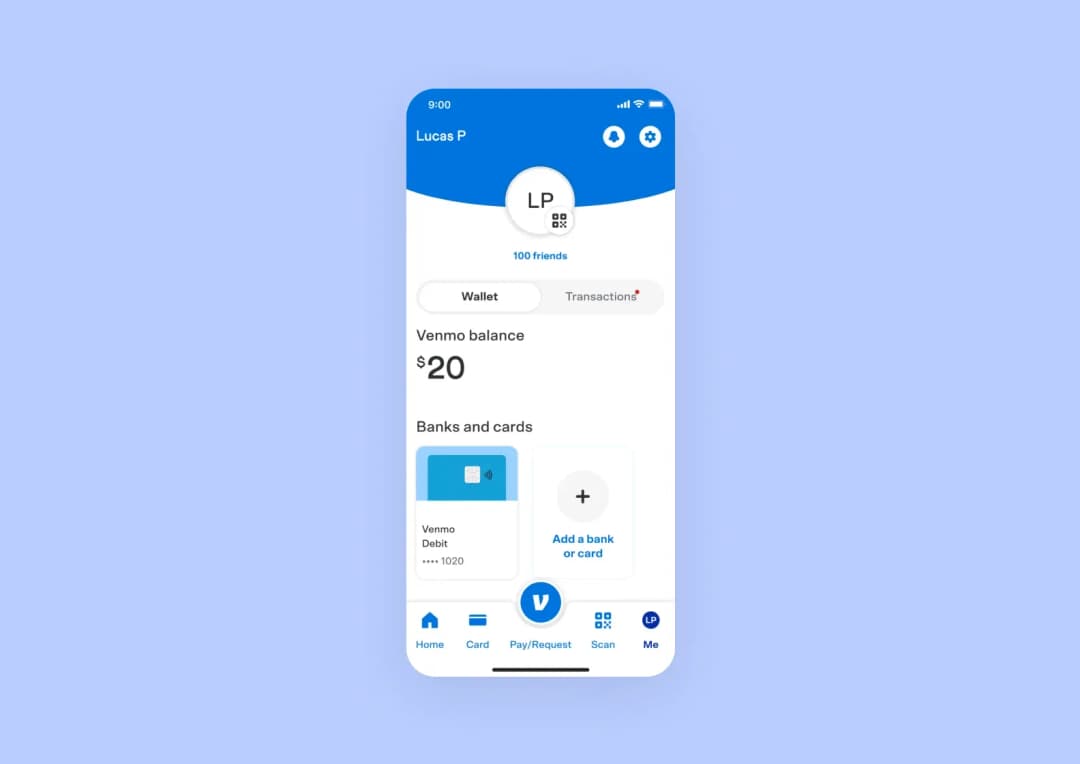
A digital wallet is the core of any mobile payment app, where users store and manage their funds. Focus on robust security measures, user-friendly interfaces, and multiple currency support to make the wallet feature attractive.
Timely and relevant notifications keep users informed about transactions, account activities, and important updates. Users rely on notifications to track their financial interactions so ensure that notifications are customizable, non-intrusive and provide clear, actionable information.
Integrating bank accounts simplifies fund transfers between the P2P payment app and users’ bank accounts, ensuring smooth transactions. Pay attention to security protocols and ensure that the integration supports a wide range of banks and financial institutions.
Quick and effective customer support is crucial for resolving issues and building trust. Users need a responsive support system for assistance with payments, account problems or even just general inquiries. Provide various contact channels, such as chat, email, or phone support and establish clear response timeframes.
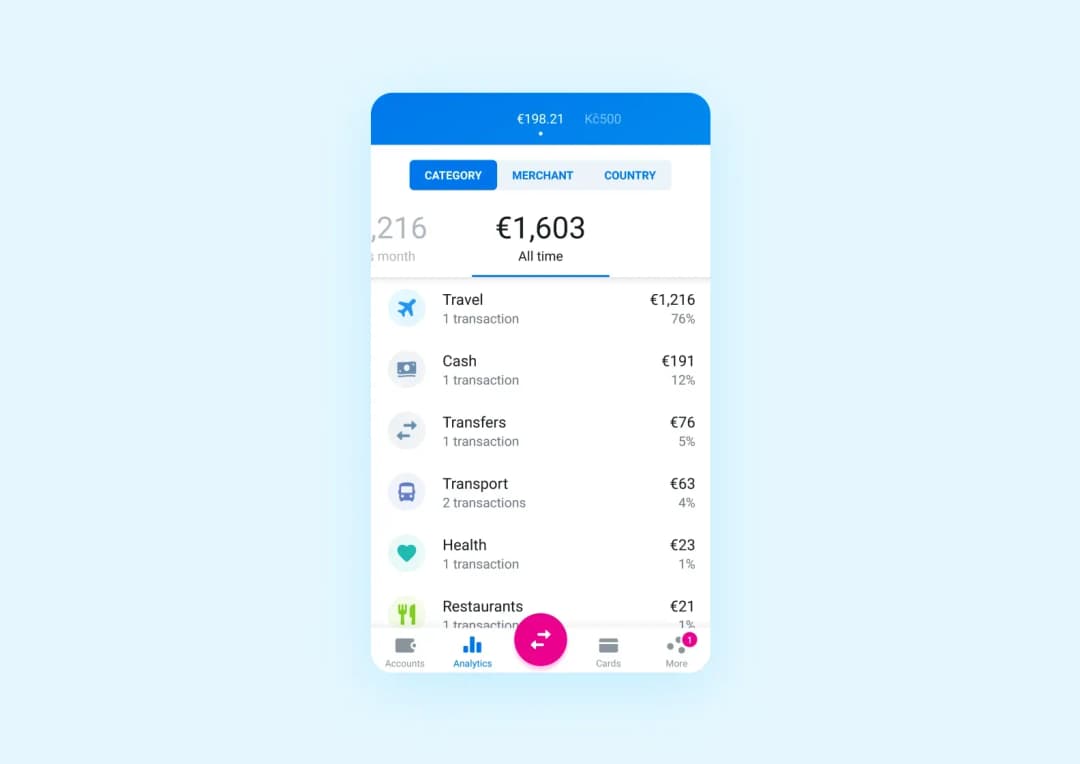
Users require easy access to their transaction history to monitor their financial activities. Offer a detailed and searchable transaction history, complete with filters and export options. Ensure the data is well-protected and easily accessible.
Real-time transfer capabilities are essential for users who want immediate access to their funds. Behind the scenes, real-time payment rails do the heavy lifting — SEPA Instant in the EU, FedNow and Zelle in the US, UPI in India. Tight integration with payment gateways and a payment service provider that supports instant clearing is what makes sub-second settlement possible. Implement secure and swift peer-to-peer transfers to enhance user experience. Consider factors like transaction fees, transaction limits, and international transfer options when designing this feature.
Incorporating these nine features into your app will not only meet user expectations but also create a secure, efficient, and user-friendly platform for financial interactions. Prioritizing user experience, privacy, and security will be key to your p2p payment app development.
With these 4 most popular types of P2P payment apps on the market, it’s important to remember that most P2P apps are a combination of different types. Most modern p2p payment platforms mix elements from more than one archetype. A single product can be both a standalone p2p mobile payment app and a bank-integrated feature, blending versatile options to fit different user preferences and needs.
Standalones are P2P payment apps designed primarily for facilitating various peer-to-peer transactions, such as payment transfers, splitting bills, or lending money among individuals. They are versatile and can be used for both personal and business transactions. These P2P payment apps offer a wide range of features, often including digital wallets, transaction history, and notifications, making them popular choices for users seeking dedicated peer-to-peer financial solutions.
📲Examples: Venmo, PayPal.
Bank-centric P2P payment apps are integrated within traditional banking apps or offered as additional services by banks. They enable users to send money, pay bills and manage their finances directly from their existing bank accounts. These apps are trusted for their security and native bank integration, ideal for users who prefer a unified banking experience. Teams building a full digital bank instead of a single P2P feature usually follow the how to build a neobank playbook. Focus on ease of use and accessibility when developing these apps to cater to a wide user base.
📲Examples: Revolut, Zelle.
They’re called social media-centric apps for a reason. These platforms are typically built into popular social networking platforms, allowing users to send money or make payments within their social networks. These apps leverage the user’s social connections to simplify transactions and create a social payment ecosystem. When developing such apps, focus on privacy and user consent to access contact lists and ensure clean integration with the social media platform’s interface.
📲Examples: Meta Pay, Snap Cash.
Mobile OS-focused peer-to-peer systems are integrated within the operating systems of smartphones, such as Apple’s iMessage for iOS users. These systems enable users to send money or make payments without leaving their messaging apps. This integration provides a convenient and familiar way to exchange funds, appealing to users who prefer a native, integrated experience. Ensure compatibility with the specific mobile OS’s features and security standards to maximize user trust and adoption.
📲Examples: Cash App, Apple Pay Cash.
A related family of products — cross-border money transfer app development — sits outside pure P2P and focuses on remittance flows, currency conversion, and multi-corridor payouts. Worth knowing it exists, but it is a different product.
Users have high hopes and demands when it comes to their finances. No one wants to have their data leaked or discover hidden fees in a credit card statement.
To prevent negative experiences, aspiring entrepreneurs must stay on top of things and consider these 7 challenges during development.
Money transfers are a heavily regulated domain. In the U.S. market alone, the Electronic Fund Transfer Act (EFTA), the Dodd-Frank Act, and anti-money-laundering (AML) and tax laws are just a few of the regulations to plan for.
Card networks add another layer through PCI DSS, the Payment Card Industry Data Security Standard maintained by the PCI Security Standards Council. It prescribes how cardholder data is stored, transmitted, and audited. Most p2p payment apps handling cards fall under PCI DSS SAQ A or Level 1 scope, depending on volume.
Security and fraud prevention. Fraud is a real risk in the p2p world. Encryption protocols, multi-factor authentication, and identity verification (KYC) protect user data and stop fraudulent activity. Regular security audits, access-control reviews, and updates are essential to stay ahead of emerging threats.
A growing share of the fraud-prevention stack now runs on AI and machine learning. Models score transactions in real time against a user’s normal pattern (geography, device, amount, time of day, velocity) and flag anomalies for step-up authentication or a hold. Feedzai, Sift, and Stripe Radar package this as a service, and it is table stakes for any p2p mobile payment app that expects meaningful volume.
Nobody wants to air two things: dirty laundry and finances. Both startup owners and developers should prioritize transparent data handling practices, obtain explicit user consent for data usage, and adhere to data protection regulations like GDPR or CCPA. Implementing privacy features, such as anonymizing transaction data, can help build user trust.
Developing and maintaining a reliable payment infrastructure can be complex and costly. Pay attention to third-party payment gateways, ensuring they are secure, compliant and capable of handling high-volume payment processing. Building redundancy and failover mechanisms into the infrastructure can mitigate downtime and ensure smooth transactions.
To gain user trust and popularize the app is a significant challenge.
Provide clear and concise information about security measures and privacy practices to reassure users.
Incentives such as referral bonuses or low transaction fees can also incentivize users to adopt the app and encourage their friends to do so.
Ensuring the app’s technical reliability is crucial to prevent downtime or glitches during transactions. Regularly monitor server capacity, and utilize load balancing, and implement disaster recovery plans to minimize disruptions. Thorough testing, including stress testing, can help identify and address potential technical issues before they impact users.
Building an effective customer support system and dispute resolution process is vital for maintaining user satisfaction.
Offer multiple channels for customer support, including chat, email, and phone, and ensure that response times are prompt.
Also, don’t forget about a clear dispute resolution mechanism with a fair and transparent process to address user concerns and disputes on time.
Online payment apps are beneficial for all involved in the process: users, business owners and the market. Here is a brief breakdown of 5 ways money transfer platforms are reshaping the market and everyday habits.
The level of technologies in the P2P market is highly advanced. Due to demanding and brutal competition, all new apps have to start with higher quality products than in other domains to be able to compete for target users.
P2P apps have permanently reset expectations for how fast money moves. Remember what it used to look like? Checks, money orders, walking into a bank, waiting in line, paperwork, then handing an envelope over in person. Now it takes a few seconds to send any amount anywhere. Traditional banks are still working out how to keep up, and that gap is where the growth for new products sits.
P2P apps are highly profitable, let’s take a look at some numbers:
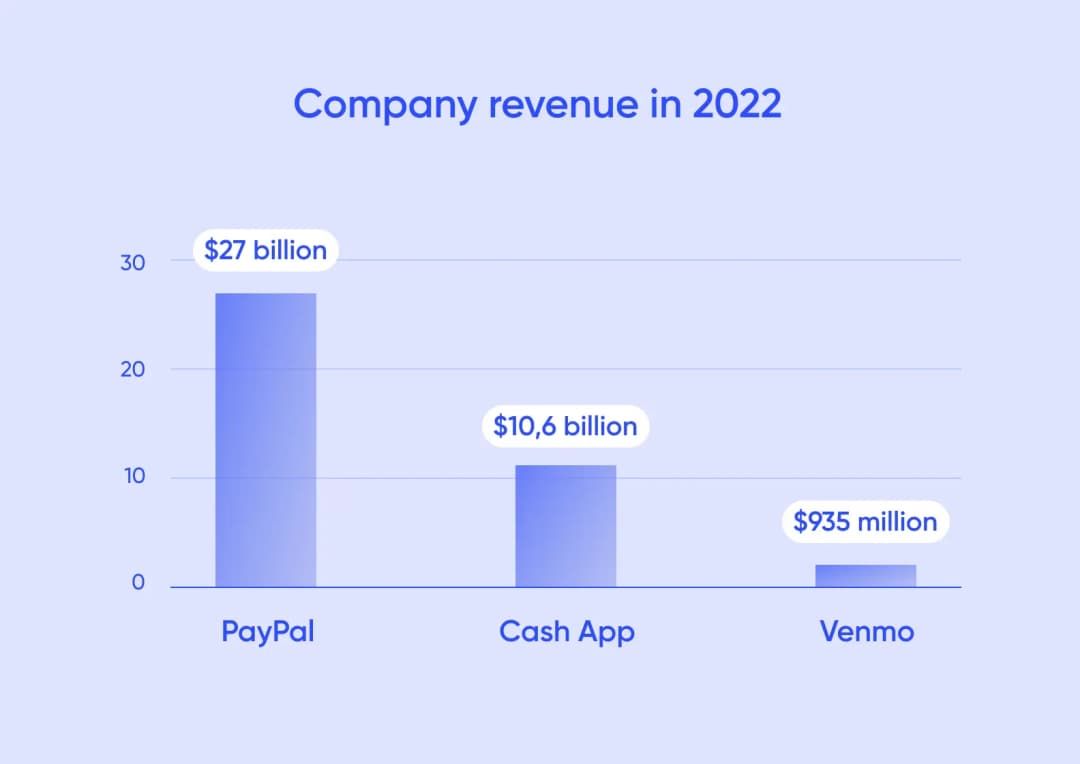
We think this image proves the point.
P2P apps offer many opportunities to scale up and expand the business. New platforms, features, regions — the possibilities are endless.
Finance is a dynamic industry with new trends and technologies emerging every month. Digital payment solutions have already reshaped the banking system, and teams launching new products still find room to differentiate on speed, UX, and niche-specific features.
Not sure where to start? We’ve got you covered.
Here is a simplified app development process with 7 important steps to create and launch a robust peer-to-peer application.
If your app is a house, the idea is the foundation. It should be solid and concrete, yet clear to build upon. At this very stage, try to work out as many details as you can: what product you want to release, who are your target users, what platforms you will be on, and what people will do in your money transfer app.
Before you turn your idea into a product, it’s important to take a step back and look at the existing products on the market. The apps you will see around are the ones you will compete with for the user’s attention. As they say, keep your friends close and enemies closer.
Because there are many apps on the P2P market, we recommend choosing the competitors for analysis wisely. For example, you plan to develop a niche solution for a very specific group of users. Let’s say, a cash transferring app for Fantasy Football players, there is little point in comparing yourself with PayPal or Cash App, because it’s too broad and too widespread compared to your niche idea.
| Market research background | More info | Questions to ask |
| Study the market | Here you need to gain a deep understanding of the market you’re entering. | – What problem is your product/service solving?– Who else is solving the same problem?
– Are they small or big? – What do customers say about them? |
| Research competitors | After you get the idea of how the market is structured, dive deeper and look at direct rivals. | – What types of users are they targeting?– What are their strengths and weaknesses?
– Are they going to build new products? – What features do they have that you like? |
| Define your competitive advantage | Focus on your product and compare it with other existing services on the market. | – What do you offer?– Do you price your product fairly?
– Why do you build an app? – What do you do best? |
MVP, or a minimum viable product, which would in this case be a simplified version of a full money transferring app. It helps entrepreneurs test the waters and validate the hypothesis with only must-have features, instead of investing heavily in an app that won’t be relevant or useful. MVP is usually cheaper than a traditional app as it takes less time to develop, meaning in a matter of months, you can have the first version of a product that you can show to investors and share with the first users.
On the tech-stack side, MVP scope drives everything. A typical p2p payment app MVP uses React Native or Flutter on the front end, Node.js or Go on the back end, PostgreSQL for the database, and cloud computing infrastructure (AWS, GCP) for hosting.
Integration with payment gateways and PSPs happens through APIs, so a clean API layer is critical. Targeting both mobile operating systems (iOS and Android) from one codebase cuts development time in half.
That is the practical development approach behind most modern p2p payment apps: a lean team ships the first working version in three to four months.
UI (user interface) and UX (user experience) cover both sides. Minimalistic and user-centric layout helps customers learn how to use the product. Through the same design instruments startup owners can make their product stand out, as well as attract and retain users in the long run. Here are a few tips on how to develop a good-looking and effective UI/UX design for a money transferring app:
Identify user-types. The main approach is to survey current or potential users and categorize them based on demographics, habits and other relevant details. Some designers create a user persona, a semi-fictional character based on a group of ideal customers.
Create a map of a user journey. Brainstorm various scenarios of how users can interact with your product and break it down in steps. After that, think about goals, expectations, and pain points users will face on the way.
Come up with the design. Based on the information you received, come up with the interface layout and design elements that will help users navigate your product. Create wireframes to plan the space on the screen, develop mockups and a UI-kit with branded graphic elements.
You don’t want to launch a raw, unfinished product. Imagine users facing a bug when using an app for the first time, will they come back? Quality assurance is a crucial step in the development process, especially for money transferring apps. You want to prevent potential data breaches and fix any possible mistake that can occur before you launch your solution to the public.
After you launch an MVP and gather feedback from users, it’s time to improve your app and step up. Add more features if you see demand, improve performance and launch a fully-functioning app.
The release is not the end for money transferring apps. After, your product comes to an equally important stage — maintaining performance and data security. You want to make data-driven decisions to improve the product, so gathering feedback from users is important.
Even the strongest criticism from the most harsh reviews can help you identify growth points and improve your app by adding additional features, enhancing user experience, and updating the UI elements.
To ensure the success of your payment app in a highly competitive market, you need to carefully consider various factors. Let’s talk about the best practices regarding security, interfaces, integrations with other platforms, customer support, and multiple other important things — all of these play a crucial role in making your payment app reliable and trustworthy.
Security is paramount in a payment app, as users entrust the platform with sensitive financial data. Implementing end-to-end encryption, secure socket layer (SSL) protocols, and two-factor authentication are fundamental steps in ensuring data privacy. Regular security audits, vulnerability assessments, and compliance with industry standards like Payment Card Industry Data Security Standard (PCI DSS) also help maintain a robust security posture.
Finally, there are some additional layers that can fortify your payment app against potential threats — for example, secure key management, tokenization, and fraud detection mechanisms.
UI personalization enhances the user experience and makes the payment app more appealing. Customizable profiles, themes, and notification preferences enable users to tailor the payment experience to their preferences. In addition to this, intuitive and user-friendly design, with a focus on simplicity, ensures that even users without extensive technical knowledge can navigate the app effortlessly. Personalization can extend to features such as transaction history, allowing users to categorize or annotate transactions for better financial management.
Clean integration with other platforms greatly enhances the app’s versatility. APIs (which is short for application programming interfaces) should be well-documented and easily accessible, enabling third-party developers to integrate the P2P payment functionality into their apps. Integration with popular social media platforms, messaging apps, and banking systems can expand the app’s user base and streamline the user experience. Collaborations with financial institutions and regulatory compliance bodies can also enhance the payment app‘s credibility.
Responsive and reliable customer support is critical for reaching a high level of user satisfaction. A multi-channel support system, including in-app chat, email, and a dedicated helpline, ensures that users can seek assistance through their preferred channels. Implementing chatbots with natural language processing capabilities can provide instant responses to common queries, while a human support team should handle more complex issues. Regularly updating the knowledge base with FAQs, tutorials, and troubleshooting guides can empower users to resolve common issues independently.
It’s crucial to adhere to local and international financial regulations. Work closely with legal experts to ensure compliance with data protection laws, anti-money laundering (AML) regulations, and Know Your Customer (KYC) requirements. We also highly recommend that you regularly update the payment app to align with evolving regulatory standards.
Design the payment app architecture with scalability in mind to accommodate a growing user base. You can utilize cloud-based solutions and scalable infrastructure to handle increased transaction volumes without compromising performance.
Ensure that the payment app remains functional even in offline scenarios. It’s always a good idea to implement features such as offline transaction queues and the ability to view transaction history and account details without an internet connection.
Implementing a broad range of offline features enhances user convenience and accessibility.
Final costs of peer-to-peer payment app development always depend on your needs, requirements, the selected tech stack, and the amount of hours it takes to complete the app, here is a general overview of how much it can cost to build an MVP of a P2P app with the Purrweb team.
| Phase | What is included | Cost |
| Discovery & product design | User research, information architecture, UI/UX design, prototypes | $8,000–$15,000 |
| Backend & payment integrations | API layer, database schema, integration with payment gateways and PSPs, KYC/AML pipeline | $25,000–$40,000 |
| Mobile front end | React Native or native iOS/Android, offline queue, biometrics | $15,000–$30,000 |
| QA, security & PCI DSS scope | Functional testing, security audit, PCI SAQ setup | $10,000–$20,000 |
| Project management & DevOps | Ceremonies, CI/CD, cloud infrastructure setup | $8,000–$15,000 |
| Total MVP (Purrweb baseline) | Focused 4-month build with a lean team | $89,350 |
| Full-featured production app | Advanced fraud detection, multi-region compliance, premium features | $150,000–$300,000+ |
Table figures other than the Purrweb baseline are market-range mobile app development cost estimates. The biggest drivers are security and compliance scope, payment integrations, and where the team sits geographically.
For a deeper dig into development cost by feature and phase, see our fintech app development cost breakdown. The p2p payment market size is large enough that the ROI math holds even at the top of the range.
At Purrweb, an MVP of a peer-to-peer app costs about $89,350. We can provide a personalized cost breakdown and budget estimation after approving all the details of the project.
Most P2P payment apps use these 3 monetization strategies:
Which monetization model is right for your payment product depends on your goals, users, and how competitors are pricing. Make sure you consider the preferences of your target audience, as well as competitors’ strategies.
Imagine, you have 5 competitors who all offer a free P2P money transfer. But you decide to charge $10 per month for the app. Why would users pay to you, if they can get these services for free somewhere else?
Unless, you have a strong competitor advantage and offer something that others don’t have. For example, ultra fast payments or advance payments.
Purrweb is a fintech app development company that builds custom financial solutions. As your development partner, we handle MVP development, UI/UX design, and project management end-to-end — a vendor you brief once instead of coordinating across five specialists.
With us, your MVP can get published in 4 months, so you could test your ideas at a low price.
Our development team has a lot of experience in fintech, you can see some examples in our portfolio. For example we developed the E-wallet. It’s an e-wallet that allows users to buy, keep, and transfer their cryptocurrency assets, as well as exchange one cryptocurrency for another within one service.
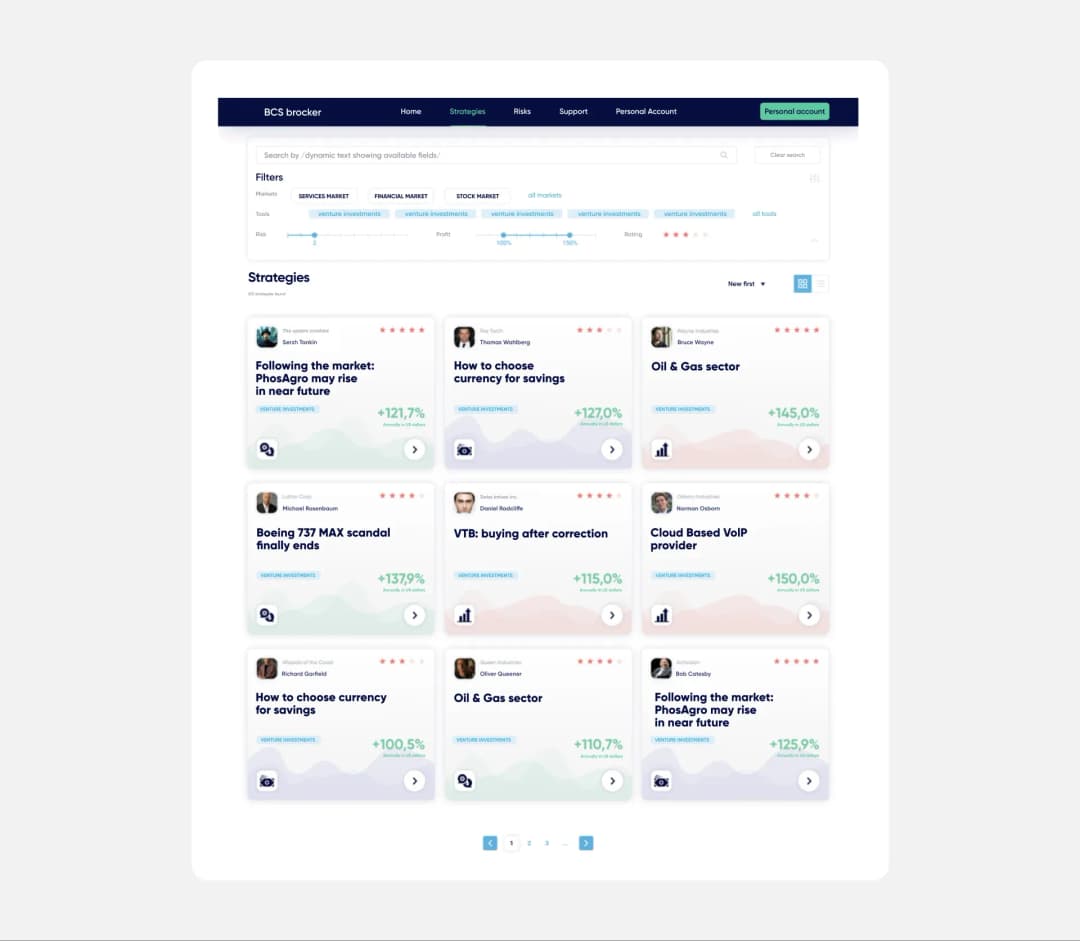
Fintarget is a fintech platform offering users pre-made investment strategies. These strategies are submitted by the parent bank’s in-house experts and independent brokers who undergo mandatory verification. Customers can then choose the strategy they like, transfer money to a trust manager and start receiving passive income. The app features an advanced filtering system to help users discover options that suit them most.
The service’s target audience are amateur investors who don’t want to crunch all the numbers by themselves. Obscure graphs, calculations, and endlessly big figures would scare them away, so we knew we needed to make the web design as simple as possible. The financial app looks and feels like a marketplace: there are big & bright product cards, simplified navigation, and convenient data visualization to make all the calculations more approachable.
Peer-to-peer apps are not an easy market to crack, but the results are rewarding. Teams that respect the challenges (especially legal and compliance work), start with an MVP, and iterate on real user feedback keep their products relevant long after launch.
Looking for a team experienced in payment and fintech projects? See our full range of financial app development team.
➡️ Ready to build your P2P payment app? Contact us for a free consultation and a project estimate within 48 hours.
Building a P2P payment app MVP costs approximately $89,000–$120,000 depending on feature scope. A basic MVP with registration, wallet, bank integration, and transaction history takes around 4 months and $89,350 at a mid-market agency rate. Full-featured apps with advanced fraud detection, multi-currency support, and compliance tooling range from $150,000 to $300,000+. The biggest cost drivers are security infrastructure, payment gateway integration, and regulatory compliance work.
Development time for a P2P payment app MVP is 3–4 months from discovery to App Store publication with a focused team. The timeline breaks down as: 2–3 weeks for discovery and architecture, 2–3 months for core development, and 2–4 weeks for QA, compliance checks, and store submission. Full-scale apps with KYC/AML pipelines, multi-region compliance, and premium subscription tiers typically require 6–9 months.
PCI DSS (Payment Card Industry Data Security Standard) is a mandatory security framework for any app that stores, processes, or transmits cardholder data. If your app connects to card networks directly, you need PCI DSS Level 1 or Level 2 certification. Using a compliant payment processor like Stripe or Braintree shifts most PCI scope to them, reducing your certification burden to SAQ A — a much lighter self-assessment. Apps that handle only bank transfers (ACH/SEPA) still need strong encryption and access controls but are not directly in PCI scope.
At minimum, a payment app must include identity verification (government ID + selfie matching), transaction monitoring for suspicious patterns, and sanctions screening against OFAC, EU, and UN lists. In the US, FinCEN rules require Customer Due Diligence (CDD) and Beneficial Ownership records for business accounts. In the EU, the 6th Anti-Money Laundering Directive (6AMLD) adds criminal liability. Practically, teams integrate a KYC API — such as Onfido, Sumsub, or Persona — rather than building verification from scratch, which cuts 4–6 weeks off development.
Most P2P payment apps are built with React Native or Flutter for cross-platform mobile, Node.js or Go on the backend for high-throughput transaction processing, and PostgreSQL or CockroachDB for reliable financial data storage. Cloud computing infrastructure (AWS, GCP) hosts the back end and scales with traffic. Payment rails use Stripe Connect, Plaid (for bank linking), or direct ACH/SEPA integrations, exposed to the mobile front end through a clean API layer. Security layers include end-to-end encryption (TLS 1.3), tokenization, and hardware-backed biometric auth. Redis handles session management and real-time balance caching.
The three proven monetization models are transaction fees (0.5–3% per transfer or flat $0.25–$1.50), premium subscriptions ($5–$15/month for instant transfers, higher limits, or cashback), and interchange revenue from branded debit cards. Cash App generated $5.24 billion in gross profit in FY2024, primarily from interchange and Bitcoin trading fees. Revolut generated around $4.0 billion in revenue in FY2024, largely from premium plans and card interchange. For early-stage apps, transaction fees provide the fastest path to revenue; subscriptions scale better once user retention exceeds 6 months.
A lean MVP team for a payment app consists of 1 product manager, 2 mobile developers (iOS/Android or React Native), 2 backend developers, 1 UI/UX designer, and 1 QA engineer with fintech experience. You also need a compliance consultant for PCI DSS and KYC setup — this is not a role to skip. Outsourcing to a fintech-experienced agency versus hiring in-house cuts time-to-market by 2–3 months because the team already knows the regulatory and integration patterns.
AI and machine learning improve a P2P payment app through real-time fraud detection, transaction anomaly detection, personalized user experiences, and smart spending limits. Fraud models score each transaction against the user’s historical pattern and flag outliers for step-up authentication or a hold. On the UX side, ML powers personalized offers, smart categorization, and predictive suggestions.


.svg)