Explore

Need help with your project?

Oops! Something went wrong while submitting the form.
An Australia-facing website or web product can look straightforward on a proposal, then become harder to evaluate once several agencies offer similar services. An Australian phone number or office address does not settle who will handle the build, where the delivery team sits, or what support will look like after launch. So what should separate one potential development partner from another?
In this guide, we'll look at ten companies through the work they are set up to deliver. The comparison stays focused on fit, delivery ownership, and the questions that turn a polished proposal into a scoped project in practice.
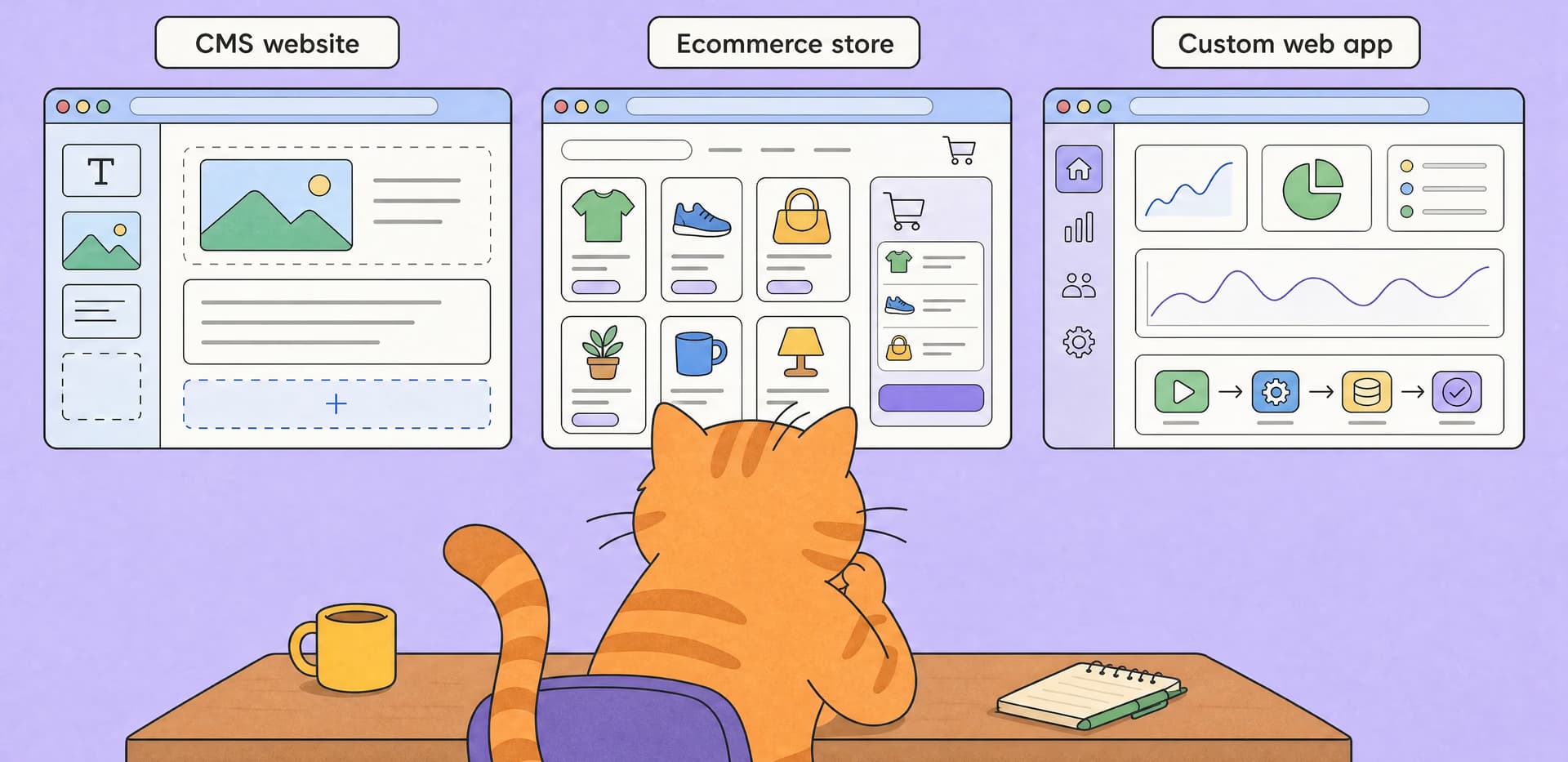
We compare ten web development companies by the work they take on: CMS websites, ecommerce stores, and custom web applications. To help you compare service providers, each profile shows what the company offers, what it has delivered, and what to ask before agreeing on scope.
Purrweb is a software development company that works remotely on web projects for Australian audiences.
The company is a closer fit for a custom browser-based product or MVP than for a content-led site that can stay within a standard CMS. Its web application development services combine user experience design with frontend and backend development. The deciding factor is whether the project calls for custom software development to support user workflows or a CMS to manage and publish content.
TuneTank shows that kind of work in practice. It is a marketplace where listeners search, preview, and license music. Purrweb built the product with React, Ruby on Rails, GraphQL, and AWS. The case also describes an SEO constraint: the SPA needed to appear in search without moving the whole product to server-side rendering.
A remote delivery model makes working-hour overlap, ownership of code and accounts, and post-launch support part of the initial conversation. It also helps to establish who makes product decisions day to day and how the handover will work after launch.
We built TuneTank as a music marketplace for people looking for royalty-free tracks and artists selling licenses. The product needed search and audio previews to work together without getting in the way of the licensing flow.
The team integrated Prerender so the SPA could appear in search results. It also created a custom AudioWave component when existing libraries could not support two linked waveforms on one page. The case does not claim traffic or revenue results. It documents a search-indexing solution and a tailored audio interaction for its users during discovery.
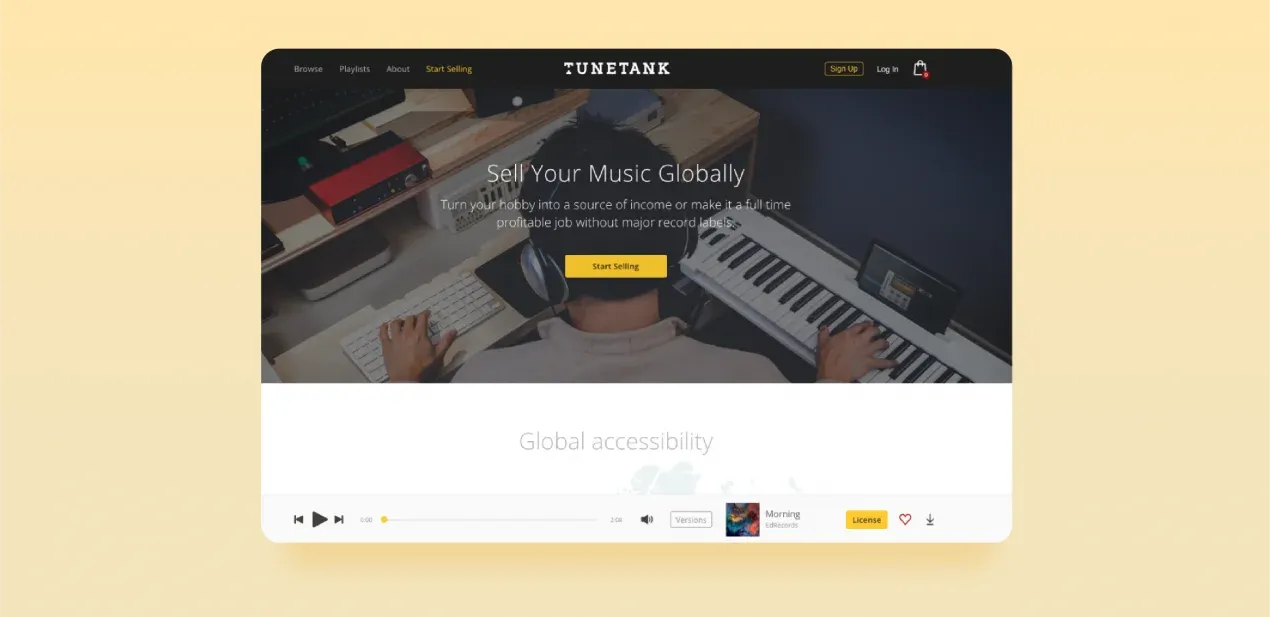
TuneTank’s marketplace page with an integrated audio player

Luminary is a fit for organizations rebuilding a content-heavy website. Web design is only one part of a website redesign like this. The team also has to decide what content moves to the new site and how editors will publish it once the site goes live.
Luminary’s web development services sit alongside UX design and content services. It works with platforms such as Kentico and Umbraco, as well as headless systems such as Contentful.
One example on its site is the Melbourne Cricket Club project. Luminary says it redeveloped the club’s digital presence across the MCC, Melbourne Cricket Ground, and Australian Sports Museum websites. That’s a useful reference for organizations planning several related sites as part of one rebuild.
Luminary describes itself as an Australian digital agency, but its website doesn’t say where everyone on a project team would work. For a rebuild, the first conversation is a chance to find out who would handle content migration. It can also clarify whether the existing CMS is worth keeping and which team would support it after launch.

A member portal can sit behind the same navigation as a public website, but the two parts serve different purposes. Visitors need to find information without signing in. Members need to log in and reach the tools or resources that go with their role. That combination makes Butterfly a candidate for organizations that want one web design and development agency to build both.
Butterfly offers web design and development, accessibility audits, hosting, and ongoing support. Its web development services include custom PHP builds and Python projects using Django or Wagtail.
For Future Skills Organisation, Butterfly describes building an accessible public website and a member portal with role-based access. That example shows the kind of project the agency takes on, though it doesn’t establish independent accessibility conformance.
Butterfly lists a Melbourne office and offers Australian hosting. Neither tells a buyer where the people working on the project will be based. The more useful conversation is about who tests accessibility on both sides of the login and who maintains the portal as member roles and permissions change.
A campaign shouldn’t have to wait for a web developer every time someone needs to publish a landing page. But when the same WordPress site also runs a store, some changes still need a developer. WP Creative works with marketing teams that want to manage their own content without taking on the technical upkeep of the site.
Its WordPress offering covers website design and development services as well as ongoing maintenance. Its services also include WooCommerce development and site migrations. For a team replacing an existing site, that combination is useful when the project includes both the move to a new setup and support for the store after launch.
WP Creative says its headquarters are in Sydney and most of its WordPress developers are based in Kathmandu. For a marketing team that makes frequent updates, a useful detail to settle early is who handles changes that go beyond the editor. That might mean updating a shared template or fixing a broken checkout integration. It’s also worth clarifying which theme and plugin licenses the business will control after handover.
A web and mobile product can launch in the browser first, even if the mobile app is already on the roadmap. Appetiser is a candidate for that kind of build because it offers web application development alongside native mobile app development for iOS and Android. That’s useful when the browser version has a job to do on its own, rather than simply showing what the mobile app will eventually do.
Appetiser lists web app development as a separate service, but a mobile case study doesn’t show how the team handles a browser product. A more relevant example would be a live web app with workflows similar to the ones in scope. It would also help to know which parts of that build Appetiser owned.
The company lists Australian offices, but those addresses don’t identify the developers assigned to a project. The web development team structure matters here: who would lead the browser build, and who would keep it moving if mobile work began in parallel? Those answers help distinguish a plan for both platforms from a proposal focused mainly on mobile.

A new store often needs development work after launch, even when the marketing team can update products and promotions on its own. A checkout integration might need fixing, for example, while the same team is preparing a campaign. If you want a digital marketing agency to support campaigns after launch, Webential is worth considering for the website build as well.
An archived version of Webential’s site lists web development and maintenance for WordPress, WooCommerce, and Shopify. It lists digital marketing for ecommerce separately. That distinction matters: maintaining the store and running campaigns are different jobs, even when one provider offers both.
The archived site lists an Australian phone number. It doesn’t establish where the company is headquartered or where the developers assigned to a project would work. The live site wasn’t accessible during our check, so the listed services are based on the archived page.
On a first call, the useful question is who handles a request that crosses both scopes. If a campaign needs a change to the checkout, is that part of the support agreement or a separate development job?

A public website and the software customers sign in to don’t have to be built by separate providers. Designpluz is a candidate when both are in scope. Its website development services include Shopify and WooCommerce builds. It also develops custom web applications, including SaaS products.
The distinction matters when the website and the application share a customer journey. A company might publish product information on its business website but handle customer accounts in a separate web app. Designpluz lists ecommerce integrations as a service. For a project like this, the conversation is about which systems need to exchange data and who will maintain those connections.
Designpluz describes itself as Australian-owned, with leadership in Sydney, and also lists an address in India. That tells a buyer where the company has a presence, not who would work on the build. If both are in scope, it’s worth asking whether the same development team would handle the website and the web application. It is also worth clarifying who would handle hosting and support for each after launch.

Emote Digital is worth considering for an ecommerce website rebuild that includes ongoing technical support. For a store that already takes orders, launch is only one part of the job. Product data has to move to the new site, existing systems have to work with it, and someone has to deal with problems once customers start using it.
Its ecommerce website development work includes platform selection, content migration, and systems integration. It also offers technical maintenance, testing, and ongoing development. That combination is useful when a business wants the team that built the store to stay involved as it changes.
Emote Digital says it works from Hawthorn in Melbourne. That identifies where the agency operates from, not where every person on the project works. On a first call, the useful distinction is between work covered by ongoing support and work quoted separately. Fixing a broken connection to an inventory system is a different job from adding a feature for a campaign.
Magneto is an option for retailers moving an existing store to Shopify Plus or Magento. The platform choice is only part of that decision. The new store still has to work with the retailer’s catalog and the systems that keep inventory and orders up to date.
Magneto lists custom web development services in Australia, including work on both platforms and third-party integrations. The integration work is worth discussing before the choice is final. A retailer might keep its existing inventory system, for example, but still need a new connection that sends stock updates to the storefront and passes orders back.
The service page lists an address in New South Wales but doesn’t establish where the project team would work. A useful first-call question is how Magneto would divide responsibility for the move. Who would clean and migrate the catalog, and who would test the connection against real orders before launch? Those details make it easier to compare what each provider actually includes in a migration proposal.
A website development company can build one enterprise site for several teams instead of giving each team a separate site to maintain. The challenge is deciding which content they share and which parts each team needs to manage on its own. Newpath is a candidate for projects where those publishing decisions are part of the build.
Newpath’s enterprise web development work covers websites, ecommerce, and intranets. The agency also offers content management. It lists Drupal, Kentico, Umbraco, and Contentful among the platforms it works with. One example is its Drupal project for the Victorian Health Building Authority. That gives buyers evaluating Drupal a specific project to discuss rather than relying on the platform list alone.
Newpath lists offices in Australia, India, and the UK. The office list doesn’t establish which team would work on a particular site. A useful question for a project with several publishing teams is who would keep the CMS and its integrations running after launch. That includes knowing who takes responsibility when a problem spans the website and another system.
The best web development partner for your project depends on what the site or app needs to do after launch. On a content-led site, editors need to publish without waiting for a developer. An ecommerce store has to keep orders and inventory in sync. A custom web app needs a team that can build and test the full workflow from the end user’s perspective.
We built Cubbiq as a web app for people looking to rent storage space from others. Renters needed to find available spaces, and owners needed a place to list them. The product also needed to take payments.
We built the frontend with Next.js and the backend with Nest.js, then integrated Stripe for payments. The client’s team joined us for testing. We fixed the major issues found during that phase before release. That work went beyond designing the screens: the build had to connect listings, payments, and the admin tools used to manage the marketplace.
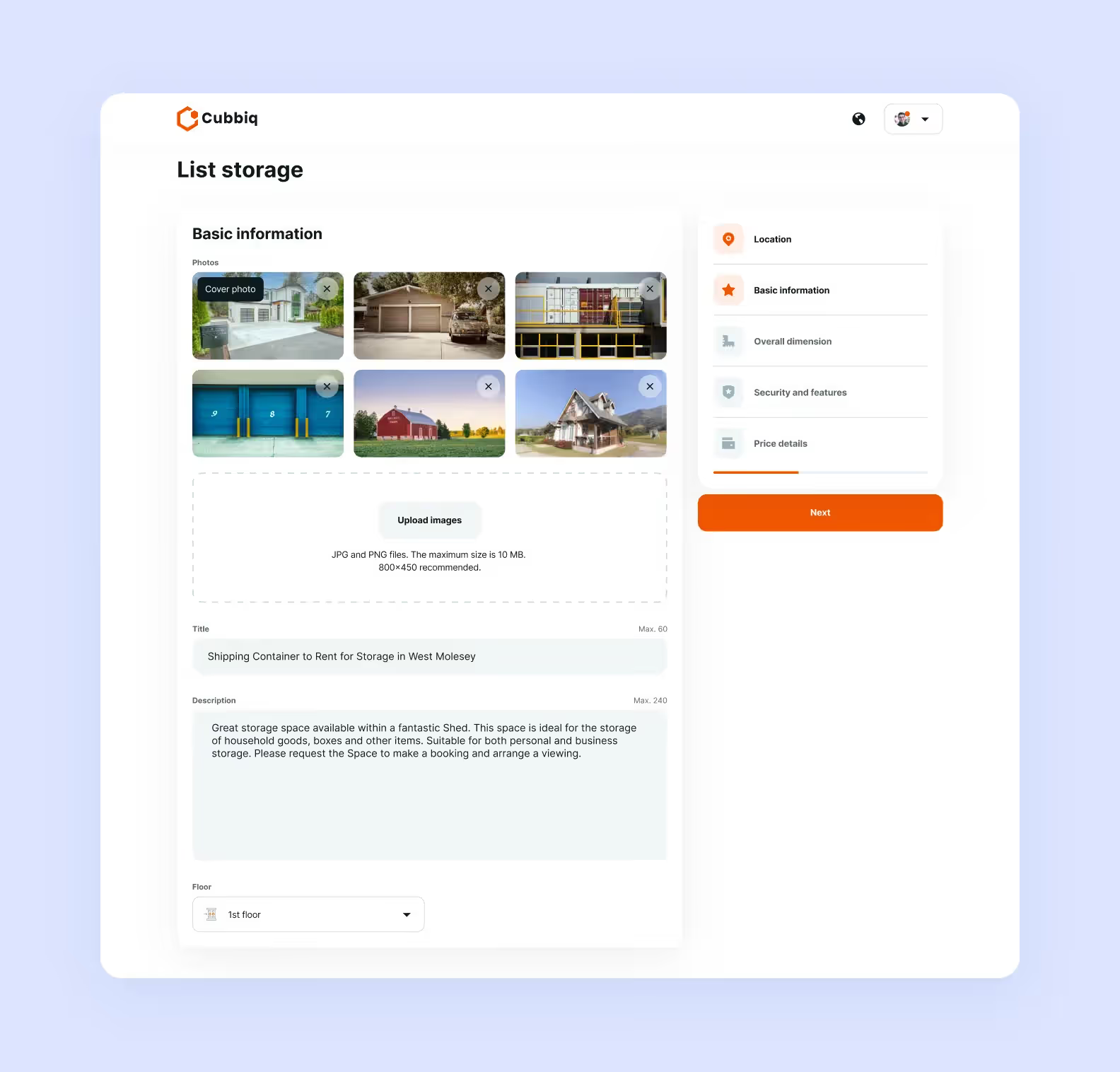
How renters find available storage spaces
A shared website development brief gives each provider the same project to respond to. For a CMS rebuild, it can spell out who moves the content and who manages it afterward. For a store, it can name the systems the new checkout needs to connect to. For a web app, it can describe what users need to be able to do from start to finish.
That makes it easier to compare web development companies on what they’ll actually deliver. A proposal that names who owns an integration and how it will be tested tells you more than one that lists the integration as a feature.
➡️ Building a custom web app for an Australian audience? Tell us what people need to do in the app, and we’ll talk through what the first release needs to cover.
Start with the product you need, not the broadest service list. A marketing website needs content management and publishing workflows; an ecommerce website needs catalog and checkout expertise; a custom web app needs application engineering. Shortlist companies with comparable web projects, then ask who delivered the work, what their responsibility covered, and how they support the product after launch.
A local office can make workshops and business-hours communication easier, but it does not prove that every developer works locally. A remote team can also be suitable when communication, ownership, and support are clearly agreed. Check the contracting entity, delivery locations, working-hour overlap with Australia, and escalation process rather than treating an Australian address as a complete delivery model.
Give shortlisted providers the same brief and compare deliverables rather than headline claims. Check the proposed website or application scope, content migration, integrations, accessibility testing, quality assurance, and handover. Ask each company to identify assumptions, exclusions, dependencies, and the people responsible for delivery. Resolve differences before choosing a provider so that proposals describe the same underlying project.
Confirm ownership of source code, design files, accounts, and project documentation. Agree who manages hosting, deployment, backups, and ongoing updates, and define the acceptance process for completed work. Ask how changes are approved and how problems are escalated after launch. Review these terms with the relevant legal and technical advisers instead of assuming that standard agency terms fit every project.
Custom web application development fits products whose user journeys, permissions, or business workflows cannot be handled cleanly by a standard website setup. A CMS website is often the more direct choice for publishing and marketing needs. Ask potential providers to demonstrate the required workflows and explain why their proposed approach fits before committing to a custom build or a platform.