Explore

Need help with your project?

Oops! Something went wrong while submitting the form.
During the growing season, farm teams decide where to send people, when to irrigate, and whether a field needs treatment. A missed pest problem or crop stress issue can turn into wasted water, chemicals, and work hours. AI could help farmers spot that problem sooner and decide what to do next.
This guide looks at the everyday farm jobs AI can support and the practical limits that affect whether a tool gets used. It also explains when an existing product makes more sense than custom software. The focus is on fitting AI into real farm work, not adding it for its own sake.
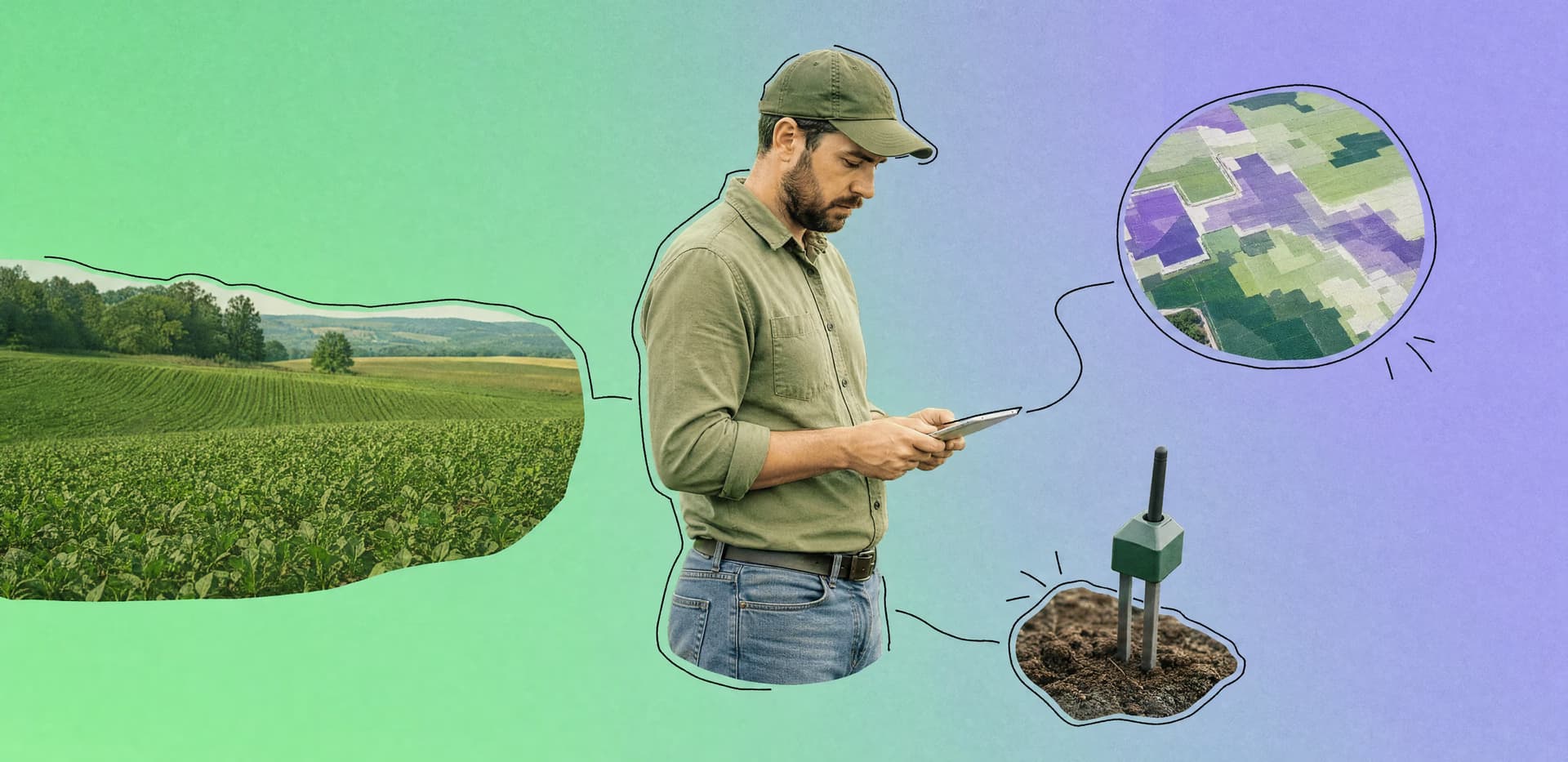
AI systems in agriculture turn field observations into analysis that can support a farm decision. A sensor, dashboard, or field record may collect useful information, but not every such product is an AI tool or artificial intelligence on its own.
AI technologies such as machine learning can examine satellite imagery, drone images, or ground-level observations. They can flag crop health patterns, estimate yield, or identify pest risk. The value comes from connecting that analysis to a decision, such as where to inspect a field or adjust an irrigation plan.
Artificial intelligence can support different farm and operational decisions. Only one application in the available evidence has a measured effect. The other use cases show where AI may help, not a proven result. AI development services can help frame a defined farm decision as a product concept.
AI-enabled precision spraying and weeding use computer vision to assess what is in a field before herbicide is applied. The goal is to optimize the treatment decision instead of treating every area in the same way.
Australian growers treated more than 10 million acres with John Deere See & Spray Select and reported average herbicide savings of 74%, as reported on September 4, 2026. This result is limited to the growers in that report and does not apply to every crop, farm, or AI tool.
Crop and soil monitoring turns imagery and field readings into a view of crop and soil conditions across a field. It can point a team to areas that need inspection, while soil moisture levels on their own only record a condition. Industrial IoT monitoring examples show how connected monitoring brings readings into a product.
This is the input layer before an analysis-led decision.
A robotic greenhouse described in building agtech apps with React Native had a plant-health sensor in each bed. The sensors communicated watering and insect-protection needs.
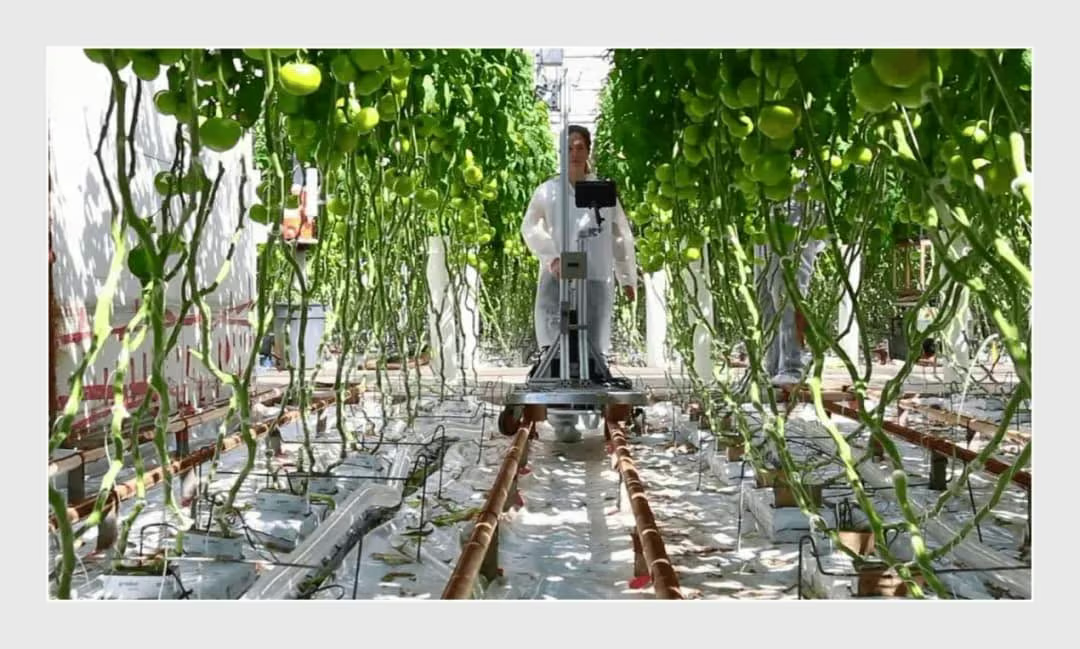
The sensors document a monitoring input layer, not AI analysis
Yield prediction and smart irrigation use field observations to support planning around crop yield and irrigation. A product can route those inputs through a model before an operator decides where or when to act. The evidence supports that decision path, not a yield or water outcome. Human review remains visible.
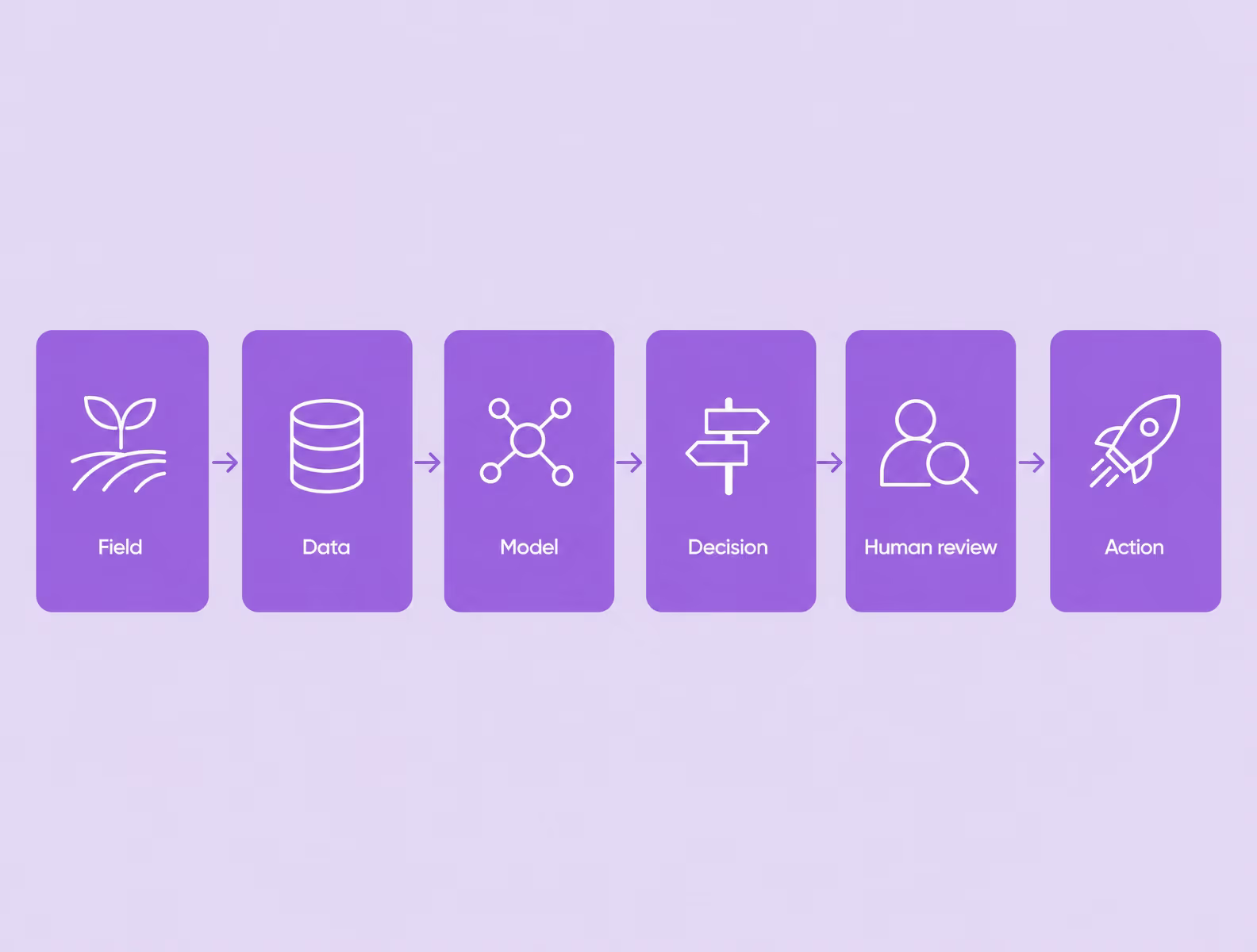
The flow keeps human review between analysis and action
Livestock health monitoring applies observation analysis to signs that may need staff review. Computer vision can be part of that observation layer, but the available material provides no diagnostic-accuracy or health-outcome measure.
Autonomous machinery and farm robotics bring AI-supported decisions closer to physical field work. The category covers machinery or robots that act in the field after AI-driven analysis, including work such as harvesting. No named system, autonomy level, or labor effect is established here.
Beyond the field, supply-chain and logistics use AI-supported analysis to coordinate operational decisions around the movement and handling of goods. This extends the application map from growing and treatment into later operational steps. No agricultural performance measure is available in the supplied material.
The value of AI in farming comes from improving a defined decision, not from adding automation to every task. The same product can matter differently across farm operations.
Data and AI alone do not make a useful farm decision. The product needs inputs that arrive in time, fit the workflow, and give people a reason to trust the result.
A recommendation is only as dependable as the route from a field observation to the person who needs to act on it. That route can break in the data, connection, workflow, or the team's trust in the product.
A connected sensor can make an observation available, but that is different from proving that a prediction is reliable. The distinction matters when a product moves from showing a condition to recommending an action.
Vendify is an IoT app for fresh-food vending machines. RFID tags detect items remaining in or removed from a fridge, giving the business an inventory signal. That workflow is useful for visibility, but it does not establish an AI model, an agricultural deployment, or a validated prediction.
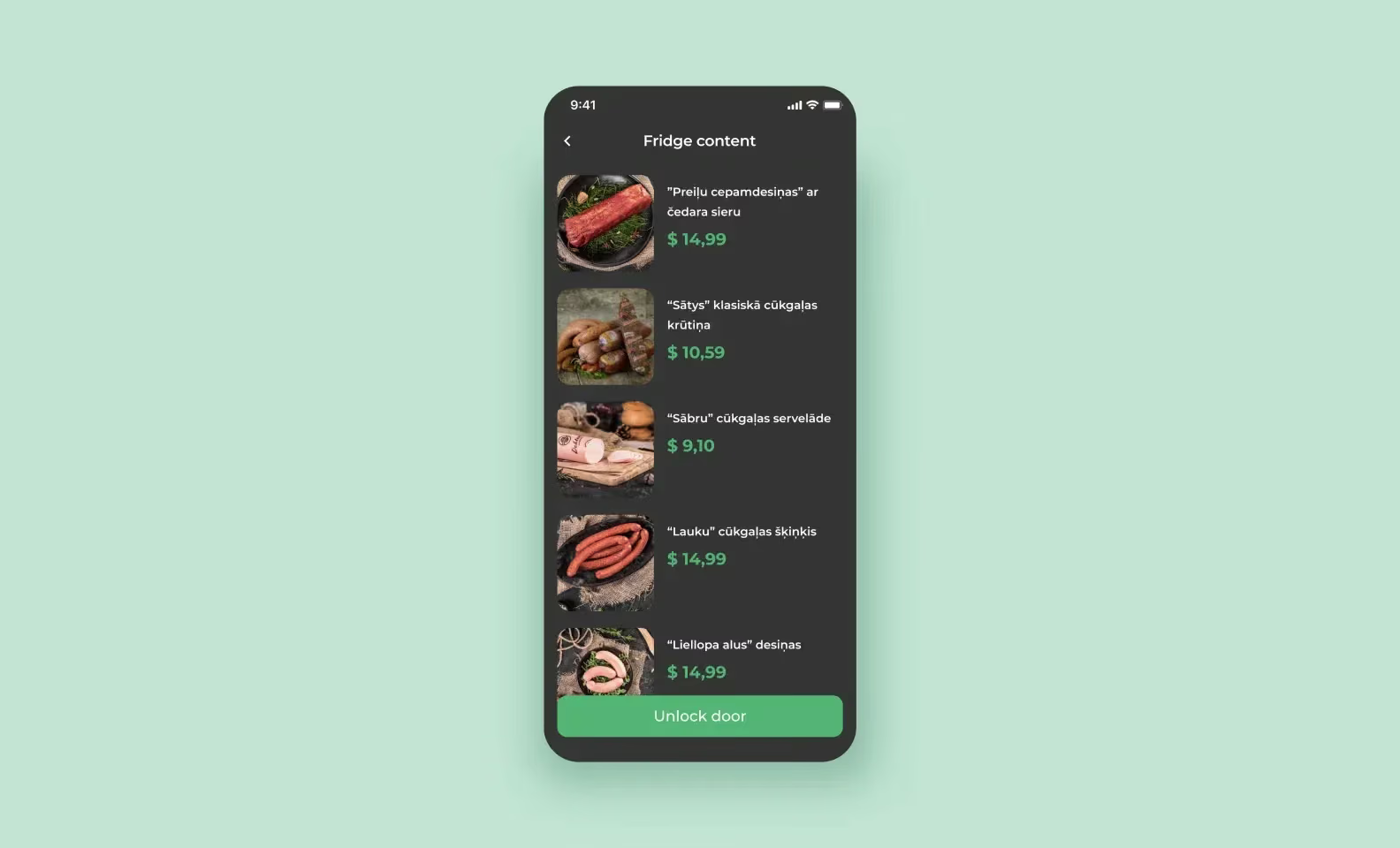
Vendify illustrates inventory visibility as a food-IoT analogue, not agricultural AI
Scope depends on the data a product must integrate and whether an existing platform already covers the decision.
Off-the-shelf agtech fits when its workflow already supports the required decision. Custom AI development becomes relevant when proprietary data, integrations, or a missing workflow create the advantage. How much AI app development costs covers broader cost drivers without adding an unsourced price range here.
| Criteria | Off-the-shelf agtech platform | Custom AI development |
| Workflow fit | Fits the required decision. | Fits a workflow a platform does not provide. |
| Proprietary data and integration | Fits relevant data and systems. | Fits proprietary data or multiple-system integration. |
| Ownership and human control | Depends on product controls and data terms. | Defines ownership, permissions, offline behaviour, and human override. |
A limited pilot tests one decision before the rollout expands. It creates evidence rather than treating a first release as proof.
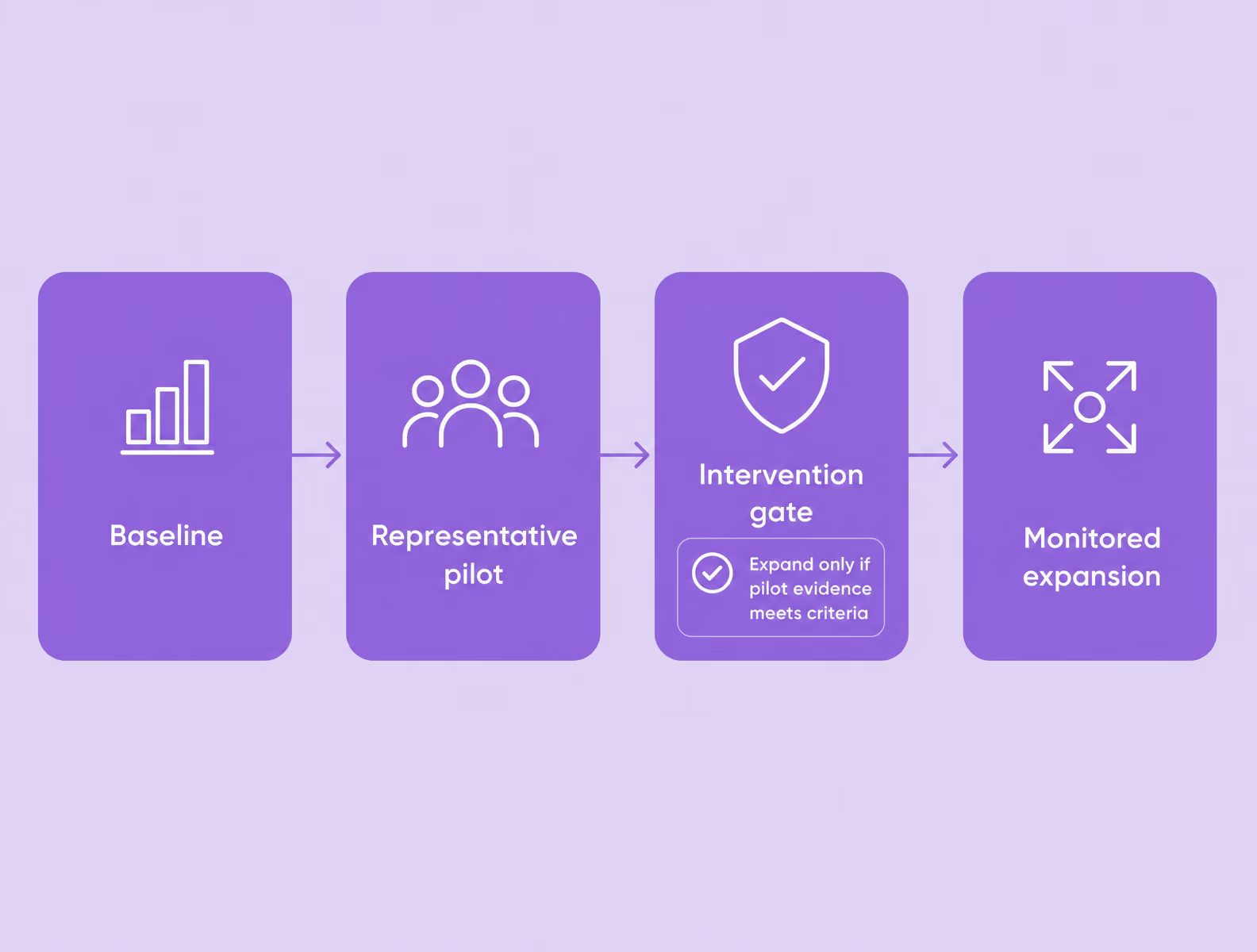
Expansion follows the pilot’s evidence, not a predetermined schedule
Examples are useful only when the reader can see what they actually establish. A working workflow can clarify an operating requirement without proving an agricultural AI result.
Delivery software can show what traceability and exception handling look like in a connected workflow. It does not make the product an agriculture or AI example.
Cargo synchronizes drivers and warehouses with real-time traffic and data updates. Its workflow includes barcode matching, a manual-code fallback, parcel photos, signatures, and notes. These functions illustrate traceability and exception handling in logistics, not agricultural deployment or AI routing.
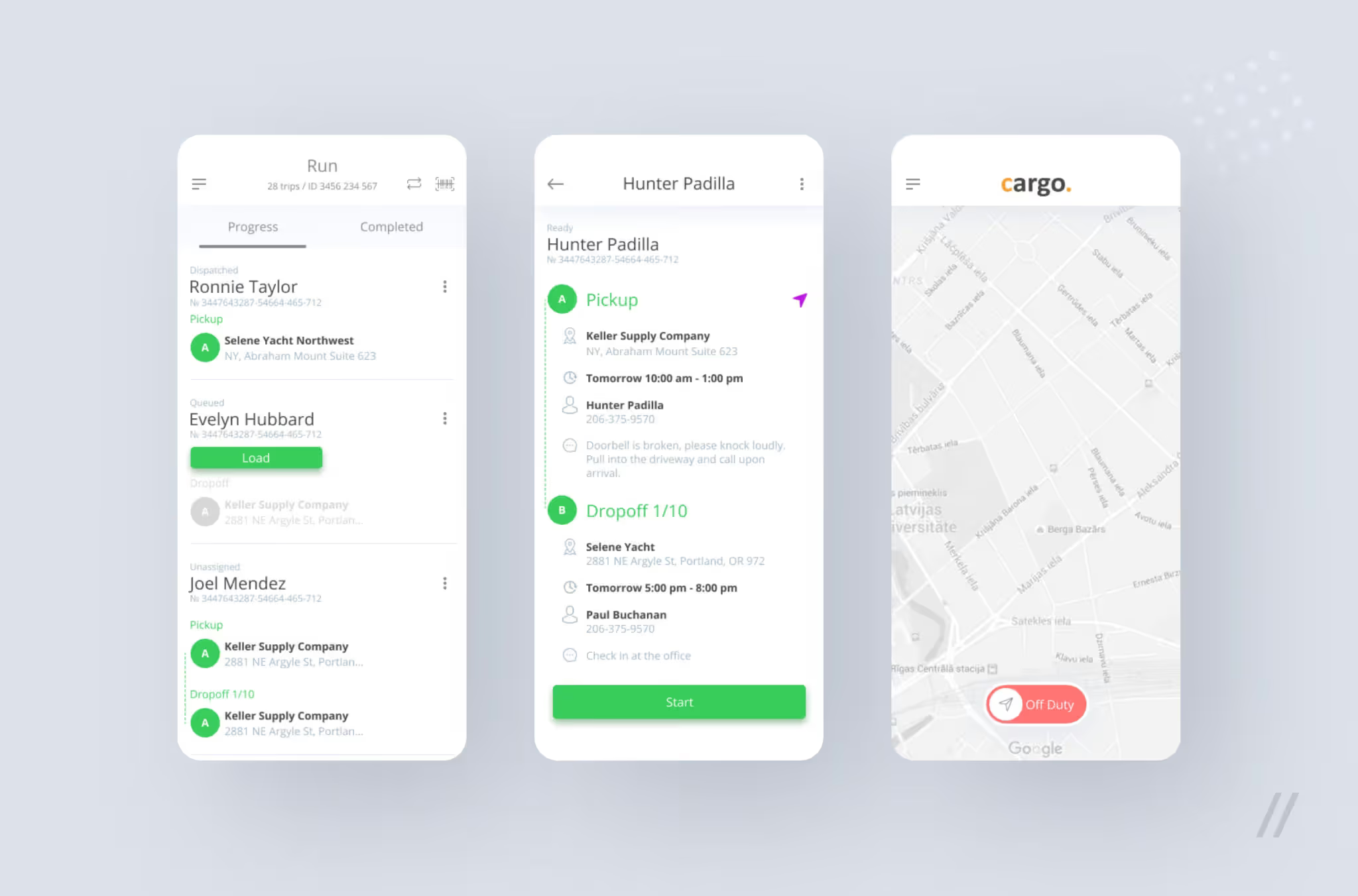
Cargo is a logistics analogue for traceability and fallback handling, not a farm AI result
John Deere See & Spray remains the article's measured agricultural AI example, with computer vision supporting a targeted spraying decision in the reported use. The greenhouse example shows how plant-health sensors can provide a monitoring input layer, but it does not prove a model or prediction.
Custom computer vision development is relevant when a product needs that kind of analysis, without implying that Purrweb built the greenhouse's AI. An agricultural CRM case study provides a separate proof point: sales managers had offline access and synchronized with an existing CRM when a connection returned. It demonstrates an integration workflow, not AI.
Calling a product generative AI does not establish that it fits a farm operation. The same questions still apply before a new capability becomes part of daily work.
Agtech work starts with one operational decision, not with a model. That decision relies on accessible, reliable data and evidence that supports action.
Off-the-shelf agtech fits when the workflow already supports that decision. Custom AI development becomes relevant when proprietary data, integrations, or an unavailable workflow create the advantage.
A responsible rollout establishes a baseline and pilots representative conditions. It sets intervention thresholds and human override, then expands only while fit and drift are monitored.
➡️ Want to build an AI-powered agriculture app? Contact Purrweb to discuss your project and get a tailored estimate.
Yes. AI is already used in agriculture, including John Deere See & Spray, a measured example of targeted spraying. Other applications support farm operations too, but their outcomes depend on the specific workflow and conditions.
There is no universal price for agricultural AI. The scope changes with off-the-shelf workflow fit, proprietary data, system integrations, and workflows that still need to be built. A pilot helps test the system under representative farm conditions before wider use.
The examples here show AI supporting farm decisions with human-control safeguards. They do not establish whether AI can replace farmers.
The main constraints are fragmented data, limited interoperability, unreliable connectivity, skills gaps, and trust in automated recommendations.


.svg)