Explore

Need help with your project?

Oops! Something went wrong while submitting the form.
In 2019, Forbes called the DeFi sector a shift that revived the cryptocurrency industry. Then, everything had just begun, and new technologies raised doubts about safety and reliability. It was the same with all innovations — remember the first clumsy and strange-looking smartphones? The global adoption of blockchain-based apps became evident in 2021 when investments in decentralized finance exceeded $100 billion. Experts suppose their growth will be based on new financial products, such as DeFi banking, P2P lending, decentralized exchanges, and so on.
Let's explore the DeFi application market, the app features, and the costs of developing a DeFi application. Learn how to create a DeFi app with Purrweb.

A DeFi app is a financial application that runs on smart contracts instead of a bank: users lend, swap, and earn without an intermediary holding their funds. Building one means picking a blockchain platform, writing and auditing smart contracts, connecting a wallet layer, and shipping a front end that hides the complexity. A production-grade MVP takes around 3,360 development hours and costs about $133,000 based on our own DeFi build, with smart contract audits — not features — being the line item teams most often underestimate.
Decentralized Finance (DeFi) refers to financial instruments — services and applications — created on the blockchain. They were developed to become an alternative to the banking sector and replace the traditional financial system with modern and more functional technologies based on open-source protocols. DeFi platforms work on smart contracts and blockchain technology, offering more accessible and transparent DeFi solutions. People use DeFi to interact with digital assets, NFT tokens, and cryptocurrencies, settling each financial transaction on-chain rather than through a bank.
The opposite system is CeFi (Centralized Finance), which means finance-related software owned and managed by business entities and registered companies that centralize custody of user funds. In case of violation of user rights, CeFi platforms can be held accountable. The central regulator often applies mechanisms to protect users from losses and offers lower risks compared to decentralized finance. Currently, CeFi platforms significantly outperform DeFi both in terms of the number of users and the total market volume.
As of mid-2026, the total value locked across DeFi protocols sits at roughly $77 billion, and Ethereum still holds the largest slice of it — a little over half — while chains like Solana, BNB Chain, and Base keep pulling share away. The market has moved past the stage where a rising TVL chart alone made the case for a new product. Liquidity now spreads across more networks than ever, and users judge a DeFi app on whether each transaction clears quickly and safely, and on how easily they can interact with DeFi through it, not on how much capital it can lock up.

To get started, let’s look at blockchain technology that decentralized applications and DeFi protocols use. Blockchain is a network that receives information which is formed into data blocks. Blocks with data are gathered in a chain based on date and time, so information cannot be changed, corrected, or stolen, and a transaction on the network cannot be canceled once it is confirmed. Since the information is publicly available to all network participants, the blockchain is considered transparent and reliable.
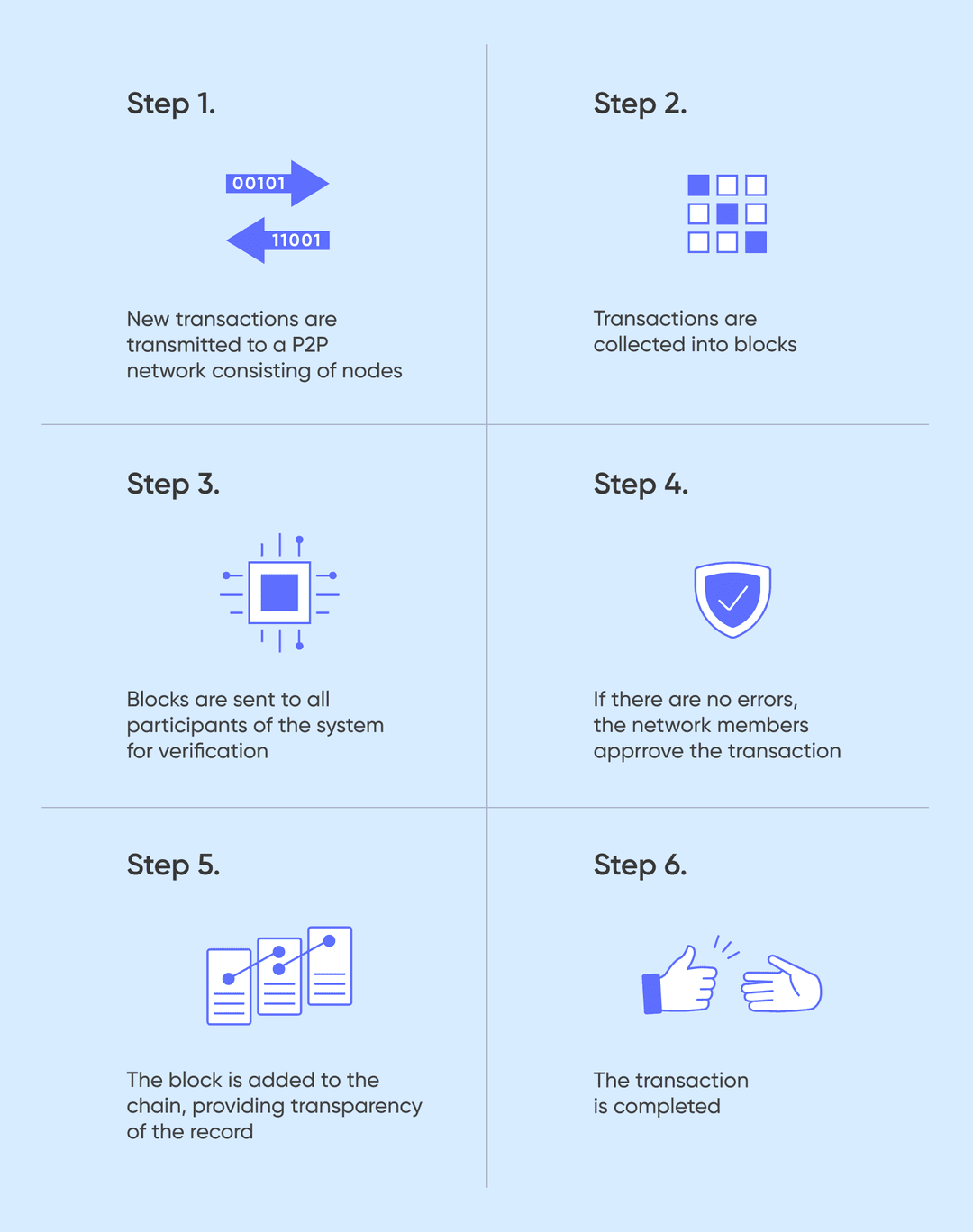
Blockchain applications, whether or not they deal with finance, require smart contracts. These self-executing algorithms are used to form, manage, and track assets in the blockchain. Simply put, smart contracts are sets of pre-programmed rules according to which one or another action happens. For example, if the user deposits assets at interest for 30 days, then after the expiration of the deposit period, the assets will be returned with the accrued interest automatically.
The term DeFi describes any blockchain software that is related to finance. DeFi apps are built on peer-to-peer decentralized networks and there is no intermediary between users exchanging data or money thanks to the smart contracts. Meanwhile, the current financial system works on centralized platforms controlled by government agencies.
Generally, DeFi is not a specific app type but rather an umbrella term that unites many finance-related applications on the blockchain. Let’s look at the most common types.
Every DeFi application is really a decentralized application with money at stake, and a DeFi platform is only as trustworthy as the smart contracts under it. The six types below cover most of what teams actually build. They differ less in their front end than in the smart contract logic underneath, which is what drives the build complexity.
| App type | What users do | Core smart contract logic | Build complexity |
| Decentralized exchange (DEX) | Swap tokens without an account | Liquidity pools, AMM pricing | High |
| Crypto wallet | Store keys, sign transactions | Key management, no custody | Medium |
| P2P lending & borrowing | Deposit collateral, take a loan | Collateral ratios, liquidation | High |
| DeFi banking | Earn yield on stablecoins | Yield strategies, rebalancing | Medium-high |
| NFT app | Mint, list, trade tokens | ERC-721/1155 minting, royalties | Medium |
| DeFi crowdfunding | Pool funds for a project | Escrow, milestone release | Medium |
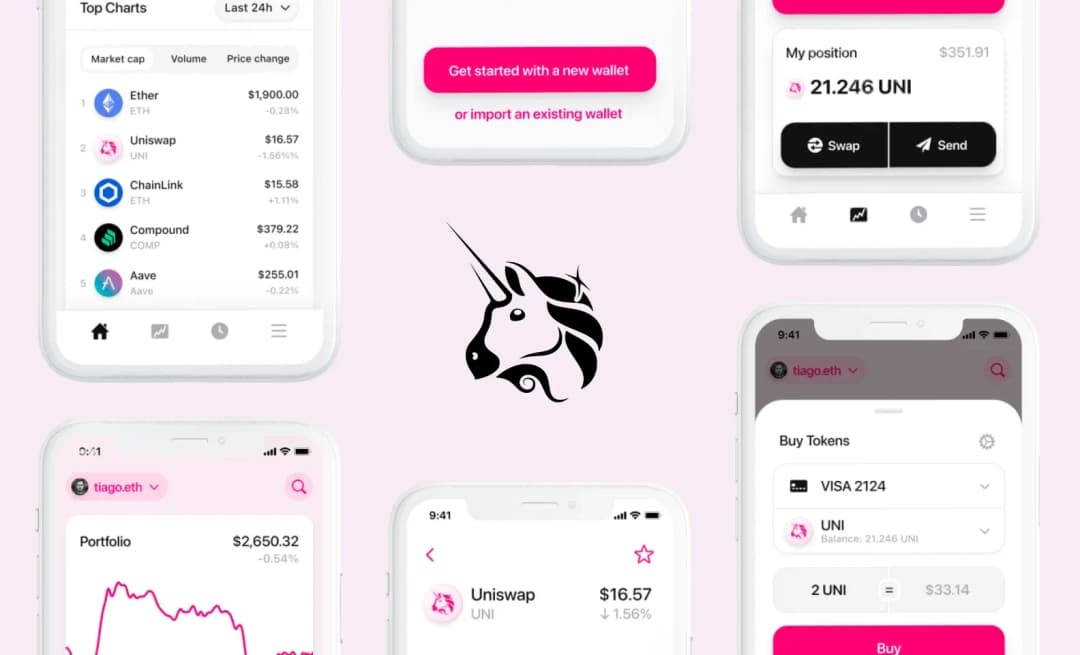
The decentralized exchange (DEX) is a platform where the user can buy, exchange, or sell assets, invest for a short and long time, and earn by trading cryptocurrencies. On the exchange, the user can get data on spot prices, market liquidity, growth or decline of crypto, as well as the liquidity of credit transactions on this site. Also, such platforms eliminate dependence on a single intermediary. One of the most successful DEXes is Uniswap. It is built on the Ethereum network. If a full trading venue is closer to what you have in mind, we cover launching a crypto exchange in a separate guide.
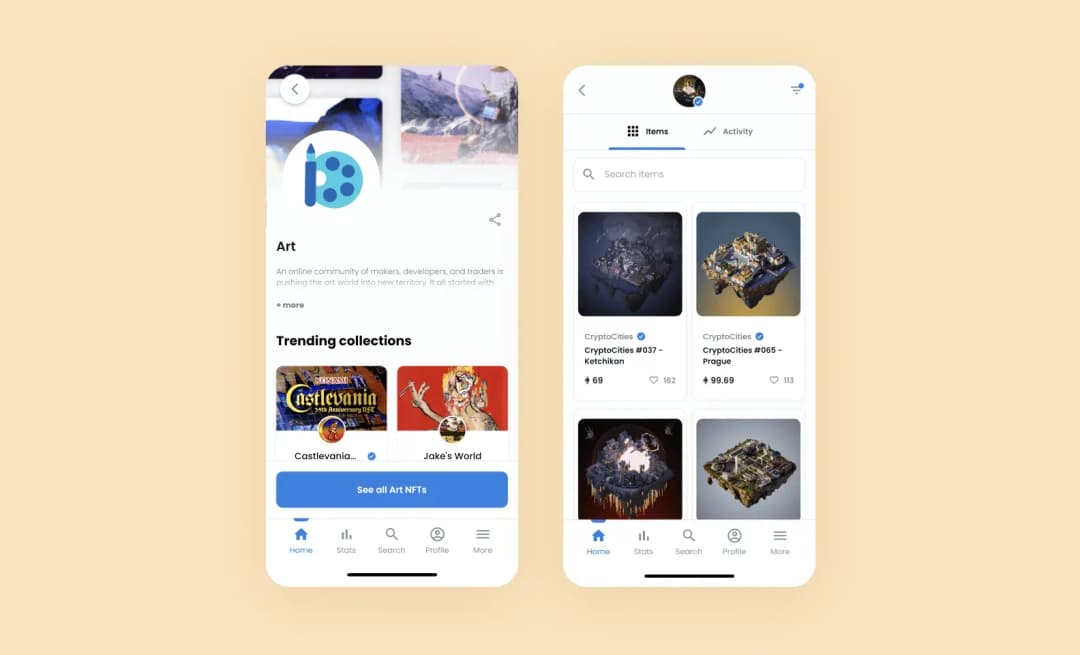
NFT apps let people mint, buy, and sell non-fungible tokens — one-of-a-kind digital representations of art, photography, video, music, and in-game items. The most widely used marketplace is OpenSea, and NFT trading is still one of the most visible consumer entry points into DeFi. At Purrweb, we made a guide on NFT-related app development, linked below.
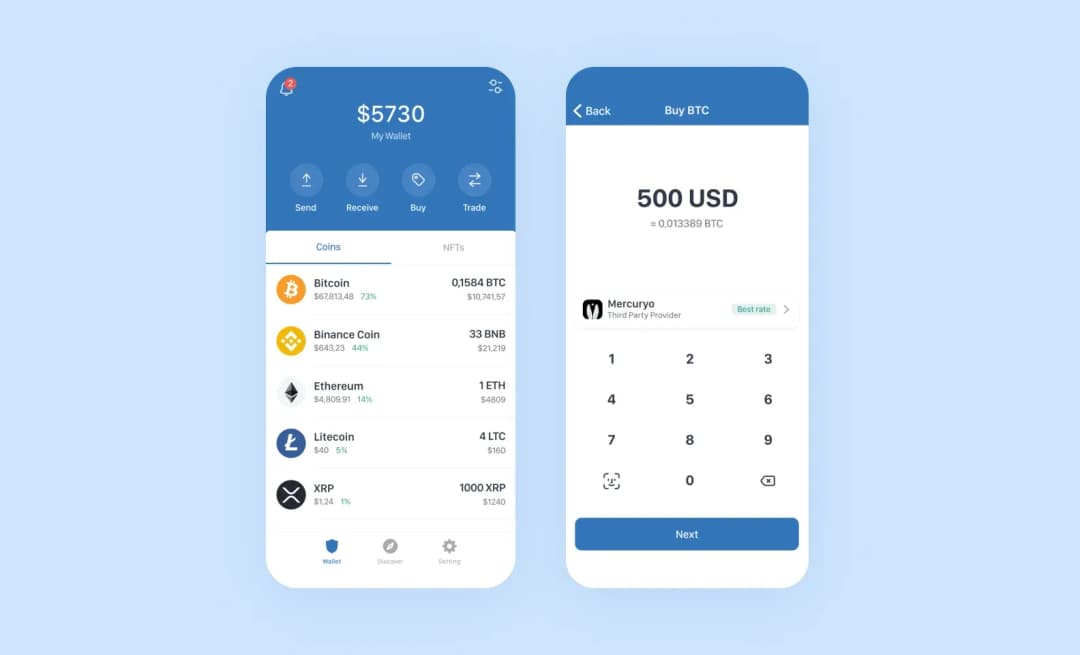
Crypto wallets are applications that store cryptocurrencies. They provide users with a unique access code and securely encrypt personal data. Most DeFi apps rely on a non-custodial wallet, so users keep control of their private keys. Crypto wallets can operate with a large number of cryptocurrencies and often include the functions of transferring and converting tokens. Two common examples are Trust Wallet, the official Binance exchange wallet, and MetaMask; many users also hold at least one stablecoin for steadier value. Trust Wallet allows users to buy and stake crypto, store NFT tokens, and use a DApp browser to trade on decentralized exchanges. We walk through building a crypto wallet step by step in a separate guide.
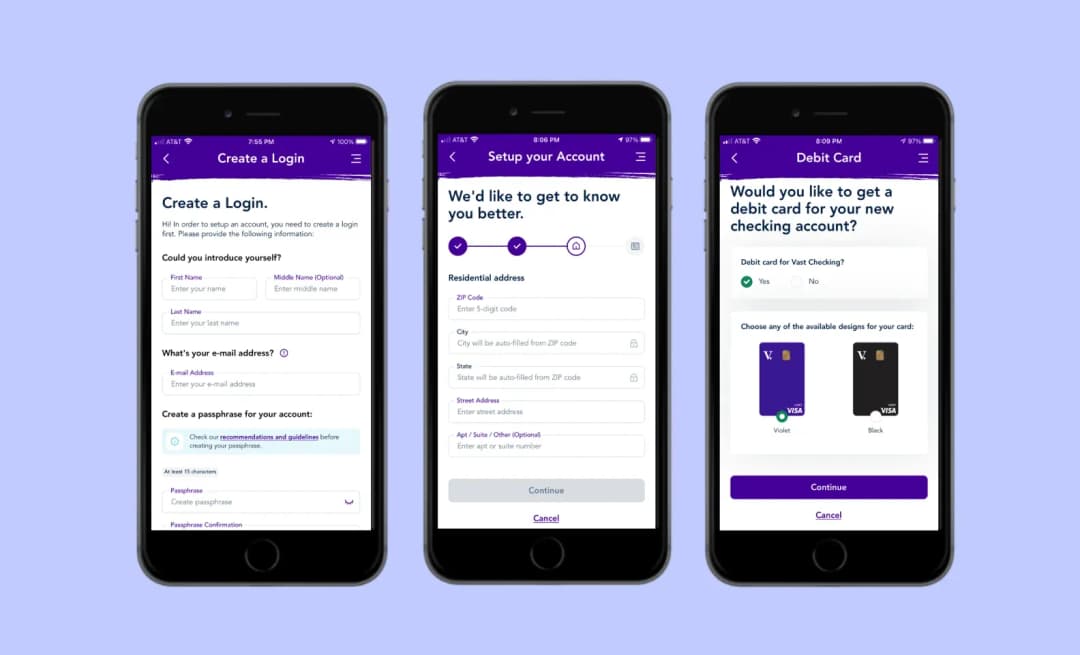
There is space in the banking sector to create global community-driven financial services, making financial operations affordable, fast, simple, and secure. DeFi apps connected to algorithmic protocols generate higher interest than traditional banks. Decentralized banks offer various kinds of staking, yield farming, and asset management tools, plus rewards programs, credits, and transfers. One good example is Vast Crypto Banking. Vast Bank is the first nationally chartered bank in the USA that allows users to purchase, sell, and store cryptocurrencies via the mobile banking application.
Thanks to decentralization, control over financial flows in the blockchain ecosystem is evenly distributed among many participants. This is convenient in lending since there are no long chains of intermediaries and paperwork as in banks. Decentralized lending protocols also minimize risks because DeFi lending and borrowing services use automated smart contracts and blockchain instead of banks and brokers. These algorithms specify all the terms of service, including lent or borrowed amounts of money, timeframes, and interest rates, so it becomes cheaper and easier to lend or take a loan. One of the most popular apps is Aave, which lets users lend and borrow against a digital asset without a bank in the middle — one of the most mature examples of a lending platform in DeFi.
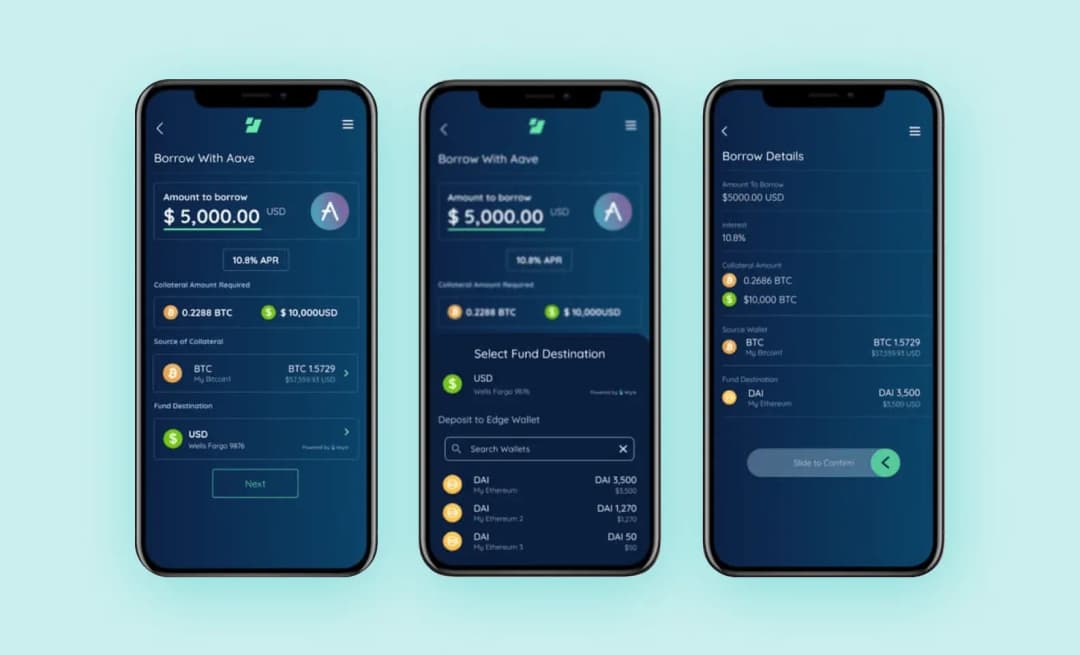
Check out our article, if you want to know more about how to develop blockchain applications.
Crowdfunding is a method of collective project financing based on charity, raising debt capital (money borrowed and repaid with interest), or stock equity. Decentralized crowdfunding platforms allow startups, businesses, and promising projects to raise funds safely and transparently. Modern services include Brugu and MantraDAO DeFi crowdfunding platforms.

Modern DeFi apps must meet several criteria, such as transparency, reliability, interoperability (the ability of the application to interact with other systems without restrictions), and flexibility. To meet them, each DeFi app is bound to feature a range of must-have functions. You can add extra features to stand out from competitors. Before we learn how to build a DeFi app, let’s look at the core DeFi features.

Support of several cryptocurrencies. Often, users need to carry out financial transactions with a variety of currencies. There are crypto wallets that support only one cryptocurrency, but they are not in demand compared to multi-currency ones. The ability to perform various operations with several blockchain networks and their tokens will increase your customer base.
Search function and filters. When you create a DeFi app, it is necessary to add a search function and the ability to filter the list of currencies and blockchains that your application supports. A nice idea is to filter a list of services or categories if your product provides several, for instance, short-, mid-, and long-term loans or crowdfunding projects. This will help simplify your DeFi app and make it user-friendly.
Cryptocurrency transactions. Not only decentralized exchanges and wallets but also other types of DeFi apps should support transactions with financial assets. Make it possible to transfer money between accounts, exchange and convert, as well as buy and sell crypto.
Push notifications. Mobile push notifications and in-app messages help inform users on time about updates, new activities, and changes in regulations. This is relevant for many applications such as decentralized exchanges, banking, loan platforms, and wallets because users can get information on the receipt or debit of funds. In addition, push notifications help to increase security, as users receive one-time codes to log in to their profiles and access assets.
Compatibility with iOS and Android. If you want to build a DeFi app that gains popularity and grows, you will need to make sure it is compatible with the most popular operating systems. You can choose one OS or make the application cross-platform and adaptive using the React Native framework.
| Feature | Why it matters | What breaks if you cut corners |
| Non-custodial wallet connection | Users keep their own private keys | Holding keys turns you into a regulated custodian |
| Transaction preview & gas estimate | Users see the cost before they sign | Failed transactions and users who blame the app |
| Multi-currency & multi-chain support | Users move between assets and networks in one place | A single-chain app leaks users to broader competitors |
| Search and filtering | Users find the asset, pool, or loan fast | A cluttered interface buries your core feature |
| Push notifications | Users hear about fills, liquidations, and logins in time | A missed liquidation alert becomes lost funds |
| Smart contract upgradeability | You can patch a contract without redeploying | A bug becomes permanent and unfixable |
| Cross-platform (iOS + Android) | You reach users on the OS they already have | Half your market can't install the app |
To develop a DeFi app, you first need to choose a desktop, mobile, or web option. Here are some of the most advanced technologies that a DeFi app development team can use.
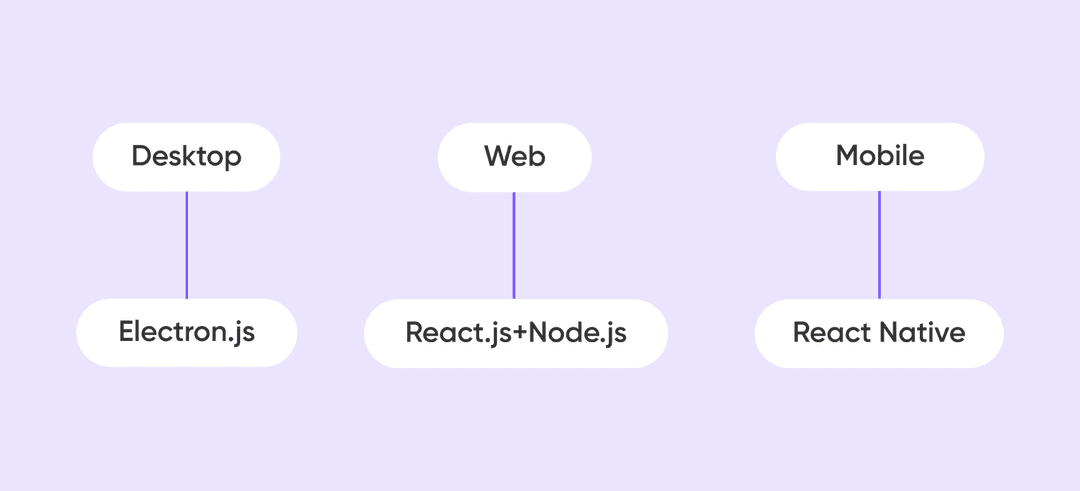
Electron.js for desktop apps. Using Electron.js, developers build native cross-platform applications for desktops. It is an open-source framework that uses JavaScript, HTML, and CSS programming languages, as well as Chromium and Node.js frameworks. Apps based on Electron.js are compatible with Windows, Mac, and Linux.
React.js and Node.js for web apps. These JavaScript libraries are used for web application development. React.js helps create user interfaces. It is an open-source frontend library with a useful developer toolset. Node.js is used to create scalable and flexible web applications. Based on this backend development environment, apps have high performance.
React Native for mobile apps. React Native is a framework with a single code base suitable for developing mobile apps both for Android and iOS. One team can build applications for two platforms which saves time and money on software development.
When building a decentralized finance app, you need to write smart contracts on the backend. Experts state the best programming languages to do this include Solidity, Java, JavaScript, Python, and SQL. It’s important to know that blockchain development is quite specific, so you’ll need skillful coders. At Purrweb, we have an experienced team that can help you with that.
The stack splits into five layers. Each one is a decision that constrains the next, so it pays to make them in order.
| Layer | Typical choice | Why |
| Blockchain platform | Ethereum, Binance Smart Chain, L2 rollups | Trade-off between security and transaction costs |
| Smart contract language | Solidity, Vyper | Ecosystem maturity, audit tooling |
| Dev & deployment environment | Hardhat, Foundry | Local testing, scripted deployment to testnet, then mainnet |
| Front end / Web3 layer | React + wagmi/viem | Wallet connection, transaction signing |
| Node & data | RPC provider, indexer | Reading chain state without running your own node |
Deployment follows a fixed path: you test contracts locally, push them to a testnet, get them audited, and only then deploy to mainnet. Skipping the testnet stage is where most avoidable losses start, and every blockchain network prices computation differently, so test against the one you will actually ship on. Scalability is the other early call. On Ethereum mainnet, the cost of each transaction spikes whenever the network is busy, so many teams deploy to an L2 rollup or a lower-fee chain like Binance Smart Chain to reduce costs and keep fees predictable. Whatever blockchain technologies you settle on, plan for how the app behaves at peak load, not just on a quiet testnet — that is what separates a demo from a product.
If you would rather hand the stack decisions to a team that has shipped this before, our DeFi app development services cover architecture through mainnet.
Before building a DeFi app, you should pay attention to the limitations and difficulties that may arise. We want to highlight a few problems that appear when you build a DeFi application and give advice on how to deal with them.
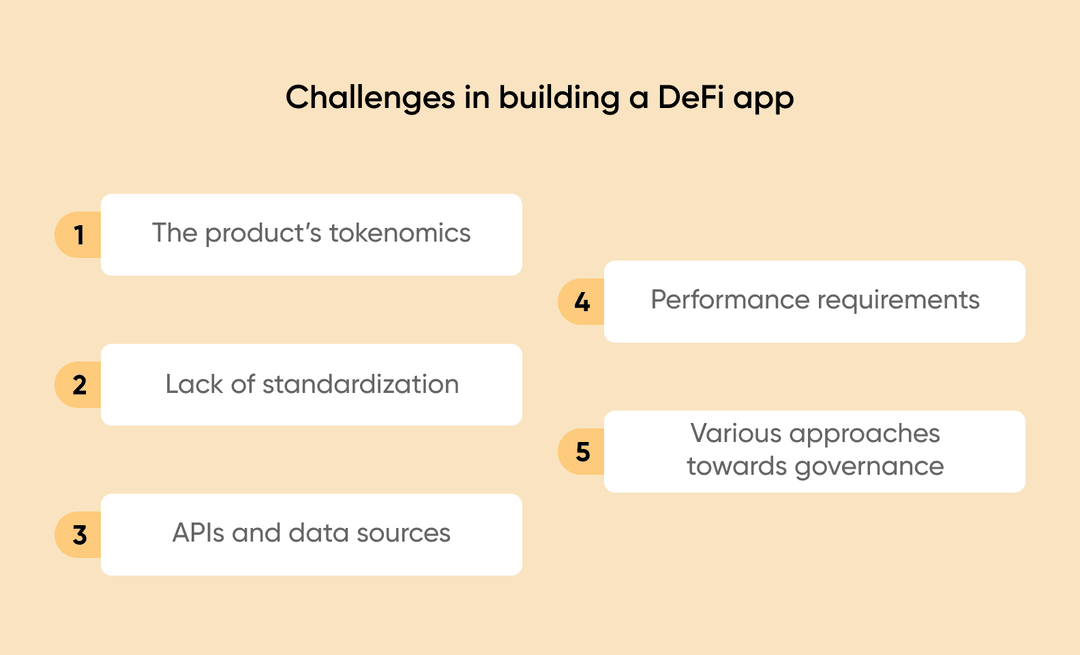
The product’s tokenomics. You will need to choose a blockchain platform and the way to use crypto. These decisions will drive all further choices of the tech stack, protocols, etc. Tokenomics is a term that reflects the factors affecting the use and value of the token, the creation and distribution, supply and demand, incentive mechanisms, and token burning. For crypto projects, well-thought-out tokenomics is crucial to success.
Lack of standardization. There are a variety of protocols, blockchains, and DeFi app options, and users expect that your product will support them. However, the DeFi industry is young, so there are few standards. As a result, dApp development is harder than it should be, and it becomes challenging for developers to create an application that satisfies the user’s needs. You need to pay attention to the specialization of your team and their ability to create applications that support all of the protocols.
APIs and data sources. Another problem is gathering information from different sources and APIs. You’ll need to upload this data to your system. Developers often need to write their software or integrate it with other systems and databases. In advance, set aside spare time and financial resources for this case. Our clients also asked us to use data from various APIs in their crypto wallet app. Check out how the Purrweb team has dealt with this challenge below.
Performance requirements. The requirements for financial applications are always high, as people need to receive money quickly when exchanging, buying, and selling their assets. If you have few servers or low bandwidth infrastructure, then you may lose customers. You need to make sure your DeFi app works well under high load. For example, to boost the Broex app performance, our team implemented real-time data updates for key features while adding a 3-second delay for the non-vital ones. Read more about this case here ⬇️
Various approaches towards governance. Each of the mentioned protocols has its own management model, which may not be suitable for your use. Approaches to management in the DeFi space vary depending on the project. Some projects involve all participants equally in the management, while others limit it only to token holders or stakers. For example, LUNA, the native token of the Terra network, sensational for its sharp fall, was used to submit and vote management proposals.
In 2026, the biggest DeFi losses no longer come from clever bugs in the code — they come from someone getting access they should not have. That single shift decides where a team should actually spend its security budget.
2026 has been the worst year on record for DeFi security. DefiLlama counts more than $840 million lost across over a hundred incidents in the first half of the year alone, and the second quarter set an all-time high for the number of separate exploits. What changed is the method, not just the total. In three of the four largest second-quarter incidents, attackers got in through stolen keys or social engineering rather than a flaw in the contract. The Drift Protocol attackers reportedly spent six months working their way into the team before draining roughly $285 million. Cross-chain bridges remain their own category of risk, with more than $328 million lost through them this year. For anyone building a DeFi app, the takeaway is uncomfortable: most of your real risk lives in operations, not in the Solidity.
Publishing a contract’s source used to be treated as optional. It no longer is. When the code behind a contract is unverified, users and security tools cannot check what it actually does before interacting with it, and that opacity has become its own attack surface. Verifying your source and getting it audited is now the baseline users expect, not a step you bolt on right before deployment.
An audit checks your contract logic: it looks for overflow errors, reentrancy, and flawed math an attacker could exploit. What it does not check is your team’s operational security — who holds the private keys, how they are stored, and whether someone can be phished into handing them over. Because compromised access now drives the largest losses, an audit is necessary but not sufficient. The security features that matter most here are secure, hardware-based key management, multisig on privileged actions, and a bug bounty that gives researchers a reason to report a vulnerability rather than sell it. In DeFi, careful smart contract development counts for little if a single private key is left exposed.
| Risk category | What it looks like | What reduces it |
| Compromised keys / social engineering | A team member’s access is taken over | Multisig, hardware keys, role separation |
| Smart contract vulnerability | Overflow, reentrancy, logic error | External audit + verified source + bug bounty |
| Bridge exploit | Funds stolen in a cross-chain transfer | Limit bridge exposure, prefer canonical bridges |
| Oracle manipulation | A price feed is pushed off-market | Multiple oracle sources, circuit breakers |
Building a DeFi app comes down to five steps: choose a chain, design the flows, write and test the contracts, connect the front end and wallet layer, and audit before you deploy. Here is what each one involves and roughly how long it takes.
Decide which chain your app runs on before anything else — it sets your transaction costs, your security assumptions, and the tooling your team will use. Weigh Ethereum’s liquidity and audit ecosystem against the lower fees of an L2 or Binance Smart Chain, and match the choice to how often your users will transact. Typical duration: about 1 week.
Map the user flows and the overall user experience before you write a contract. DeFi is hard to follow, so the interface has to hide the machinery — wallet connection, gas, confirmations — behind screens a first-timer can get through. Good blockchain UX design is what turns a working protocol into an app people actually finish onboarding into. Typical duration: 4–5 weeks.
This is the core of the build and the part you cannot rush. Your contracts hold user funds, so they get written, unit-tested, and run against edge cases on a testnet before a single line touches mainnet. Keep the logic as small as it can be — every extra function is extra attack surface. Typical duration: 6–10 weeks, overlapping with QA.
Wire the interface to the contracts and to users’ wallets. This is where transaction previews, gas estimates, and clear error states get built — the details that decide whether self-custody feels safe or terrifying. Test every path against a real wallet, not a mock. Typical duration: runs alongside development.
Book an external smart contract audit before you deploy, not after. Once the audit is clean, deploy to mainnet, monitor the contracts in production, and keep a plan for patching and incident response. Launch is the start of maintenance, not the finish line. Typical duration: a 2–4 week audit, then ongoing.
If you’re going to create a DeFi app, you should know about all the parts of the development and estimate potential costs. The application development market is large, and different development companies price the same DeFi product very differently as the DeFi market shifts. At Purrweb, we have already created a DeFi app, therefore, our estimates are based on a real successful DeFi project. You can check out how we managed to create a crypto wallet.
Here’s how our team evaluates rates and timeframes of an NFT wallet MVP development. Mind that we calculate costs for an app with the basic must-have function.
| Stage | Estimation in hours | Estimation in weeks | Approximate costs |
| Business process project analysis | 40 hours | 1 week | $800 |
| UI/UX design | 140 hours | 5 weeks | $6,300 |
| App development stage | 2100 hours | 24 weeks | $94,500 |
| QA Testing | 1080 hours | 27 weeks | $21,600 |
| Smart contract audit (external) | — | 2–4 weeks | from ~$15,000* |
| Project management | during the whole project | during the whole project | $9,850 |
Overall, the development of a DeFi app will cost you $133,050.
* The smart contract audit is run by a specialized third-party firm and billed separately, so it sits on top of the $133,050 build cost.
| App type | Typical MVP cost | What drives it |
| Simple crypto wallet | from ~$40,000 | Fewer contracts, no custody or trading logic |
| Decentralized exchange (DEX) | ~$120,000–$180,000 | Liquidity pools, AMM pricing, heavier audit scope |
| Lending / borrowing protocol | ~$150,000 and up | Collateral ratios, liquidations, oracle integrations |
Three things move a DeFi budget more than anything else. The first is how many smart contracts you need and how much value they hold — more contracts mean more code to audit and more attack surface to defend. The second is integrations: every external protocol, oracle, or bridge you connect to adds engineering and testing time. The third is reach — supporting several blockchains instead of one roughly multiplies the deployment, testing, and audit work. A single-chain wallet sits at the low end of the range; a multi-chain lending protocol with its own token sits at the top. For a wider view across blockchain products, we break down Web3 development budgets separately.
Developing a DeFi app on a realistic timeline means planning around overlap. An MVP takes about six to seven months of calendar time — less than the raw hours suggest, because design, development, and QA overlap instead of running one after another.
The numbers below come from the same development process behind the cost estimate above, viewed by time instead of money. They describe a production-grade MVP with a basic feature set; a more complex protocol pushes every row out.
| Stage | Hours | Calendar time | Runs in parallel with |
| Business analysis | 40 | 1 week | — |
| UI/UX design | 140 | 5 weeks | Smart contract architecture |
| Development | 2,100 | 24 weeks | QA |
| QA | 1,080 | 27 weeks | Development |
| Smart contract audit | external | 2–4 weeks | — |
| Project management | ongoing | full project | all |
Add the weeks up and you get far more than seven months — that is the point. Development and QA run in parallel, and design overlaps with early smart contract architecture, so the calendar time is much shorter than the stage total. Six to seven months also assumes the team can start immediately and the scope does not move. In practice, two things add weeks most often: an audit booked late (good auditors have waitlists) and scope creep once stakeholders see the first working screens. You can compress the schedule by running design and contract architecture together from week one, and by keeping the MVP genuinely minimal — every feature you defer is testing and audit time you get back before deployment.
DeFi is one of the major trends in the blockchain industry, and the wider DeFi ecosystem keeps shifting as new DeFi trends emerge. From what we have seen so far, DeFi certainly has the potential to benefit the banking sector, and many believe it will even outperform traditional finance.
Considering a DeFi project? Our DeFi development services cover how we approach blockchain and decentralized finance builds, from smart contract architecture to front-end integration.
➡️ We hope that our guide has answered most of your questions regarding the development of a DeFi app. If you have any doubts or difficulties with the evaluation of the project, you can always contact our experts. We know how to create a DeFi app. The Purrweb team will be happy to help make your idea come true, not only with advice but also with the development and design of a product with a quality guarantee. Take a look at our cases and leave a request in the form so we can contact you.
DeFi apps run on a blockchain platform — most often Ethereum, which holds just over half of all value locked in DeFi, or a lower-fee alternative like Binance Smart Chain or an L2 rollup. The application logic lives in smart contracts; the app itself is only an interface to them.
Pick a blockchain platform, define the financial logic, write and test smart contracts, get them audited externally, connect a wallet layer, and build a front end that hides the complexity. Deployment goes local, then testnet, then audit, then mainnet. Plan for the audit before you plan for launch.
A production-grade MVP runs around $133,000 based on our own build — roughly 3,360 hours across analysis, design, development, QA and project management, plus an external smart contract audit. Multi-chain support and complex lending logic push the number up.
About six to seven months of calendar time for an MVP, with design, development and QA running partly in parallel. An external smart contract audit adds two to four weeks and should be booked in advance, not after the code is frozen.
Yes, for anything that holds user funds. An audit checks contract logic, not your team's operational security — and in 2026 compromised access, not contract bugs, is the single biggest cause of DeFi losses by incident count.
Yes, and it is now the default expectation. Users keep their private keys; the app handles transaction previews, gas estimates and clear error states so that self-custody does not feel like operating a terminal.


.svg)