Explore

Need help with your project?

Oops! Something went wrong while submitting the form.
Your SaaS roadmap is moving faster than hiring. An external team can add capacity, but the real concern is control: who owns priorities, decisions, and acceptance?
In this guide, we'll look at when SaaS outsourcing fits, how engagement models divide responsibility, and which governance practices keep delivery visible. The goal is to evaluate the choice as an operating model, not a shortcut to lower rates.

SaaS (software as a service) outsourcing assigns agreed product work to an external team. The client still controls product vision, roadmap priorities, customer knowledge, approvals, and final decisions throughout delivery.
The scope for outsourcing SaaS development can include discovery, user experience design, user interface, engineering, QA, and release.
Outcomes and decision rights define the boundary. An internal org chart does not. For example, the team owns delivery of an onboarding flow. The SaaS company decides which customer problem it solves and whether the result is ready.
The model differs from two arrangements that often carry the same label:
This split keeps product ownership inside the SaaS business. Companies outsource SaaS product development for capacity and delivery expertise. The client remains responsible for priorities, access to decision-makers, customer insight, and the standards used to approve the work. Without that internal ownership, outsourcing changes who is waiting for a decision rather than solving the delay itself.
SaaS companies can outsource SaaS development when a defined roadmap lacks delivery capacity or specialist skills. It works poorly when nobody inside the company can set priorities, answer product questions, or accept completed work.
A development partner offering SaaS development services can add a delivery unit without waiting for every role to be hired. The model is most useful when the business problem is clear enough to guide discovery and estimation.
Common fit signals include:
The main limitation sits inside the client organization. Outsourcing does not create a product vision, settle priorities, or shorten a decision queue. The operating model still depends on a named product owner who provides context and accepts trade-offs. With that role in place, an external team expands delivery capacity. Without it, the same uncertainty moves into a different company.
The better model depends on the capacity the roadmap requires, how quickly that capacity must change, and who can govern delivery. Cost matters, but it cannot be separated from hiring, management, and product-context commitments.
| Criteria | In-house team | Outsourced SaaS team |
| Product context | Builds customer and product knowledge over time inside the company | Needs structured onboarding and documented context at the start |
| Capacity changes | Hiring, onboarding, and retention determine how quickly the team grows | Team composition can be agreed around a defined scope or product stage |
| Governance | Direct day-to-day proximity, with management handled internally | Requires explicit decision rights, communication cadence, and acceptance criteria |
| Cost evaluation | Includes ongoing employment, recruitment, tooling, and management commitments | Depends on scope, engagement model, change control, and the client's governance workload |
| Best fit | Stable long-term capacity under strong internal product and engineering leadership | Specialist delivery capacity, a defined product stage, or a roadmap that needs temporary expansion |
An in-house development team keeps product context within the company. That matters when the product requires continuous domain learning and a stable stream of work for the same roles. The trade-off is organizational commitment: hiring creates capacity that the company has to recruit, manage, and retain beyond one release.
Companies can outsource SaaS development to an outsourcing team matched to their development needs. It can bring a complete cross-functional unit instead of adding isolated roles one at a time. The trade-off is more explicit governance. Product decisions, repository ownership, meeting cadence, and the definition of accepted work cannot remain informal.
Neither option provides control automatically. Neither model guarantees control over the development process. In-house proximity does not fix unclear priorities, and an external contract does not remove management work. The practical comparison is whether the company wants to build permanent capacity or govern temporary specialist capacity around a defined outcome.

The management commitment changes with the model even when both teams work toward the same product outcome
An external team can own delivery from discovery through release, provided the scope names the expected outcomes and decision boundaries. Product strategy, customer knowledge, roadmap priorities, and final approval remain with the SaaS company.
The transferable work usually falls into five groups:
Choosing a provider is separate from deciding how the product gets built. A SaaS app development guide covers building SaaS solutions. When companies outsource SaaS development, the internal product owner still decides which customer problem deserves the next release and which trade-offs are acceptable.
We built Contentplace, a web marketplace where buyers search for video-content rights and sellers upload videos, set prices, and organize portfolios.
The delivery scope had to connect more than content upload. Seller subscriptions, buyer purchasing, and different permissions formed one business flow. We separated the buyer and seller journeys, then defined how portfolio management and subscription access worked inside each role.
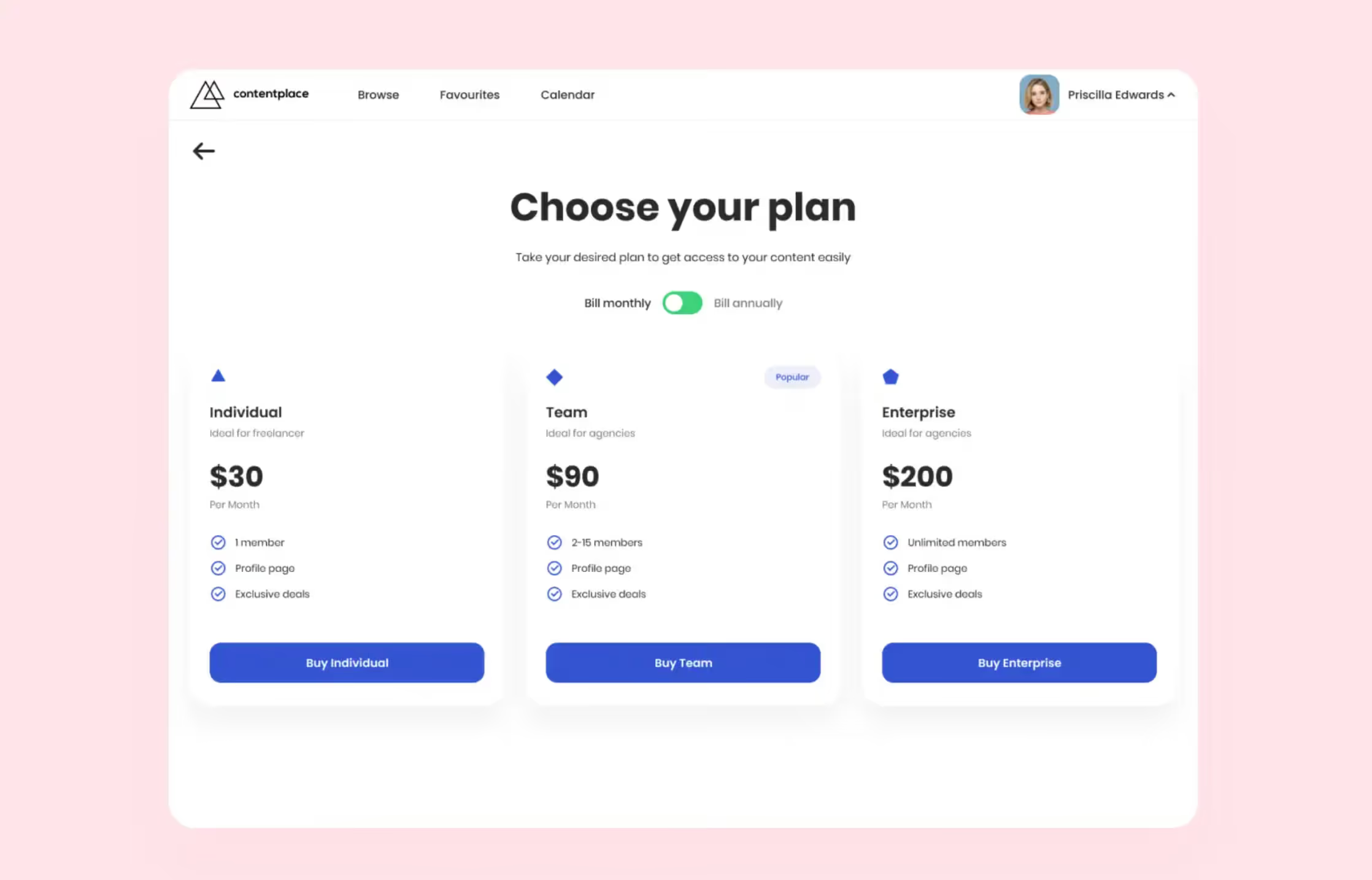
Clear role boundaries keep marketplace permissions and subscription logic from becoming late-stage engineering questions
SaaS outsourcing models follow scope certainty and roadmap change. Fixed scope works with stable acceptance criteria. A dedicated team supports evolving releases, while staff augmentation fills specialist gaps under existing internal leadership.
| Model | Use when | Client responsibility | Watch-out |
| Fixed-scope project | Requirements and acceptance criteria are sufficiently clear | Prioritize the scope and approve milestones | Change requests need explicit control |
| Dedicated team | The roadmap will evolve over several releases | Provide product leadership and a regular decision cadence | Avoid treating the team as ownerless capacity |
| Staff augmentation | Internal leadership exists, but a specialist gap must be filled | Integrate specialists into the internal workflow and quality standards | Define accountability across the combined team |
A fixed-scope project creates the clearest commercial boundary, but it becomes expensive to govern when requirements change every sprint. A dedicated team absorbs roadmap change more naturally because capacity stays with the product across releases. The client still owns prioritization and acceptance.
Staff augmentation solves a different problem. It adds individuals rather than an autonomous delivery unit. The model fits when internal product and engineering leaders already coordinate the work, own the architecture, and need a specific role added to the existing workflow.
The pricing model and outsourcing strategy follow these operating differences. A company choosing among them is deciding how change enters the workflow, who resolves trade-offs, and where delivery accountability sits.
We built Look4Pro, a B2B platform where businesses post services and find suppliers, contractors, or partners.
The product used a subscription to unlock listing authors' contact details. The scope therefore had to separate free discovery from paid access and connect those rules to Stripe payments. We defined the access states as product behavior rather than leaving monetization as a payment task at the end.
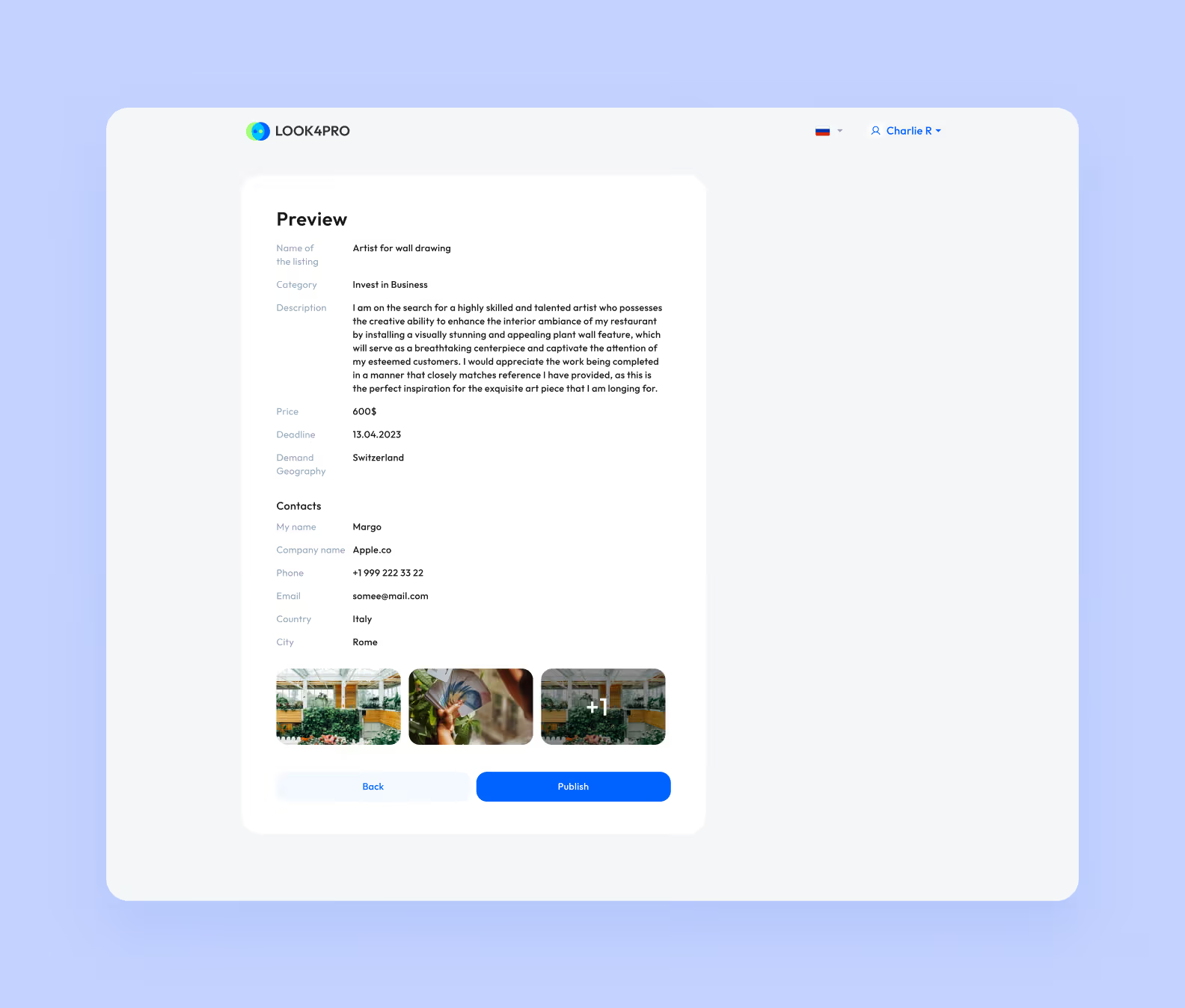
An engagement scope becomes easier to accept when paid and free user actions are defined before implementation
A governable approach to outsourcing software development starts with a SaaS outcome. Next come evaluation, discovery, contracting, onboarding, delivery, acceptance, and handover. Each stage produces an artifact that makes responsibilities and the next decision visible.
The setup differs from generic how to outsource app development guidance because a SaaS product keeps evolving after its first release. The engagement has to account for subscriptions, data access, integrations, and continued ownership of the roadmap.
The artifacts are useful only when teams keep them current. A stale backlog or access matrix creates the appearance of governance without giving decision-makers reliable information. The process works when each document supports a real approval, risk review, or transfer of responsibility.
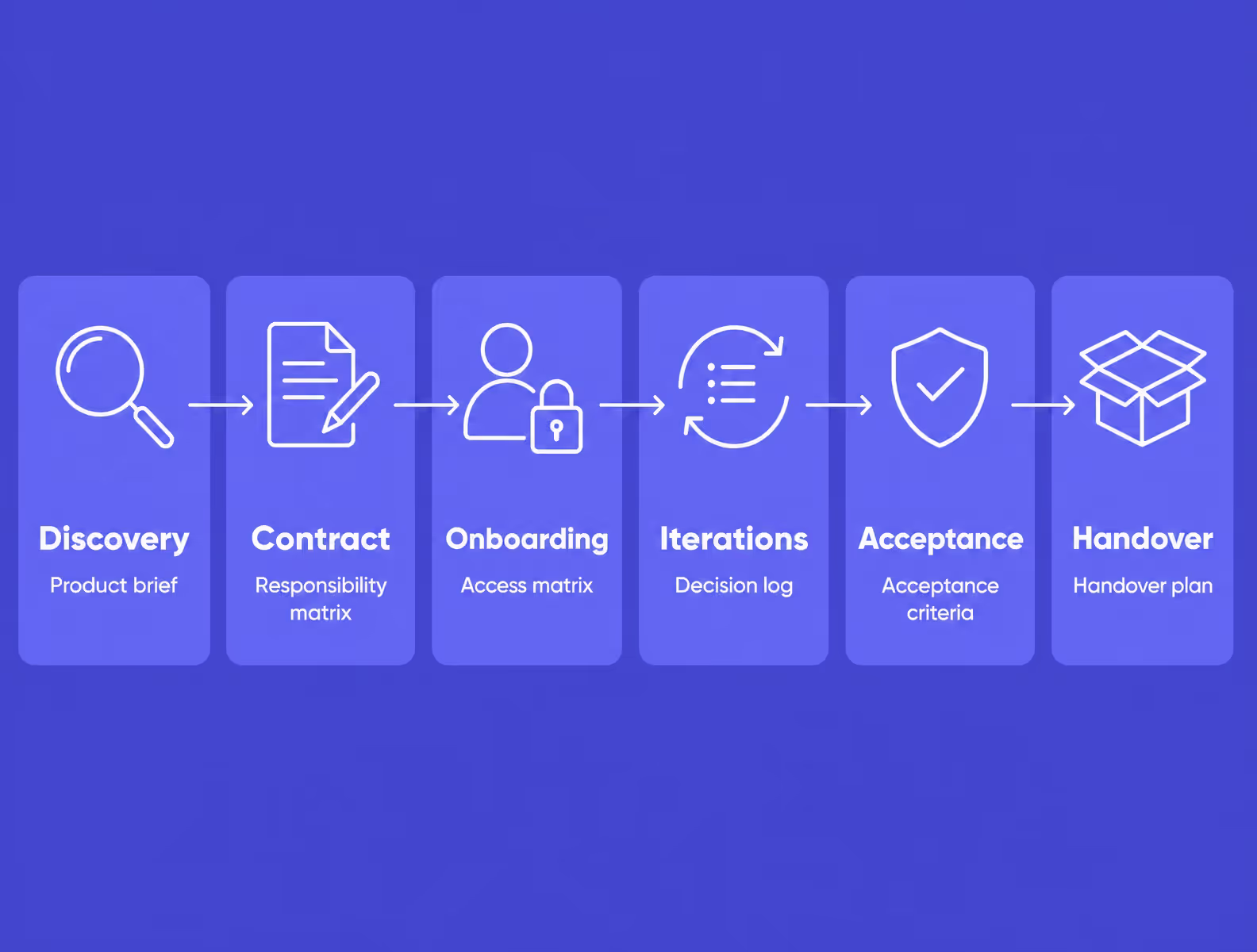
The process stays controllable when every stage leaves a usable decision or ownership record
Choose a SaaS outsourcing partner by testing how they turn product uncertainty into delivery decisions. Relevant experience matters, but the stronger evidence is a clear discovery process, accountable team, quality controls, and transparent commercial rules.
A provider-evaluation checklist covers:
A broader guide on how to choose a SaaS development company helps compare outsourcing companies. When choosing a SaaS outsourcing partner, test how the outsourcing provider would operate with the product.
Useful questions include:
Strong answers name owners, artifacts, and decision points. Weak answers rely on general assurances about expertise or flexibility. The right partner involves trade-offs. The goal is to understand them before they appear in the contract or roadmap.
Development costs and timelines for a SaaS project depend on scope, integrations, compliance, team composition, quality, and change frequency. A useful estimate connects each driver to assumptions, ownership, and an agreed way to control change.
The feature list is only one input. Billing, permissions, legacy data, or compliance can make a small interface harder than a larger product built from familiar flows.
The main estimate drivers are:
A credible estimate names these assumptions and the client decisions that can move the timeline. The cost of development then becomes a planning output, not an optimistic hour count.
The common risks have corresponding operating controls:
Remote collaboration makes these controls part of delivery. In a large developer survey, 32.4% of respondents reported working remotely. The figure does not prove outsourcing performance. It shows why access, documentation, and communication must work without physical proximity.
For Talentum, we built a personal-chef marketplace with profiles, in-app chat, and chatbot-assisted ordering.
Design and development ran in parallel, and the case page records a production launch within four months. This project-specific timeline does not predict delivery for another SaaS product.
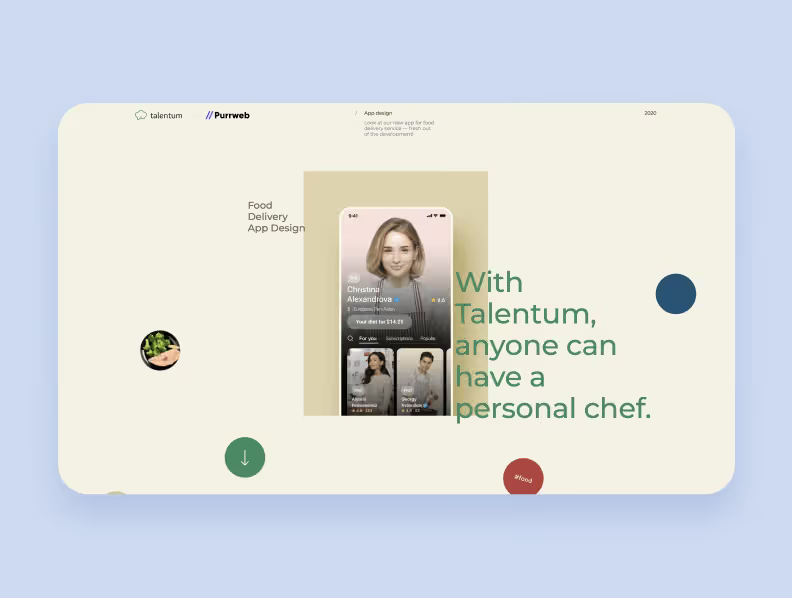
A documented feature scope makes a project timeline explainable without turning one case into a universal promise
Project management and product governance are practices for successful SaaS outsourcing, not constant supervision. The client keeps decision ownership, while both teams use shared priorities, visible acceptance rules, controlled access, and current documentation to manage delivery.
The operating routine includes:
Contentplace shows why this discipline starts before engineering. Its buyer, seller, portfolio, and subscription flows required explicit roles and business logic before the team could treat them as accepted product behavior.
Outsource your SaaS development when the product has a defined outcome, an accountable owner, and a delivery model suited to expected change. The decision becomes manageable when scope, access, acceptance, and handover are visible before work begins.
➡️ Ready to test the model against your roadmap? Tell us what you are building, and we'll discuss the delivery plan.
SaaS development outsourcing is the use of an external team to perform agreed product work such as discovery, design, engineering, testing, or scaling for a subscription software product. The client should retain ownership of product priorities, customer insight, approvals, and the outcomes used to judge delivery.
Outsourcing is worth evaluating when a company needs specialist capacity, wants to validate a defined product scope, or must advance a roadmap without building every role internally. It is not a substitute for a clear product owner, prioritized backlog, or timely decisions from the business.
There is no reliable universal answer. The cost depends on scope, integrations, quality requirements, team composition, engagement model, and the frequency of change. Compare the full management and delivery commitments of each option instead of relying on headline hourly rates.
Use a fixed-scope project when requirements and acceptance criteria are stable, a dedicated team when the roadmap will evolve, and staff augmentation when internal leadership needs specific specialist capacity. Choose the model that matches how much product direction and change control your company can provide.
Evaluate relevant SaaS experience, discovery practices, team composition, communication cadence, quality assurance, security controls, intellectual-property terms, and evidence of transparent delivery. Ask how the partner handles changing requirements, acceptance, documentation, access, and knowledge transfer before signing a contract.
Start with a defined discovery phase, name decision-makers on both sides, maintain a shared backlog and regular demos, set written acceptance criteria, control access to data and repositories, document key decisions, and agree on IP, security, and handover obligations in the contract.


.svg)